How to Set Up Texas Rig: A Clear Bass-Fishing Guide
A Texas rig is a versatile way to present soft plastics around cover while reducing snags. This guide explains the components, setup, basic presentation, and practical adjustments for different conditions.
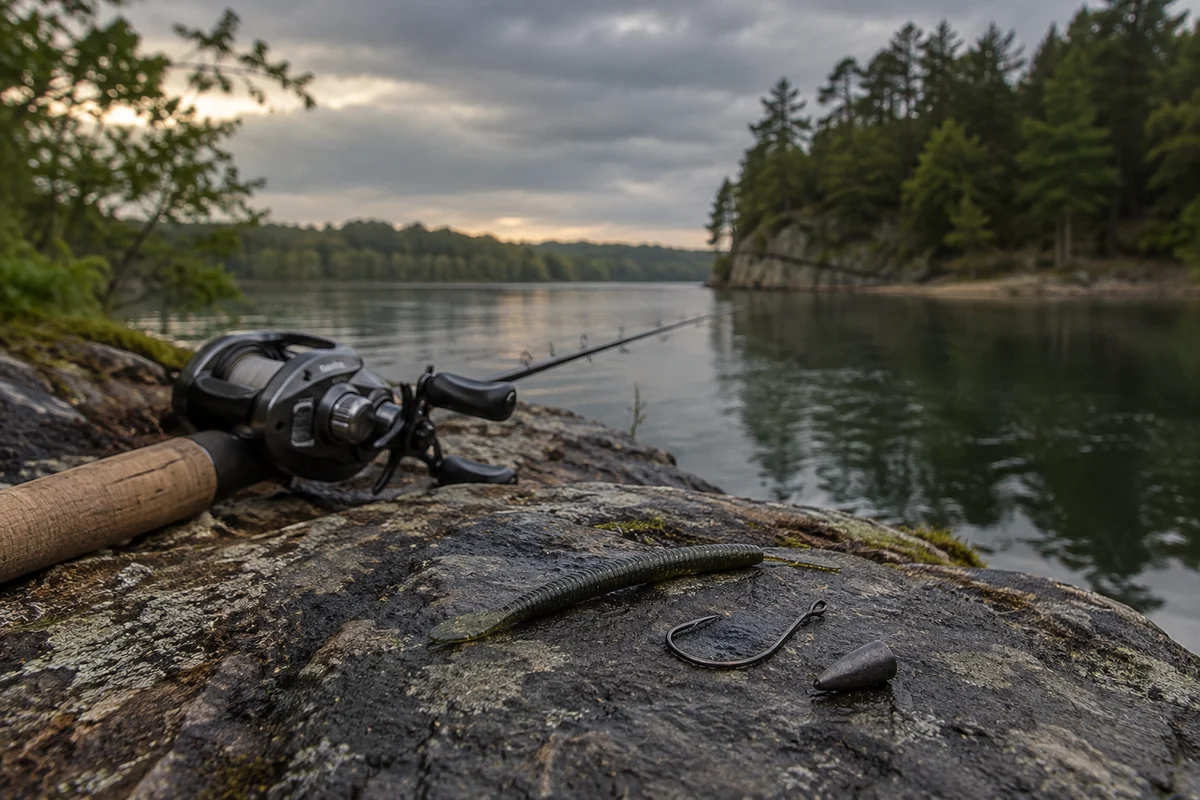
The how to set up texas rig question has a straightforward answer: thread a soft-plastic bait onto an offset hook, add a sliding or pegged bullet sinker if you want one, and position the hook point so it lies against—or just inside—the bait. That weed-resistant arrangement lets you fish a worm or creature bait through many kinds of bass cover. The details matter, though: hook size should suit the bait, the plastic should sit straight, and the weight should match the depth and cover rather than being chosen by habit.
What makes a Texas rig useful?
A Texas rig combines a soft plastic with a hook arranged to minimize exposed points. The usual version has a bullet-shaped sinker on the line ahead of the hook. The sinker can slide freely, be held near the hook with a stopper, or be omitted for a weightless presentation. A properly rigged bait can slip past vegetation, brush, and other cover more readily than a lure with an exposed hook.
It is a flexible tool, not a guarantee against snags. Heavy brush, tangled branches, and dense vegetation can still trap line or bait. Match the rig to the cover, use tackle appropriate to the fish and setting, and avoid forcing a hooked fish through obstacles in a way that risks breaking off line.
If you are learning the broader basics, start with bass fishing for beginners. For a comparison of alternative presentations, see plastic worm rigs for bass.
Components and choices
You need a soft-plastic bait, an offset worm hook, line, and optionally a bullet sinker and sinker stop. Choose a bait and hook that fit together: the hook bend and gap should leave room for the plastic to compress when a fish takes it, without making the bait sit crooked or bunch up.
| Component | Practical starting point | Adjust when… |
|---|---|---|
| Soft plastic | A straight-bodied worm or compact creature bait | Choose a profile that moves naturally and is not too large for the hook |
| Offset hook | A size that fits the bait’s body and thickness | A thick bait needs enough gap for the plastic to compress around the hook |
| Bullet sinker | The lightest weight that reaches the target and maintains contact | Add weight for depth, current, wind, or difficult-to-feel bottom; reduce it for a slower fall |
| Sinker stop | Optional | Use it when keeping the sinker close to the bait helps move through cover; leave it off for a sliding sinker |
| Line and rod | Tackle suited to local conditions and the cover | Dense cover may call for stronger line and suitable rod power; open water permits lighter choices |
There is no single ideal hook, line, or sinker for every Texas rig. Bait dimensions and manufacturers’ hook recommendations vary. When in doubt, test the fit by threading the bait straight and checking that the point can be brought through the plastic without distorting it.
How to set up a Texas rig step by step
- Slide on the sinker, if using one. Thread the line through the pointed end of the bullet weight so the wider end faces the hook. Add a sinker stop if you want the weight held close; otherwise, let it slide freely. You can also leave the weight off for a weightless rig.
- Tie on the hook. Use a strong, familiar knot appropriate for your line and hook eye. Moisten the line before snugging the knot, then inspect it for damage and trim the tag end. Follow the line and knot manufacturers’ guidance, especially with specialty line.
- Insert the hook into the bait’s nose. Push the point into the center of the bait’s tip and bring it out after a short distance. Keep the entry centered so the bait tracks straight.
- Slide the bait onto the offset. Move the plastic up the shank and rotate it so the hook point faces back toward the body. The bait should rest at the offset bend without being stretched or bunched.
- Measure the hook position. Lay the hook alongside the bait to identify where the point should enter the body. Push the point through at that spot, then let the bait settle naturally.
- Make it weedless. For a skin-hooked rig, bury just the point beneath the surface of the plastic. Alternatively, lay the point flat against the bait and lightly press it into the surface. Do not bury it so deeply that it cannot clear the plastic when the hook is set.
- Check alignment. Hold the bait by the line and inspect it from the front and side. It should hang straight, not spiral, bow, or twist. Re-rig a crooked bait; it can move unnaturally and twist line during a retrieve.
A correctly rigged bait should flex when lightly compressed, while the point remains protected from routine contact with cover. Check the hook point periodically for damage and replace a bait that is torn enough to slide down the shank or foul the hook.
Choosing a weight and sinker arrangement
Weight changes both the fall and how much bottom contact you can feel. A heavier sinker gets down quickly and can help maintain contact in deeper water, wind, or current, but it may fall too abruptly in shallow water or land hard on cover. A lighter weight falls more slowly and can be useful around sparse cover or when fish are responding to a gentle presentation, though it may be harder to control in difficult conditions.
A free-sliding sinker can separate from the bait during a fall, while pegging keeps the two together. Keeping them together may help the rig pass through some cover as a compact unit. Neither arrangement is universally superior: let the structure, vegetation, bait movement, and snag risk guide the choice. Start with a manageable weight, make several casts, and change one variable at a time so you can tell what improved control.
How to fish the rig around cover
Cast beyond or beside the target rather than dropping the rig directly into the thickest tangle. Let it fall on a controlled line, then watch for an unexpected twitch or sudden slack; either can indicate contact or a fish. Once it reaches the bottom, move it in short pulls or small hops, pausing between movements. The pause gives the bait time to settle and makes it easier to detect a change in line tension.
Pay attention to transitions: the edge of a weed bed, a drop-off, a branch near open water, or a change in bottom firmness. Move the bait slowly enough to feel where it is, but do not drag blindly through every obstruction. If the rig catches, ease the line from a different angle before pulling hard. Repeatedly yanking can bury a hook or break the line.
When you feel a tap, unusual weight, or steady movement, take up slack and maintain controlled pressure. The exact hook-setting motion depends on the hook, line, rod, and cover; use a firm, deliberate motion rather than swinging wildly. Keep the rod and line under control, and follow local rules for handling and releasing fish. For another soft-plastic approach with a different presentation, explore bass fishing with soft plastics.
Common setup problems and quick fixes
- The bait spins or rolls: It is probably off-center or stretched. Remove it and rethread it straight through the nose and body.
- The hook point is buried too deeply: Bring it nearer the surface so the plastic can clear the point when compressed.
- The bait slides down the hook: Recheck how it is seated on the offset. Replace torn plastics rather than repeatedly pushing them back into place.
- The sinker keeps snagging: Try a lighter weight, a different angle of approach, or a more compact bait; some cover cannot be fished cleanly with the current setup.
- Bottom contact is hard to detect: Reduce slack, slow the fall, or adjust weight to suit depth and conditions. Wind and line choice can affect feel.
- The rig feels cumbersome: Check whether the hook and sinker are oversized for the bait and the cover. A lighter, better-proportioned setup can move more naturally.
A simple decision framework
Before each session, identify the target cover and depth, then make the smallest useful adjustment. In shallow, sparse cover, a lighter or weightless rig may keep the bait’s fall natural. In deeper water, current, or wind, a heavier sinker can improve control. In vegetation or brush, a weedless point and a compact profile can reduce fouling, but there is no rig that eliminates snags. If you are losing contact, adjust weight or line control; if the presentation drops too fast, reduce weight or allow the sinker to slide.
The Texas rig earns its place because its basic parts are easy to adapt. Get the bait straight, keep the hook point protected but accessible, and choose only as much weight as the conditions require. Those checks make the rig more dependable than simply adding a heavier sinker or changing baits at random.
For more, explore our bass fishing fishing freshwater guides.
Frequently asked questions
Does a Texas rig need a sinker?
No. A bullet sinker is common, but a weightless Texas rig can be useful when you want a slower fall or a lighter presentation.
Which way should a bullet sinker face?
Thread the line through the pointed end so the wider end sits toward the hook and bait.
How do I keep a Texas-rigged worm straight?
Center the hook entry in the nose, seat the bait on the offset without stretching it, and align the body before casting.
Should the Texas rig be pegged?
Pegging is optional. It holds the sinker near the bait; a free-sliding sinker can separate from it. Choose based on cover and the movement you want.
Sources & further information
Consult these primary sources for current regulations, technical information and local guidance.