Bass Fishing for Beginners: A Practical First-Season Guide
A clear first-season framework for finding bass, choosing uncomplicated tackle and lures, and learning from each trip without overcomplicating the sport. Start with accessible water, a reliable spinning setup, and a few repeatable presentations.
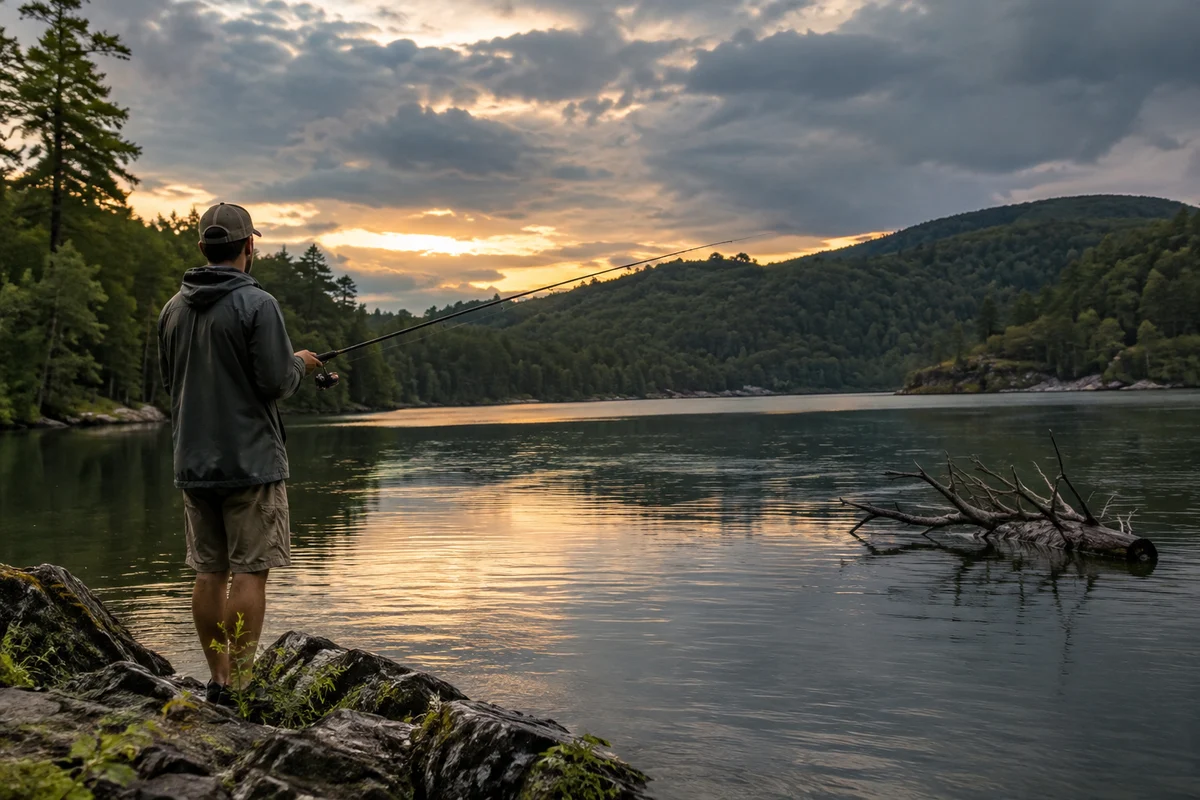
Bass fishing for beginners gets easier when you treat each outing as a small experiment rather than a test of how much tackle you own. Start with a rod and reel you can cast comfortably, a short selection of lures, and a plan to look for places where bass can find food or shelter. Then change one thing at a time—location, depth, or presentation—and pay attention to what the water tells you.
Bass are not always shallow, aggressive, or near the most obvious cover. Their position changes with season, weather, water clarity, forage, and fishing pressure. No beginner’s formula guarantees a bite. The goal is to develop a repeatable process, fish safely and legally, and build observations that make the next trip more informed. For local context and related freshwater topics, visit the freshwater bass fishing hub.
What do you need for a first bass fishing trip?
A basic spinning outfit is a forgiving starting point for many new anglers. A medium or medium-light spinning rod paired with a matching reel can cast a range of modest lures and is generally easier to learn than a baitcasting setup. Choose equipment that feels balanced in your hands; exact rod length, power, and line choice depend on the waters and techniques you expect to fish.
Use line that suits the reel and the cover. Monofilament is manageable and stretches under load; braid has little stretch and can be useful around vegetation, though it may require a leader in clear water; fluorocarbon is often used as a less-visible leader or main line. These are tradeoffs, not rules. Follow the rod and reel maker’s line recommendations, and check knots and line for abrasion regularly.
Keep your first tackle selection compact:
- A few soft plastic worms or stick-style baits, with suitable hooks and weights.
- A weedless soft-plastic option for vegetation or snag-prone cover.
- One or two moving lures, such as a small spinnerbait or a shallow-running crankbait, where local rules and conditions permit.
- Needle-nose pliers or forceps, line cutters, and a small tackle container.
- A landing net if appropriate for the water and fish size, plus a measuring tool if you need to check local limits.
Hooks are sharp, and treble-hook lures can catch clothing or skin. Carry pliers, keep hooks covered during transport, and avoid casting near people. A personal flotation device is important when fishing from a boat; wear it as required and follow the vessel’s safety rules. On shore, use footwear suited to slippery banks and keep a safe distance from steep or unstable edges.
If you want to compare a few fundamental soft-plastic approaches, our guide to plastic worm rigs for bass can help you understand how rigging changes a bait’s action and snag resistance.
How do you find bass in unfamiliar water?
Begin with a map, if available, and observe before casting. Bass often relate to structure—underwater features such as points, channels, drop-offs, and submerged humps—or to cover, including weeds, docks, laydowns, and rocks. These features can concentrate forage or provide an ambush edge, but fish may not occupy every likely-looking spot.
On a small pond, walk quietly and look for changes: a weed edge, a shaded bank, a creek inlet, a patch of open water beside vegetation, or a point that extends into deeper water. On a lake, identify accessible points and coves, then consider how wind, sunlight, and water clarity affect the area. From a boat, use electronics as aids rather than guarantees; learn what the display represents and avoid assuming every mark is a fish.
A useful first pass is to divide the shoreline or area into manageable sections. Make a few casts parallel to the bank, then fan casts toward open water. A parallel cast keeps a lure in the shallow zone longer; a cast across a point or weed edge explores a change in depth or cover. If there is no sign of activity, move a short distance and repeat instead of repeatedly casting the same unproductive water.
A simple location checklist
| Water clue | Why it may matter | A beginner-friendly response |
|---|---|---|
| Weed edge or vegetation gap | Cover can shelter forage and create an edge | Cast along the boundary, then into openings with a weedless bait |
| Point or drop-off | A change in depth can connect shallow and deeper water | Fan-cast across the feature, varying the fall and retrieve |
| Shade, dock, or fallen branch | Overhead or woody cover can offer ambush spots | Make accurate, controlled casts; avoid people and snag hazards |
| Wind-blown bank | Wind may push surface food and influence where baitfish gather | Try a moving lure, then slow down if fish do not respond |
| Clear-to-stained water change | Visibility and fish positioning may differ | Start where the change is accessible and adjust lure visibility |
These are search clues, not promises. Water levels, local habitat, and seasonal patterns differ. Be especially careful around private property, restricted areas, boat traffic, and sensitive shoreline habitat.
Which lure should a beginner tie on?
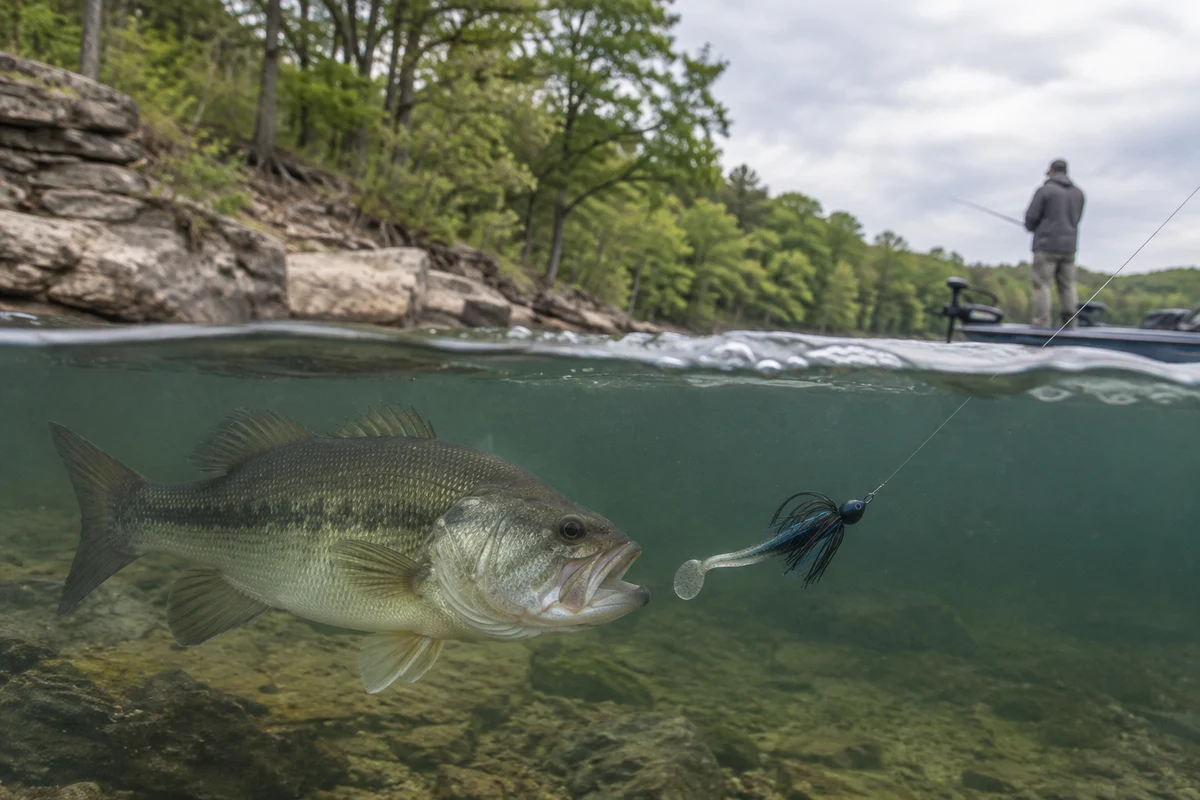
Choose a lure that matches the cover and lets you maintain control. A soft plastic is versatile and can be fished slowly near cover. A spinnerbait or similar moving lure can help search open lanes and edges. A crankbait covers water while moving, but its hooks can snag vegetation or wood. You do not need every color or shape; use a few options that you can fish confidently.
Start with a simple decision:
- Thick weeds or snag-prone cover: Try a weedless soft plastic and make deliberate casts into openings or along the edge.
- Open bank or scattered cover: Use a moving lure to search, then follow up with a slower bait where a fish might have missed or ignored it.
- Clear, calm conditions or visible fish: Reduce disturbance, cast beyond the target, and bring the lure past it rather than dropping it directly on top.
- Stained water or low light: A lure that creates vibration or a visible profile may be easier for fish to locate, but experiment with speed and depth.
For a soft plastic, allow it to sink on a controlled line, then move it with small lifts, drags, or pauses. Watch the line as it falls. A sudden jump, sideways movement, or unexpected slack can signal a bite, but wind and current can also move line. Reel in slack and set the hook with a firm, controlled motion suited to your tackle; avoid an exaggerated swing that could send a lure toward someone nearby.
With a moving lure, keep a steady retrieve at first. If it contacts weeds or bumps cover, pause or change direction when safe and practical. A strike may happen during that change. Vary one factor at a time—retrieve speed, depth, or angle—so you can learn which adjustment mattered. Our overview of early-season lipless crankbaits discusses one search-lure category; seasonal usefulness depends on local water and conditions.
How should you adjust to weather and season?
Bass activity and location vary with temperature, daylight, spawning cycles, forage, and local conditions. A calendar date is only a rough guide: a shallow pond and a deep reservoir in the same region may behave differently. Consult local fisheries information where available, and pay attention to current water conditions rather than assuming a universal seasonal schedule.
In cool conditions, fish may be less willing to chase quickly, so a slower presentation and longer pause can be worth trying. As water warms, fish may use shallow cover, but heat can also push them toward shade or depth. During bright conditions, shade and deeper edges can be worth checking; during low light, shallow feeding areas may become productive. Wind can make casting harder while creating useful current or surface movement along a bank.
Change your approach methodically. If a lure passes through a likely area without response, adjust one variable: move deeper, slow down, switch to a more visible profile, or try a different edge. Give each change enough casts to be meaningful, but do not stay stuck when the evidence suggests the fish are elsewhere. Record the date, general weather, water clarity, location type, and what you tried. A few notes are more useful than a vague memory of “they were biting.”
What does a bass bite feel like, and what should you do?
A bite may feel like a tap, added weight, a brief pull, or nothing obvious at all. Beginners often mistake bottom contact or vegetation for a fish; that uncertainty is normal. Keep light contact with the lure and watch the line. If it moves in a way that does not match your retrieve, take up slack and respond with a controlled hook set.
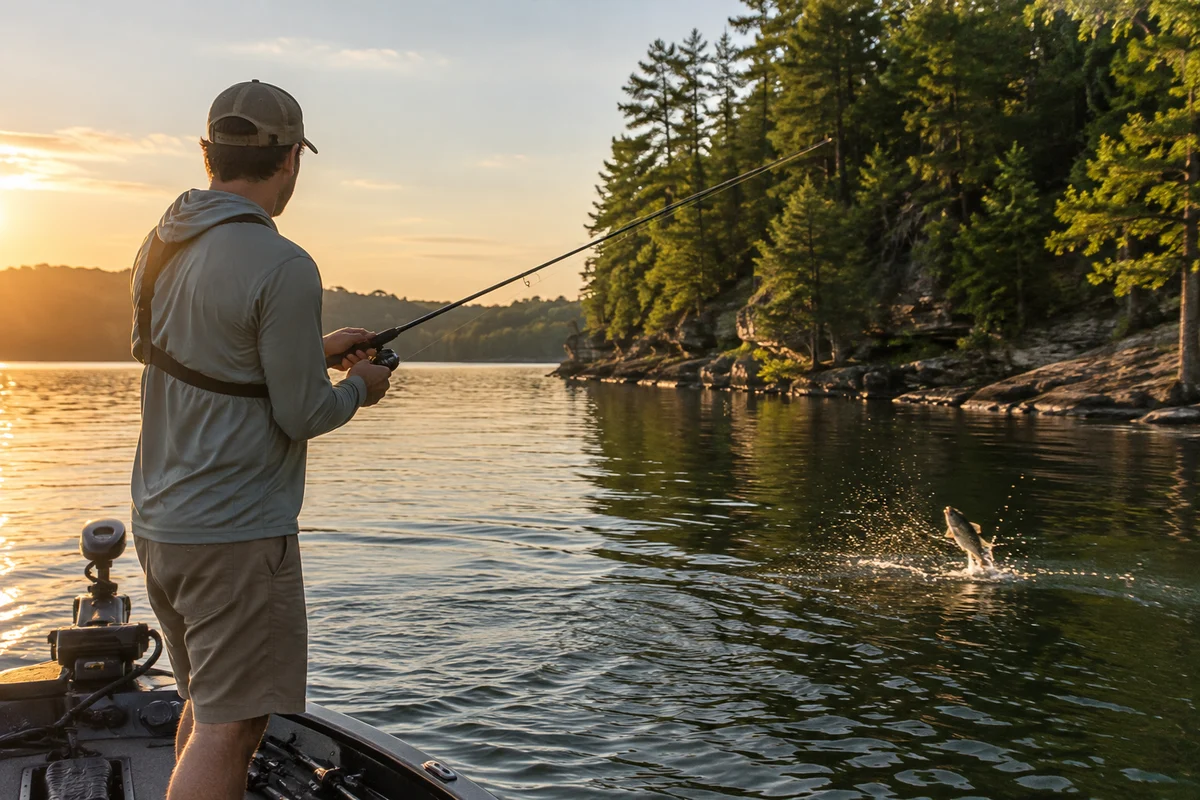
Once hooked, keep the line taut without forcing the fish. Use the rod to absorb movement, guide the bass away from immediate snags when possible, and avoid wrapping line around your fingers. If a fish jumps, maintaining controlled tension can reduce slack. Do not lift a large fish by the line alone.
For catch-and-release, wet your hands before handling the fish, support its body, and minimize time out of the water. Keep fingers away from the gills and eyes. Remove the hook with pliers when it can be done safely; if a hook is deeply embedded and removal risks serious injury, follow local fisheries guidance rather than causing additional harm. Photograph the fish quickly if you choose, then return it gently and allow it to swim away under its own power. If keeping fish is legal and part of your plan, promptly follow food-safety guidance and local requirements.
How can you make each trip more productive?
Set a modest goal: learn one shoreline, practice accurate casts, or compare two presentations. Beginners can lose time changing lures constantly. Instead, use a short rotation: one lure to search, one slower option to investigate likely cover, and a third only when conditions suggest a specific alternative. Retrieve each in a way that keeps it in the intended zone.
Accuracy often matters more than adding another box of tackle. Practice casting toward a safe, open target before fishing around docks, branches, or other anglers. Check behind you before every cast, and never cast over people or into areas where someone could be hidden. When fishing from a boat, communicate before moving and observe navigation rules.
Before leaving, inspect your line, hooks, and knots. Pack out discarded line and soft plastics; they can injure wildlife. Avoid trampling vegetation, follow access rules, and leave gates and shorelines as you found them. If you fish a new place, check whether access is public and whether special restrictions apply.
A short log can turn trial and error into learning. Note what changed when a bite occurred: depth, cover, retrieve, light, wind, and time. Do not treat one fish as proof of a universal pattern. Repeat a promising approach on another outing and see whether the conditions resemble the first.
What rules should you check before fishing?
Fishing regulations are local and can vary by state, province, waterbody, species, and season. Check the current rules from the relevant fish and wildlife agency before your trip. Confirm license requirements, open seasons, size and creel limits, gear restrictions, special-water rules, and any boating or access rules. Regulations can change, and a general article cannot substitute for the current official rulebook.
Also consider conditions that affect safety: weather, water temperature, currents, algae advisories, and boat traffic. Tell someone where you are going if fishing alone, carry a charged phone where service is available, and use appropriate flotation on the water. Responsible preparation is part of learning the sport, not an advanced step.
A beginner’s plan for the next outing
Pick one accessible, legal location and give yourself enough time to observe it. Bring a manageable spinning setup, a soft plastic, and one moving lure that suits the water. Start at a visible edge or depth change, make controlled casts, and note whether the fish respond to a moving or slower presentation. If nothing happens, alter one variable and keep exploring rather than assuming the place has no bass.
Bass fishing rewards patience, observation, and small adjustments. You will have quiet days as well as memorable ones, and both can teach you something. Keep the first trips simple, handle fish carefully, and let local rules and conditions guide your choices.
Frequently asked questions
What is the easiest setup for bass fishing for beginners?
A balanced spinning rod and reel is a forgiving starting point. Match line to the reel and cover, follow the maker’s recommendations, and choose a small set of lures you can cast and retrieve confidently.
What is a good first lure for bass?
A soft plastic worm or stick-style bait is versatile around many kinds of cover. A spinnerbait or other moving lure can help search open water; choose based on the cover and conditions rather than a guaranteed color or style.
Where should a beginner look for bass?
Start by exploring edges and changes such as weed lines, points, shade, docks, and depth transitions. These are useful search clues, not guarantees, and fish positions vary with water, season, and local conditions.
Do I need a fishing license to catch bass?
License requirements and bass regulations depend on location, age, waterbody, and other factors. Check the current rules from the relevant local or state fish and wildlife agency before fishing.
Sources & further information
Consult these primary sources for current regulations, technical information and local guidance.