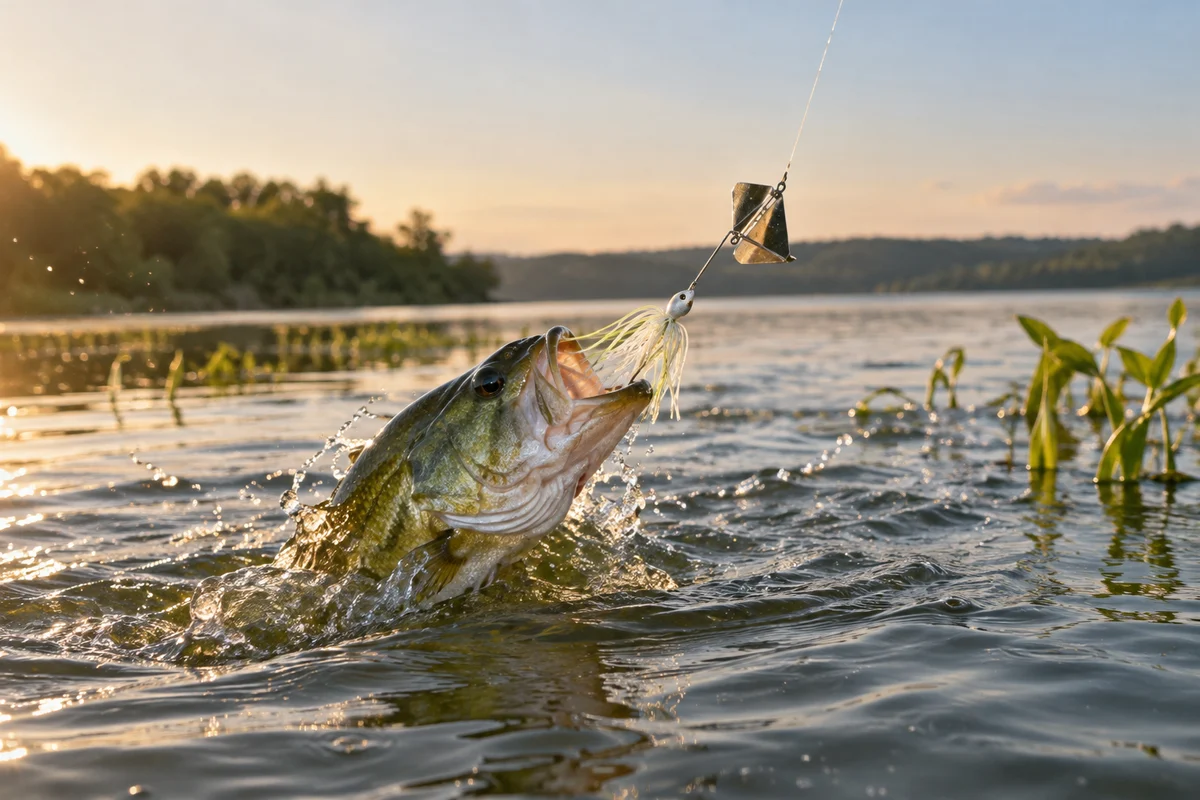
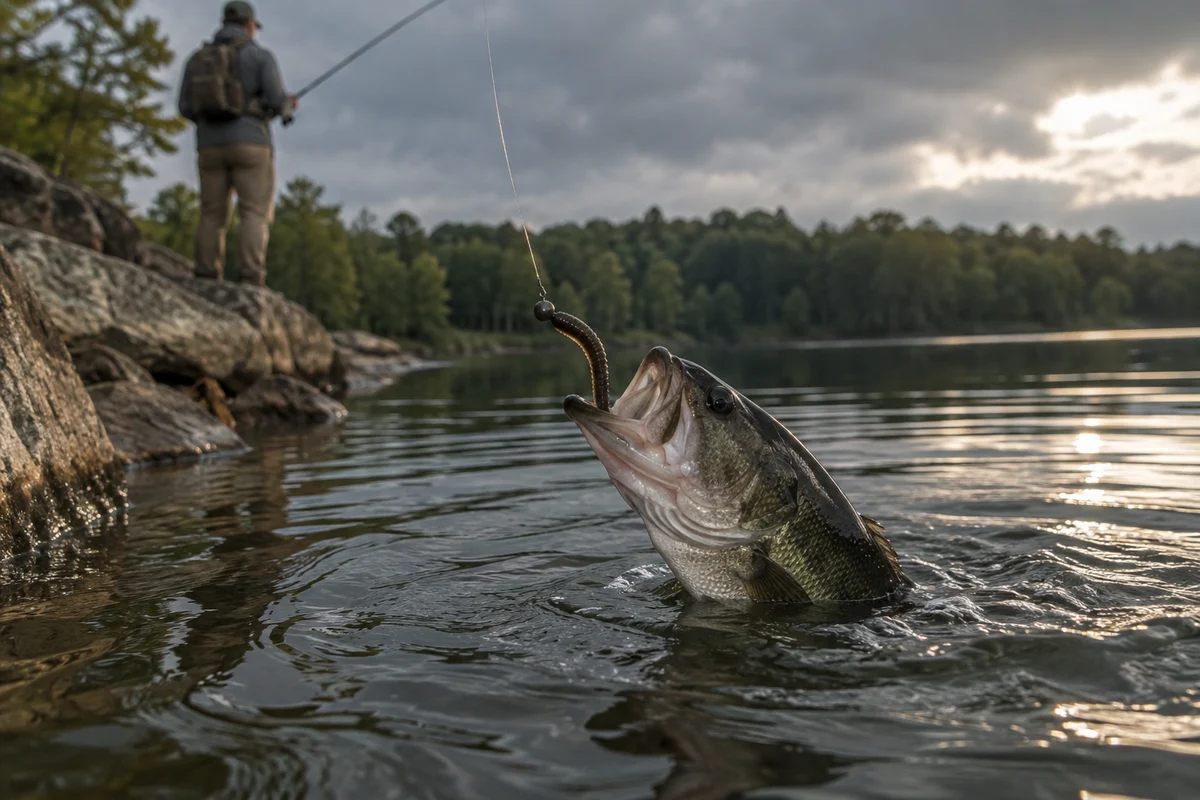
4 Plastic Worm Rigs for Bass That Every Angler Should Know
Four basic plastic-worm presentations cover a surprising range of bass situations. Learn how Texas, wacky, Carolina, and neko rigs differ, when to choose each, and how to keep the setup practical and snag-aware.
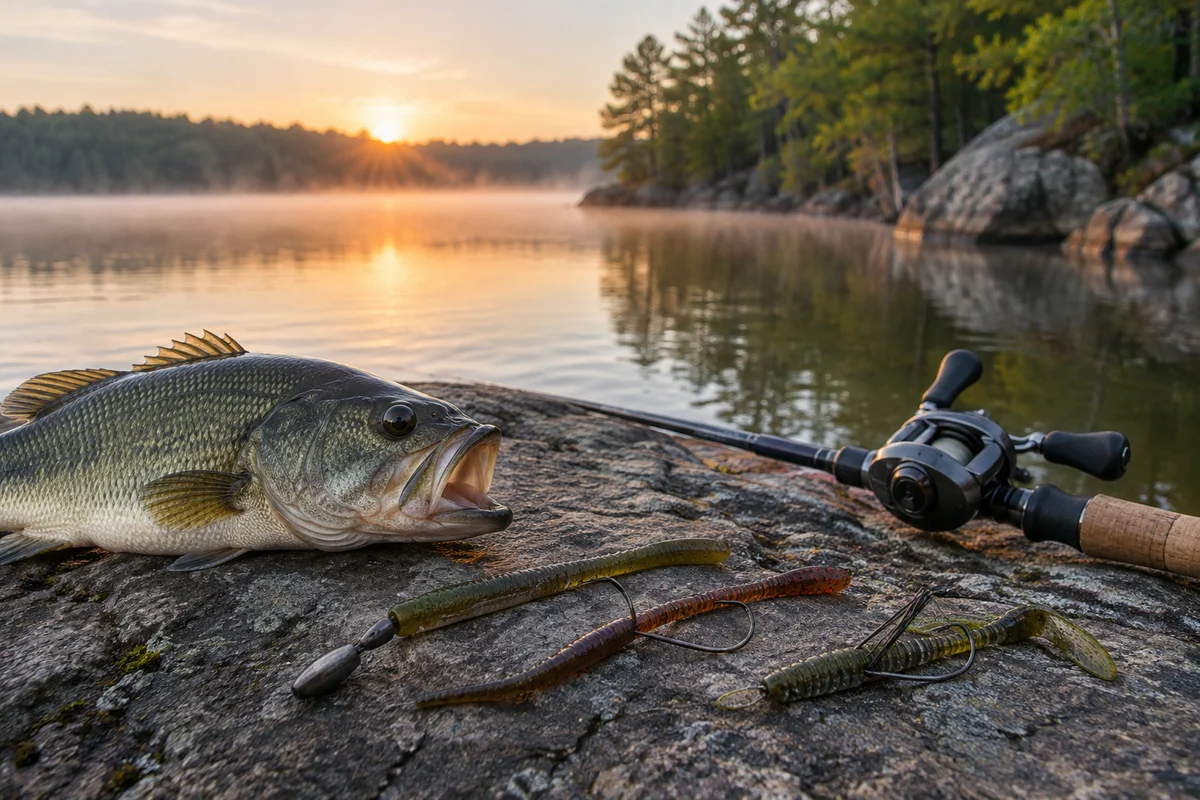
Plastic worm rigs for bass are easiest to choose when you start with the cover, depth, and fall you want—not a crowded tackle tray. A Texas rig slips through vegetation and wood, a wacky rig gives a worm a distinctive flutter, a Carolina rig separates bait from weight, and a neko rig adds a controlled nose-first fall. Each can catch fish, but none is universally best.
The right setup also depends on local rules, the fishery, your tackle, and the particular worm. Hook sizes and weights are not one-size-fits-all: match them to the bait and conditions, and check manufacturer guidance. If you are building a broader approach, our freshwater bass fishing hub connects this guide with other bass techniques.
Quick comparison: four plastic worm rigs
| Rig | Where it excels | How it falls or moves | Main trade-off |
|---|---|---|---|
| Texas | Weeds, brush, wood, and mixed cover | Usually head-first; weight may be pegged or free | Can be less visible or subtle than exposed-hook presentations |
| Wacky | Open water, sparse cover, docks, and edges | Worm bends and flutters around its middle | Exposed hook can catch cover; fall can be slow |
| Carolina | Broad, deeper, or relatively open bottom | Weight leads while a leader trails the worm | More components and a less direct feel than a simple rig |
| Neko | Bottom-oriented fishing around scattered cover | Weighted end drops first while the tail moves | Nose weight and exposed hook need care around snags |
Treat this as a starting point, not a ranking. A lightly weighted Texas rig can fall slowly; a wacky rig can be weighted; and leader length, bait shape, line, and current all alter what the fish see.
1. Texas rig: the adaptable cover rig
A Texas rig typically uses a soft-plastic worm, an offset or suitable worm hook, and a bullet-shaped weight that slides on the line. The hook point is tucked into or against the bait, reducing exposed points that can grab weeds. That makes it a useful choice when a cast must pass through vegetation, around limbs, or beside other cover.
Thread the worm straight onto the hook so it hangs naturally rather than corkscrewing. A crooked bait can twist line and move unnaturally. Many anglers leave the weight free to slide; others use a stopper to keep it close to the worm. A free weight can move independently and may be quieter or more natural in some situations, while pegging keeps the weight and bait together when pulling through thick cover. Neither arrangement is a universal rule.
Cast beyond the target when practical, let the rig sink, then work it with small lifts, short drags, or pauses. Pay attention during the fall: a sudden stop or an unexpected change in line movement can signal contact or a bite. Avoid striking at every touch; first maintain control and determine whether the line is moving in a way that suggests a fish. Keep the hook point protected while traveling through cover, but ensure the bait can collapse enough for a sound hookset.
Choose a weight that reaches the intended depth without making the worm crash through the water. In wind, current, or dense cover, more weight may improve control; in shallow, calm water, a lighter setup can preserve a slower fall. For seasonal alternatives that cover water with a different profile, see how to choose a spinnerbait for bass.
2. Wacky rig: a slow, visible fall
The wacky rig is simple: hook a soft stick-style worm near its midpoint so both ends remain free. As it sinks, the ends pulse and flutter. That action can be useful around docks, open pockets, sparse vegetation, or a visible target where the fish can inspect a slowly falling bait.
A small O-ring or purpose-made bait band can hold the worm and reduce tearing, though it does not make soft plastic indestructible. Position the hook so the bait stays balanced. A hook designed for this presentation can help, but select tackle appropriate to the bait, cover, and fishery rather than assuming one model fits every case. In snag-prone places, a weed guard may help, but it can also change how readily the hook point clears the bait.
Let the worm fall on a controlled line. Slack can help it move freely, but watching the line is important because a bite may happen before the bait reaches bottom. If nothing happens, make a small lift or shake, pause, then retrieve and cast to another likely target. The method is often less effective when a fast, bottom-hugging presentation is needed, and its exposed hook can collect vegetation or hang in wood.
Wacky rigs are not limited to one season. Fish activity, water clarity, and local conditions matter more than a calendar label. When fish are responding to a quicker, more horizontal search bait, compare this slower approach with early-season lipless crankbait choices.
3. Carolina rig: a weight-led bottom search
A basic Carolina rig places a sliding sinker on the main line, followed by a bead if desired, a swivel, a leader, and a hook carrying the worm. The weight contacts the bottom while the bait trails behind on the leader. This separation gives the worm room to move as the weight is dragged across relatively open bottom.
The leader length changes the presentation. A shorter leader keeps the bait closer to the weight and can make the rig easier to control; a longer one gives the worm more separation but can be harder to cast and manage. Start with a manageable length suited to your rod, casting space, and bottom conditions, then adjust based on how well you can feel and control the rig. There is no single ideal length for every lake.
Make a cast, let the weight settle, then sweep or drag it steadily while maintaining enough contact to notice changes in bottom texture. Pause when the rig reaches an edge, transition, or other likely holding area. Avoid snapping it aggressively through weeds or timber, where the weight and leader can tangle. A Carolina rig is most at home on clearer, more open bottom; it is usually not the first choice for dense vegetation.
The rig can help anglers cover a broad area methodically, but it is not a substitute for identifying useful structure. Learn to distinguish a firm bottom from softer material and note changes in depth or contour. For another slow worm presentation built around bottom contact, compare it with fishing a 10-inch worm.
4. Neko rig: a nose-weighted finesse option
A neko rig places a small weight in one end of a soft-plastic worm and hooks the bait farther up its body, commonly with the point exposed or lightly guarded. The weighted end sinks first while the tail stands or moves above it. This makes a compact, bottom-oriented presentation that can be useful around isolated targets and relatively light cover.
Use a purpose-made insert weight or another suitable, securely seated option intended for fishing. Avoid improvised materials that can damage the bait, line, or environment. A band around the worm can provide a convenient hook point and help reduce tearing. Make sure the weight does not fall out during the cast, and check the bait periodically for damage.
Let the rig reach bottom, then shake it subtly in place or move it a short distance before pausing. The goal is controlled movement, not constant agitation. If the bait repeatedly wedges into cover, move to a more weedless presentation or change the angle of approach. The neko rig can be a useful middle ground between a stationary finesse bait and a traditional Texas-rigged worm, but exposed tackle still has limits around brush and thick grass.
Choose by conditions, then adjust one variable
Use this decision framework before changing several parts at once:
- Dense cover? Start with a Texas rig and keep the hook point protected. If the weight hangs up, consider a different weight shape, a lighter option, or a new casting angle.
- A visible target in open or sparse cover? Try a wacky rig and let the fall do the work. Watch the line as the bait sinks.
- Open bottom and a broad area to search? Use a Carolina rig to maintain bottom contact while the worm trails behind the weight.
- A specific bottom target and a slower, compact presentation? Test a neko rig, then switch if its hook or weight catches too often.
- Cannot feel or control the bait? Adjust weight, line management, or casting angle before concluding the fish are not interested.
Change one factor at a time—weight, hook position, leader, or retrieve—so you can tell what improved control. Keep casts away from people and wildlife, use tackle responsibly, and dispose of damaged soft plastics and line properly. Fishing regulations differ by location; consult the relevant local authority for seasons, access, and gear restrictions.
Common rigging mistakes to avoid
- A bent worm: Re-rig it straight; a spinning bait is harder to control and may look unnatural.
- Too much weight: A fast, hard landing can undermine a slow presentation. Use only enough weight for the depth and conditions.
- Ignoring the line: Watch for movement or an unexpected pause during the fall, especially with wacky and lightly weighted rigs.
- Forcing one setup everywhere: Switch when cover, bottom, or snag frequency calls for another presentation.
- Leaving damaged plastic behind: Retrieve scraps and line whenever possible, and follow local disposal guidance.
The practical takeaway
Start with a Texas rig for cover, a wacky rig for a deliberate flutter, a Carolina rig for a weight-led bottom search, and a neko rig for a compact, nose-first fall. These are flexible categories, not fixed recipes. Match components to the worm and conditions, make controlled adjustments, and let the structure of the fishery—not a supposed universal best rig—guide the next cast.
Byline: ODU Magazine Staff
Frequently asked questions
Which plastic worm rig is best for beginners?
A Texas rig is a versatile starting point, especially around cover. Rig the worm straight and use only enough weight to control its fall.
Can you fish a wacky rig around weeds?
Yes, particularly around sparse vegetation and edges, but its exposed hook can collect weeds. A weed guard or a more weedless rig may suit thicker cover better.
What is the main difference between Texas and Carolina rigs?
A Texas rig places the weight close to the worm, often with the hook point protected. A Carolina rig separates the weight from the worm with a leader, letting the bait trail behind.
When should I use a neko rig?
Try it around a specific bottom target when you want a compact, nose-weighted presentation. Switch if the exposed hook or insert weight snags repeatedly.
Sources & further information
Consult these primary sources for current regulations, technical information and local guidance.