Food Plot Trees: Choose Species for Deer, Soil, and Season
Well-chosen trees can complement a food plot with browse, mast, and long-term habitat structure. Start with site conditions and native species, then protect young plants and plan for years of growth.
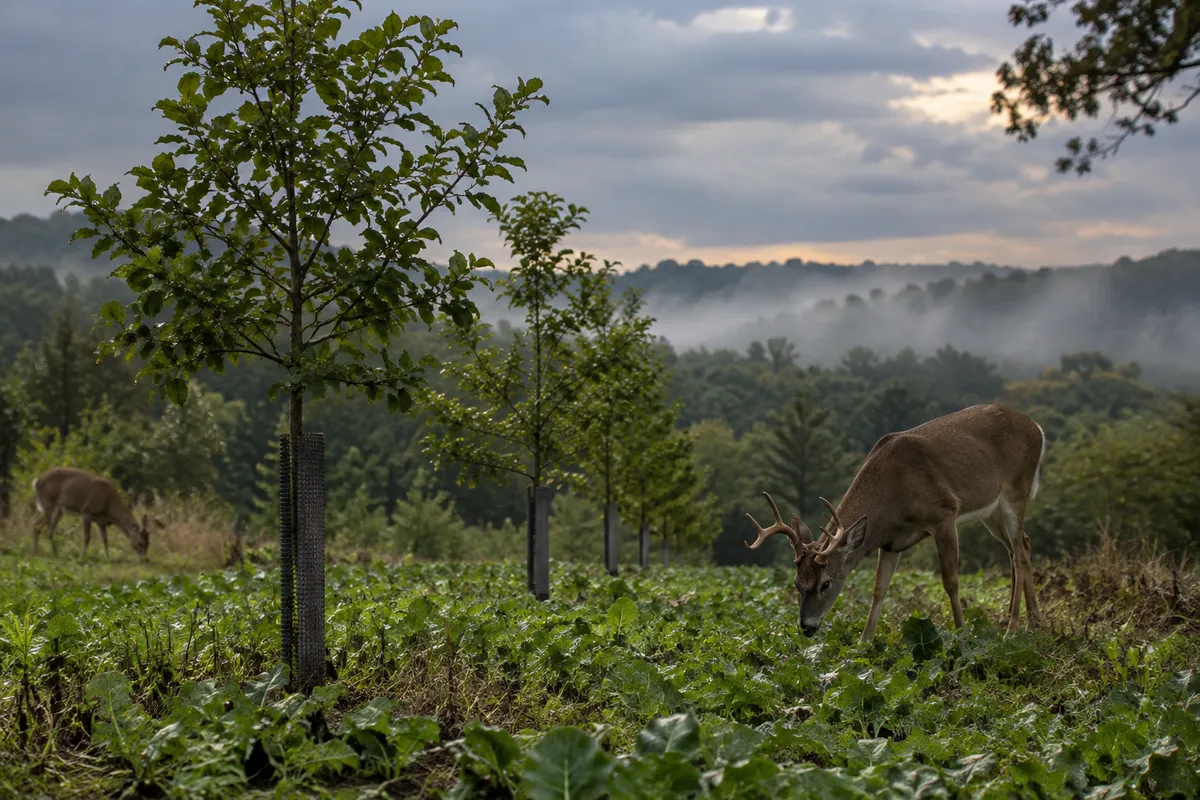
Food plot trees can make a hunting property more useful through seasons when an annual planting is dormant, but they are not a quick substitute for good habitat planning. Trees may offer browse, fruit or nuts, shade, and travel cover; what they provide depends on species, age, local climate, and site conditions. The best choices are usually locally native or well-adapted trees that can thrive without conflicting with the plot’s sunlight and soil needs.
Before ordering seedlings, identify the habitat goal. Are you trying to add soft browse, future mast, screening, or a mix? Then assess drainage, sunlight, soil texture, and nearby vegetation. A short site assessment can prevent a costly row of trees that struggle or shade out the forage you intended to grow.
What can trees add to a food plot?
A food plot is typically managed for herbaceous forage, while trees contribute a different structure and timeline. Young shoots and leaves can provide browse where deer have access; fruit and nuts may become seasonal foods once trees mature. Trees can also offer screening or edge cover, although dense planting can reduce sunlight and make a plot less productive.
These benefits are conditional. A newly planted seedling will not provide mature mast right away, and heavy browsing can prevent it from establishing. Fruit and nut production can vary with weather, tree age, pollination, and other factors. Treat trees as a long-term habitat investment rather than a guaranteed food source for a particular season.
For broader property planning, browse the hunting and archery hub and consider how a planting fits with access, cover, and existing habitat. If you use cameras to understand activity around a plot, see this overview of PlotWatcher Pro versus a basic trail camera; the tools differ, and neither replaces checking local rules and respecting privacy.
Start with the site, not the catalog
Walk the proposed planting area in more than one season if possible. Note where water stands after rain, where the ground dries quickly, and where existing trees cast shade. A soil test through a local extension service can help determine pH and nutrient conditions; recommendations vary by crop and region, so use local guidance rather than a universal amendment recipe.
Also consider the plot’s shape and orientation. Trees along a boundary may provide a transition or screen, while a cluster can create a small habitat island. Keep enough open sunlight for the forage you intend to grow. Avoid planting where roots or future canopy will interfere with roads, utility lines, drainage, or neighboring property.
| Site condition or goal | Questions to answer | Practical direction |
|---|---|---|
| Wet or seasonally flooded ground | Does water remain after ordinary rain? | Favor species documented for local wet conditions; confirm with a state forestry or extension resource. |
| Dry, exposed ground | Is there persistent summer stress or shallow soil? | Choose locally adapted trees and protect seedlings from competition while they establish. |
| Mast objective | Which native nuts or fruits occur naturally nearby? | Use regional species suited to the site; expect production to take time and vary by year. |
| Browse objective | Is there enough sunlight for young growth, and can plants be protected? | Consider a small trial planting and monitor browsing and survival. |
| Screening or cover | Will the mature canopy shade the plot or obstruct access? | Place trees deliberately at edges, with room for their mature size. |
This is a framework, not a species prescription. Soil, climate, and wildlife regulations are local. A state forestry agency, wildlife agency, or university extension office can help narrow suitable species for your county.
Choosing species: native first, purpose second
Begin by observing healthy trees in nearby woods, field edges, and similar soils. Native trees are adapted to local conditions and support local ecological relationships, but “native” alone does not guarantee a match for a specific wet, dry, sunny, or shaded site. Confirm both regional suitability and the planting objective.
For mast, investigate native oaks, hickories, or fruit-bearing trees that naturally occur in your area. Different species mature and produce on different schedules, and some require compatible pollination conditions. For browse, consider whether the species produces accessible young growth and whether it can tolerate the local browsing pressure. For screening, look at mature form and spacing rather than the size of a nursery seedling.
Avoid selecting a tree solely because a catalog promotes it for deer. Ask for the botanical name, regional suitability, mature size, light and moisture needs, and whether it is native or a cultivar. Check state guidance before introducing nonnative plants; some are invasive or restricted. The USDA Plants Database is a useful starting point for plant profiles and distribution, but local experts can interpret a species’ suitability on your particular ground.
A hybrid or named cultivar may have specific characteristics, but claims and availability should be verified with its producer. For background on a branded tree topic, see our evergreen overview of Mossy Oak Nativ. Do not assume a name or marketing description guarantees performance in your region.
Planting and protecting young trees
Follow the nursery’s instructions and local planting guidance. In general, handle roots carefully, plant at the appropriate depth, firm soil around the roots, and water during establishment when rainfall is insufficient. Mulch can help conserve moisture and suppress competing vegetation, but keep it from piling against the trunk. Exact timing and care depend on species and local conditions.
Protection is often as important as species choice. Deer can repeatedly browse or rub young trees, and small seedlings may also face competition from grass, weeds, and rodents. Tree shelters, cages, or fencing can reduce some risks, but they must be sized, installed, and maintained appropriately. Check them periodically for damage, trapped debris, and vegetation growing through or around them. Do not assume a shelter can be left unattended indefinitely.
Plant a modest trial before committing to a large order. Record the species, planting location, and survival through the first growing seasons. If seedlings fail, look for a cause—water stress, poor drainage, competing vegetation, browsing, or planting damage—before replacing them with the same stock. This simple monitoring makes the next planting more informed without pretending that a small trial predicts every future result.
Fit trees into a whole-property plan
Think in layers: annual forage, perennial openings, shrubs, mature trees, and travel cover. The goal is a resilient mix, not maximum tree density. Keep access routes safe and avoid creating a setup that funnels people or wildlife into an unsafe shooting direction. Where hunting is part of the plan, follow local seasons, access rules, and firearm safety requirements; property improvements do not override those obligations.
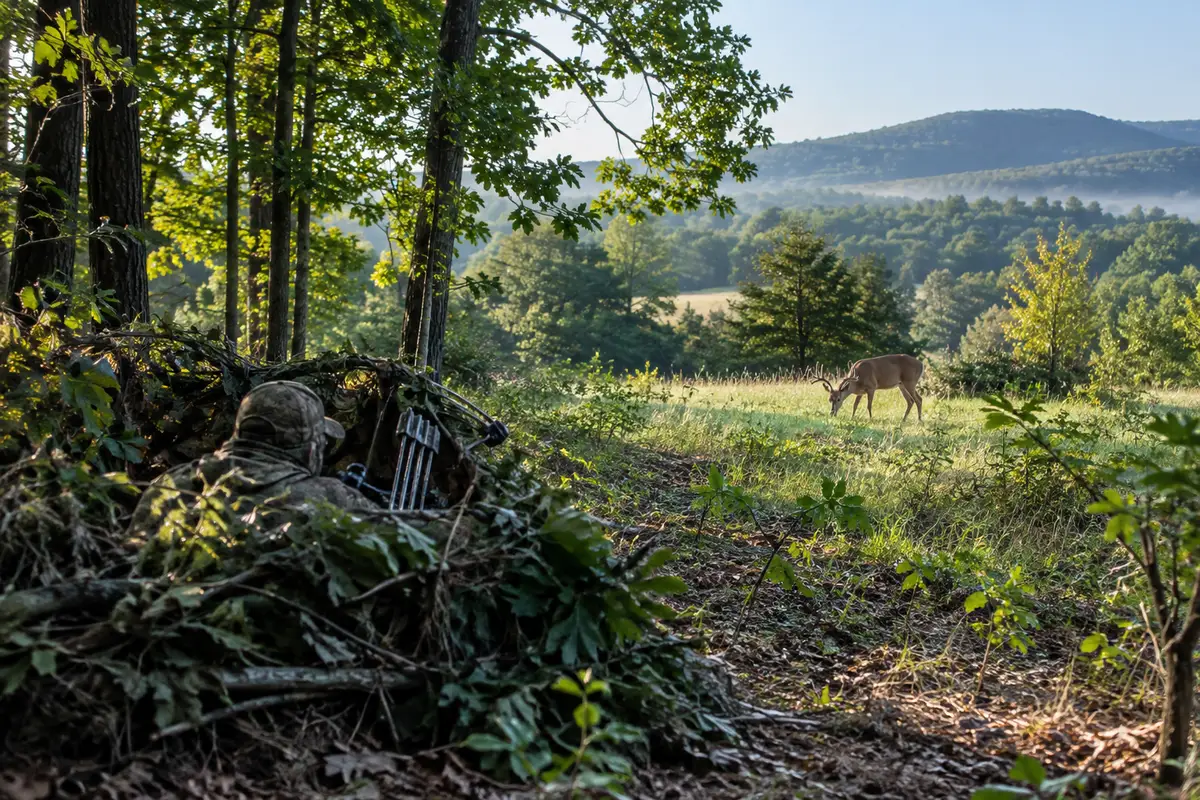
A rangefinder can support ethical distance judgment in the field, but it is only one part of preparation. Our guide to how to use a rangefinder covers practical considerations without replacing safe hunting decisions. For concealment and habitat context, explore natural ground blinds for deer hunting and evaluate whether a blind placement respects property boundaries and a clear, safe backdrop.
A simple decision checklist
- Define the purpose: browse, mast, screening, or habitat diversity.
- Map the conditions: sunlight, drainage, soil, slope, and existing canopy.
- Verify the species: botanical identity, regional suitability, mature size, and any invasive-plant concerns.
- Plan spacing and protection: account for growth, forage sunlight, deer pressure, and maintenance access.
- Start small and observe: track survival and adjust using local expert advice.
Food plot trees work best when they are chosen for the land rather than a generic promise. Match species to the site, protect young plants, and give the planting time. The payoff is not a guaranteed feeding pattern; it is a better-planned habitat component that can complement openings and existing woods over the long term.
Frequently asked questions
What are the best trees to plant around a deer food plot?
There is no single best choice. Match locally suitable native species to your soil, drainage, sunlight, and goal, then confirm selections with a state forestry or extension resource.
How long does it take food plot trees to benefit deer?
It varies widely by species, starting size, site, and browsing pressure. Young trees may offer some browse before they produce mature mast, which can take years; do not count on a specific timeline.
Should trees be planted inside or around a food plot?
Often, placing trees at edges or in separate clusters preserves sunlight for forage. Consider mature canopy, access, and the plot’s orientation before planting.
How can I keep deer from damaging young trees?
Use suitable cages, shelters, or fencing and maintain them regularly. Protection needs depend on local browsing pressure, tree size, and the design of the barrier.
Sources & further information
Consult these primary sources for current regulations, technical information and local guidance.