How to Use a Rangefinder for More Confident Hunting
A rangefinder can clarify distance, but only when you use it deliberately and understand what its reading does—and does not—tell you. This field guide covers setup, reliable readings, terrain, practice, and ethical limits.
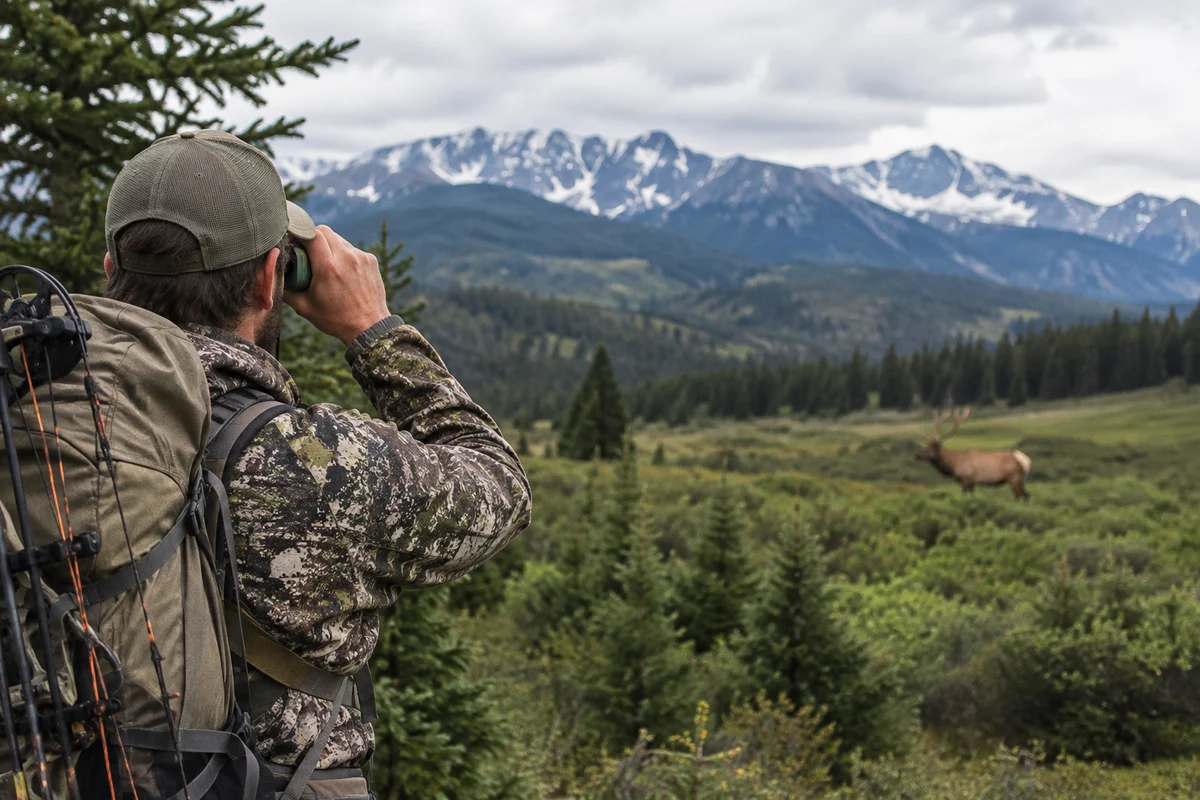
A rangefinder is most useful when it answers a specific question: how far away is that landmark, trail crossing, or animal? Learning how to use a rangefinder means more than pointing a device and reading a number. You need a clear target, a steady view, an understanding of the display, and the judgment to treat the result as one piece of information—not permission to take a shot. This guide focuses on practical, safe use for hunting and outdoor navigation. Follow the device manual and local hunting rules, and never let a range reading replace a sound, ethical decision.
What a rangefinder measures
Most handheld hunting rangefinders send a pulse of light toward a target and estimate distance from the returning signal. The device reports the strongest or most useful return it detects, depending on its design and selected mode. A clean, broad surface may produce a reliable reading; a thin branch, brush, rain, or a moving target can complicate the return.
Some models offer an angle-compensated or “horizontal distance” mode. On an incline, that figure estimates the horizontal component of the distance rather than the full line-of-sight distance. That can be relevant when a hunter’s equipment and practiced judgment are based on horizontal distance. It is not a universal correction for every situation: read the manual, know which mode is active, and do not assume every number on the screen means the same thing.
A laser rangefinder does not identify an animal, assess whether it is legal to harvest, predict its movement, or determine whether a shot is safe. It can also fail to return a reading. Treat uncertainty as a reason to pause, not as a reason to guess.
Set up before you need a reading
Read the manual at home, especially the sections on power, focus, display brightness, measurement modes, and warnings. Confirm how the unit indicates yards or meters and how it signals a weak or missing return. If the device has multiple modes, learn how to select and verify the intended one without looking away from your surroundings for long.
Check the battery before heading out and carry a replacement if the manufacturer recommends it. Clean the lenses only as directed; grit and rough fabric can scratch optical surfaces. A neck strap or secure pocket helps keep the device accessible without risking a drop. In cold or wet weather, follow the manufacturer’s storage and operating guidance rather than assuming the device is weatherproof.
If you wear glasses, determine whether the eyecup and eye relief work comfortably with them. Adjust diopter or focus controls, if present, according to the manual. A clear image makes it easier to place the aiming point on the intended surface.
How to use a rangefinder step by step
- Stop and scan safely. Before raising the device, confirm that the area and direction are safe. Keep attention on your surroundings and do not point the laser toward people, vehicles, aircraft, or reflective surfaces. Follow the product’s laser-safety warnings.
- Choose a specific target. Select a stable object with a clear outline: a tree trunk, rock face, or visible landmark. Avoid aiming through branches or at a narrow object when a larger nearby surface is available.
- Brace your position. Stand or sit steadily, support your elbows where practical, and hold the unit firmly. A small wobble can shift the aiming point, particularly at greater distances.
- Center the aiming mark. Place the reticle or aiming point on the target itself, not on the background beyond it. Make sure the target is large enough in the viewfinder for the device’s targeting system.
- Take the reading. Press the measurement control as instructed. If the display is blank, inconsistent, or shows an error, reposition and try again rather than inventing a distance.
- Confirm important distances. Take another reading, ideally from a stable stance and on a clearly defined surface. If readings differ, check for intervening brush, movement, poor visibility, or an accidental change of mode.
- Interpret the result. Verify units and whether the display is showing line-of-sight or angle-compensated distance. Use the reading as information, then make an independent safety and legality assessment.
Build a dependable distance reference
Range landmarks before they matter. From a safe, stationary position, measure several fixed features you can recognize later: a tree at a trail edge, a stump near a field boundary, or a distinctive rock. If you hunt from a stand or blind, learn distances to landmarks across the area without pointing toward people or occupied locations. The purpose is to reduce uncertainty, not to turn the device into a substitute for careful observation.
A simple field note can record the landmark, approximate range, and the place from which you measured it. Distance changes with your position, so a reference is useful only when you are at or near the same spot. Recheck when the setup or viewpoint changes.
| Situation | Useful approach | Common source of error |
|---|---|---|
| Broad, stationary landmark | Aim at a distinct central surface and repeat the reading | Reticle drifting onto background |
| Brush or clutter between you and target | Seek a clear opening or a larger unobstructed landmark | Device returning a nearer branch or an uncertain surface |
| Uphill or downhill terrain | Verify the selected mode and understand its displayed value | Confusing line-of-sight distance with horizontal distance |
| Low light or poor visibility | Stabilize, identify the target clearly, and stop if uncertain | Misidentification or an unreliable return |
| Moving animal | Do not rely on a rushed reading; wait for a safe, clear opportunity | Movement, poor target placement, or a changing distance |
Understand angle compensation and its limits
On a slope, the straight-line path from you to a target is longer than the horizontal distance between the two points. Some rangefinders can display an angle-adjusted figure, but features and terminology differ by model. Check the manual to learn what the mode calculates and how it labels the result.
An angle-compensated reading is not a guarantee of a safe or ethical shot. It does not account for every factor that matters, including your position, the target’s movement, obstructions, visibility, your equipment, or your own demonstrated proficiency. If you are unsure which figure to use—or whether you can make a responsible shot—do not take it. Practice with your own equipment in controlled conditions and within lawful, safe settings.
Practice without creating bad habits
Practice by ranging fixed objects at varied distances and angles in a safe area. Compare repeated readings, note how bracing affects steadiness, and learn how the display changes when you switch modes. If you use the device from a blind or elevated position, practice from that position before hunting, with no person or animal in the line of sight.
Practice also means learning when not to use the device. If raising it distracts you from nearby hazards, obscures your view, or delays a decision, lower it. Never use a rangefinder while moving through unsafe terrain or while crossing a road. During a hunt, keep the muzzle of any firearm pointed in a safe direction and follow all firearm-handling rules; the rangefinder does not change those responsibilities.
For broader preparation, see our guide to aiming small and our overview of natural ground blinds for deer hunting. Those topics complement careful observation and setup, but neither replaces range practice or local regulations. More hunting and archery coverage is collected in the hunting and archery hub.
Troubleshooting an unreliable reading
If the rangefinder does not return a reading, first check the basics: confirm power, verify the unit is not in an unintended mode, and inspect the view for obstruction. Hold still, aim at a larger target, and try again. In some conditions—such as rain, fog, dense vegetation, or a target with a poor reflective surface—the instrument may struggle. Exact performance depends on the model and conditions, so consult the manufacturer’s instructions rather than assuming a particular maximum range applies in the field.
If repeated readings conflict, do not select the number that best suits your plans. Reassess the target, stabilize your position, and measure a clear landmark. If uncertainty remains, treat the distance as unknown. A device that is damaged, fogged internally, or behaving inconsistently should not be trusted until the manufacturer or a qualified service provider advises you.
Keep the decision ethical and lawful
A measured distance is not a judgment about whether an animal may be taken. Identify the species and confirm that the season, location, method, and any other applicable requirements are legal. Regulations vary by jurisdiction and can change; consult the official wildlife agency for the place where you hunt. Respect property boundaries and posted restrictions.
Make decisions within your proven ability and your equipment’s appropriate use, without relying on a universal distance threshold. Consider the target’s position, what lies beyond it, visibility, and whether conditions allow a safe outcome. If any element is uncertain, pass. Responsible hunting includes accepting that a tool cannot remove uncertainty from the outdoors.
A quick field checklist
- Battery and optics checked; manual and display modes understood.
- Target is clearly identified, stationary if possible, and unobstructed.
- Device is braced and aimed at the intended surface.
- Units and angle mode are verified before interpreting the reading.
- A second reading agrees, or the uncertainty is treated honestly.
- The situation is legal, safe, and within your demonstrated ability.
- If any answer is no, lower the device and wait or decline the shot.
A rangefinder works best as a simple measuring instrument used with patience. Learn its controls before the season, build a reference to stable landmarks, and verify readings when they matter. Most importantly, let uncertainty guide you toward caution: the right use of a rangefinder sometimes ends with no shot at all.
Frequently asked questions
Should I use yards or meters on a hunting rangefinder?
Use the units you understand and that match your practice and applicable guidance. Verify the display setting before relying on any measurement.
What does angle compensation mean on a rangefinder?
On some models, it estimates horizontal distance on an incline. The feature and display vary, so read the manual and confirm which value is shown.
Why does my rangefinder give inconsistent readings?
Movement, brush, poor visibility, a small target, or mode confusion can affect results. Stabilize, aim at a clear surface, check settings, and do not guess if readings remain uncertain.
Can a rangefinder tell me whether a shot is ethical or legal?
No. It measures distance only. You must identify the target, follow local regulations, assess safety and conditions, and stay within your demonstrated ability.
Sources & further information
Consult these primary sources for current regulations, technical information and local guidance.