How to Frog Fish for Bass: A Practical Guide to Topwater Strikes
Frog fishing puts a weedless topwater presentation over cover where bass often hide. Learn how to choose a location, work the bait, respond to strikes, and adjust when the bite is slow.
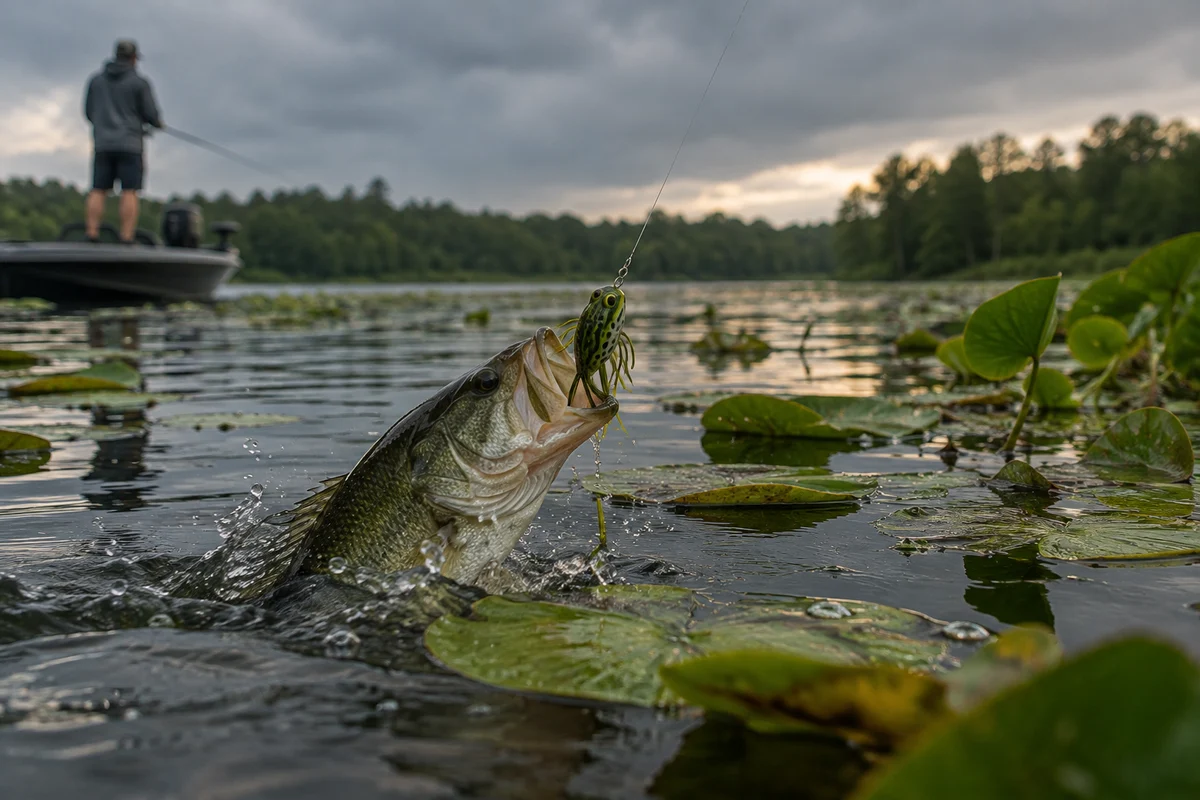
Frog fishing for bass is a way to cover shallow vegetation and other snag-prone places with a topwater lure that can pass over cover more easily than many exposed-hook baits. The key to how to frog fish for bass is not constant action: find promising cover, make a controlled presentation, pause after a strike, and set the hook only after the fish has taken the frog. Conditions and cover vary, so treat each retrieve as information rather than expecting one cadence to work everywhere.
Where frog fishing makes sense
Look for shallow water with matted grass, lily pads, reeds, overhanging vegetation, or scattered openings beside cover. These places can provide shade and ambush points, but a frog is not automatically the best choice wherever weeds appear. In sparse grass, an ordinary topwater or a bait that runs just below the surface may be easier for a bass to find. In dense cover, a weedless frog can travel across the top without dragging a treble-hook lure through every stem.
Start with visible transitions: the outside edge of a mat, a point that projects into open water, a pocket in the vegetation, or a narrow lane between cover and shore. Cast beyond the target when practical, then bring the frog across it. This keeps the lure moving naturally as it reaches the likely holding area and avoids a splash directly on a small opening.
Wind, light, water clarity, and vegetation all affect what you can see and how fish respond. A calm surface makes it easier to watch the frog, while a light ripple can make a subtle presentation less obvious to fish. Bright conditions may make shaded edges worth checking; low light can make broad shallow flats productive. These are starting points, not rules. Follow local regulations and respect access restrictions, wildlife, and sensitive shoreline habitat.
Choose a frog and a setup for the cover
Hollow-body frogs are common for working over weeds because their body shields the hooks during the retrieve. Some are designed to walk side to side with short rod movements; others make a more direct, popping, or splashing action. A walking frog suits open lanes and edges where there is room to move it. A compact, more direct action can help when you need to keep the lure in a small pocket. The shape and hook arrangement differ by model, so inspect the manufacturer’s guidance and check that the hooks are clear of the body after each outing.
Use tackle suited to the cover and the fish you expect, while staying within your ability to cast and control it. A rod with enough backbone to steer a fish away from vegetation is useful, but a setup that is too heavy can make accurate casts and a delayed hookset harder. Choose line and knots according to the rod, reel, lure, local conditions, and manufacturer recommendations. Check line for abrasion, especially after pulling through rough stems or wood.
| Situation | Starting presentation | What to watch for |
|---|---|---|
| Thick surface mat | Move the frog steadily across the mat, then pause at a seam or opening | A bulge or disturbance can signal a fish following beneath the cover |
| Lily pads with open lanes | Walk the frog along pad edges and through gaps | Keep the lure clear of stems and give it room to turn |
| Small pocket or isolated opening | Land near the opening and work the frog in place with short movements | Avoid pulling it out before a fish has time to find it |
| Sparse grass edge | Try a steady walk-and-pause retrieve; compare with a subsurface bait if fish ignore it | Repeated missed strikes may mean the hooks are fouled or the presentation is too fast |
| Open water beside cover | Cover the edge in sections and vary pause length | Notice whether strikes cluster at points, corners, or shade lines |
This is a decision framework, not a guarantee. If a frog repeatedly catches vegetation or cannot be seen and tracked, change the route or lure style rather than forcing the same cast.
Work the frog with controlled movements
A useful starting cadence is a sequence of short rod-tip movements that makes the frog turn or glide, followed by a brief pause. Keep the rod tip low enough to control the line, and use slack-line twitches when the lure needs to pivot instead of being dragged straight toward you. Retrieve slack between movements without pulling the frog out of the strike zone. The exact rhythm depends on the lure and cover; practice beside shore or in clear water so you can see how your particular frog responds.
Make deliberate casts to targets rather than repeatedly fan-casting the same water. Bring the frog across an edge, pause at the opening, and continue through the next likely lane. If a fish follows or swirls without taking it, stop briefly, then give the lure a small movement. A long pause can be useful in a tight pocket, but it can also let the lure drift into weeds. Adjust to what you observe.
Cover water methodically. Work the nearest edge first when approaching a bank so you do not cast over fish close to shore. Then make longer casts toward farther cover. Keep track of where you see baitfish, surface disturbances, or repeated follows; these observations can help you decide which sections deserve another pass.
What to do when a bass strikes
A topwater strike can be startling, and the fish may miss or merely push the frog. Resist the instinct to jerk at the first splash. Keep the rod pointed toward the lure and maintain contact while allowing a short moment for the fish to take it. When you feel the fish’s weight or see the line move away, reel down to remove slack and make a firm, controlled hookset. A premature swing often pulls the frog away before the fish has it; waiting indefinitely can give a hooked fish time to wrap itself in vegetation.
After the hookset, keep steady pressure and guide the fish toward open water. Avoid slack line, which can let the hooks come free. If the fish is in heavy cover, use the tackle appropriately to move it without reckless force. Do not reach into dense vegetation or handle a fish near exposed hooks without first controlling the lure and the fish.
If a strike misses, pause and watch the area. Bass sometimes return to the same spot, but not every swirl means a fish is still there. Make one careful follow-up presentation, perhaps with a slightly different pause or angle. If the frog comes back with grass over the hook points, clear it before casting again; a fouled lure may look active but hook poorly.
Improve the presentation when the bite is slow
Change one variable at a time so you can learn from the response. Try a different retrieve speed, a longer pause, a new casting angle, or a nearby edge with a different amount of cover. If bass follow but do not commit, a smaller or quieter action may help. If the water is choppy or the fish do not seem to locate the frog, a more noticeable action may be worth testing. Color is less important than a clean, visible presentation in the conditions, and there is no universally best color.
A frog is a specialized tool, not a requirement. If fish are holding deeper, the surface is covered in wind-driven debris, or repeated casts produce no signs of activity, change depth or presentation. Anglers learning broader techniques can review bass fishing for beginners for foundational decisions, compare plastic worm rigs for bass for slower presentations, and explore best frog fishing rods for gear considerations. For more freshwater bass topics, browse the bass fishing hub.
Handle fish and gear responsibly
Keep pliers or another suitable hook-removal tool accessible, and manage the line and lure before handling a fish. Wet hands before touching a fish, support its body, and return it promptly if releasing it. Avoid dragging fish across dry ground or holding them by the line. Local rules may set seasons, size limits, or other requirements; check the current rules for the water you plan to fish. Regulations, access, and conservation guidance can change, so verify them with the responsible state or local agency.
At the end of a session, inspect the frog for torn material, bent hooks, and vegetation packed around the hook area. Check knots and line for wear, then store hooks so they cannot snag hands or other gear. These small checks make the next outing safer and help keep the lure working as intended.
A simple on-the-water checklist
- Identify a likely edge, point, pocket, or lane before casting.
- Choose a frog action that fits the space and cover.
- Make accurate casts and retrieve with short, controlled movements.
- Pause after a strike; set only when you feel the fish take the lure.
- Keep steady pressure and guide hooked fish away from cover.
- Check for fouled hooks, worn line, and local fishing rules.
The most reliable way to improve is to observe the water and make purposeful adjustments. Start with cover that lets you track the lure, use a cadence you can repeat, and change location or depth when the signs suggest bass are not feeding on the surface. Frog fishing rewards patience and precision more than frantic retrieves.
Frequently asked questions
When is a good time to frog fish for bass?
Try shallow vegetation and shaded edges when bass are near the surface, including low-light periods. Conditions vary, so watch for activity and adjust.
How should I work a frog lure?
Start with short rod-tip movements that make the frog turn or glide, add pauses at openings, and retrieve slack without dragging it out of the strike zone.
Should I set the hook as soon as a bass hits a frog?
Usually, no. Wait briefly until you feel the fish take the lure or see the line move, then reel down and set with controlled force.
What cover is best for frog fishing?
Shallow grass, lily pads, reeds, and openings along vegetation are common targets. Choose areas where you can control the lure and safely manage a hooked fish.
What should I do if bass keep missing the frog?
Pause after each strike, check for fouled hooks, and make one careful follow-up cast. Consider changing the cadence or casting angle.
Sources & further information
Consult these primary sources for current regulations, technical information and local guidance.