Fall Bass Fishing Techniques for Changing Conditions
Autumn bass rarely follow one predictable pattern. Use water temperature trends, forage clues, and a simple decision framework to find productive water and adapt your presentation without overcommitting to a seasonal cliché.
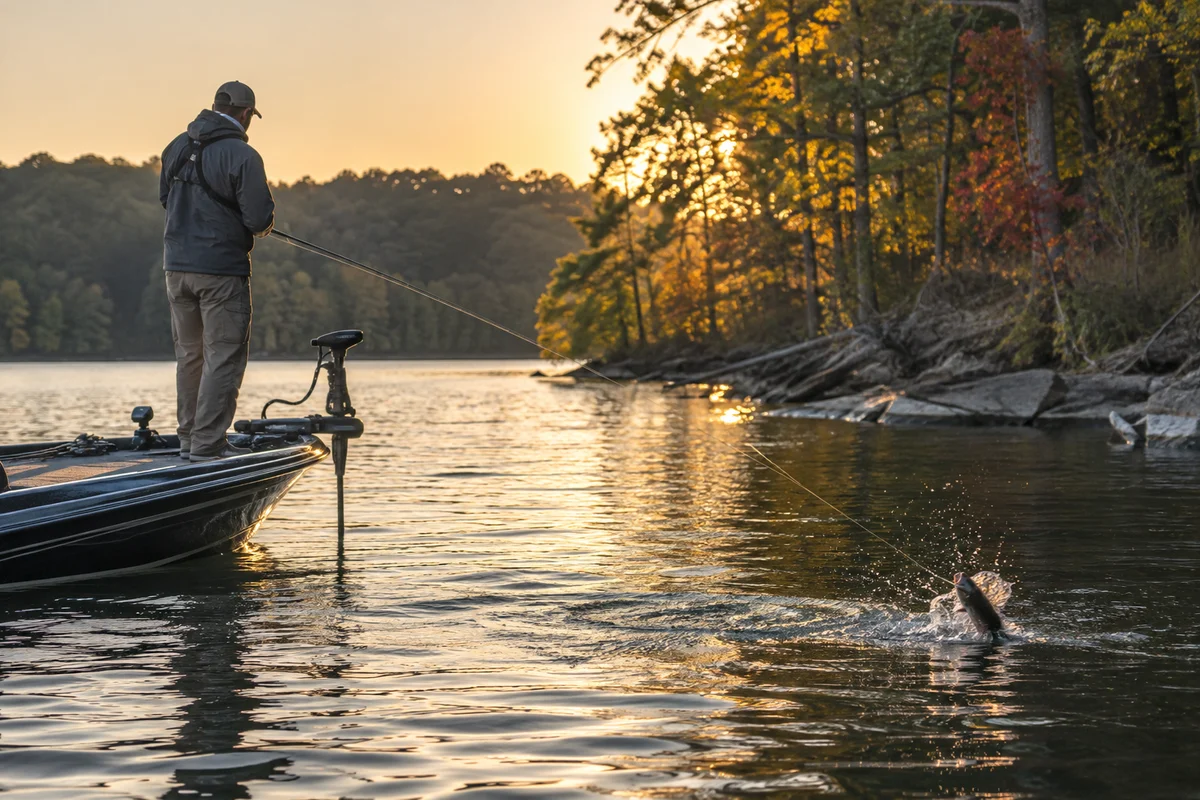
Fall bass fishing techniques work best as a process of reading conditions, not as a fixed list of lures. Cooling water can change bass activity, baitfish location, and the amount of time fish spend near shallow cover—but the pace and timing vary by region, lake, weather, and species. Start with observable clues, make one adjustment at a time, and let bites and follow-up signs guide the next move.
What changes for bass in fall?
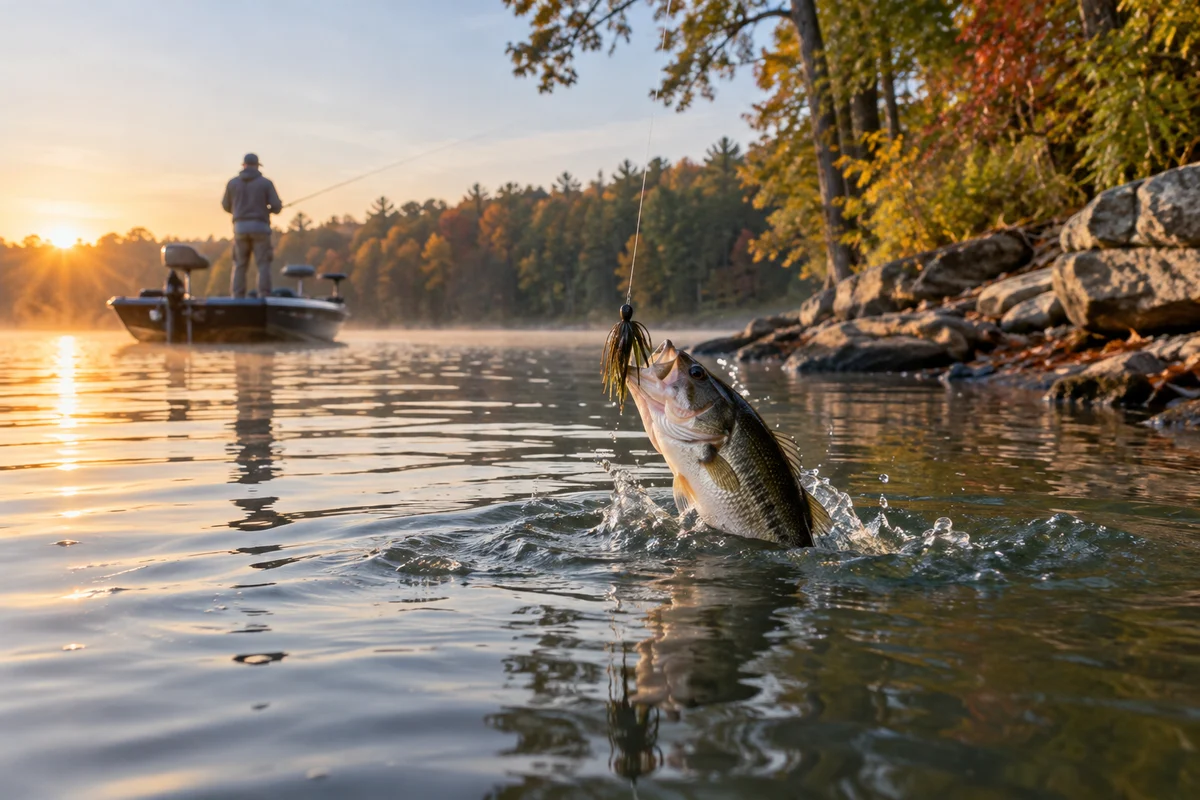
As summer heat eases, many lakes experience more comfortable surface conditions and changing water temperatures. Baitfish may gather near creek arms, points, flats, or other areas with food and cover. Bass can follow them, but not every fish migrates to the bank. Some remain deep, suspend, or use nearby structure, especially when forage and suitable conditions persist offshore.
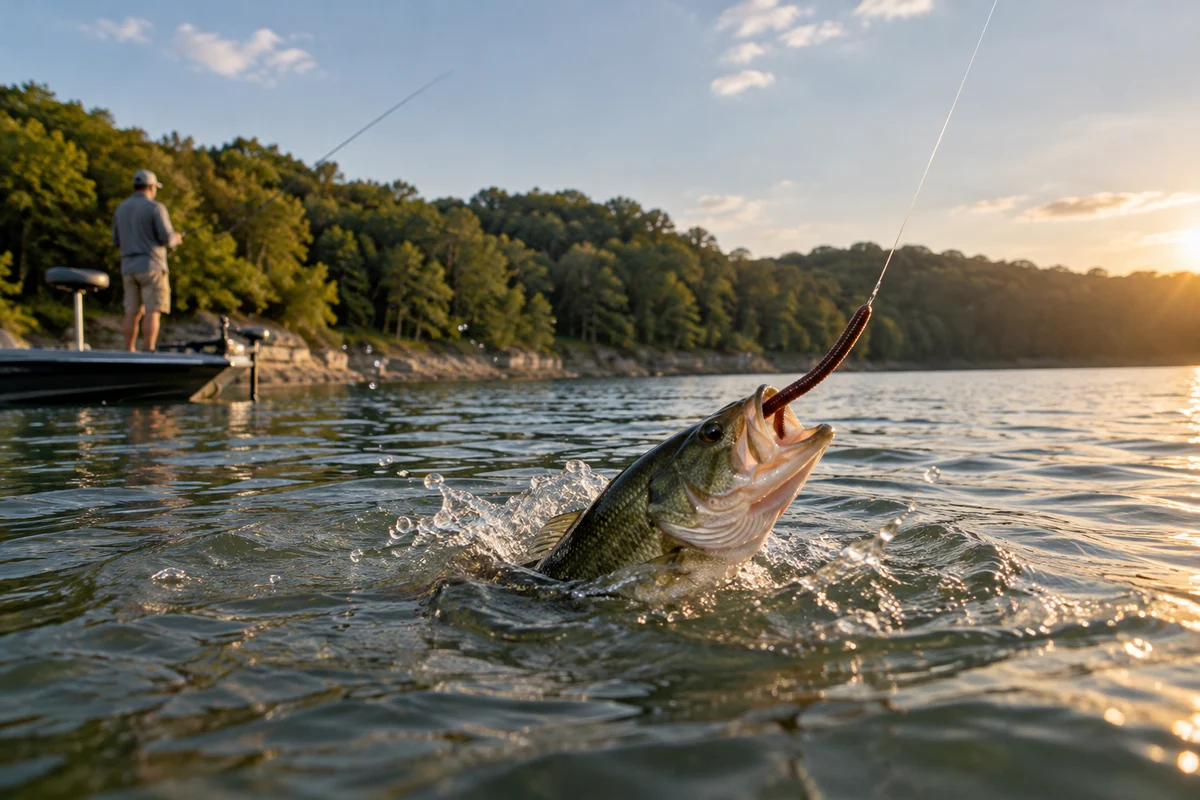
That means “the bass are chasing shad” is a useful possibility, not a guarantee. Look for multiple clues: bait flickering or dimpling the surface, birds working, bass striking, or fish appearing on sonar. One isolated splash may be a small fish or unrelated activity. Give a promising area a few careful casts before deciding it is a pattern.
A broad understanding of seasonal movement helps put these observations in context. If you are new to the sport, review bass fishing for beginners before building a more detailed seasonal plan. The freshwater bass-fishing hub also gathers related coverage.
Where should you start looking?
Begin at the transition between a likely summer location and a shallow feeding area. On many waters, that might mean a creek channel near a flat, a point that meets a drop-off, a rocky bank beside deeper water, or the mouth of a cove. These are starting points rather than guarantees: local depth, vegetation, current, water clarity, and forage determine which features matter.
Work from broad areas toward specific cover. First check a creek arm or shoreline stretch. Then investigate the points, grass edges, docks, wood, or depth changes within it. If the water is clear and calm, fish may hold farther from the bank than they appear to. In stained water, cover and vibration can help fish locate a moving presentation at closer range.
When bait is visible, follow its direction instead of repeatedly casting at the same surface disturbance. If the activity moves, reposition quietly and intercept the route. When there is no visible bait, use structural clues: a channel bend, a submerged edge, or a transition from rock to softer bottom may concentrate fish even without obvious surface signs.
A practical fall decision framework
Use this table to choose what to test. It is a starting framework, not a promise that a particular presentation will catch fish.
| What you observe | First adjustment to try | What to learn next |
|---|---|---|
| Bait breaking on a point or flat | Make controlled casts across the activity with a moving lure suited to local rules and conditions | Are strikes occurring on the surface, during the retrieve, or near the edge? |
| Wind pushes into a bank or point | Check nearby cover and the depth contour; fish the area from a safe, stable position | Does the wind concentrate bait, or is the area simply rougher? |
| Clear, calm water with scattered activity | Reduce disturbance and try a more natural, slower presentation | Are fish following without committing, or is there no response? |
| Stained water or low light | Put casts close to cover and use a presentation fish can detect | Does contact with cover produce a response? Keep hooks clear of snags. |
| No surface signs and no bites | Change depth or location before cycling through many lures | Is the forage elsewhere, or are fish holding deeper? |
Keep a short note of location, approximate depth, wind, clarity, and what happened. A simple record helps distinguish a repeatable clue from a one-off encounter. Avoid treating a single productive cast as proof that the same setup will work across the whole lake.
How should you choose a presentation?
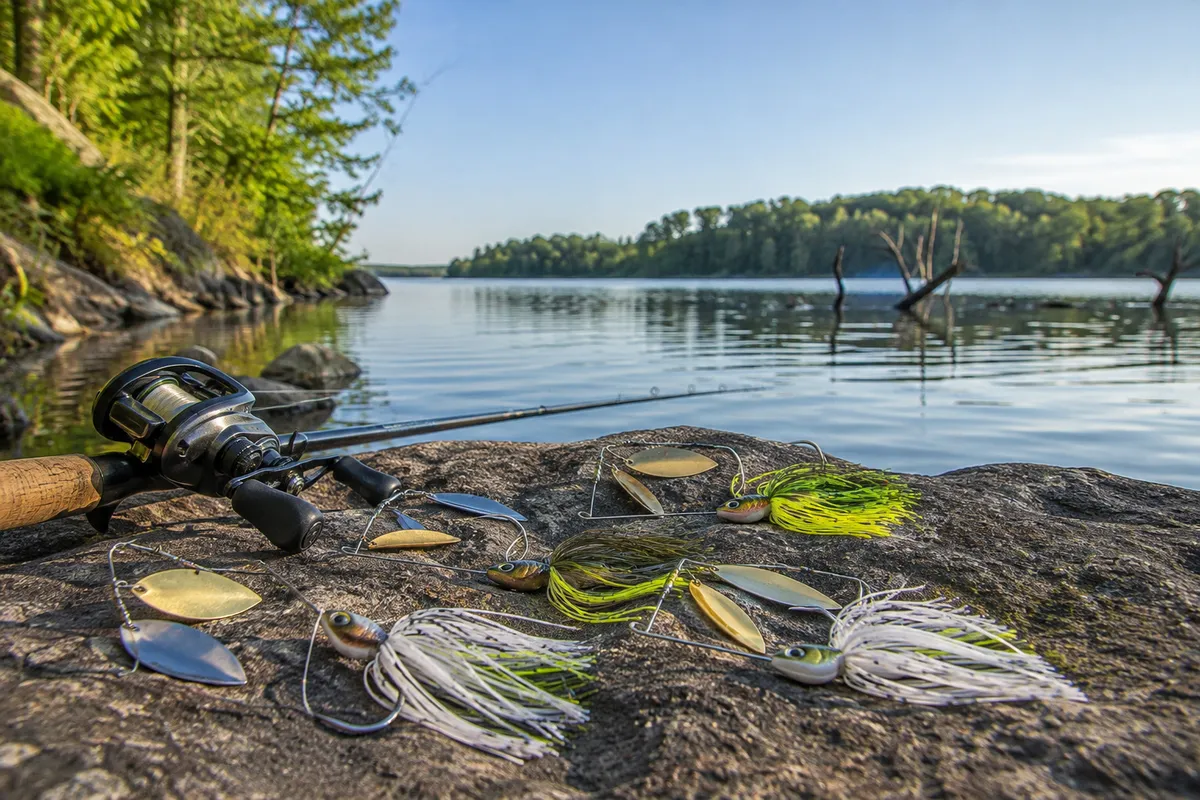
Choose a lure by the job you need it to do. A moving search bait can cover water and reveal active fish. A slower presentation can help when bass follow but do not strike, or when the fish appear tied to a specific piece of cover. Match size and profile to the forage you actually see when possible; when forage is uncertain, use a versatile option and make the retrieve the first variable you change.
For example, vary speed, pauses, and depth while keeping the same lure and area. If a fish follows, note where it turns away. A pause or a change in direction may help, but repeated follows can also mean the fish are not feeding or that the lure is passing at the wrong depth. If the lure repeatedly catches weeds or bumps bottom, adjust its path rather than assuming the spot is unproductive.
A soft-plastic option can be useful when fish are close to cover or want a slower presentation. For rigging ideas, see plastic worm rigs for bass. When water cools and fish respond to a moving bait near vegetation or open lanes, swimming jigs for bass offers another approach to consider. These are complementary tools, not seasonal rules; choose based on cover, depth, and the response you observe.
What does weather tell you?
A warming spell, a cold front, cloud cover, or wind can change how and where fish behave, but the effects differ among waters. Consider the direction of change as well as the forecast. A steady trend may matter more than a single reading, and a cold, windy bank may be difficult or unsafe to fish even when it looks promising.
Wind can move surface food and make some banks worth checking, but it also reduces visibility and complicates boat control. Keep a safe margin from hazards, wear a properly fitted life jacket, and avoid operating a boat in conditions beyond your ability or equipment. On foot, watch for slippery banks and changing water levels. If wind makes accurate, safe casts difficult, shift to a protected area rather than forcing the exposed shoreline.
After a sudden weather change, do not assume all fish have left. Test a nearby depth change, adjacent cover, or the protected side of the same area. Make a deliberate adjustment and compare results. If fish were active before the change, returning later when conditions stabilize may be more informative than abandoning the entire seasonal pattern.
How to make a short trip more efficient
Before fishing, check local regulations, access rules, and current conditions. Choose a manageable area with a few different features rather than racing across the lake. Begin with a search presentation, then slow down only where there is evidence of fish, forage, or useful cover.
Use this compact checklist:
- Observe: note wind, water clarity, temperature trend if known, and visible forage.
- Locate: identify a transition, point, flat, cover edge, or channel connection.
- Test: cover water at a controlled pace; watch for follows, strikes, and bait movement.
- Adjust: change one factor—depth, retrieve speed, position, or lure—so you can interpret the result.
- Record: write down what worked and what did not, including the conditions.
- Release responsibly: handle fish carefully, keep them in the water when practical, and follow local rules.
If you fish from a boat, plan the return before light fades and keep navigation lights and safety gear in working order. Shore anglers should identify safe access and avoid trespassing. A productive fishing plan should never depend on unsafe positioning or ignoring local restrictions.
Why fall patterns can be inconsistent
Autumn is a transition, not a switch. A shallow bite can develop in one cove while nearby fish remain offshore. Water temperature can differ across a large reservoir, and weather may change conditions faster than fish relocate. Some lakes have abundant shad; others offer different forage. Even within the same water, fish may use separate patterns on consecutive days.
Treat reports and seasonal advice as hypotheses. Confirm the conditions yourself, and be willing to change location or depth. If a familiar pattern stops producing, revisit the clues rather than repeating the same cast indefinitely. The most transferable fall skill is not memorizing a lure choice; it is noticing what the water is showing and making a measured adjustment.
Sources and further reading
For current regulations and species-specific guidance, consult your state wildlife agency. The U.S. Fish and Wildlife Service provides national conservation and aquatic-resource information. Because rules and local conditions vary, verify applicable regulations before fishing.
Frequently asked questions
Do bass always move shallow in fall?
No. Some follow forage toward shallow areas, while others remain deep or suspend. Check local conditions and test more than one depth.
What is a good place to begin fall bass fishing?
Try a transition such as a creek channel near a flat, a point beside deeper water, or cover along a depth change. Treat it as a starting point, not a guarantee.
Should I fish faster or slower in autumn?
Let fish response decide. A moving presentation can locate active bass; slow down when fish follow without striking or appear tied to specific cover.
How can I tell whether bass are chasing baitfish?
Look for repeated bait activity, birds working, or bass strikes, and see whether the signs move together. A single splash is not conclusive.
Sources & further information
Consult these primary sources for current regulations, technical information and local guidance.