How to Fish Salmo Hornet Crankbaits for Bass
A practical guide to fishing Salmo Hornet crankbaits, from choosing a model by depth to adapting your retrieve around cover and changing conditions. Check current manufacturer information for specifications, since models and availability can vary.
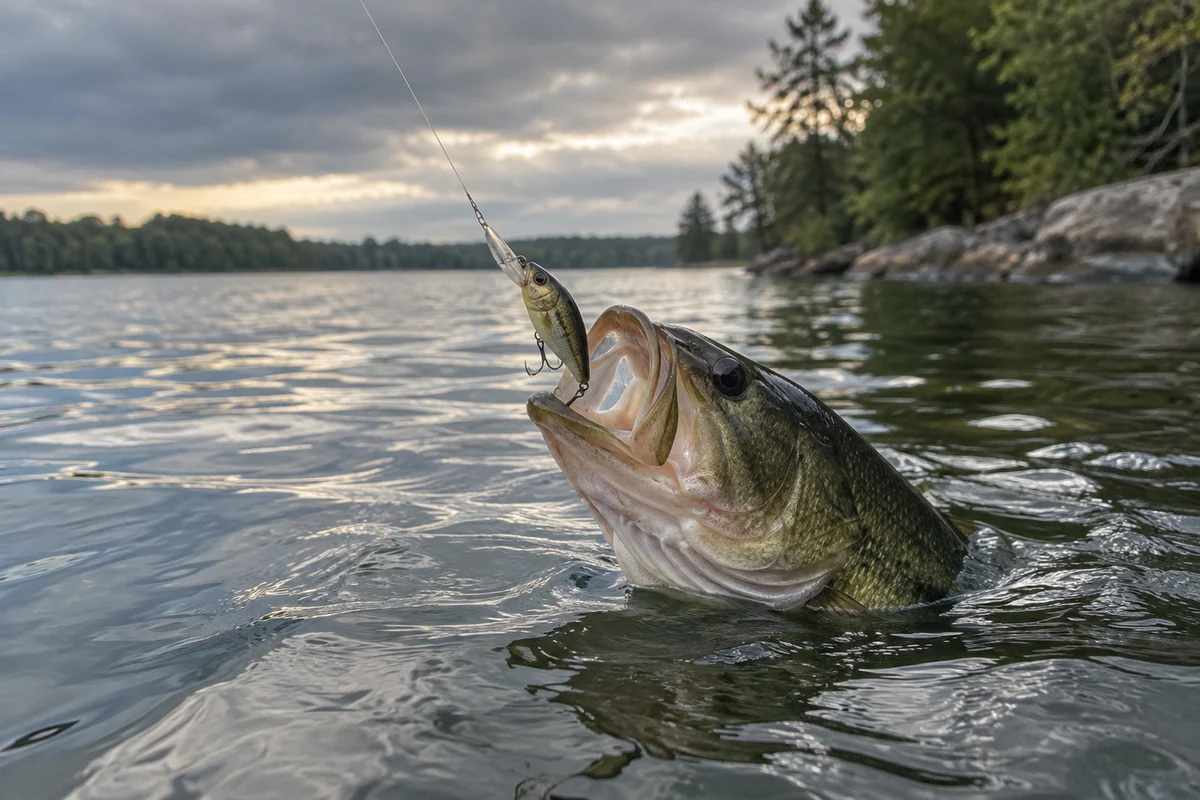
Salmo Hornet crankbaits can be approached as compact, hard-bodied lures for covering water and presenting a moving target to bass. The useful question is not whether one lure will work everywhere, but how to match the particular Hornet model, its running depth and your retrieve to the water in front of you. Model names, sizes, colors and availability can change, so confirm current details with Salmo rather than relying on an old listing or an assumed specification.
The same framework applies to many small crankbaits: identify likely fish-holding areas, choose a lure that can reach them, and make controlled casts that bring it past—not blindly into—cover. If you are still learning seasonal patterns, start with our guide to summer bass fishing tips; for a broader foundation, see bass fishing for beginners. This article focuses on fishing decisions, not claims of guaranteed results.
What makes a Salmo Hornet crankbait useful?
A crankbait is a hard lure designed to move through the water when retrieved. Its body shape and diving lip influence its action and how it travels; the exact behavior depends on the specific model and setup. A compact profile can be useful when bass are feeding on smaller prey or when you want to search a stretch without making repeated slow presentations.
Think of the Hornet as one option in a search-and-contact approach. Cast past a likely target, retrieve steadily enough for the lure to work, and note where it passes in relation to weeds, rocks, wood or a depth change. If fish follow but do not strike, vary speed or angle before assuming the lure is wrong. If the lure repeatedly catches vegetation or bottom debris, adjust the model, line, cast angle or location.
Do not infer a lure’s exact depth, buoyancy, hook configuration or other specification from a photograph or a retailer’s shorthand. Look up the exact model on the Salmo manufacturer site and check the package or product information available for the version you own.
How do you choose the right model and depth?
Begin with the zone where you expect bass to be, not with color. A lure that runs well above fish may pass unnoticed; one that continually digs into snags can spend more time fouled than fishing. Water depth, cover, line choice, retrieve speed and casting angle all influence where a crankbait travels. Because these factors vary, treat depth labels as guidance rather than a guarantee of the lure’s path on every cast.
Use this decision framework before tying on:
| Situation | Starting choice | What to watch for |
|---|---|---|
| Open water with fish activity near the surface | A model intended to work higher in the water column | Whether bass track or strike during a steady retrieve |
| A visible weed edge or shallow cover | A lure that can pass along the outside edge without constantly fouling | Contact with vegetation, and whether a small angle change clears it |
| A deeper edge or drop-off | A model whose published running range suits the target zone | Whether the lure reaches the area during the useful part of the retrieve |
| Uncertain depth or unfamiliar water | Start conservatively and make controlled casts | The point where the lure begins to contact bottom or cover |
This is a starting method, not a promise that a particular model reaches a precise depth. If you fish from shore, your lure may travel through a different path than it would from a boat because the cast angle changes. A long cast over shallow water can also spend much of its travel outside the zone you want to cover.
How should you retrieve a Hornet?
Start with a steady retrieve. It provides a baseline: you can feel whether the lure is working, notice contact, and compare one cast with the next. Keep the rod position consistent for a few casts, then change one variable at a time—speed, pause, angle or target—so the result tells you something.
A practical sequence is:
- Make a clean cast beyond the target. A cast that lands on top of a branch or dense weed mat is less useful than one that brings the lure past its edge.
- Engage the retrieve smoothly. Avoid an abrupt burst that makes it difficult to judge the lure’s normal action.
- Track the lure’s path. Note where it begins to contact cover or bottom, and whether that contact repeats at the same point.
- Try a modest speed change. If a fish follows without committing, a slightly faster or slower retrieve may make the presentation more noticeable. No speed is universally best.
- Change the angle or target. Repeating the same cast through an unproductive lane rarely adds much information.
Crankbaits can deflect off suitable cover, but that does not mean every collision is beneficial. Hard contact with branches, rocks or docks can snag hooks or damage equipment. Make deliberate casts, keep awareness of people and obstacles, and retrieve a snagged lure carefully rather than pulling blindly toward yourself.
Where should you fish it?
Look for edges and transitions: the outside of a weed line, a change from firm to soft bottom, the edge of a shallow flat, or a point leading into deeper water. These areas let you cover a defined lane and compare results. In open water, fan-cast across a likely depth range rather than repeatedly fishing one line. Around cover, cast parallel to an edge when possible so the lure spends more time near it.
Wind can push prey and surface activity toward a bank or point, but it can also make boat position and casting control harder. Treat wind as a clue, not a rule. Water clarity, temperature, season, local forage and fishing pressure all matter. If the water is murky, a fish may rely more on vibration and proximity; in clearer conditions, a natural-looking presentation may be easier to inspect. These are tendencies, not dependable formulas.
When fish show interest but do not take the crankbait, switch presentation rather than forcing the same pattern. A slower bottom-oriented option may suit a fish holding close to cover. Our overview of plastic worm rigs for bass explains alternatives for a more deliberate presentation.
What tackle and safety checks matter?
Use tackle appropriate to the lure’s actual weight and the cover you are fishing. Check the rod and line ratings, and avoid pairing a small lure with gear that makes accurate casting or controlled retrieval difficult. Line type and diameter can affect lure action and running depth, so keep those factors consistent when comparing casts. Follow the manufacturer’s recommendations for the specific lure and your rod, reel and line.
Before fishing, inspect the body for cracks or damage and check that hooks are secure and sharp. Handle treble hooks with care, use pliers when removing a deeply caught hook, and keep a safe distance from other anglers during casts. Local rules may restrict access, seasons or fishing methods; check the applicable regulations for the water you plan to fish.
How can you tell whether the pattern is working?
Judge the approach by repeatable signs, not a single cast. A fish following the lure, a strike near a particular edge, or repeated contact at a consistent depth gives you a reason to refine that lane. No response after methodical coverage is useful information too: try another depth, cover type, retrieve or lure category rather than assuming a different color alone will solve the problem.
Keep a brief note of conditions and outcomes: location type, water clarity, wind, approximate depth, retrieve speed and any contact. This need not become a complicated log. It helps separate a real pattern from a memorable but isolated bite, and it makes the next trip more purposeful.
The best use of Salmo Hornet crankbaits is therefore conditional: verify the model, target a defined zone, retrieve with control and adjust according to what the water tells you. Manufacturer specifications can clarify the lure’s intended range, but they cannot account for every line, cast angle or fishing condition. Treat each cast as a test of a hypothesis—not proof that one bait or method always wins.
For more, explore our bass fishing fishing freshwater guides.
Frequently asked questions
What are Salmo Hornet crankbaits used for?
They are hard crankbaits used to search water with a moving presentation. The suitable model and retrieve depend on target depth, cover and conditions.
How deep does a Salmo Hornet crankbait run?
Running depth varies by model and fishing setup. Check the exact lure’s current manufacturer information, and remember that line, retrieve and casting angle affect its path.
What retrieve should I use with a Salmo Hornet?
Begin with a steady retrieve, then change one factor at a time—such as speed or cast angle—based on fish response and contact with cover.
Can I fish a Hornet around weeds and wood?
You can work it along cover edges, but snagging is possible. Cast deliberately, monitor contact and adjust the path or lure if it fouls repeatedly.
Sources & further information
Consult these primary sources for current regulations, technical information and local guidance.