Catching Bass With Weedless Spoons for Bass
A weedless spoon can slide through vegetation where many lures bog down, then flash and flutter when it clears the cover. Use this guide to select a setup, vary your retrieve, and recognize when another presentation is the better choice.
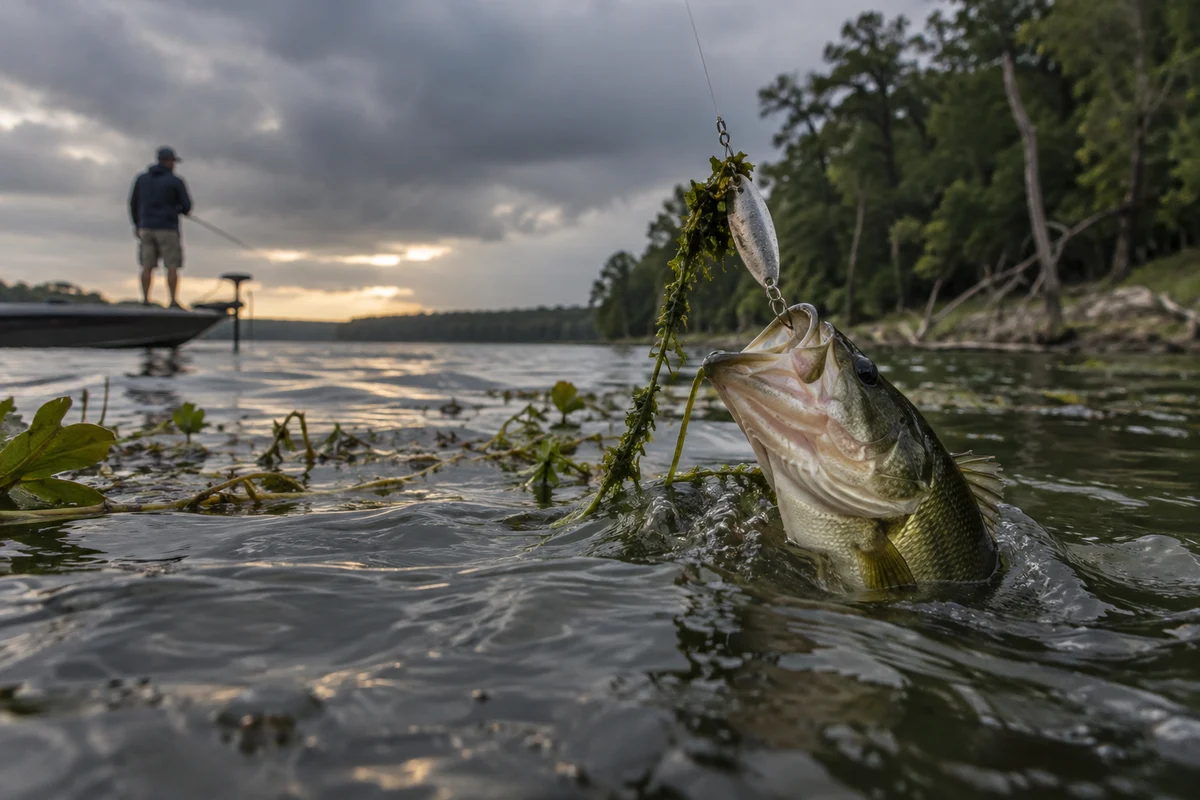
A spoon that slips through weeds can put a bass lure in places a treble-hooked bait cannot reach. Weedless spoons for bass are especially useful around emergent plants, submerged grass, and the edges of floating vegetation—but “weedless” does not mean snag-proof, and no single retrieve works everywhere. The key is to match the spoon and its hook guard to the cover, keep the presentation controlled, and change tactics when the lure is collecting more greenery than fish.
What makes a spoon weedless?
A conventional spoon has a curved metal body that wobbles and flashes as it moves through water. A weedless version typically uses a single hook positioned close to the body, with a wire guard or another design feature that helps keep stems from catching on the point. Some models are intended to be rigged with a soft-plastic trailer; others are ready to fish as supplied. Designs differ, so inspect the maker’s instructions rather than assuming every spoon takes the same trailer or hook arrangement.
The guard is a compromise. It should deflect light vegetation without preventing a solid hook-up when a bass takes the bait. A guard that is bent out of position, packed with plant fibers, or pressed too firmly against the hook can affect performance. Check it often and clear debris by hand with the lure secured; avoid sweeping a hooked lure toward yourself.
A spoon’s broad shape can flutter as it falls and wobble on a steady retrieve. That movement can attract attention in stained water or in broken light, but flash alone is not a guarantee of a strike. Fish may ignore it, and a fast, broad spoon can be a poor fit for shallow, tight cover or wary fish.
Where to fish one
Start with a clear target rather than dragging the lure at random. Useful places include a pocket in a weed mat, a lane through submerged grass, the outside edge of a weed line, or a gap beside a dock or fallen vegetation. Bass may use cover for shade, ambush, or access to nearby food, but their position changes with season, water conditions, and local habitat.
In matted vegetation, a spoon can be allowed to drop into openings or worked over the top and pulled across a seam. In submerged grass, try a controlled retrieve just above the plants, pausing if the lure reaches a hole or edge. Along an outside weed line, cast parallel to the edge when possible: the lure stays in the likely strike zone longer than it does on a short crosswise pass.
Pay attention to the cover’s depth and density. A spoon that falls freely into a pocket may bury itself in thick, soft growth. If you cannot keep it moving cleanly, shorten the drop, use a more direct path, or change to a presentation made for that vegetation. For more general habitat and seasonal context, see our bass fishing hub.
Choosing a spoon and tackle
Think in terms of control, not a supposedly universal “best” size. A heavier spoon generally falls faster and can be easier to feel at depth; a lighter one may descend more slowly and suit shallower water. The spoon’s profile and hook arrangement also affect how it passes through plants. Compare the lure’s stated use and rigging guidance, then choose a model you can control in the depth and cover you are fishing.
A medium-heavy rod with enough backbone to guide a fish away from vegetation is a common starting point, paired with a reel and line appropriate to the cover and the lure maker’s guidance. The exact choice depends on local vegetation, fish size, casting distance, and your comfort with the setup. Heavy cover may call for stronger line and sturdier tackle; open edges may allow a lighter outfit. Check line condition before fishing, especially after contact with stems, wood, or rock.
| Situation | Spoon and retrieve approach | What to watch for |
|---|---|---|
| Shallow pocket in a mat | Let it drop into the opening, then lift and let it fall under control | A line jump or unexpected slack may signal a take |
| Submerged grass | Retrieve steadily just above the tops; pause at a gap | Repeatedly fouling means the lure is too deep or the path is wrong |
| Outside weed edge | Cast along the edge and vary a steady retrieve with brief pauses | Follow the edge’s depth changes instead of making every cast identical |
| Sparse weeds and open water | Use a controlled fall or swimming retrieve | A treble-hooked or more subtle lure may be more suitable if fish refuse it |
This is a decision aid, not a guarantee: plant type, water clarity, current, and spoon design all matter.
A practical retrieve, step by step
- Make a short test cast. Before sending the lure into the thickest cover, check how it falls and whether the guard sheds the vegetation you encounter. Confirm the spoon is swimming as intended.
- Target an opening or edge. Aim for a hole, seam, or weed-line turn. Avoid landing on top of a fragile mat if the lure is meant to enter through an opening.
- Control the fall. Keep light contact with the line while allowing the spoon to descend. A bass may take it on the drop, so watch for a line that moves sideways, stops early, or suddenly goes slack. Those signs can also come from weeds or a change in depth; respond by taking up slack and assessing, rather than assuming every movement is a fish.
- Work it through the target. Try a lift-and-fall in a pocket or a steady swim above grass. Add a pause at a lane, corner, or edge. Change one variable at a time—speed, depth, or pause length—so you can tell what improves the presentation.
- Keep contact after a strike. Reel down and set the hook with a firm, controlled motion appropriate to your tackle. Once connected, maintain steady pressure and guide the fish away from the thickest cover. Avoid high, uncontrolled swings, which can pull a fish or lure toward people.
- Inspect between casts. Remove vegetation, check that the hook guard and point are aligned, and look for damaged line. A weedless lure that has collected a bundle of stems is no longer presenting cleanly.
Improve the odds without overworking the spot
Make deliberate casts that cover different angles. A cast parallel to a weed edge, one into a pocket, and one across a nearby lane may reveal where fish are holding. If a fish follows without taking, or the spoon repeatedly comes back fouled, change the angle or retrieve before changing everything at once.
A soft-plastic trailer can alter the spoon’s profile and fall, but it can also catch more vegetation or slow the lure. Use only a compatible trailer and follow the lure maker’s rigging directions. For anglers comparing other ways to present a bait around cover, our guide to plastic worm rigs for bass explains several slower options. If fish are feeding near the surface, floating buzz bait techniques offer a different, noisier presentation; a buzz bait is not a substitute for working a spoon down into a pocket.
When a weedless spoon is not the answer
Switch lures if the spoon cannot pass through the vegetation without fouling, if fish are clearly feeding on a different depth or bait profile, or if you need a quiet, precise presentation in open water. Dense mats may require a lure designed specifically for punching through that cover; sparse vegetation may be better suited to a swimming jig or soft plastic. The right choice is the one that reaches the target and remains fishable—not the one with the most impressive “weedless” label.
Wind, current, and water clarity also change how much control you have. Wind can bow the line and make a falling spoon harder to track. Current may pull it off the intended seam. In either case, adjust casting angle and line control; if you cannot reliably detect the lure’s position, use a more manageable target or presentation.
Handling fish and following local rules
Use tackle appropriate to the vegetation so a hooked fish can be brought under control without an unnecessarily prolonged fight. Keep hands clear of the hook when removing the lure, use suitable pliers, and support a fish carefully if releasing it. Rules for seasons, size limits, possession, and allowed methods vary by location. Check the current regulations from the relevant state or local fish and wildlife agency before fishing, and follow any access restrictions around protected vegetation or habitat.
A weedless spoon is a focused tool: it helps you explore pockets, lanes, and edges that can frustrate other lures. Start with a clean target, control the fall, vary the retrieve methodically, and inspect the rig often. When it is not moving cleanly—or the fish are not responding—change the presentation rather than forcing the spoon through every patch of weeds.
Frequently asked questions
Are weedless spoons completely snag-proof?
No. Their hook guards reduce some snags, but stems, branches, and thick vegetation can still catch the lure. Check and clear it frequently.
How should I retrieve a weedless spoon for bass?
Try a controlled fall into pockets, a steady swim above submerged grass, or a cast parallel to a weed edge. Adjust depth and speed to avoid fouling.
Should I add a soft-plastic trailer?
Only if the spoon is designed to accept one. A trailer can change the profile and fall, and may also collect more vegetation; follow the manufacturer’s rigging guidance.
What tackle works for fishing spoons in weeds?
Use a rod, reel, and line that let you control the lure and guide a fish away from the cover. The appropriate strength depends on vegetation, depth, and lure design.
Sources & further information
Consult these primary sources for current regulations, technical information and local guidance.