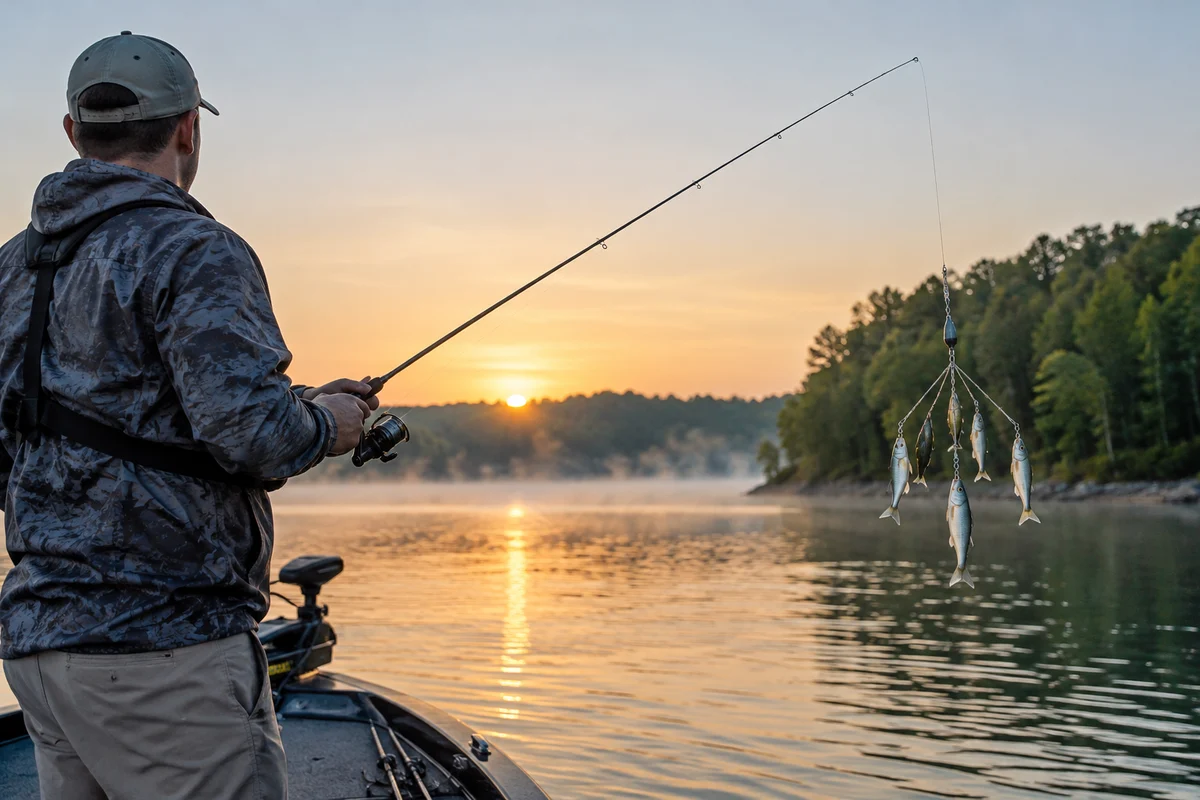
Summer Bass Fishing Tips for Hot, Bright Days
Summer bass fishing is less about one magic lure than finding comfortable water and adjusting to light, wind, and temperature. This practical guide helps you plan a flexible day, choose presentations, and handle fish carefully in warm conditions.
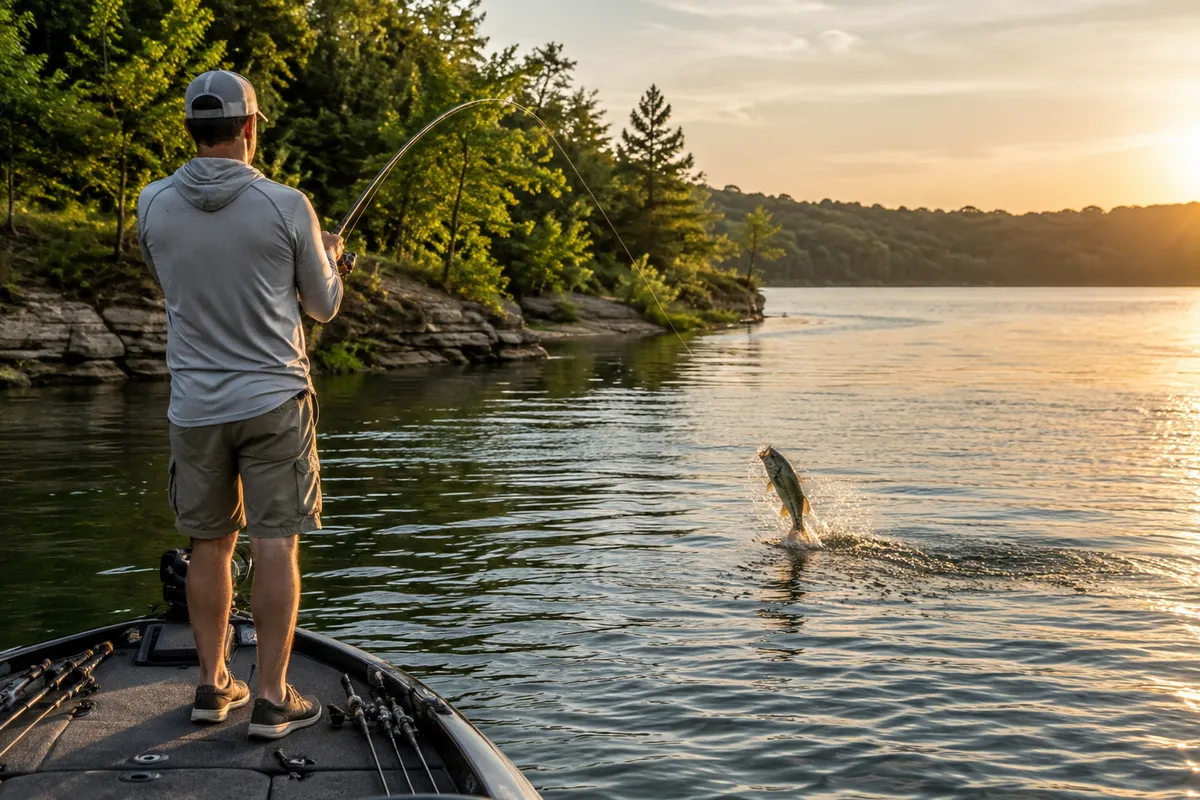
Summer bass fishing tips work best when they start with a simple question: where can bass feed while avoiding the brightest, warmest parts of the day? In summer, fish may use shade, deeper edges, current, or cover, but their position changes with weather, water clarity, and the lake itself. Treat each spot as a hypothesis, watch for signs, and adjust rather than assuming every bass has moved deep.
A useful plan balances three things: safe conditions for you, comfortable water for the fish, and a presentation you can control. Begin early if possible, keep water and sun protection close, and let the first hour teach you how the lake is behaving. For broader seasonal context and related methods, visit the freshwater bass fishing hub.
Where to look for bass in summer
Bass do not occupy one universal summer depth. On a clear, steep-sided reservoir, a useful starting point may be a drop-off near deep water. In a shallow pond, the best available shade, vegetation, or inflow may matter more than depth. In a river, current seams and protected pockets can offer feeding opportunities without requiring fish to hold in the strongest flow.
Start by mapping the water you can see and safely reach. Look for points, creek channels, weed edges, docks where fishing is permitted, shaded banks, and transitions between hard and soft bottom. Then prioritize places that combine more than one feature: a weed edge beside a drop, for example, or shade close to a current break. These are search areas, not guarantees.
Light and wind help refine the search. Bright, calm conditions often make shade and cover worth checking closely. Cloud cover can spread activity across more open water, while a breeze may push bait toward a bank or concentrate it along a windward edge. These patterns vary; if a bank is muddy, exposed, or unsafe to fish, choose another. Do not force a forecast-based plan when the water tells you something different.
A quick decision framework
Use this table to make a first adjustment, then confirm it with bites, visible bait, or other signs. Conditions can overlap, so treat each row as a starting point rather than a rule.
| What you notice | First areas to check | Presentation to try |
|---|---|---|
| Bright sun and little wind | Shade, vegetation edges, docks where allowed, or deeper breaks | A slower presentation close to cover |
| Cloud cover or low-angle light | Points, shallow edges, and open lanes beside cover | A moving bait to locate active fish |
| Wind pushing into a bank | The safe, fishable side of the windward edge | A moving bait, then a slower follow-up |
| Clear water and wary fish | Longer casts, sparse cover, and depth transitions | A subtle bait with a controlled retrieve |
| Stained water or dense cover | Visible edges and openings you can fish cleanly | A noticeable presentation kept near cover |
| Current or an inflow | Seams between moving and slower water | A bait presented along the seam, not blindly into heavy flow |
If one approach produces no sign of life after you have covered a reasonable stretch, change one variable at a time: depth, location, speed, or profile. Changing everything at once makes it harder to learn what mattered.
Choose a presentation you can fish well
A practical summer box does not need a different lure for every forecast. Bring a few presentations that cover distinct jobs: one moving bait to search, one soft plastic to work a target slowly, and one option suited to the cover and depth you are actually fishing. Keep color choices simple and let water clarity guide visibility rather than chasing a universal “best” color.
A soft plastic can be useful around cover because you can control its fall and pause it in a small area. Rigging choice affects how it moves and where it can be fished. Our guide to plastic worm rigs for bass explains common setups and their tradeoffs. Match the rig to the cover, use tackle you can cast accurately, and avoid dragging a snag-prone setup through places where you cannot retrieve it responsibly.
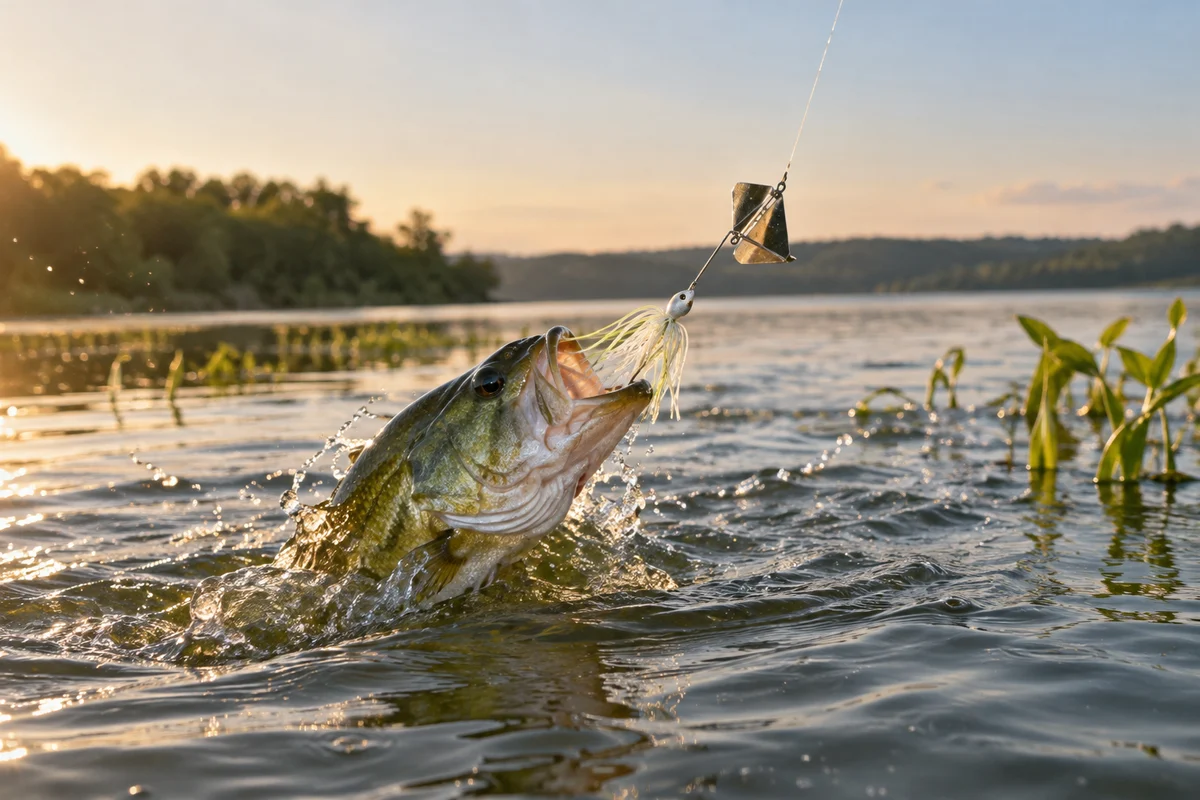
When bass are willing to chase, a moving bait can help you cover water and locate activity. A spinnerbait is one option around edges and scattered cover; the right choice depends on water clarity, wind, and how cleanly you can present it. See how to choose a spinnerbait for bass for a more focused breakdown. A buzz-style surface bait can also be worth trying when fish are visibly feeding near the top or when low light makes a surface presentation practical; the floating buzz bait overview offers additional context.
Retrieve speed should be deliberate, not automatic. Begin at a pace that keeps the bait working as intended. If fish follow without committing, try a pause, a slower pass, or a different angle. If the lure repeatedly fouls in grass, change its path or choose a cleaner opening. Make accurate casts to likely targets, but do not repeatedly disturb a small patch after it has gone quiet.
Make the first hour a scouting session
Before settling into a long cast pattern, spend a few minutes observing. Check the water’s clarity, wind direction, shade, visible forage, and whether the surface shows signs of feeding. If you have access to a map, use it to identify contour changes and safe routes, but verify conditions on the water. Water levels, vegetation, access, and hazards can change.
Fish a small sample of different locations rather than making a full day’s decision from the first bank. Try a shallow cover edge, a nearby transition, and a deeper feature if the water offers one. Keep notes about where a bite happened, the light, wind, and depth estimate. A brief record helps separate a repeatable pattern from a lucky cast.
If you catch a fish, consider what the location offers: shade, a drop, current, or nearby forage. Look for that combination elsewhere. If you do not get a bite, the result is still useful when you have tested a distinct type of water with a clear presentation. Move on when the area has been covered methodically, especially if conditions are changing.
Plan for heat and handle fish carefully
Hot weather changes the outing for anglers as well as fish. Carry drinking water, sun protection, and any needed safety equipment; take breaks in shade and leave the water if heat illness or dangerous weather becomes a concern. Follow local boating rules, access restrictions, and fishing regulations, including seasonal limits and area-specific closures.
Warm water can make fish recovery more demanding, particularly after a long fight or extended handling. Use tackle that lets you land a fish promptly, keep it in the water where practical, and have tools ready before you lift it. Wet your hands before handling, support the fish without squeezing, and avoid touching the gills or eyes. If you plan to photograph a fish, prepare the camera first and keep the time out of water short. Release it gently and allow it to regain balance in the water; do not force it forward and backward.
Where regulations require a harvest, follow the applicable rules and handle the fish in accordance with local guidance. When catch-and-release fishing, consider whether the conditions make a long fight or repeated handling avoidable. If fish appear stressed, shorten the process and move to a different approach or location.
Common summer mistakes to avoid
Assuming deep means better. Deep water can be useful, but some bass remain shallow when cover, forage, shade, or current make it worthwhile. Test the water available rather than applying a fixed depth rule.
Fishing too fast to learn. Covering water is helpful, but an unbroken rush past likely targets can miss fish. Slow down around a promising feature, then move on if it does not produce.
Changing several variables at once. If you switch location, lure, depth, and retrieve together, you lose the ability to read the result. Make one clear adjustment and observe.
Ignoring comfort and safety. Dehydration, sun exposure, storms, and unsafe footing can turn a fishing day into an emergency. Check conditions, use appropriate equipment, and make conservative choices.
Keeping a fish out of water for a better photo. Prepare first and prioritize the fish’s recovery. A quick release is more important than a perfect image.
A flexible checklist for the day
- Check local regulations, access, weather, and any waterbody advisories.
- Pack water, sun protection, and appropriate safety gear.
- Start with a moving presentation to search, then slow down around promising cover.
- Compare at least two kinds of location, such as a shaded edge and a depth transition.
- Note wind, light, water clarity, and where any fish or forage appears.
- Prepare tools and camera before handling a fish; minimize time out of water.
- Change one variable at a time and leave unproductive water after a fair test.
The most dependable summer approach is a process, not a secret spot: read conditions, check a few contrasting locations, and adapt your presentation to the cover and activity you find. Stay comfortable, fish responsibly, and let each outing provide clues for the next one.
Frequently asked questions
Where should I look for bass on a hot summer day?
Check available shade, vegetation edges, current breaks, points, and depth transitions. The best starting areas depend on the waterbody, clarity, wind, and forage.
Are bass always in deep water during summer?
No. Some use deeper breaks, while others remain shallow around shade, cover, current, or food. Test more than one kind of location.
What should I throw first for summer bass?
A moving bait is useful for searching active water; a soft plastic can work a small target more slowly. Choose based on cover, clarity, and how fish respond.
How can I reduce stress on bass in warm water?
Use tackle that helps land fish promptly, prepare tools before handling, keep the fish in water when practical, and minimize handling and photo time.
Sources & further information
Consult these primary sources for current regulations, technical information and local guidance.