Cold Water Bass Fishing: A Practical Seasonal Guide
Cold-water bass often feed in short windows, but a measured approach can help you find them and present a bait effectively. Read the conditions, start with high-percentage water, and adjust your pace without assuming every fish behaves alike.
Cold water bass fishing is less about finding a magic lure than matching your search to the conditions. As water cools, bass may feed less often and move more slowly, but they still need to eat. Their location and activity vary with species, region, season, water clarity, and the weather that preceded your trip. A useful plan is to identify likely habitat, make controlled presentations, and change one variable at a time.
The temperature on a phone’s weather app is not the temperature where fish are holding. If you can, use a water-temperature reading as a trend rather than a precise rule: note whether the surface is warming, cooling, or staying stable. A sunny afternoon can warm shallow water locally, while wind can mix water or push bait and warmer surface water toward a bank. Treat these as clues to test, not guarantees.
For broader seasonal context, start with the freshwater bass-fishing hub. If you are still building a foundation, this bass fishing for beginners guide can help with basic tackle and fish-finding decisions.
What changes when the water gets cold?
Cooling water affects fish metabolism and the pace of their activity, but it does not switch feeding off. Bass may make shorter feeding movements, use nearby cover or structure, and spend more time in areas that provide a comfortable route between deeper water and feeding zones. The exact pattern differs between a natural lake, a reservoir, a river, and a small pond.
Look for transitions rather than a single “winter spot.” Examples include a point that drops into deeper water, the edge of a channel near a flat, a break in a weedline, or a rock bank adjacent to a basin. In rivers, current seams and slack pockets can matter because fish may conserve energy while remaining close to food. In every setting, local depth contours and seasonal forage are more useful than a universal depth prescription.
A stable stretch of weather can be easier to interpret than a sharp cold front. After a sudden change, fish may hold tighter to cover or become less willing to chase. That is a hypothesis to test: make a few deliberate casts to the edge and interior of cover before moving on. Do not assume a front makes every fish inactive.
Build a simple location plan
Begin by choosing a small area with more than one depth or cover type. A point, a cove mouth, or a stretch with a channel edge and nearby hard cover gives you options without requiring a long run. On unfamiliar water, consult a current map and observe access rules, navigation hazards, and weather before fishing.
Work from likely deeper water toward shallower transitions, or reverse the order if the sun and wind suggest a shallow area may be warming. Make a few casts along the structure, then across it. A lure moving parallel to a drop or cover edge spends more time in the zone than a quick pass across it. If you get no indication after a careful, repeatable presentation, shift to the next nearby feature rather than making endless casts to unproductive water.
Use this decision framework to keep the search orderly:
| Condition or clue | First adjustment to test | What the result tells you |
|---|---|---|
| Stable weather and clear water | Fish a transition with a controlled, visible presentation | Whether fish are using the edge or nearby cover |
| Bright sun after a cool spell | Check protected, sunlit shallows near deeper water | Whether local warming has concentrated activity |
| Wind pushing into a bank | Test the windward edge and nearby structure | Whether wind has moved forage or improved feeding activity |
| Sudden temperature or weather change | Slow down and probe cover and depth changes | Whether fish are holding closer to shelter |
| No bites across different presentations | Change location or depth before changing every lure | Whether the fish are elsewhere rather than simply selective |
These are starting points, not rules. Wind can make boat control difficult and can reduce visibility; prioritize safe positioning over reaching a particular bank.
Choose a presentation you can control
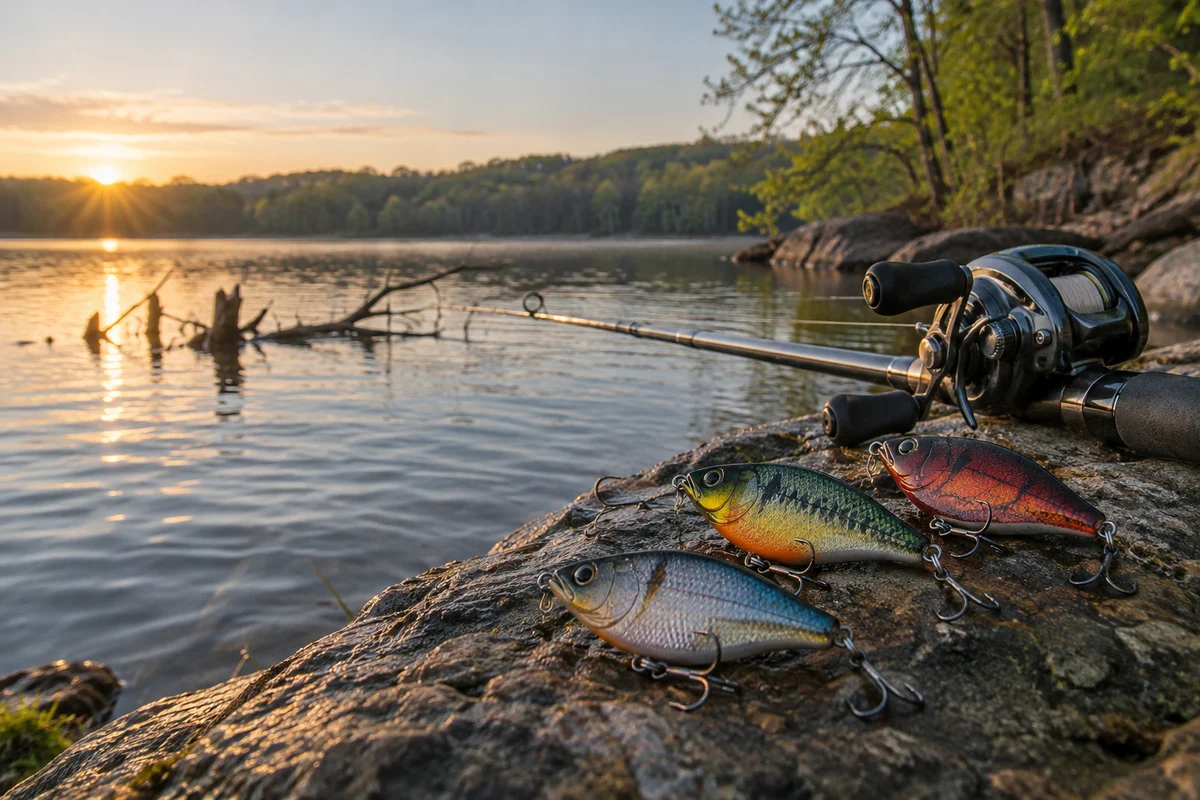
A useful cold-water lure is one you can keep near likely fish and detect without rushing. A compact jig, a suspending or slowly worked hard bait, and a soft plastic on a suitable rig can all be reasonable options depending on cover and local forage. The best choice is not fixed by the calendar. Water clarity, snags, depth, wind, and the size of prey in the fishery should guide the selection.
With a jig or soft plastic, let the bait reach the intended depth, then move it in short increments. Pause long enough to keep contact with the area rather than dragging it continuously out of the strike zone. On a hard bait, vary the length of pauses and the speed of the retrieve, keeping the movement controlled. A fish may take on the pause, but a pause is not automatically better in every waterbody.
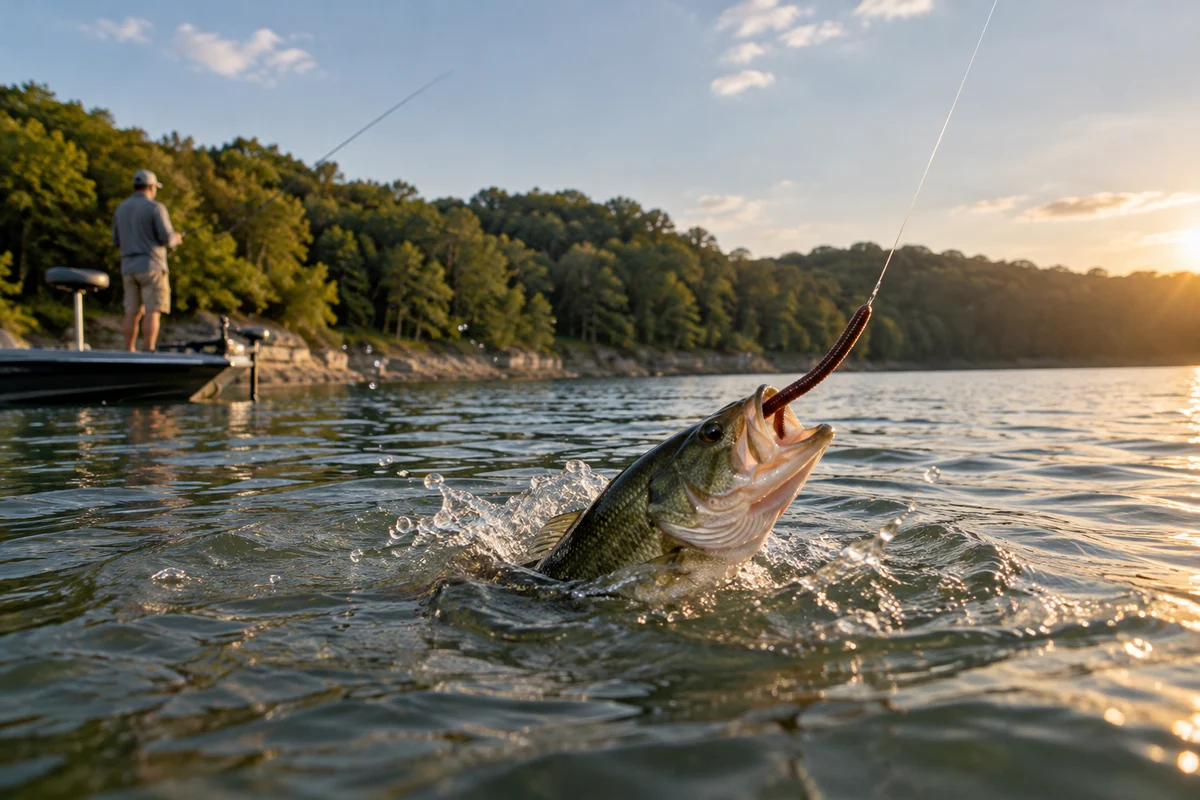
For a finesse approach around open water or sparse cover, review these plastic worm rigs for bass. Rig choice should fit the bottom and cover: exposed hooks can snag in vegetation or wood, while a weedless arrangement may pass through cover more cleanly. Use tackle strong enough for the fish and habitat, and check local rules on hooks and permitted gear.
Keep a small rotation rather than changing constantly. Start with one search bait or a presentation that covers water, then follow up with a slower option around the best-looking feature. Change only one factor—depth, retrieve, color, or location—so you can learn from the result. In stained water, a bait with a stronger silhouette may be easier to track; in clear water, a more subtle profile can be worth testing. These are practical experiments, not universal color laws.
Read bites and protect the fish
Cold-water bites can feel like a tap, added weight, or simply a line that moves differently. Keep slack under control while allowing the lure to work naturally. Watch the line as well as the rod tip, especially when a bait is falling. If a fish is hooked, use steady pressure and avoid unnecessarily prolonged handling.
Prepare tools before the first cast: pliers or a hook remover, a landing net if appropriate, and a camera only if you plan to make a quick record. Wet your hands before handling a fish, support its body, and return it promptly. Follow local guidance for seasons, size limits, possession limits, and release practices; regulations differ by jurisdiction and may change. The U.S. Fish and Wildlife Service provides information about fishing and aquatic resources, while state wildlife agencies publish the rules that apply to a specific water.
A practical cold-water checklist
Before leaving, check the forecast, access conditions, and local regulations. Dress for immersion and changing weather, not just the temperature at the launch. On the water, note the wind direction, water clarity, and any temperature trend you can measure. Pick a location with a depth transition, test a controlled presentation, and record the conditions when you get a bite.
A compact trip log can include date, waterbody, approximate water temperature if measured, cloud cover, wind, depth or structure, lure type, and whether the fish were caught shallow or deep. Avoid drawing a firm conclusion from a single outing. Repeated observations across different weather conditions are more informative than a rule based on one memorable catch.
Cold water can make fishing feel slow, but it also rewards careful observation. Find a nearby route between depth and feeding water, keep the lure in the likely zone, and let evidence—not a rigid seasonal formula—determine your next move. That deliberate process is the most transferable tool for cold water bass fishing.
Frequently asked questions
Are bass still active in cold water?
Yes. Activity and feeding can continue, but frequency and location vary with weather, waterbody, forage, and species.
Where should I look for bass when the water is cold?
Start at transitions connecting deeper water with nearby points, channels, flats, or cover, then test the pattern rather than relying on a fixed depth.
Should I fish slowly for cold-water bass?
A controlled, slower presentation is a useful starting point, especially around cover, but vary retrieve speed and pauses to learn what fish respond to that day.
What lure is best for cold water bass fishing?
There is no single best lure. Choose a bait you can control at the fish’s depth and adapt it to cover, clarity, wind, and local forage.
Sources & further information
Consult these primary sources for current regulations, technical information and local guidance.