Weedless Inline Spinner: Fish Cover Without Constant Snags
A weedless inline spinner pairs a rotating blade with a hook arrangement meant to deflect some vegetation, but it is not snag-proof. Learn where it works, how to tune the retrieve, and when another lure is a better fit.
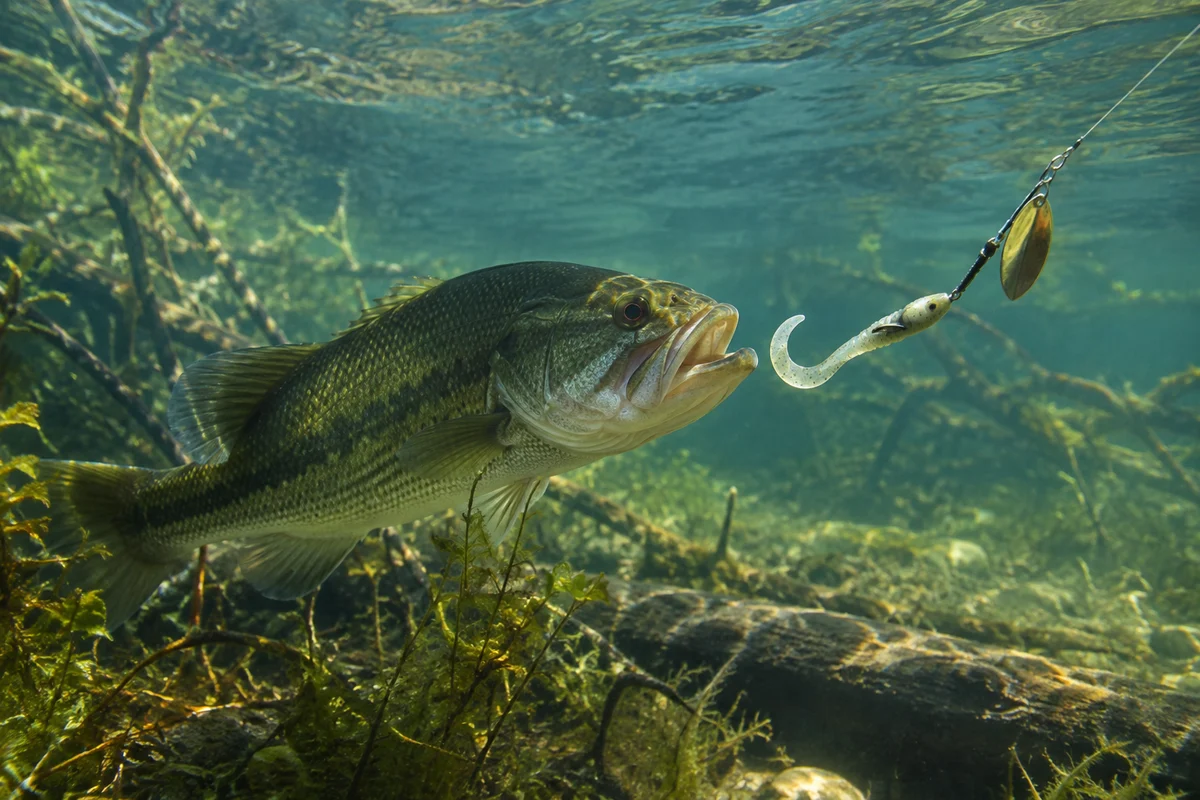
A weedless inline spinner can bring flash and vibration into places where open hooks collect grass, but “weedless” is a matter of degree, not a promise. The blade spins around a central shaft while a guard or protected hook point helps the lure slip past some vegetation. Choose the right cover, keep the hook clear, and retrieve steadily: those basics make this lure more useful than simply throwing it into the thickest weeds. These practical approaches fit into broader freshwater fishing tips for adapting tackle to conditions.
How does a weedless inline spinner work?
A conventional inline spinner has a blade that turns around a wire shaft, creating movement, flash, and vibration as it travels through water. A weedless version adds a feature intended to shield or deflect the hook point, often a wire guard, a brush-style guard, or a hook positioned close to the body. Designs differ, so inspect the actual lure rather than assuming every model protects its hook in the same way.
The guard reduces the chance that stems or leaves will catch the point; it cannot prevent the blade, shaft, or hook from snagging every kind of cover. A lure may pass through scattered grass and still hang in a dense mat, submerged branches, or loose strands wrapped around the blade. Weedlessness is most useful when it improves access to a promising lane without making the lure so guarded that fish are difficult to hook.
Which cover is a good match?
Start with edges and openings: the outside line of submerged weeds, pockets between plants, sparse reeds, or a clear lane beside a laydown. These places give a spinner room to rotate and give you a path for bringing a fish out. Make a few casts parallel to an edge, then angle across it. A consistent path through the same strip helps reveal whether strikes come from the edge, a gap, or a change in depth.
Thick surface mats are usually a poor fit for a blade that needs room to turn. Likewise, branches with many tight forks can catch a wire guard or trap the lure body. If the spinner stops pulsing or comes back carrying vegetation, clear it and adjust your path instead of repeatedly dragging it through the same snag. For open water or a clearer bank, an exposed-hook spinner such as the Mepps Flying C for shore fishing may be a more straightforward alternative; compare its open presentation with a guarded lure and match the choice to the cover.
How should you choose the lure and hook guard?
Look first at the hook arrangement. A guard should sit between likely contact with vegetation and the point, without being so stiff or poorly aligned that it prevents the hook from clearing when a fish takes the lure. On a store-bought lure, check that the guard is intact and does not cover the entire hook bend. On a lure you already own, follow its maker’s care guidance rather than bending components without knowing how they are meant to work.
Next consider blade clearance and overall profile. A blade that repeatedly catches stems may be a poor match for that particular patch, regardless of the hook guard. The best choice is the one that tracks cleanly through the available opening and can be retrieved at a speed that keeps the blade working. Color and flash are secondary to a lure that moves properly and reaches the target. If you want a different controlled presentation around cover, a swivel-head jig offers another way to think about hook orientation and movement, though it is a different lure style.
How do you rig it and check the guard?
Tie the line to the lure’s designated attachment point, using a knot appropriate to your line and the lure maker’s instructions. Make sure the knot is seated and the line is not trapped against a sharp or moving part. If the lure includes a snap or swivel as part of its design, follow its instructions; extra hardware can alter how a small lure moves.
Before fishing, inspect the point, barb, guard, and blade. Remove old plant material, check that the blade turns freely, and replace or repair damaged parts according to manufacturer guidance. Do not assume a guard makes a dull point acceptable. When a fish takes, the guard must yield enough for the hook to engage; a controlled, firm hookset is generally more useful than a panicked jerk. Keep the hook pointed away from your hands while clearing weeds, and use suitable tools to handle a fish safely.
What retrieve helps the blade keep working?
Cast beyond the target when space allows, let the lure settle only as needed, and begin a steady retrieve. Watch or feel for the blade’s repeating pulse. If it stops, the lure may have hit vegetation, the blade may have fouled, or the retrieve may be too slow for that particular setup. Reel in, clear it, and start again rather than towing a wad of weeds through the strike zone.
Vary speed in small steps. A slightly faster retrieve can keep the lure above low grass; a slower one may keep it near a deeper edge, provided the blade continues to turn. Brief pauses can change the lure’s path, but in cover they also give loose vegetation time to catch. Try a few passes at different angles before changing lures. If fish follow without taking, adjust speed or the distance from the edge first, then consider a smaller or less flashy presentation if you have one.
Why might fish miss it or weeds still catch?
A missed fish can result from a guard that is too stiff for the bite, a point that is not sharp, a fish striking the blade rather than the hook, or slack developing during the take. Check the hook and guard after a missed strike, keep contact with the lure during the retrieve, and make sure your hookset is controlled and directed to maintain tension. Avoid repeatedly bending the guard as a quick fix: changing its shape can affect both snag resistance and hook exposure.
Weeds on the blade are a separate problem from a hook snag. Even when the point is shielded, vegetation can wrap around the blade or shaft and stop the action. Clear the lure after contact and choose a cleaner route. If the same patch fouls it on every cast, move to the edge or switch to a lure designed for that vegetation rather than treating a weedless label as a guarantee.
When is another lure the better choice?
Use an inline spinner when you can present its flash and vibration through a reasonably open lane or along a cover edge. Change tactics when the water is choked with floating vegetation, when branches repeatedly trap the lure, or when you need a presentation that can remain in one small opening. Local rules may govern tackle, hooks, and where fishing is allowed, so check the relevant wildlife agency before heading out; Florida anglers can start with the Florida Fish and Wildlife Conservation Commission, while anglers elsewhere should consult their own state or local authority.
The practical test is simple: can the lure travel through the target lane with its blade turning and its hook staying clear enough to catch fish? If so, keep working that route and note the speed and angle that produce clean passes. If not, change the lane or lure. A weedless inline spinner is a useful tool for selected cover, not a universal answer for every weed bed.
Frequently asked questions
Is a weedless inline spinner completely snag-proof?
No. A guard can help deflect some vegetation from the hook, but weeds can foul the blade and shafts or branches can still catch the lure.
How can I tell whether the spinner blade is working?
Maintain a steady retrieve and look or feel for a repeating pulse. If it stops, reel in and check for vegetation, damage, or a blade that is not turning freely.
Should I use a weedless inline spinner in a thick weed mat?
Usually it is better suited to edges, gaps, and sparse cover where the blade has room to turn. A dense mat may foul it repeatedly; choose a route or lure suited to that cover.
Sources & further information
Consult these primary sources for current regulations, technical information and local guidance.