NC State Record Crappie: How to Verify a Catch
A practical guide to checking North Carolina’s official crappie record, preserving the evidence for a possible record fish, and understanding why category and verification rules matter.
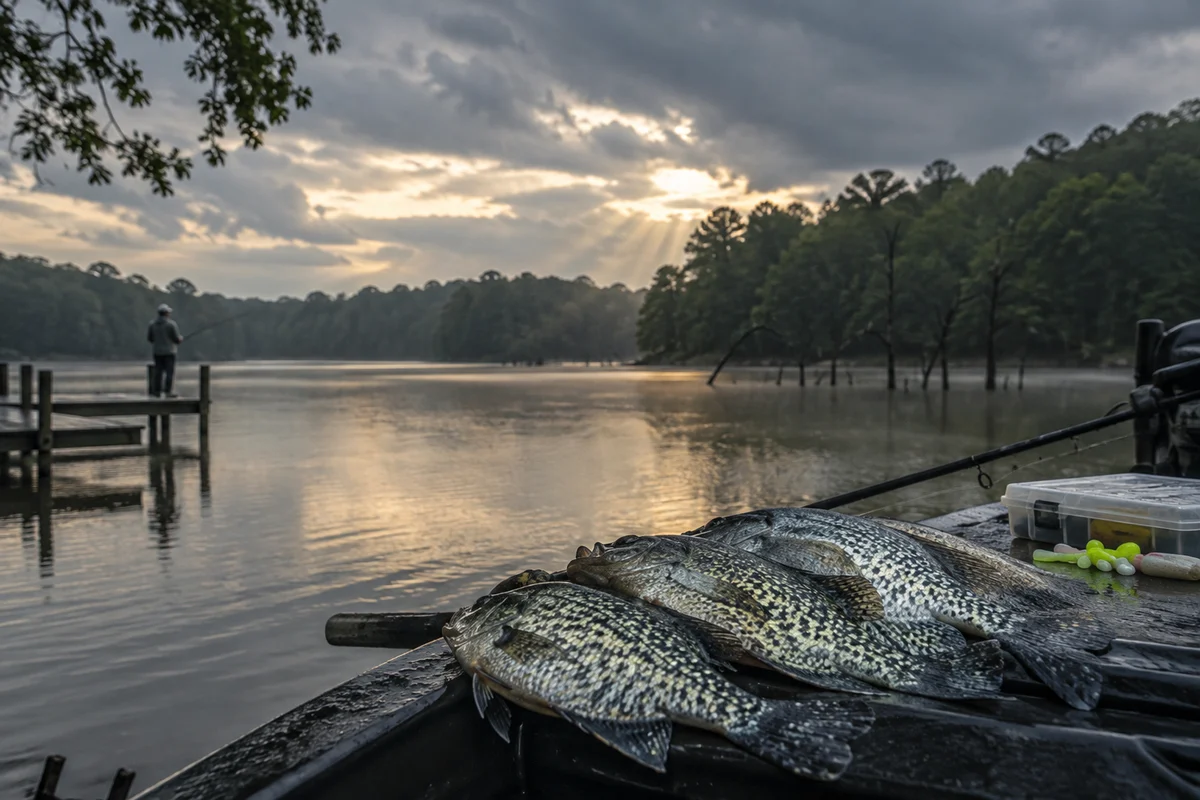
The nc state record crappie is not confirmed by a photo, a scale estimate, or a social post: the current title and its requirements must be checked with North Carolina’s official record program. If you think you have a contender, protect the evidence first. Identify the fish carefully, record its weight using an appropriate scale, and contact the state agency for the current application and verification process before assuming it qualifies.
This guide explains how to look up the recognized mark, what to document, and how to distinguish a state record from other kinds of fishing records. Record listings and rules can change, so treat the North Carolina Wildlife Resources Commission (NCWRC) as the authority for the current answer—not an old article or an unsourced claim.
Where can you check the current North Carolina crappie record?
Start with the North Carolina Wildlife Resources Commission and locate its current state fish records information. Check the listing itself for the species name, record category, recorded weight, angler or catch details if provided, and any notes about the entry. If the page is unclear or the category you need is not listed, contact the agency directly and ask which record applies to your catch.
Do not rely on a search snippet, reposted chart, or an older story as the final authority. A listing may be revised after a record is verified, and a fish that appears to be a crappie may need confirmation of its exact species before it can be compared with the right category. If you are researching the broader idea of state fish records, ODU’s overview of large fish records in Pennsylvania offers another example of why record claims need to be tied to a specific jurisdiction and category; it does not establish a North Carolina record.
What does “state record” mean for crappie?
A record is a recognized catch under a particular program’s rules, not simply the biggest fish someone says they have caught. Programs may distinguish records by species, method, waterbody, or other categories, and they set their own evidence and eligibility requirements. The applicable North Carolina listing and application determine which distinctions matter; do not assume that rules from another state or a national organization apply.
The common name “crappie” can refer to more than one species. Identification matters because an entry must be compared with the correct species category. When identification is uncertain, preserve clear images of the fish and ask the state agency what evidence it needs. A record reported for a different crappie species, or under a different kind of record category, is not automatically a match for the category you have in mind.
Likewise, a personal best, a large fish from one lake, a tournament result, and a state record are different claims. State recognition depends on the state’s documented process. For an international record, the International Game Fish Association maintains a separate record program with its own categories and requirements. That process does not replace North Carolina’s rules.
What should you do if you catch a possible record fish?
Treat the first steps as evidence preservation, not a victory announcement. Keep the fish in good condition while you promptly find out what the current state procedure requires. Avoid making a decision about release or handling based on a guess: contact the agency as soon as practical and follow its instructions. Requirements can be specific, and an informal measurement may not satisfy them.
Before the details fade, write down the date, approximate time, waterbody and location information requested by the application, fishing method, and the names of people who witnessed the catch. Take clear photographs that show the whole fish and useful identifying features. If the agency requests additional views or documentation, follow those directions. Keep original images and notes rather than relying only on edited or compressed copies.
Do not publicly present an unverified weight as an official record. A careful description such as “possible record catch, pending verification” is more accurate until the agency confirms the entry. For everyday crappie trips, reliable bait and tackle handling still matter; this guide to multi-species fishing lures covers general lure choices without determining whether a fish qualifies for a record.
How should a potential record fish be weighed and documented?
Use the official application’s instructions for the weighing process and acceptable equipment. Ask the agency which scale, witnesses, certification, or other documentation it requires before treating a reading as official. A number displayed on a personal scale can be useful as an initial indication, but it is not necessarily a certified weight or proof that all program conditions have been met.
Record the scale information and the weighing circumstances as requested, and keep the process transparent. If a witness is required or recommended, have that person observe the relevant steps and provide any requested information. Photograph the scale reading in context if the program accepts or requests photographs, but do not assume a picture substitutes for a required form or formal verification.
Follow the agency’s directions on the fish’s condition, inspection, and submission. Avoid adding or removing anything that could affect the measurement, and do not alter evidence. If the fish is no longer available, explain that honestly and ask whether any documentation can still be considered. The agency—not a social audience—decides whether the available evidence meets its rules.
Why can a big crappie fail to become a state record?
A remarkable fish may not qualify if it falls outside the correct species or category, if the measurement method does not meet program rules, or if required evidence is missing. Eligibility can also depend on details such as where and how the fish was caught. These are reasons to consult the current application, not assumptions about what North Carolina requires in every case.
There is also a difference between biological size and official weight. A photograph can make a fish look unusually large because of perspective, and length does not by itself establish a weight record. Even a convincing scale reading needs to be connected to the required documentation and process. That is why a claimed record should remain a claim until the agency has reviewed it.
If the fish does not qualify, its catch can still be meaningful. Record programs are narrow administrative categories; they do not measure the value of a fishing day or the health of a fishery. Keep the account precise: distinguish a verified state record from a personal best, an unverified estimate, or a local report.
How can anglers follow the rules while pursuing crappie?
Check current North Carolina fishing regulations before a trip, including rules relevant to the waterbody, season, species, and method. Regulations can vary, and record eligibility does not exempt an angler from ordinary fishing rules. Use the NCWRC’s current guidance when you need an authoritative answer, especially if a potential record catch raises questions about handling, retention, or documentation.
Handle fish carefully and minimize unnecessary time out of the water when release is intended. Use tackle suited to the fishing situation, keep the catch out of excessive heat, and make decisions with the fish’s welfare and applicable rules in mind. If you are unsure whether a record application requires the fish to be retained or inspected, ask the agency rather than risking a violation or compromising the fish based on hearsay.
For a practical starting point on the wider subject, browse the freshwater fishing tips hub. It is a place to continue exploring fishing techniques and related topics; record eligibility itself should always be verified through the official North Carolina program.
What is the most reliable way to confirm the record?
Use the current NCWRC record listing and application, then ask the agency to clarify any uncertainty about species, category, measurement, or required proof. Keep contemporaneous notes and original documentation, and avoid treating a third-party post as confirmation. If you are reporting someone else’s catch, verify the record and its category before repeating the claim.
That approach answers the key question behind “nc state record crappie”: the recognized fish is the one accepted under North Carolina’s current rules, not necessarily the largest-looking catch circulating online. Check the authoritative listing for the latest confirmed entry, and let the agency determine whether a new submission meets its standards.
Frequently asked questions
How do I find the current NC state record crappie?
Check the North Carolina Wildlife Resources Commission’s current state fish records information. Confirm the species and record category, and contact the agency if the listing or requirements are unclear.
Does a photo or personal scale reading prove a crappie is a state record?
No. They may help document a catch, but the state record program sets the accepted weighing, evidence, and application requirements. Follow the current official instructions.
Are state and IGFA crappie records the same?
No. North Carolina’s state program and IGFA have separate record categories and requirements. Verify a claim with the organization responsible for the specific record.
Sources & further information
Consult these primary sources for current regulations, technical information and local guidance.