Night Fishing for Crappie: A Seasonal Guide to Finding Fish After Dark
A practical, season-by-season guide to locating crappie after dark, choosing lights and presentations, and fishing safely without assuming every lake behaves alike.
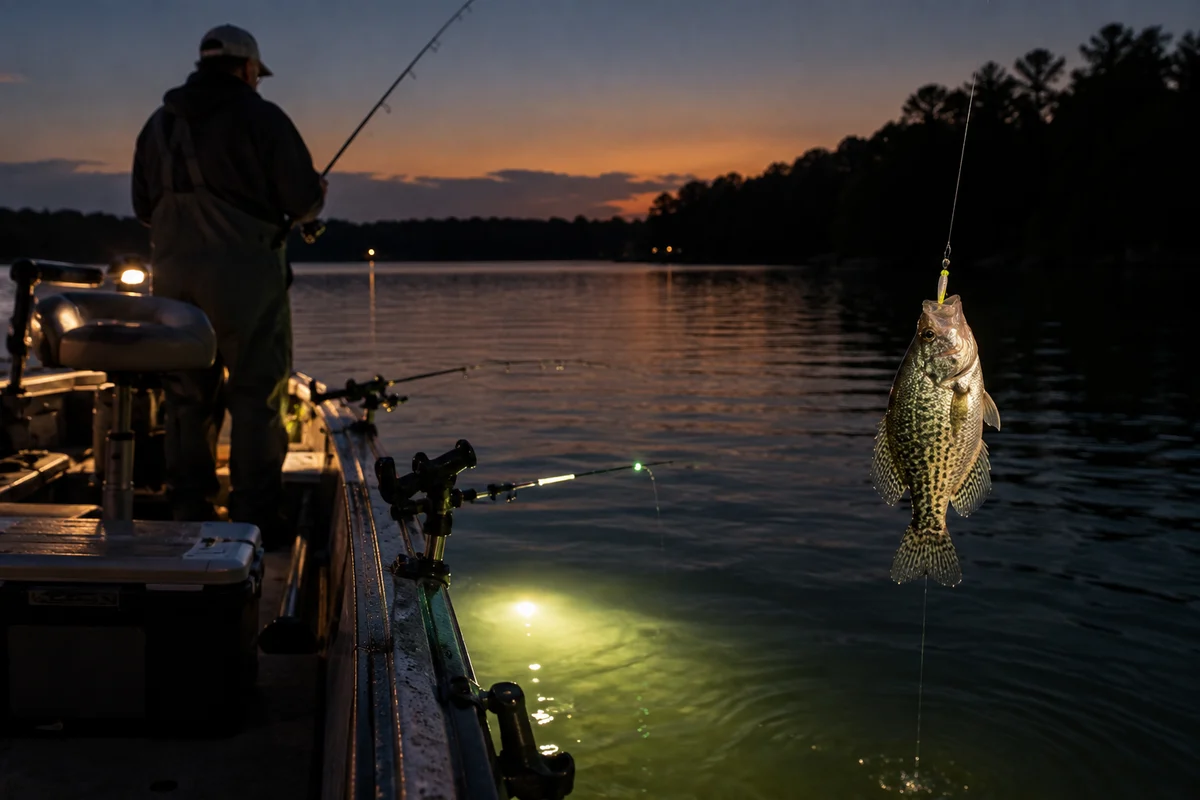
Night fishing for crappie is less about finding a magic light or lure than understanding where fish are likely to feed after sunset. Crappie may gather around a lighted dock, suspend over a basin, or remain close to a shoreline edge; their position changes with season, water conditions, and local habitat. Build a simple plan around structure, depth, and safe access, then let what you observe refine it.
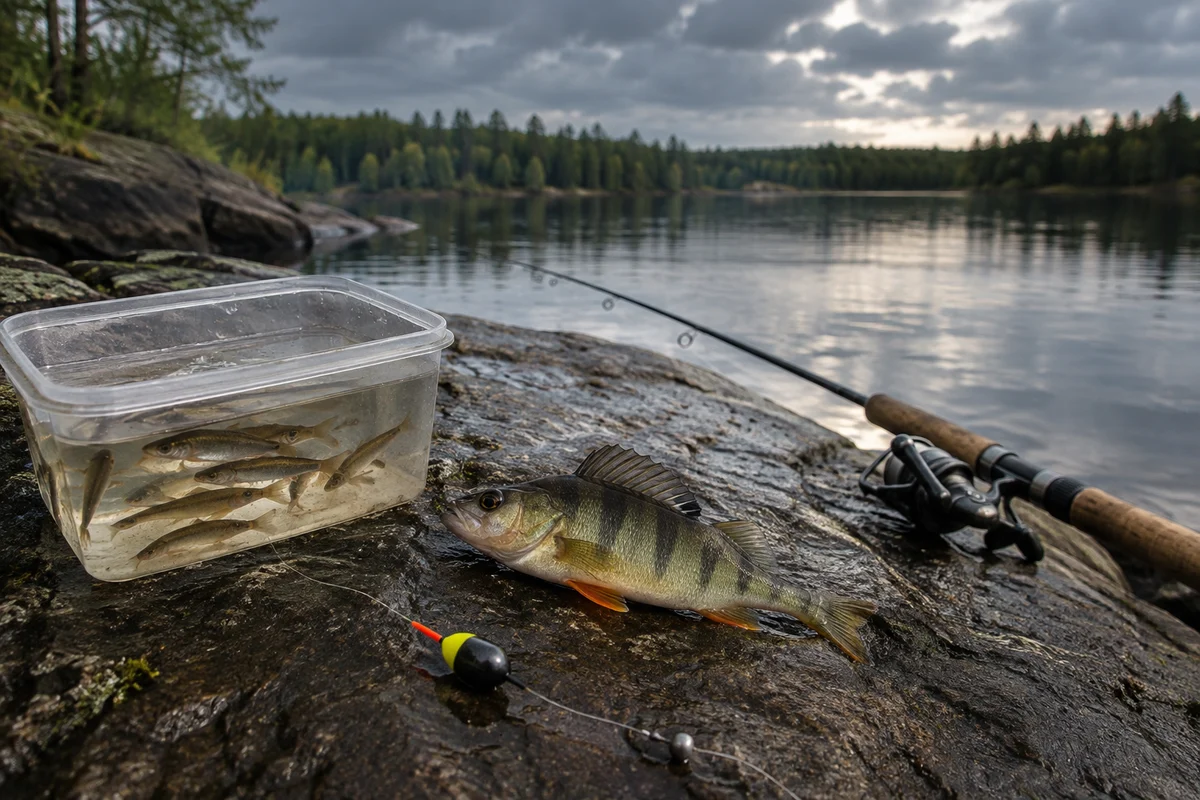
This guide focuses on adaptable methods rather than guaranteed patterns. Regulations, access hours, and local night-fishing rules vary, and fish behavior differs between lakes. For more panfish fundamentals, visit the freshwater panfish fishing hub. Related approaches include cold-water crappie fishing and fishing for crappie with minnows.
Why crappie may gather after dark
Crappie often relate to cover, depth changes, and forage. Darkness can make shallow feeding areas more comfortable for fish that spend daylight near deeper water or cover, but it does not switch on a universal nighttime bite. On some waters, fish move toward points, weed edges, brush, docks, or the mouths of coves. Elsewhere, they may remain suspended over deeper water.
Artificial light can help anglers see and may attract small organisms and baitfish, which can in turn draw feeding fish. The response may take time, and some locations produce little activity despite a bright lamp. Treat light as a way to make a fishing station visible and observable—not as proof that crappie are directly beneath it.
Choose a location before sunset
Arrive with enough daylight to identify hazards and set up. Check a lake map or chart for a combination of access, depth, and nearby structure. A dock, protected cove, steep bank, or anchored boat can all work when legal and safe. Prioritize a location you can reach and leave without navigating unfamiliar hazards in darkness.
Look for a nearby transition: a drop-off beside a shallow flat, a creek channel near a cove, or cover along a depth change. These features offer fish routes between resting and feeding areas. If you are fishing from shore, choose a stable, accessible bank with room to cast and no overhead obstructions. From a boat, favor a sheltered position out of traffic and away from navigation channels.
Avoid assuming that a famous location or a visible dock light is automatically productive. Observe the water, watch for bait activity, and give a spot a reasonable trial. If there is no sign of life, move carefully to another preselected location rather than making repeated blind runs.
A seasonal framework for after-dark fishing
| Season or condition | Starting area | Useful adjustment | What to watch |
|---|---|---|---|
| Spring, around spawning periods | Protected coves and nearby breaks | Test shallow edges, then step out to deeper water | Water temperature trends, vegetation, and local rules |
| Summer | Drop-offs, points, and deeper basin edges | Begin near suspended bait and vary lure depth | Heat, oxygen concerns, storms, and boat traffic |
| Autumn | Creek arms, points, and forage routes | Follow bait movement and check several depths | Cooling trends and changing water clarity |
| Winter or cold-water periods | Deeper breaks and basin edges | Slow the presentation and keep changes small | Ice, cold exposure, and reduced safe access |
This table is a starting framework, not a calendar of guaranteed locations. Seasonal timing varies by latitude, weather, water level, and lake. Use local reports and your own observations, and check the state wildlife agency for regulations and current advisories.
Spring: work the edges, not just the shallows
As water warms, crappie may use protected areas and shallow cover, but nighttime fish can also hold just outside a spawning area. Start around a cove’s entrance or a nearby break, then test progressively shallower water. If you find fish, note the depth and nearby cover rather than assuming all fish have moved to the bank.
Spring weather changes quickly. Wind can make a small boat or exposed dock uncomfortable, while rain may affect visibility and water levels. Keep a safe exit plan, and avoid wading unfamiliar shorelines after dark.
Summer: search depth and suspend a presentation
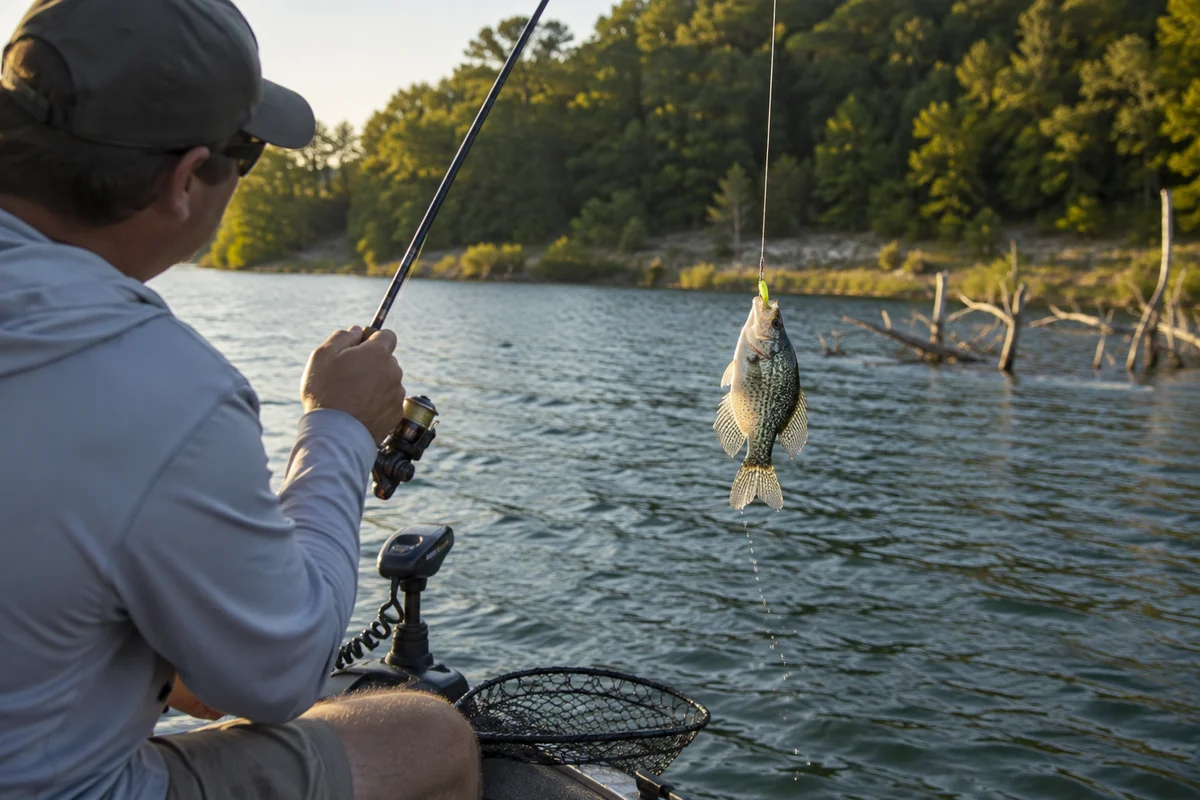
Warm-season fish may hold near deeper structure or suspend over a basin, particularly when bait is present. Start near a depth change and test a range of depths with a jig or minnow. If bites occur at one level, repeat that presentation before changing locations. A float can help keep a bait at a controlled depth; a slow, steady retrieve can help you search water without constantly snagging bottom.
Do not linger in a location if heat, storms, or poor water conditions make it unsafe. Check forecasts before leaving, and remember that water temperatures and oxygen conditions can differ across a lake.
Autumn: follow changing forage
Cooling water can shift both baitfish and crappie. Instead of relying on a summer location, check creek arms, points, and the edges of deeper water. Begin near visible bait or other signs of activity, then adjust depth in small increments. Wind-blown areas may collect forage, but strong wind can also make a boat position difficult to manage.
Winter: prioritize safety and a slower search
In cold weather, crappie can remain near deeper breaks or suspend over deeper water. A slower, controlled presentation may be easier to keep in the strike zone, but cold conditions raise the stakes of every mistake. Dress for immersion rather than merely air temperature, tell someone your plan, and do not launch if conditions exceed your experience or equipment.
Lights, tackle, and presentation
Use a light that can be secured and aimed without obstructing navigation lights or another angler’s view. A submerged fishing light may be useful where lawful, while a headlamp helps with knots and landing fish. Keep a separate, reliable light for moving around. Avoid shining a bright beam into other boats or toward a person’s eyes.
A simple setup is often enough: a light spinning outfit, small jig or hook, appropriate line, and a float if you want to control depth. Minnows can be effective where legal and available; artificial jigs are convenient for repeated depth changes. Choose hook and bait sizes appropriate to local fish and tackle, and check rules on bait use, possession, and transport.
Work deliberately. Lower or cast the presentation near the depth where fish or bait appear, pause, and retrieve slowly. If you get no response, adjust one variable at a time: depth first, then location or lure action. This makes it easier to learn what changed the result. For another compact artificial option, see our overview of crappie jigs.
Read the light zone and keep a useful record
The brightest part of a lighted area is not always where fish feed. Bait may show near the edge of illumination, and larger fish may hold just beyond it. Try the center, edge, and darker water nearby at different depths. Watch for bait movement, surface dimples, or repeated marks on a fish finder, but interpret electronics as clues rather than identification guarantees.
Keep notes on the date, approximate conditions, location type, depth, light arrangement, and presentation. Avoid recording a spot as a permanent rule; water levels, vegetation, and seasonal movements change. A short log helps distinguish a repeatable pattern from a single good evening.
Practical setup and safety checklist
Before leaving home, verify access hours, fishing regulations, bait rules, and any required licenses. Share your destination and return time. Check weather, wind, and water conditions, and make a conservative decision if visibility or forecast conditions are poor.
At the site:
- Set up in daylight and identify the route back before darkness.
- Wear a properly fitted, approved life jacket when boating; keep it on, not just within reach.
- Follow navigation-light requirements and keep lights arranged so they do not confuse other boaters.
- Carry a charged phone in a protected place, a backup light, and basic first-aid supplies.
- Keep hooks, knives, and loose tackle organized; use a covered container for bait.
- Keep the landing area clear and avoid standing near an unguarded edge.
- Stop if weather, visibility, fatigue, or boat traffic makes the plan unsafe.
No catch is worth a preventable nighttime accident. Boating rules and safety requirements vary by jurisdiction, so consult the appropriate state agency and official boating guidance before a trip.
Common problems and how to adjust
The light attracts bait but no crappie appear. Give the location time, then sample the darker perimeter and several depths. If activity remains absent, try a different structural feature rather than simply adding more light.
Bites stop after the first fish. The school may have shifted, or your presentation may have moved out of its depth range. Return to the productive level, pause between retrieves, and check whether bait remains nearby.
The water is too clear or too dark to see hazards. Do not compensate by moving faster. Use known access, a chart or marked route, and appropriate lights. If navigation remains uncertain, end the trip.
The fish are suspended. Avoid dragging a bait along bottom. Use a float or controlled retrieve to hold a lure at the observed level, then make small depth adjustments.
A better night starts with a flexible plan
Successful night fishing for crappie comes from a sequence: choose a safe location near useful structure, begin around a plausible depth, watch for bait and fish activity, and change one variable at a time. Seasonal patterns narrow the search, but they never replace local observation. Keep the setup simple, respect regulations and other anglers, and leave when conditions become unsafe. The most useful result of a trip may be a clear note about where fish were—and where they were not.
Frequently asked questions
Do lights always attract crappie at night?
No. Lights can make a fishing area visible and may attract bait, but results vary by lake, weather, water clarity, and location. Try the edge of the light and nearby darker water.
What depth should I fish for crappie after dark?
There is no universal depth. Start near a drop-off or visible bait, test several levels, and repeat the depth where you find activity.
Is night fishing for crappie better in summer?
Summer nights can offer comfortable access to deeper areas, but crappie may feed after dark in any season. Seasonal location and safe conditions matter more than a fixed calendar rule.
What is a simple setup for night fishing?
A light spinning outfit with a small jig or hook is a versatile start. Add a float to control depth, and use a secured fishing light where permitted.
What should I check before fishing after dark?
Confirm access hours, fishing and bait regulations, weather, navigation-light requirements, and local boating rules. Set up in daylight and carry a backup light.
Sources & further information
Consult these primary sources for current regulations, technical information and local guidance.