Choosing Crappie Jigs for Season, Depth, and Cover
The best crappie jig is the one that reaches the fish at a controlled pace and stays in their strike zone. Match jig weight, profile, and color to depth, cover, light, and water clarity rather than relying on a single favorite.
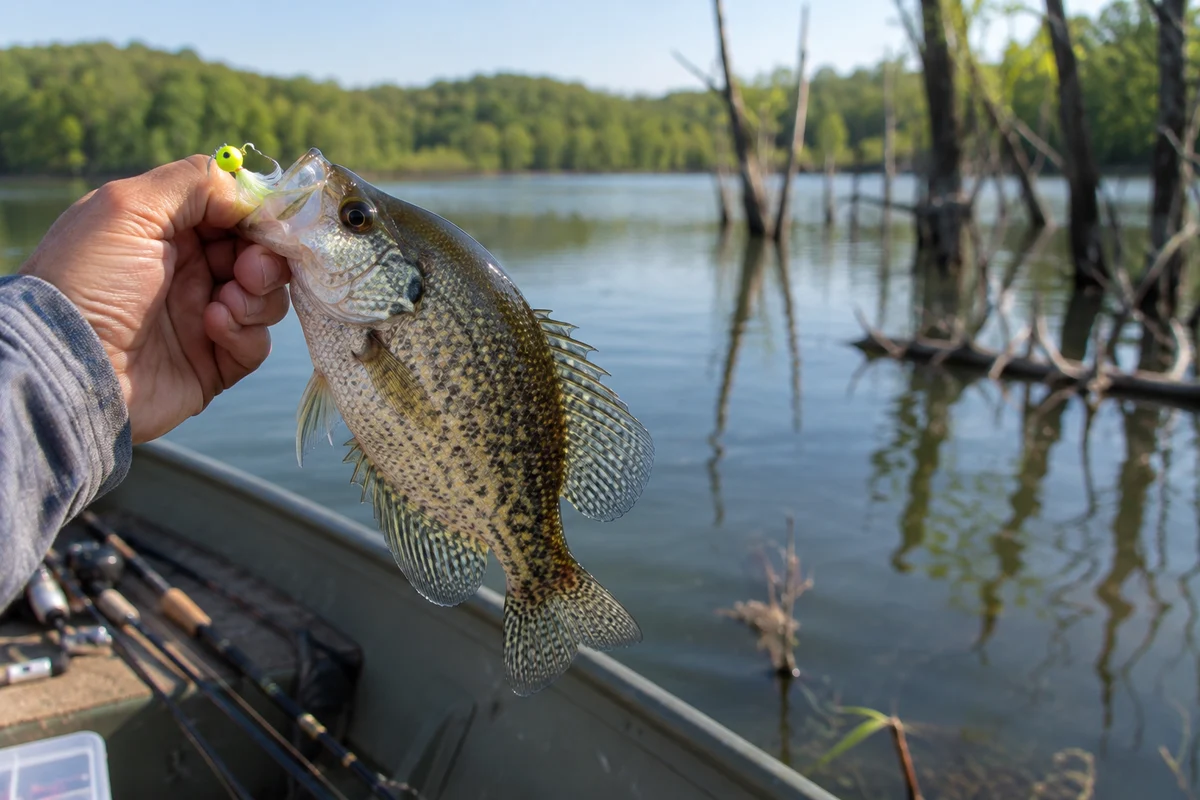
Crappie jigs are simple lures, but choosing one well means balancing weight, profile, color, and presentation. The right setup should fall at a manageable pace, pass through likely holding cover, and remain easy to detect. There is no universally best jig: depth, current, visibility, fish activity, and the way you are fishing all change what works.
A useful starting point is a compact jig that you can keep near the fish without snagging constantly. Then change one variable at a time. If the lure is passing too quickly, lighten it or reduce line drag; if it cannot reach the target, add weight. If fish follow without striking, adjust the profile, color, or pause before replacing the whole setup.
What makes a crappie jig effective?
Most crappie jigs combine a weighted hook with a soft-plastic body, a marabou-style dressing, or another compact material that moves on the fall and during small rod-tip motions. The head provides casting weight and helps the lure descend. The body supplies shape and movement, while the hook must be appropriate for the fish and the cover.
Think of a jig as a presentation, not just a color. A small change in weight can alter fall speed and how long the lure stays in front of a fish. A bulkier body may move more water, while a slim body can slip through tight branches. Neither is always superior. The useful question is whether the lure can be presented steadily at the depth and speed the situation calls for.
Jig weights and hook sizes vary among makers, so compare actual dimensions and intended use rather than assuming every package marked the same weight fishes identically. Check local regulations for hook restrictions, seasons, and other rules before fishing.
Choose jig weight by depth and conditions
Weight is primarily a control choice. A jig must be heavy enough to reach the target and stay in contact with the intended depth, yet not so heavy that it plunges through the zone before fish can respond. Wind, current, line diameter, and the angle of your line all affect the fall.
Start with a manageable weight and watch how the line behaves. If the line keeps drifting over the target or the jig takes too long to reach depth, move slightly heavier. If the lure drops sharply and repeatedly hangs in cover, try a lighter head or a more vertical presentation. In current, extra weight may be necessary to keep the jig from sweeping away.
When fish are suspended, count the lure down in a consistent way and repeat the same presentation. A countdown is not a precise depth measurement; wind, boat drift, line, and lure shape change the rate of descent. Treat it as a repeatable reference, then refine it by observing bites and marks on your electronics where permitted.
For a seasonal approach to colder conditions, see our guide to cold water crappie fishing. Cold weather does not guarantee a particular depth or bite; use the guide as a framework and verify what the fish are doing on the water you are fishing.
Match profile and color to visibility
Color choices are best treated as practical experiments, not rules. In clear water and bright conditions, natural or subdued shades can look less conspicuous. In stained water, low light, or around dark cover, a contrasting or brighter body may be easier for fish to locate. Water color and background matter: a shade that stands out against a pale bottom may disappear against submerged vegetation.
Begin with a familiar color that is visible enough to track. If fish approach but do not commit, try a different level of contrast or a smaller silhouette. If the lure is hard to see in the water, changing color may help you monitor it, though visibility to the angler is not a direct measure of how a crappie sees it.
Body shape also affects the presentation. A thin, flexible tail can flutter with very little movement. A broader body can create more resistance and may slow the fall. A compact profile can be easier to place among branches. Keep a few distinct shapes rather than a large collection of nearly identical options, and note which combinations produce bites under specific conditions.
Select a presentation for the location
A jig can be cast, vertically lowered, or slowly moved through a target area. Choose the method that lets you control depth and avoid unnecessary contact with cover.
| Situation | Starting presentation | What to adjust |
|---|---|---|
| Fish suspended beside a visible brush pile | Lower or cast to the outside edge; pause at a repeatable depth | Change depth before changing color |
| Shallow vegetation or wood | Use a compact profile and controlled lift-and-fall | Reduce weight or shorten the line swing if snagging |
| Wind or light current | Keep the line angle manageable and maintain contact | Add a little weight if the jig drifts off target |
| Fish following without taking | Slow the retrieve or add a brief pause | Try a smaller profile or a contrasting shade |
| Unfamiliar water | Search likely cover with repeated casts or controlled drops | Record depth, cover, and presentation that draw bites |
This table is a starting framework, not a promise of results. Fish can be absent from a spot, inactive, or holding at a depth you have not checked. Make deliberate changes and give each one enough consistent presentations to learn from it.
When fishing brush or standing timber, work the edges before dropping directly into the thickest branches. Keep the rod tip high enough to feel the lure and use small movements rather than sweeping it through the cover. If the jig hangs, avoid forceful jerking that can drive the hook deeper into wood or vegetation. Carefully change line angle or retrieve slack when safe to do so; if retrieval risks injury or damage, cut the line rather than reaching into hazardous cover.
A practical way to find the strike zone
- Locate likely habitat. Look for submerged wood, vegetation edges, docks where fishing is allowed, or other cover suited to the local waterbody. Seasonal movements differ by lake and weather.
- Start at a repeatable depth. Lower or cast the jig, pause, and repeat the same count or retrieve. Watch the line for a twitch or unexpected slack.
- Change depth in small steps. Work above, alongside, and below visible fish or cover instead of changing several variables at once.
- Track the response. Note depth, cover, light, water clarity, jig weight, and profile. A short note on your phone or in a log can make a later trip more efficient.
- Adjust after evidence. If you get no contact, move to a new depth or piece of cover. If fish follow, first alter cadence or profile. If you are snagging repeatedly, simplify the path or change weight.
Bites may feel like a light tap, but they can also appear only as a line that stops, shifts, or goes slack. Maintain enough contact to notice changes without pulling the jig unnaturally. A sensitive rod and manageable line help, but technique and attention matter more than equipment claims.
For anglers who want to compare a familiar lure design with other options, our overview of the Road Runner crappie jig discusses that style in context. It is one possible approach, not a requirement for catching fish.
Fishing from shore, boat, or kayak
From shore, make casts that cover different depths and angles around reachable cover. A jig that is too light may be difficult to control at long range in wind; a heavier one may be easier to cast but fall too quickly near shallow targets. Keep the retrieve slow enough to notice a take, and avoid casting into places where the line could cross people or snag private property.
A boat or kayak can make vertical presentations easier, but movement complicates depth control. Wind and drift may pull the jig away from the target. Position legally and safely, use modest movements, and account for the possibility that a fish or lure may be close to the boat. Our article on crappie fishing from a kayak covers the craft-specific considerations; always follow local boating and life-jacket requirements.
Common mistakes and useful limits
- Changing too many things at once: You cannot tell whether a new weight, color, or retrieve made the difference. Adjust one variable, then observe.
- Assuming bright color is always better in murky water: Contrast can help, but fish behavior, background, and light vary. Test rather than assume.
- Fishing only the surface or bottom: Crappie may suspend. Search multiple depths, especially when fish or bait are visible in the water column.
- Using weight to solve every control problem: Line drag, wind, boat drift, and rod position also affect the presentation. A heavier jig can make a snag problem worse.
- Treating a bite as proof of a universal pattern: One session may reflect a brief local condition. Recheck the pattern as weather, water level, and season change.
No jig choice can guarantee a catch, and fish-finding electronics or visible cover cannot confirm that fish will bite. Regulations and access differ by location. Check the state or local fish and wildlife agency for current limits, seasons, waterbody rules, and safe handling guidance. Keep fish you intend to harvest within the applicable rules, and handle released fish carefully.
Build a small, useful jig selection
A practical kit can include a few weights suited to your typical depths and wind, several contrasting colors, and two or three body profiles. Include a compact option for cover and a more visible profile for situations where you need to track the lure. Carry spare hooks and plastics, but prioritize combinations you can actually control.
After a trip, record what mattered: water clarity, approximate depth, cover type, wind, light, and how the jig was presented. Those observations are more transferable than a claim that one color or brand works everywhere. For broader panfish tactics and related seasonal topics, browse the freshwater panfish fishing hub.
Frequently asked questions
What size jig is best for crappie?
Choose a weight that reaches the target while letting you control the fall. Depth, wind, current, line, and cover all affect the best choice; start manageable and adjust based on control and snags.
What color crappie jig should I use in stained water?
Try a shade that contrasts with the water and background, then compare it with a more subdued option. Visibility and fish response vary, so treat color as an experiment rather than a fixed rule.
Are soft-plastic or hair jigs better for crappie?
Neither type is always better. Soft plastics offer varied shapes and movement, while hair or feather-style dressings move differently. Choose a profile you can present at the target depth and test it under current conditions.
How do I keep a crappie jig from snagging brush?
Work the outside edges first, use controlled movements, and avoid letting the jig plunge into dense branches. A lighter weight or a more vertical angle may help, though no setup is snag-proof.
Sources & further information
Consult these primary sources for current regulations, technical information and local guidance.