Cold Water Crappie Fishing: A Practical Guide to Finding Winter Fish
Cold water crappie fishing is less about covering water quickly and more about locating stable habitat and keeping a small presentation in the strike zone. Use this guide to adapt your search, tackle, and pace to changing winter conditions.
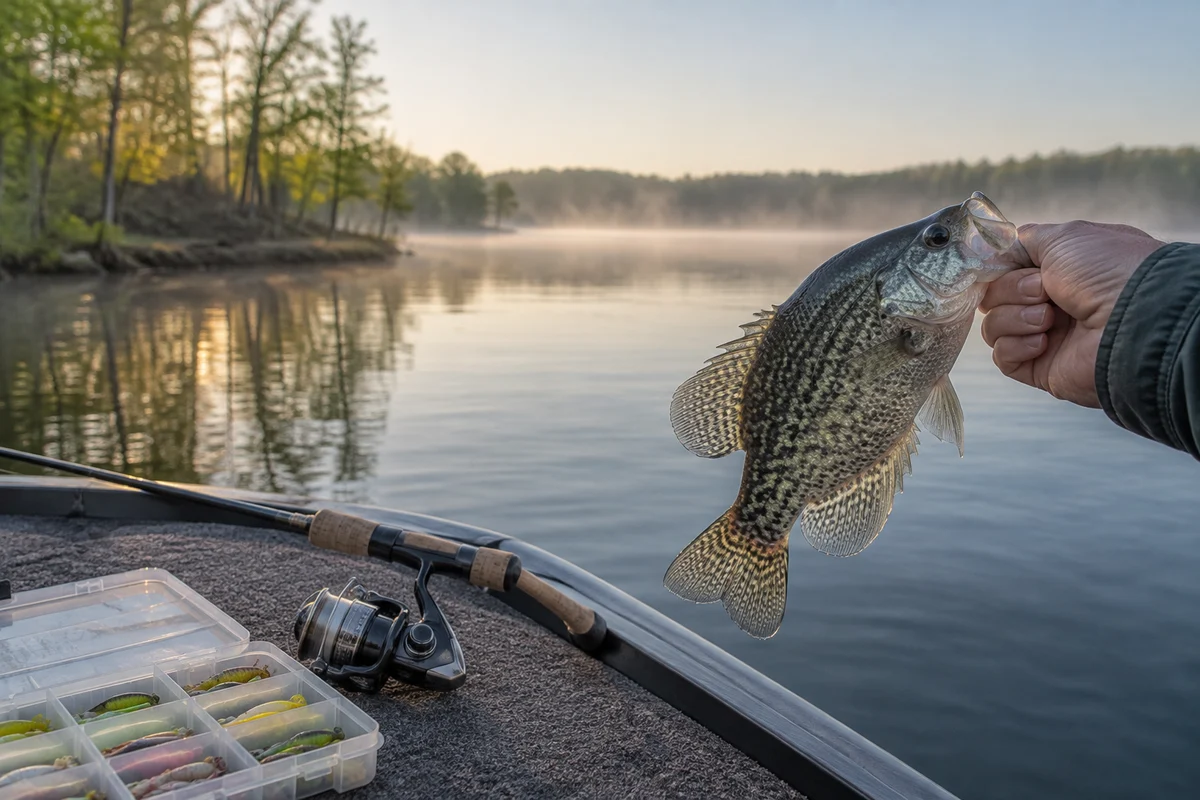
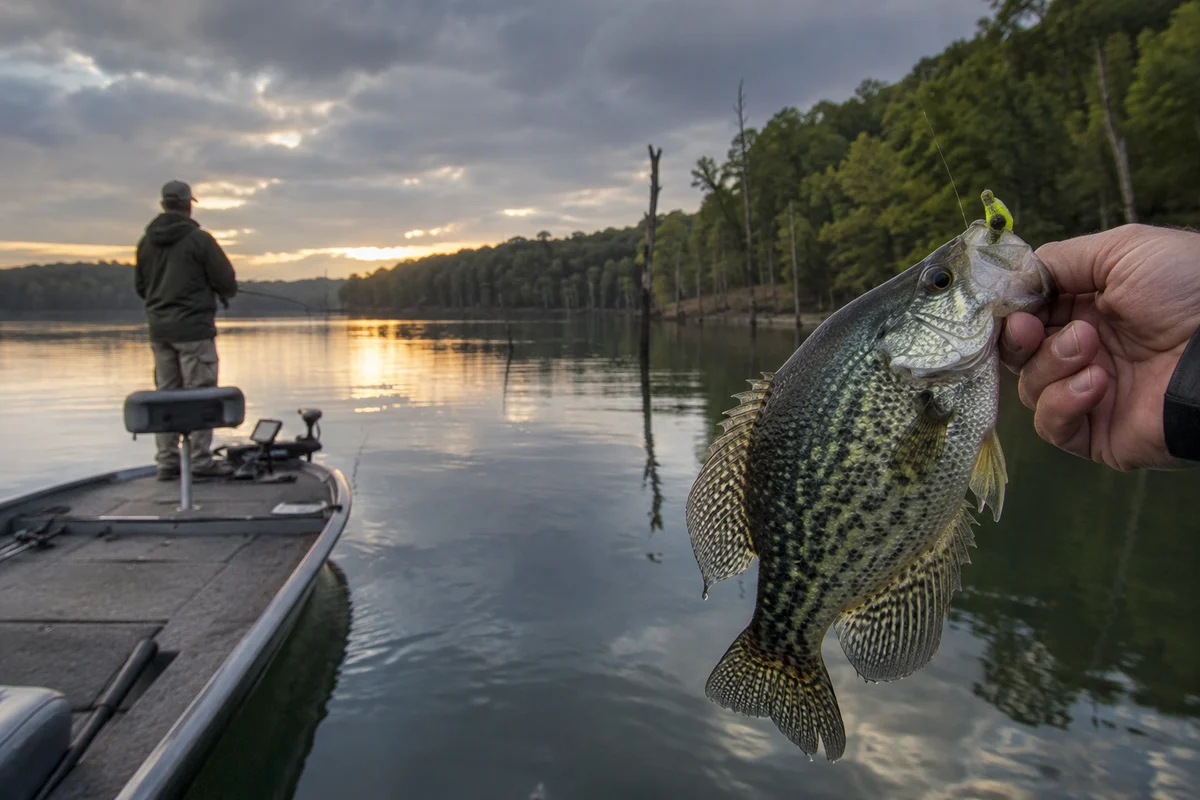
Cold water crappie fishing can be rewarding when you trade summer speed for careful observation. As water cools, crappies often become less willing to chase a moving bait, and their location can shift with depth, weather, forage, and the shape of the lake. There is no single winter depth or lure that works everywhere; the practical goal is to find suitable cover, present a small offering slowly, and let the fish tell you whether to stay or move.
This approach applies to both black and white crappies, but local waters differ. A reservoir with standing timber behaves differently from a shallow natural lake, and regulations vary by jurisdiction. Check current rules before fishing, especially seasonal closures, size limits, and harvest limits. The freshwater panfish hub is a useful starting point for related crappie and panfish topics.
Where crappies hold in cold water
Begin with structure and cover rather than assuming that fish are simply “deep.” Crappies may use creek channels, submerged timber, brush, dock edges, weed remnants, or the boundaries between a basin and a nearby slope. In some waters they suspend over deeper water; in others they stay close to cover. The best clue is often a combination of habitat and forage, not depth alone.
Look for places that offer nearby access to more than one depth. A point that falls toward a channel, a submerged tree beside a drop, or the outer edge of a remaining weed bed can give fish options as conditions change. If you have a sonar unit, use it to map depth changes and distinguish likely cover from open water. Treat marks as clues rather than proof: electronics may show fish, bait, or structure, and identification is not always certain.
On unfamiliar water, consult a contour map before launching. Pick a few areas where a channel, basin, or point meets cover, then check them methodically. Avoid spending the whole day searching featureless water unless local knowledge or observations give you a reason to do so. In clear water, crappies may hold deeper or farther from visible cover; in stained water, they may use shallower structure. These are tendencies, not rules.
Read conditions before choosing a spot
Cold fronts, wind, sunlight, and water clarity can all influence a fishing day. A stable stretch of weather may make fish easier to locate, while a sharp change can alter their activity or position. Rather than treating a particular temperature as a switch, compare conditions across the lake and revisit productive areas after changes.
Wind can push plankton and small baitfish toward a bank or point, but it can also make boat control difficult. If the wind is manageable, check the windward side of promising structure as well as sheltered alternatives. On calm, bright days, shade and deeper cover may be worth a look. In cloudy conditions, test a range of depths instead of assuming fish have moved shallow.
Use a simple search sequence: start at a likely depth near cover, fish it thoroughly, then move up or down in small increments. If you find fish but get no response, change presentation before abandoning the area. If you find neither fish nor forage after a careful check, move to the next feature rather than repeatedly fishing empty water.
Choose a presentation you can control
A small jig is a versatile starting point. Choose a jig-and-plastic or jig tipped with bait that you can keep near the suspected fish without snagging constantly. The exact weight depends on depth, wind, line, and the speed at which your boat drifts. Use the lightest option that still lets you track the bait and maintain control; increase weight when wind or current makes the lure sweep away from the target.
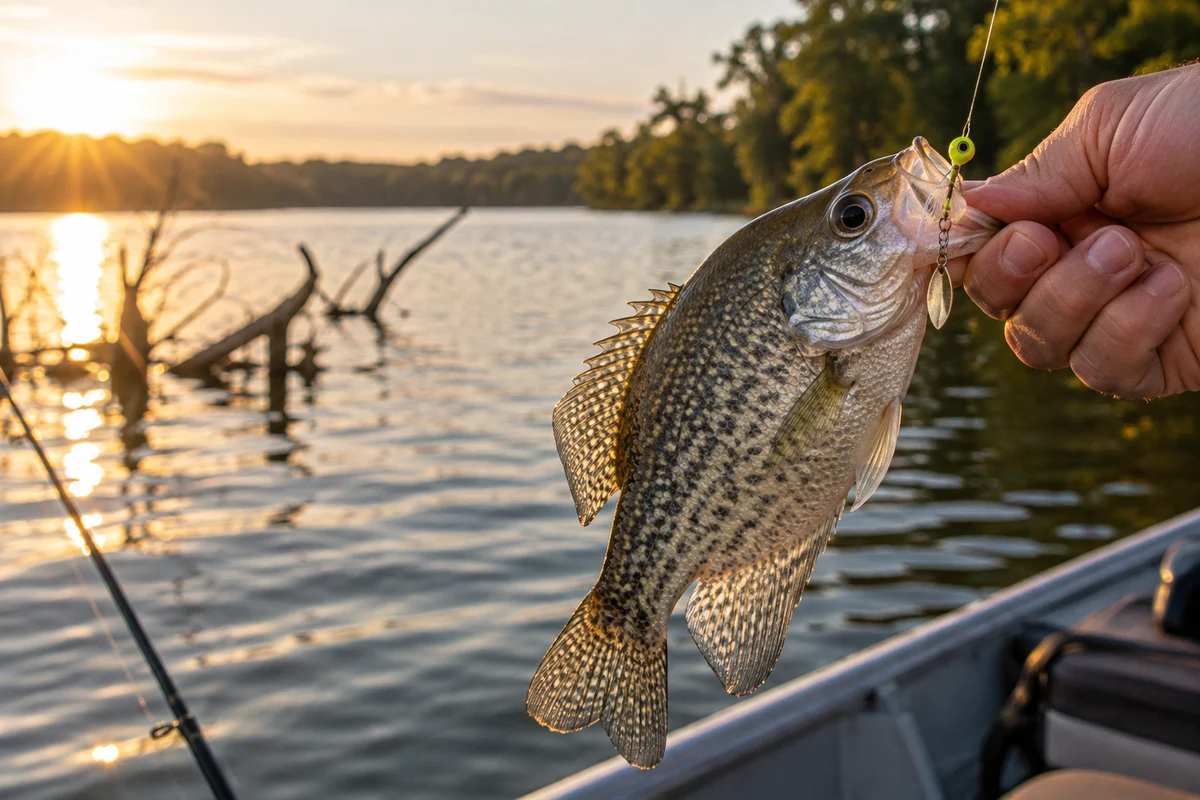
A float can help suspend a bait at a set depth and reveal subtle takes. It is particularly useful around brush or timber when you want to hold a small offering just above snags. A vertical presentation can be effective from a boat when fish are directly below, while casting lets you cover edges and approach wary fish without positioning directly over them. For more on a time-tested jig style, see this overview of the Road Runner crappie jig; select tackle to suit local conditions rather than assuming one lure is universally best.
| Situation | First adjustment | What to observe |
|---|---|---|
| Fish appear suspended | Hold the bait at their level; vary depth in small steps | Whether marks follow, rise, or disappear |
| Bites are light | Slow the movement and watch the line or float closely | Taps, slack, or a float that settles oddly |
| Wind pushes the bait away | Add enough weight for control or move to a sheltered angle | Whether the lure stays beside the target |
| Frequent snags in cover | Raise the bait slightly or use a float | Whether fish respond above the branches |
| No fish or forage located | Check a nearby depth break or a different cover type | Whether the new area has bait and suitable structure |
Slow down without making the bait lifeless
Cold water often calls for a restrained cadence, but “slow” does not mean motionless in every situation. Start with a gentle lift, a short pause, and a controlled fall. Keep the bait near the fish long enough for them to inspect it. If that produces no response, try a slightly quicker lift, a longer pause, or a small change in direction. Change one element at a time so you can tell what mattered.
Pay attention to line and rod position. A crappie may take a bait without a dramatic strike; the line can twitch, drift sideways, or suddenly go slack. Keep the line as visible as conditions allow, and avoid holding the rod so tightly that subtle movement is missed. When fishing vertically, maintain contact without pulling the jig away from the fish. When casting, let the lure reach the chosen depth and retrieve steadily enough to keep it there.
If you are fishing from a kayak, boat control becomes part of the presentation. Wind can move you off a brush pile or channel edge before you realize it. A controlled drift, a safe anchor setup, or a sheltered position may help keep the bait in place. The related guide to crappie fishing from a kayak covers the platform-specific considerations; always follow the watercraft and personal-flotation rules for your location.
A repeatable search-and-adjust plan
Use a short sequence rather than changing everything at once:
- Choose a feature. Identify cover near a depth change, channel, or basin edge.
- Check the area. Look for bait and likely fish with available mapping or sonar, while remembering that screen marks are not definitive.
- Set a starting depth. Begin near the cover or marks, then test modestly above and below.
- Make controlled presentations. Try a slow vertical jig, a float, or a careful cast along the edge.
- Adjust one variable. Change depth, cadence, or weight before switching locations.
- Move when evidence says to. If a thorough pass finds no sign of fish or forage, test another feature.
Keep notes on the location, depth, weather, water clarity, and presentation that produced a response. A simple record helps distinguish a repeatable pattern from a one-time bite. It can also help you recognize how a familiar lake changes over the season without assuming that last winter’s productive spot will always hold fish.
Handle fish and conditions responsibly
Cold-weather fishing has hazards beyond fish location. Dress for immersion, not just the air temperature, wear an appropriate personal flotation device, and tell someone where you plan to go. Cold water can become dangerous quickly; avoid taking risks to reach a spot or recover gear. Check ice and boating advisories from local authorities, and do not assume that an area is safe because it was recently accessible.
If you keep fish, follow local size, season, and possession rules and use fish-cleaning guidance from a trusted local authority. If releasing a fish, minimize time out of water, wet your hands before handling, and support the fish gently. Regulations and conservation recommendations differ among waters, so consult the relevant state or provincial fisheries agency.
There is no guaranteed formula for cold water crappie fishing. Fish may suspend, hold tight to cover, or shift after a weather change. A patient search, a controllable presentation, and a willingness to revise your depth and pace are more reliable than a rigid rule. For another panfish perspective, explore this account of a state fishing record crappie; record claims should always be checked against the official state recordkeeper rather than repeated without verification.
Frequently asked questions
How deep should I fish for crappies in cold water?
There is no universal depth. Start near cover and a depth change, check for fish or forage, then test slightly above and below until you find a productive level.
What is a good cold-water crappie presentation?
A small jig worked slowly and kept near the fish is a practical starting point. A float can help suspend bait above snags, while a vertical presentation works when fish are directly below.
Do crappies always move deep when the water gets cold?
No. They may use deeper water, but can also hold near shallow cover, channel edges, or remaining vegetation depending on the lake, forage, clarity, and weather.
Should I keep or release cold-water crappies?
That depends on your goals and local rules. Check current regulations, handle released fish gently, and keep only what is lawful and appropriate for the water.
Sources & further information
Consult these primary sources for current regulations, technical information and local guidance.