How to Fish Shaky Head: A Simple Bass-Fishing Guide
A shaky head is a simple, adaptable way to present a soft plastic near the bottom. Learn how to choose a basic setup, work it without overworking it, and adjust to cover and conditions.

A shaky head gives a soft-plastic worm or compact bait a light, controlled presentation near the bottom. Learning how to fish shaky head rigs is less about mastering a complicated retrieve than noticing what the line and lure are doing, then making small adjustments. The method can be useful when bass are reluctant to chase, but it is not a guaranteed fix: fish location, forage, weather, and local conditions still matter.
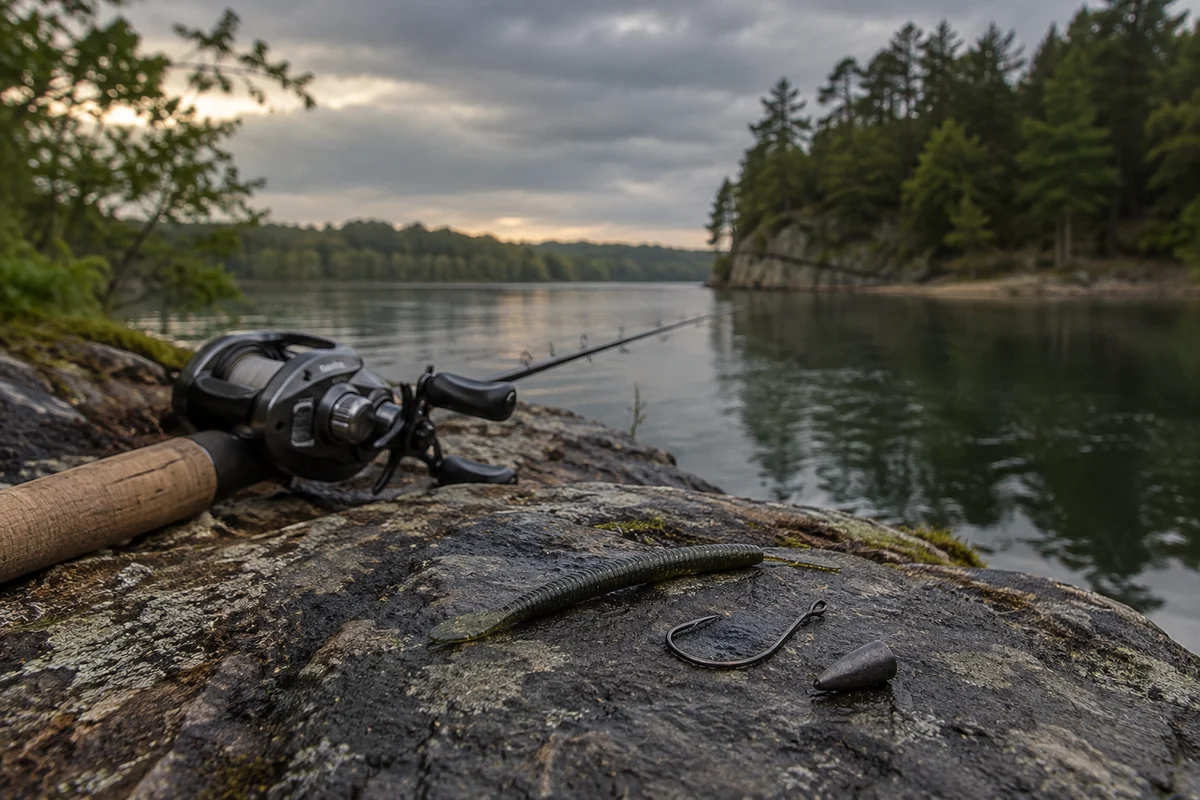
The usual rig pairs a small jig head with a hook and a soft plastic, often a straight-tail worm. Some heads have a screw or keeper to hold the bait; others use a simple hook. Match the hook and head to the bait, the cover, and local rules. For a broader introduction to presentations and basic tackle, see our guide to bass fishing for beginners.
What makes a shaky head work?
The head supplies weight and keeps the bait close to the bottom, while the soft plastic can move with subtle rod or line movements. Many anglers use it around areas where a slower presentation makes sense: a rocky edge, a point, a transition in bottom composition, or the outside of sparse vegetation. It can also be fished along docks or other structure when there is enough room to keep the rig clear.
The name can suggest constant shaking, but vigorous motion is not essential. A bait may draw attention while it rests, drifts slightly, or moves in short increments. The key is maintaining contact with the bottom without dragging the rig blindly through every snag.
A shaky head is one member of a larger family of soft-plastic presentations. Compare its bottom-oriented approach with the options in plastic worm rigs for bass and consider how a more vertical presentation differs in our overview of drop-shot baits for bass.
Choose a basic setup
Start with tackle that lets you feel the head and control the bait. A spinning outfit is a common, manageable choice, especially for lighter heads and smaller plastics. Use line appropriate to the water, cover, and equipment, and follow the line and rod makers’ guidance. There is no single ideal weight or line size for every lake.
| Situation | Starting adjustment | What to watch |
|---|---|---|
| Open, relatively shallow bottom | Use a lighter head that still reaches bottom | Whether you can distinguish bottom contact from a bite |
| Wind or deeper water | Consider a heavier head if the rig is hard to feel | Line bow and whether the bait stays in touch with bottom |
| Sparse grass or scattered cover | Choose a streamlined bait and controlled casts | Grass collecting on the hook or bait |
| Rock or wood nearby | Make shorter, more deliberate movements | Repeated hang-ups and the path of the line |
These are starting points, not fixed prescriptions. If a head cannot reach bottom in the conditions, it is too light for that task. If it plows into cover or snags repeatedly, try a different angle, a lighter head, or a more suitable location before adding more force.
Rig the plastic straight. A crooked bait can spin or behave erratically on the fall. If the hook is exposed, be attentive around weeds and brush; if a weedless arrangement is used, make sure the hook point is positioned as intended and remains legal where you fish. Check the bait after catches or contact with cover, since a shifted plastic can impair the presentation.
How to fish shaky head step by step
- Find a useful target. Look for a change in depth, a point, a transition, or an edge that gives fish a reason to hold. A shaky head can cover water, but it is most informative when you can identify what you are fishing.
- Cast beyond or alongside the target. Avoid landing directly in the thickest part of cover if that makes the rig difficult to retrieve. Let the bait descend on a controlled line; watch for an unexpected pause or movement before it reaches bottom.
- Confirm bottom contact. The line may relax, or the rod tip may register a light tap as the head settles. Wind, current, soft bottom, and line angle can make this harder to read. If uncertain, give it a moment and make a small lift rather than sweeping the rod.
- Move the bait in short increments. Lift or twitch the rod tip slightly, then let the rig settle. You can also tighten the line enough to move the head a little. Pause between movements. The goal is to keep the bait near the target, not to shake continuously.
- Keep slack manageable. A modest bow can let a bait fall naturally, but excessive slack makes it difficult to detect contact or control the next movement. Reel in slack carefully rather than pulling the rig away from the bottom.
- Respond to a possible bite with control. A fish may feel like a tap, a sudden heaviness, or a line that moves sideways. Reel until you have contact and use a firm, controlled hook-set suited to the hook and tackle. Avoid an uncontrolled, full-force swing, especially with light line or nearby people.
- Retrieve and inspect. If the rig hangs up, change the angle or ease pressure rather than yanking repeatedly. After a fish or snag, check that the hook, knot, and plastic are still in good condition.
Adjust the retrieve to conditions
When fish seem inactive, lengthen the pause and reduce how far each movement travels. If you are not getting bites and the bottom is clean, try a slightly livelier series of small lifts. Make one change at a time—pace, location, or bait profile—so you can tell what helped.
Wind and current can pull line away from the rig, obscuring bottom feel. A cast that reduces the line’s exposure to wind, or a modest increase in head weight, can improve control. In clear water, a more restrained presentation and careful approach may be worthwhile; in stained water, a slightly larger or more visible bait can be a reasonable experiment. Water clarity alone does not dictate a color or retrieve, so treat these as hypotheses rather than rules.
Cover demands a tradeoff. An exposed hook may make contact and hook-up easier, but can collect vegetation or catch in wood. A weedless arrangement may pass through some cover more cleanly, though it still can snag and may require good hook placement. Fish edges and openings if dense cover makes the rig impractical. Local regulations may restrict tackle or methods; check the rules for the specific water you plan to fish.
Common mistakes and practical fixes
- Shaking without a pause: Constant movement can pull the bait away from a small target. Let it settle and pause before moving again.
- Using weight by habit: Too much weight can make the rig drop abruptly or wedge into cover; too little can leave it hard to control. Choose based on depth, wind, current, and bottom contact.
- Dragging through every obstacle: Repeatedly forcing the rig through snags wastes time and may damage tackle. Change casting angle, shorten the movement, or fish the edge.
- Setting on every tap: Bottom contact can resemble a bite. Keep the line controlled, wait for clearer weight or movement when appropriate, and avoid violent swings.
- Ignoring the bait’s alignment: A bent or torn plastic may spin, slide down, or lose its intended action. Re-rig or replace it when needed.
- Fishing only the lure, not the location: A careful presentation cannot compensate for an unproductive area. If several deliberate casts reveal no promising contact, move to another feature or depth.
A quick decision framework
Before changing tackle, ask three questions: Can the rig reach bottom? Can I tell when it touches? Can I move it through this cover without constant snagging? If the first answer is no, adjust weight or casting angle. If the second is no, reduce slack, account for wind, or select a head you can control. If the third is no, fish an edge or opening, alter the angle, or choose a different presentation.
Keep a simple mental record of the depth, cover, pause length, and type of contact where you get a bite. That is more useful than assuming a single color or movement works everywhere. Conditions vary from one waterbody to another, and an approach that is effective one day may need adjustment the next.
Safety and responsible fishing
Use hooks carefully, keep casts clear of other people, and handle fish in a way that minimizes unnecessary time out of water. Follow local seasons, size limits, tackle rules, and access restrictions. If you are unsure about regulations, consult the relevant state or local fish-and-wildlife agency before fishing.
The shaky head’s strength is its versatility: a straightforward rig can be presented slowly around many kinds of bottom structure. Keep the bait aligned, stay attentive to the line, and make measured adjustments. When those fundamentals are in place, you can tell whether the technique suits the location—or whether it is time to try another approach.
For more, explore our bass fishing fishing freshwater guides.
Frequently asked questions
What is the best bait for a shaky head?
A straight-tail worm is a common starting point because it rigs simply and moves with subtle inputs. Compact soft plastics can also work; match the bait to the hook and cover.
Should you shake a shaky head constantly?
No. Let the bait settle, pause, and move it in short increments. Constant shaking can pull it away from a small target.
How do I know when a shaky head reaches bottom?
Look for a relaxed or changed line and a light contact through the rod. Wind, current, depth, and soft bottom can make the signal less distinct.
Can you fish a shaky head around weeds?
Yes, but vegetation can foul an exposed hook. Consider a suitable weedless arrangement, fish openings or edges, and follow local tackle regulations.
Sources & further information
Consult these primary sources for current regulations, technical information and local guidance.