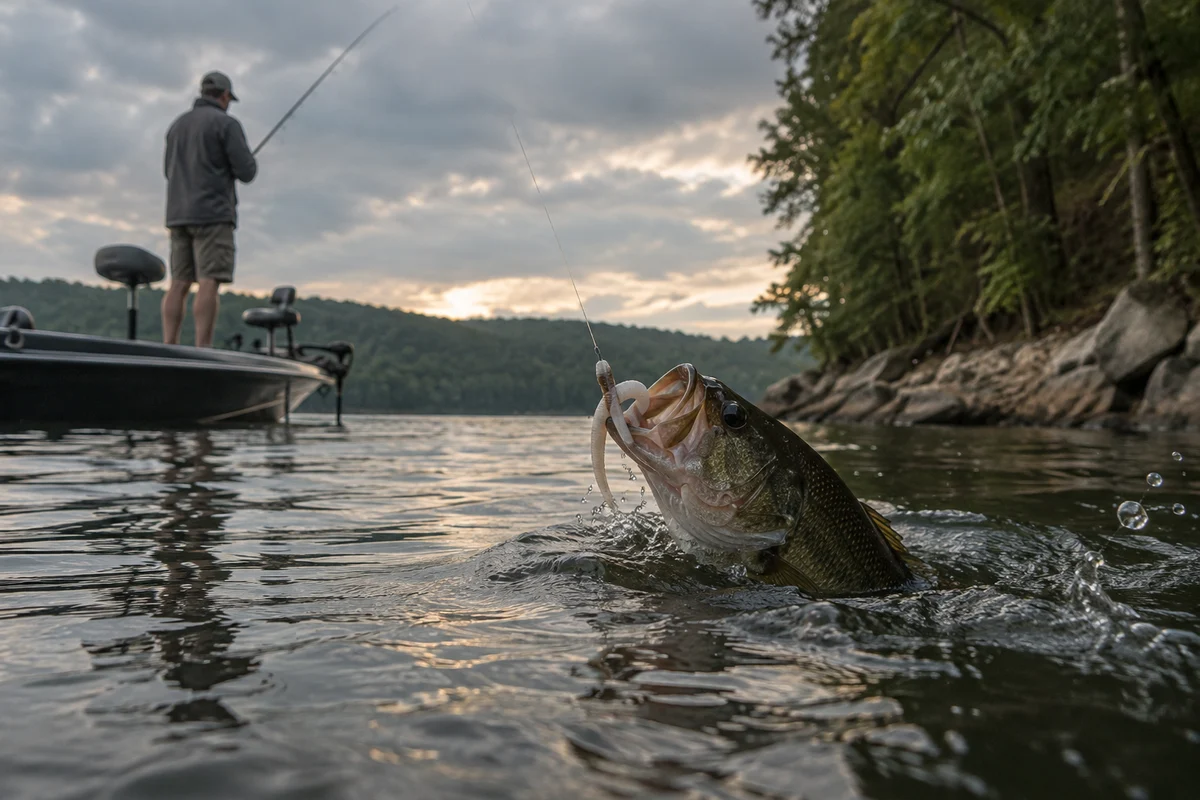
Best drop shot baits for bass: how to choose and fish them
A practical guide to choosing and presenting drop-shot baits for bass, from slim worms to compact creature baits. Learn how conditions, rigging, and restraint shape the choice.
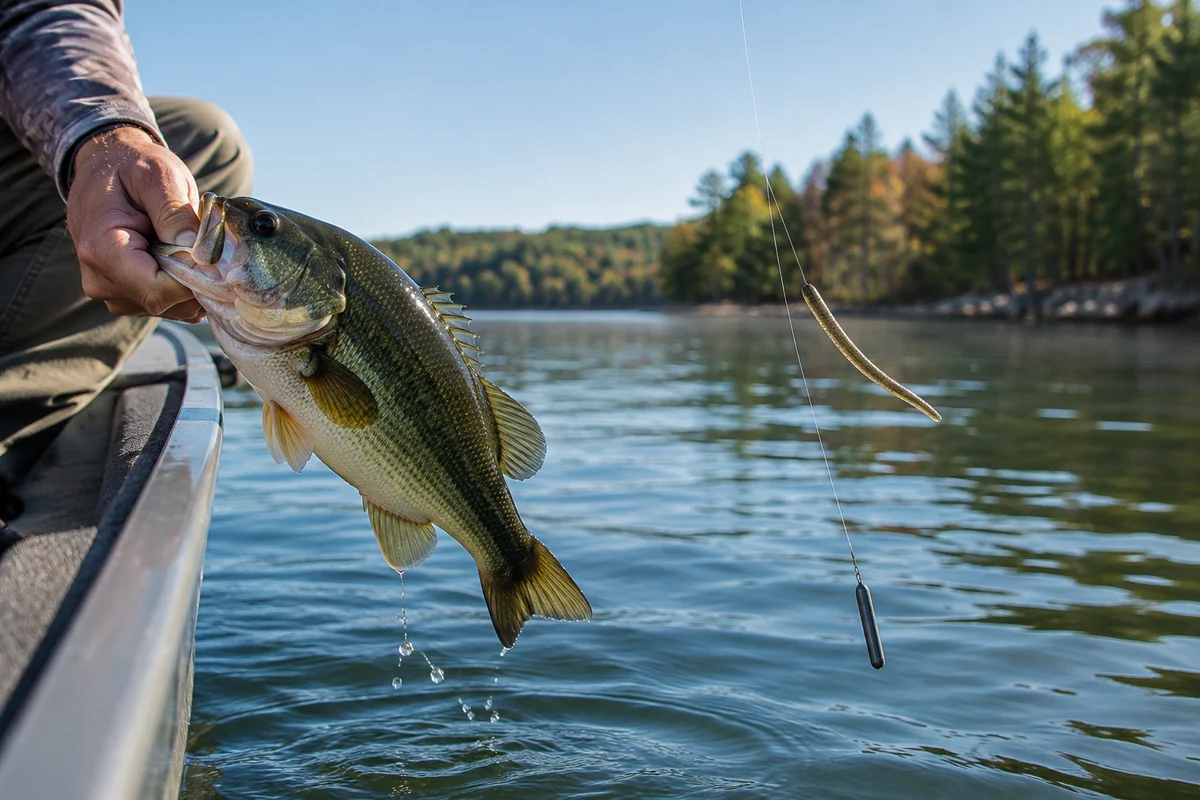
The best drop shot baits for bass are not necessarily the most elaborate ones. A slim worm, minnow-shaped plastic, or compact creature bait can all work when its profile and movement suit the forage and conditions. The useful question is not which bait wins everywhere, but which one gives bass a recognizable meal without overpowering a subtle presentation.
Drop-shot fishing suspends a hook and bait above a sinker at the end of the line. That arrangement can keep a lure near a chosen depth while the weight rests on or near bottom. It is useful around deeper structure, suspended fish, and pressured water, but it is not a guarantee: fish location, seasonal behavior, water clarity, and local rules all matter. For broader context, visit our freshwater bass-fishing hub and guides to plastic worm rigs for bass and summer bass fishing tips.
Start with the bait’s job
A drop-shot bait should remain appealing while the rig is held nearly in place or moved slowly. Long, thin tails can quiver with small movements; a compact bait can offer a restrained silhouette; a baitfish profile can suggest local forage. Consider how much motion you want, then choose a shape that supplies it without constant rod shaking.
Think in terms of three jobs:
- Imitate a small, slender meal: Start with a straight-tail worm or finesse worm. Its narrow profile is easy to cast and can be animated with modest line movement.
- Suggest baitfish: Try a small minnow-shaped plastic where bass are feeding on slender forage or holding off bottom. Keep the bait’s size and color plausible for the waterbody rather than assuming a particular hue is universally best.
- Offer a compact, different profile: A short creature-style or compact craw-shaped bait can be worth trying when a worm draws no response or fish are oriented close to bottom. Use it as a change in silhouette, not as a promise of a bigger fish.
The bait’s action is partly determined by the plastic itself, but also by hook placement, line tension, and how the rig is moved. A bait that looks lively in a package may be difficult to present naturally if it is over-rigged or constantly pulled out of position.
A practical selection framework
Use this as a starting point, not a fixed recipe. Bass can reject a theoretically sensible choice, and local forage can differ even between nearby lakes.
| Conditions or observation | First bait profile to try | Presentation adjustment |
|---|---|---|
| Clear water or visible, cautious fish | Slim worm or subtle minnow profile | Reduce unnecessary shaking; let the bait pause |
| Bass appear to be following small baitfish | Minnow-shaped plastic | Keep the bait at the fish’s depth and move it steadily |
| Fish seem close to bottom, but ignore a straight worm | Compact creature or craw-style profile | Make a modest change in silhouette, then hold position |
| Wind, current, or boat movement makes control difficult | A compact bait that stays manageable | Keep line contact without dragging the sinker continuously |
| No clear clue about forage | A simple straight-tail worm | Treat it as a baseline and change one variable at a time |
Color is another variable, but avoid treating color charts as law. In clear water, natural-looking tones may blend with local prey; in stained water, a more visible contrast can help a fish locate the bait. The best choice depends on light, water color, depth, and what bass encounter in that fishery. Start with a restrained option and change color only after considering whether the fish are in the area and responding to the presentation.
Rigging choices that affect action
A drop-shot bait may be nose-hooked, threaded onto a hook, or rigged weedless, depending on its shape, cover, and the rules for the water you fish. Nose-hooking often leaves much of a slim bait free to move. Threading can help a bait track straight and stay attached. A weedless arrangement can reduce snags in cover, though it may change how freely the bait moves and how the hook engages.
Hook and sinker selection should fit the bait, tackle, depth, cover, and applicable regulations. There is no universally correct size. Check manufacturer guidance for the particular hook and bait, and consult local fishing regulations for restrictions on hooks, weights, and methods. Keep the knot and hook arrangement secure, inspect line for abrasion, and replace damaged tackle rather than relying on a compromised connection.
The distance between hook and sinker sets how far above bottom the bait sits when the weight is down. Adjust that spacing to the fish’s position and the structure, then verify with your electronics or careful observation when possible. If fish are suspended, a bottom-focused presentation may miss them; if they are tight to bottom, an excessively high bait may not be in view. Boat drift and current can alter the effective position, so recheck after moving.
How to present the bait without overworking it
A common mistake is to shake the rod tip continuously. The weight may stay put while the bait moves, but too much line movement can pull the rig, make the action unnatural, or lift the sinker from the target. Begin with a controlled cast or drop, take up slack until you can feel the rig, and let the bait settle. Try small, intermittent movements followed by a pause. If the sinker is sliding across bottom, ease your pressure or reposition rather than turning every presentation into a drag.
When fishing from a moving boat, distinguish boat motion from deliberate lure movement. A light breeze or current can impart enough action. Hold the rod steadily and observe whether the line angle changes; if it does, the bait may be traveling even when your hand is still. A pause gives fish time to approach, but the appropriate pause is situational rather than a fixed count.
Pay attention to the line as well as the rod. A bass may load the line, move sideways, or produce a subtle change in tension. Set the hook with a controlled motion suited to the hook and tackle, and avoid violent swings that can pull a small hook free. Keep fish handling brief and follow local guidance for harvest, release, and seasonal restrictions.
Troubleshooting: change one thing at a time
If bites are scarce, first check whether bass are present at the depth and location you are fishing. A bait change cannot solve a location problem. Then review the presentation: Is the rig reaching the zone? Is wind or current moving it too quickly? Is the bait fouled, twisted, or damaged? Only after those checks, adjust one variable—profile, color, hook arrangement, or spacing—so you can tell whether the change helped.
If you are getting short strikes, consider whether the bait is too large or moving too much, but do not assume that every missed bite calls for a smaller lure. Verify that the hook is exposed or rigged as intended, that the bait is straight, and that the line is not slack in a way that hides contact. Around snags, a more weedless rig may improve efficiency; in open water, a freer presentation may be preferable. Balance those tradeoffs against local rules and the cover you are fishing.
Keep a simple on-water checklist
Before changing baits repeatedly, run through this quick sequence:
- Find the fish or likely holding area. Use seasonal knowledge, visible activity, and available electronics; do not infer fish presence from a single cast.
- Match the depth. Set hook-to-weight spacing and boat position so the bait can reach the observed zone.
- Choose a modest profile. Start with a worm, minnow, or compact creature shape that makes sense for the conditions.
- Check the rig. Make sure the bait is straight, undamaged, and moving freely enough for its intended action.
- Present, pause, and observe. Avoid constant shaking; note line movement and whether the weight is holding position.
- Change one variable. Record mentally what changed, then give the new presentation a fair trial.
The dependable choice is the one that fits
For many anglers, a straight-tail worm is a useful baseline because it is simple to rig and can be presented with little movement. A minnow profile makes sense when bass are focused on baitfish; a compact creature bait offers another silhouette when the first option is not producing. None is the best in every lake, season, or moment. Choose based on forage clues, visibility, depth, and cover, then let the fish’s response guide adjustments.
Keep expectations grounded: drop-shot fishing can help hold a bait in a narrow zone, but it cannot overcome poor location, changing weather, or fish that are not feeding. Handle bass carefully, observe local regulations, and use the simplest bait that lets you make a controlled, convincing presentation.
Frequently asked questions
What is a good first drop-shot bait for bass?
A straight-tail finesse worm is a practical baseline: it is simple to rig and can be fished with subtle movement. Adjust to local forage and conditions.
When should I use a minnow-shaped drop-shot bait?
Try one when bass appear to be feeding on slender baitfish or holding at a depth where a baitfish profile is plausible. Match size and movement to the situation.
Should a drop-shot bait move constantly?
No. Small movements and pauses are a sound starting point. Boat drift, current, or wind may already animate the bait, so watch the line and avoid pulling the weight unnecessarily.
How far above the sinker should the hook be?
There is no universal spacing. Adjust it to the depth and position of the fish, then account for boat movement and current that can change where the bait sits.
Sources & further information
Consult these primary sources for current regulations, technical information and local guidance.