Hot Weather Bass Fishing: A Practical Summer Strategy
A practical guide to finding bass in summer heat by reading water conditions, choosing efficient presentations, and adjusting when fish or anglers show signs of stress. Focus on local conditions rather than a rigid temperature rule.
Summer heat changes the way bass use a lake, but it does not make them vanish. Successful hot weather bass fishing starts with a useful distinction: warm water is not the same everywhere. Depth, shade, current, vegetation, wind, and dissolved oxygen can make two nearby areas feel very different to a fish. Instead of chasing a single “magic” temperature or lure, look for places that offer comfortable conditions and a reliable food source, then let the fish’s response guide your next move.
Before launching, check the local forecast, access rules, fishing regulations, and any heat or water-safety advisories. Carry water, sun protection, and a way to communicate. Heat affects anglers as well as fish, and a productive day is not worth ignoring either risk.
Where bass may hold in summer
Bass often use cover and structure that provide a combination of shade, ambush opportunity, and access to suitable water. On a bright, calm day, start by looking for shade lines beneath docks, overhanging trees, or emergent vegetation. In clear water, bass may stay deeper or tight to cover during the brightest part of the day. In a stained lake, they may remain shallower because reduced light helps them feed.
Treat these as starting points, not rules. A shallow weed edge can be productive when wind pushes baitfish against it. A deep point may be quiet if there is little forage or oxygen. Current can bring food and keep water moving, but the strongest flow is not automatically best. Search for transitions: the end of a weed line, a point meeting a channel, a shaded bank beside open water, or a flat that drops into a deeper basin.
Oxygen is an important part of the picture. In some lakes, dense plant growth and warm, still conditions can contribute to low oxygen in certain areas or depths. There is no universal depth that is safe or productive across all waters. Use local knowledge, observe conditions, and avoid assuming that the deepest water is automatically the coolest or best. If fish show distress or a waterbody has an official advisory, follow agency guidance and consider ending the trip.
A simple search sequence
A deliberate sequence helps cover water without changing everything at once:
- Start with conditions. Note cloud cover, wind direction, water clarity, current, and visible baitfish or surface activity.
- Check a likely edge. Try a shaded bank, weed edge, point, or dock line that connects cover with deeper water.
- Make a few controlled presentations. Begin with a moving lure to locate active fish, then slow down around likely holding cover.
- Change one variable. If you get no response, alter depth, retrieve speed, or position before replacing the entire approach.
- Keep a mental map. Record which combinations of shade, depth, and wind produce bites, not just the lure that caught one.
This approach is especially useful for anglers still learning seasonal patterns; the bass fishing for beginners guide offers a foundation for reading water and building a repeatable routine.
Match presentation to the situation
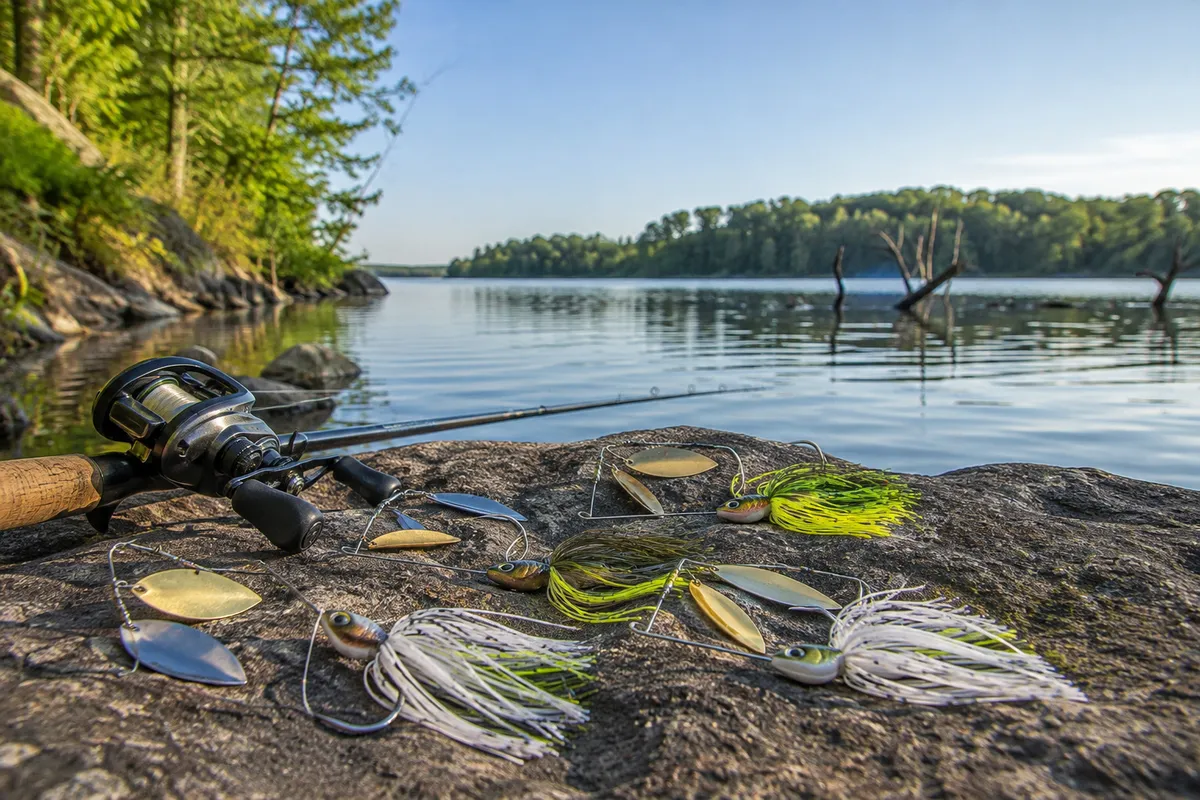
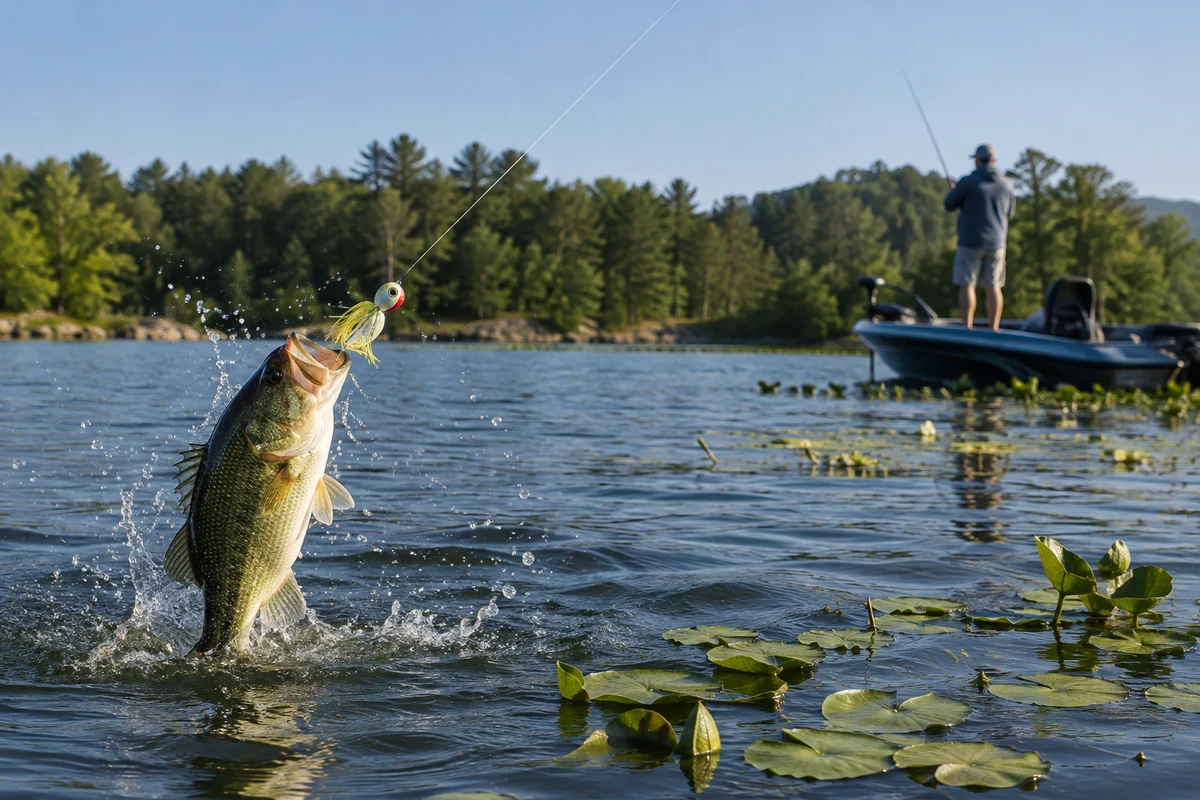
When fish are actively feeding, a moving bait can help you cover an edge efficiently. Choose a presentation you can control around local cover, and keep the retrieve steady enough to identify whether the fish are following, short-striking, or ignoring it. If you see activity but cannot get a commitment, adjust cadence or depth rather than assuming the spot is empty.
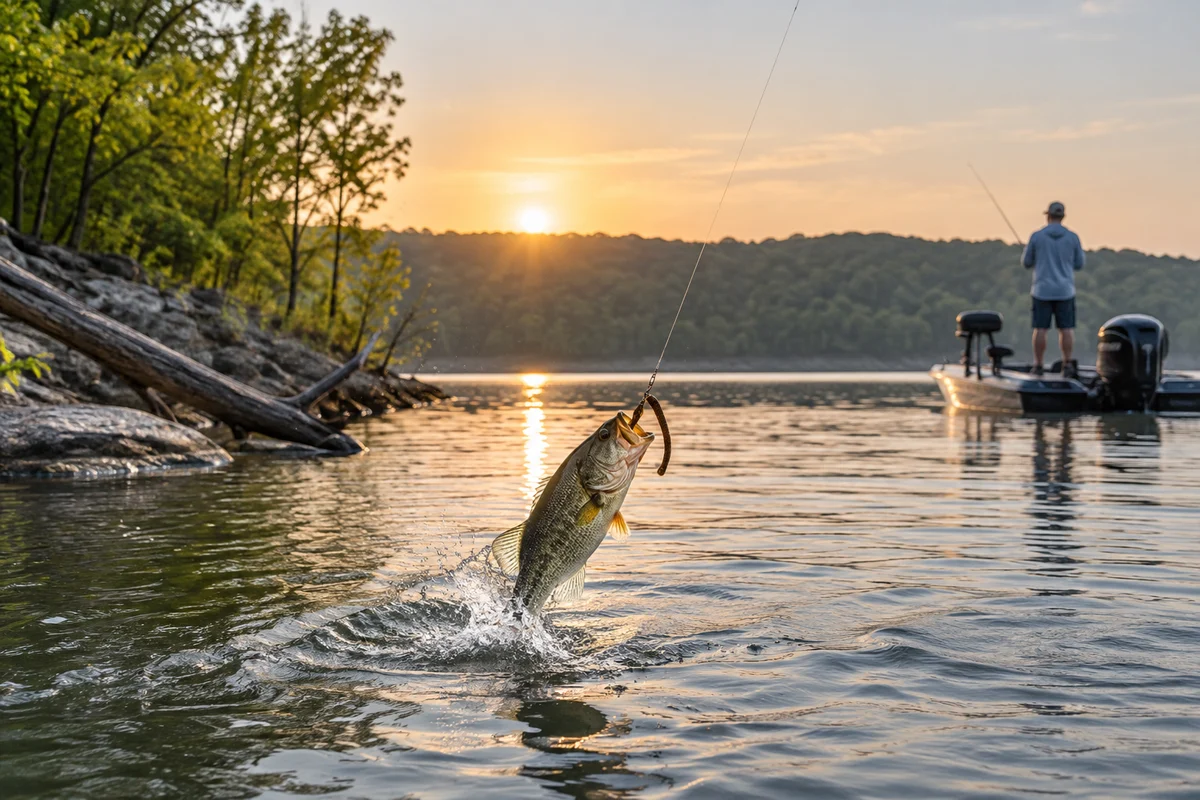
For fish holding close to vegetation, docks, or wood, a soft plastic can be presented more deliberately. A worm rig lets you explore a specific lane or piece of cover at a slower pace. Keep the rig and hook choice appropriate to the cover and local rules, and avoid dragging blindly through snags. Compare options in this overview of plastic worm rigs for bass.
A topwater or other surface presentation can be worth trying around shade and low-light periods, especially where bait is visible near the surface. It is not a guarantee that fish will feed on top. If the surface approach draws no interest, move on or follow up at a different depth. For anglers considering a surface approach over vegetation, see best frog fishing rods for context on the gear category and its role.
| Conditions you notice | First adjustment to try | What the response can tell you |
|---|---|---|
| Bright sun and calm water | Work the shaded side or the nearest cover edge | Whether shade concentrates fish or forage |
| Wind on a bank or point | Check the windward edge, while maintaining safe boat control | Whether moving water and bait improve activity |
| Fish follow but do not strike | Vary retrieve speed or pause, then try a different depth | Whether fish are tracking a particular pace or zone |
| No bites on a fast search bait | Slow down around the best cover or transition | Whether fish are present but less willing to chase |
| Surface activity with no response | Try the same area at a subsurface depth | Whether fish are feeding below the visible activity |
These are experiments, not prescriptions. Local forage, water clarity, fishing pressure, and weather can all change the result.
Timing and pace matter
Early morning and the last part of the day often offer lower light and more comfortable conditions for anglers. They can be useful times to check shallow cover or surface activity, but bass may feed at other times too. Cloud cover, wind, current, and local conditions can keep fish active through midday. Plan around the forecast and your own heat tolerance rather than treating sunrise or sunset as guaranteed bite windows.
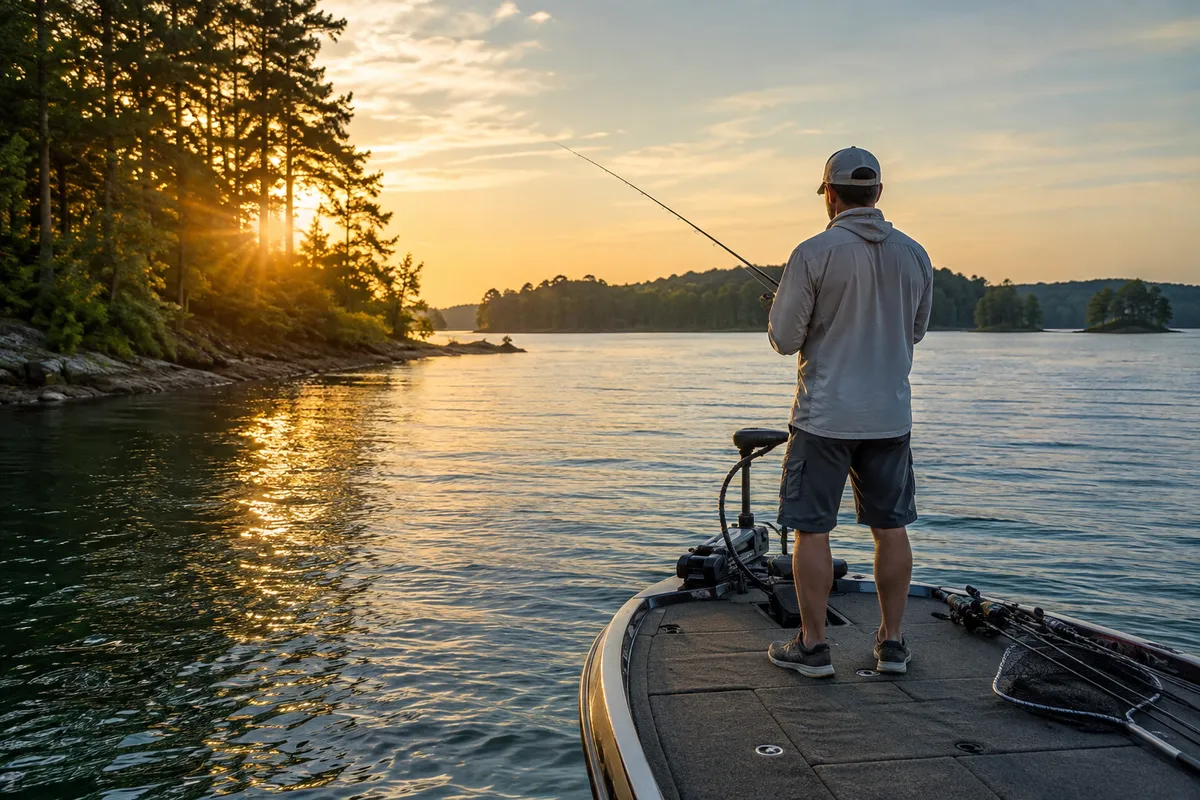
In the middle of a hot day, concentrate on high-percentage areas instead of making an exhausting run from one end of the lake to the other. Fish a short stretch carefully, take breaks in shade, and keep drinking water. If you are fishing from shore, identify shaded access and safe places to rest before the heat peaks. On a boat, wear a properly fitted life jacket, follow navigation rules, and avoid letting a fishing plan distract from changing weather or unsafe conditions.
A slower pace also helps when fish are tightly positioned. Make accurate casts and allow a lure to reach the intended depth. If a spot appears promising, try more than one angle, but do not spend the entire day on a location that gives no evidence of life. Move when the available clues—bait, cover, water movement, or bites—are absent.
Handle fish with care in warm conditions
Warm water can make recovery more difficult for caught-and-released fish, although the degree of stress depends on species, water conditions, handling, and fight duration. Keep fish in the water when practical, wet your hands before handling, minimize air exposure, and prepare tools before landing a fish. Support the fish’s body rather than suspending it by the jaw, especially for larger fish. Follow local regulations on harvest, handling, and release.
If you intend to release a fish, avoid prolonged photographs and unnecessary handling. Do not keep a fish out of water while searching for equipment. When fish are visibly struggling or conditions appear especially harsh, consider stopping or changing activities. Conservation-minded choices can matter more than squeezing in one more cast.
A flexible summer checklist
Before fishing, confirm access, regulations, weather, and any advisories. Pack water, sun protection, suitable clothing, and essential safety gear. On the water, look for a combination of cover, depth change, wind or current, and signs of forage. Start with an efficient search presentation; slow down only where evidence supports it. Change one factor at a time and note what the fish reveal. Handle catches quickly and carefully, and stop if conditions become unsafe.
The central lesson of hot weather bass fishing is to read the whole setting rather than blame the season. Shade, oxygen, water movement, forage, and light can create productive pockets even during a heat wave, while an apparently attractive spot may be unproductive for reasons that are not visible from the surface. Stay observant, adapt to local conditions, and put angler and fish welfare ahead of a fixed plan.
For more seasonal techniques and freshwater context, visit the freshwater bass fishing hub.
Frequently asked questions
What time of day is best for hot weather bass fishing?
Early and late periods often provide lower light and more comfortable conditions, but wind, cloud cover, current, and local forage can keep bass active at other times.
Do bass always move to deep water when the weather is hot?
No. Bass may use shade, vegetation, current, or shallow cover depending on water clarity, oxygen, forage, and local conditions. Depth alone is not a reliable rule.
What should I try when bass follow a lure but will not strike?
Change one factor at a time, such as retrieve pace or depth, and consider a slower presentation around nearby cover. A follow is a clue, not proof that a particular lure will work.
How can I reduce stress on bass during summer catch-and-release?
Keep the fish in water when practical, wet your hands, minimize air exposure and handling time, support its body, and follow local regulations. Consider stopping if conditions seem especially stressful.
Sources & further information
Consult these primary sources for current regulations, technical information and local guidance.