How to Trap Hogs: A Responsible Guide to Feral Swine
Successful hog trapping is a planned, locally compliant effort—not simply setting a gate and waiting. Learn how to assess activity, select and monitor a trap, reduce risks, and know when to call a wildlife professional.
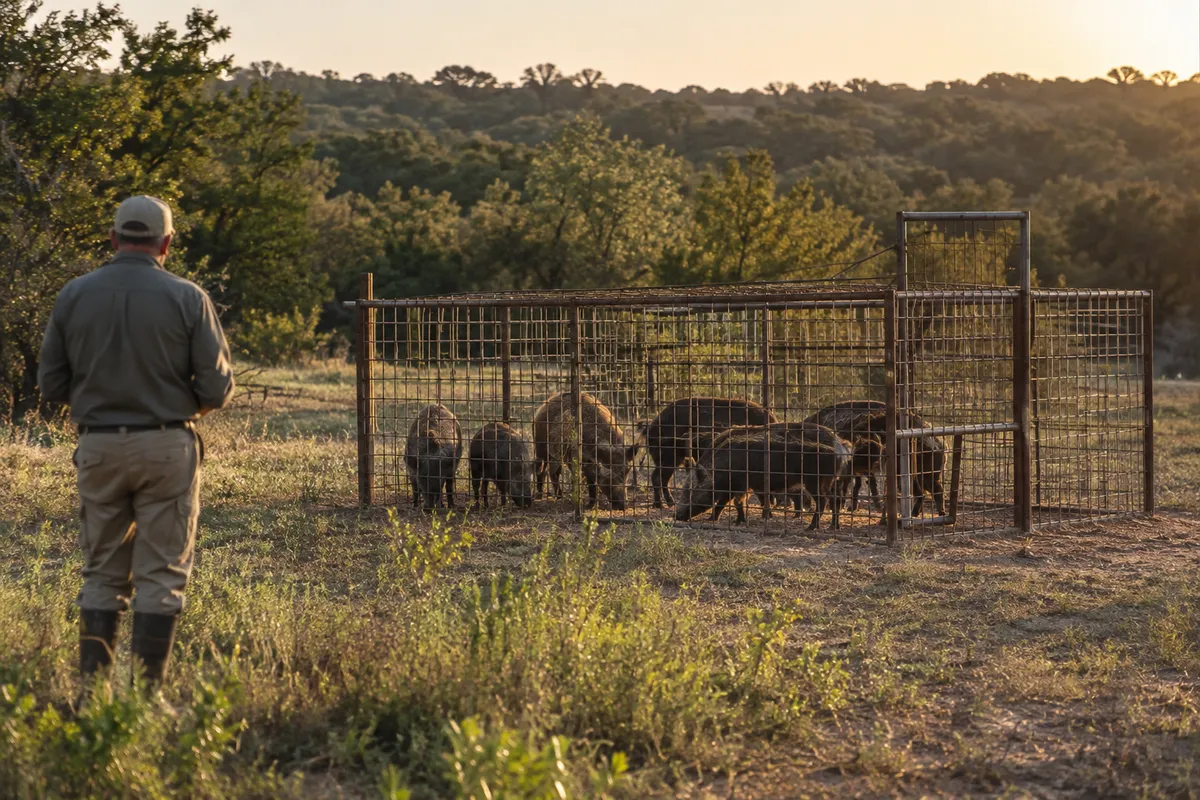
Feral hogs are adaptable, wary animals that can damage crops, soil, wetlands, and habitat. Learning how to trap hogs begins with confirming the animals are present and understanding the rules where you live; a trap is only one part of a responsible management plan. Regulations differ by state, county, land status, and season, and some places require permits, specific trap designs, notification, or approved dispatch methods. Confirm current requirements with your state wildlife agency before setting equipment.
For many landowners, a corral-style trap offers a practical way to capture more than one hog when a sounder is using a site. Yet trapping is not guaranteed to solve a problem: animals may avoid unfamiliar equipment, a group can learn to evade a trigger, and new hogs may move into the area. Good records, frequent monitoring, and coordination with neighboring owners can make efforts more effective. If you are also learning about broader land stewardship, see the big-game hunting hub, our guide to bear safety tips, and the overview of Alabama alligator hunting. Those topics involve different rules and risks, so always follow the guidance specific to the species and location.
Start by confirming hog activity
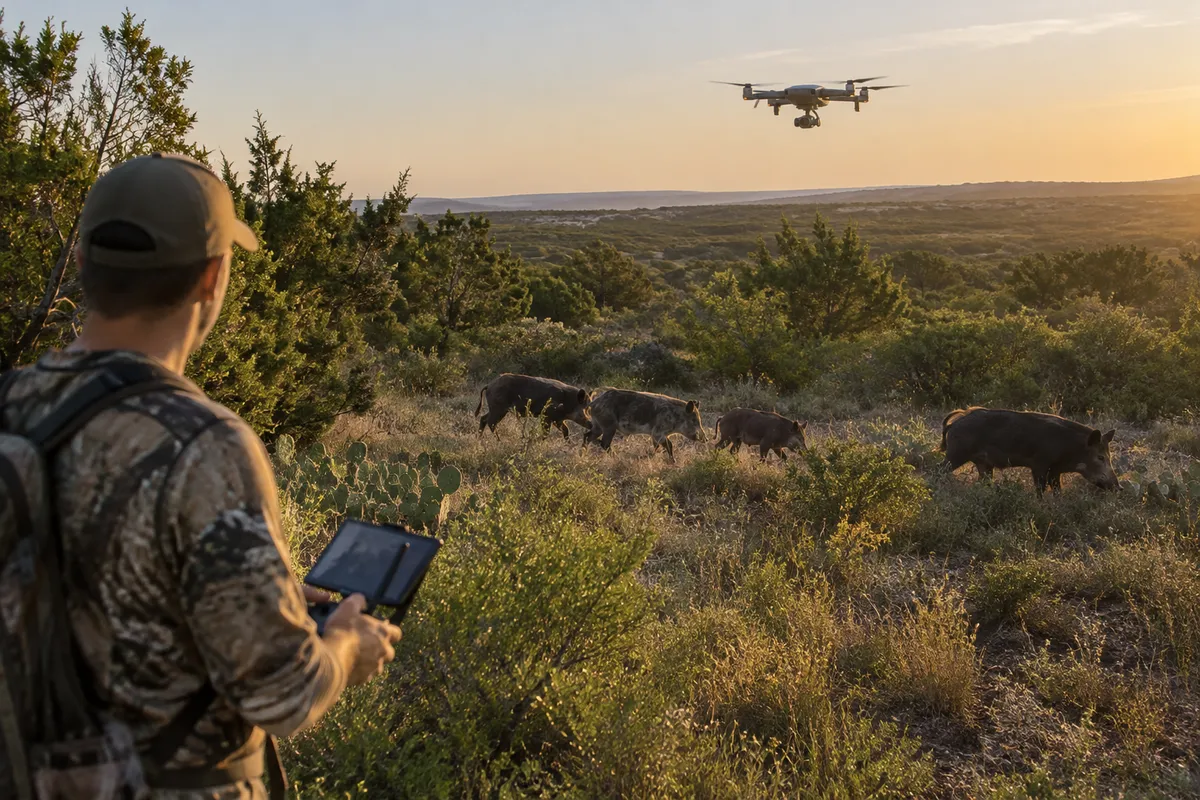
Before buying or building anything, document what is happening. Look for repeated tracks, rooting, wallows, droppings, damaged fences, and crop disturbance. A single sign can be misleading; repeated fresh evidence at the same location is more useful. Note dates, times, and the direction of travel. A trail camera aimed at a bait-free travel route can help establish when hogs visit and how many appear, but follow local rules on camera placement and avoid putting cameras where they could intrude on neighbors or public access.
Distinguish a regular pattern from a one-time visit. Hogs often use paths between cover, water, and feeding areas, but their routines can shift with weather, food, disturbance, or hunting pressure. If a camera shows several animals entering over multiple visits, that is stronger evidence for a group trap than occasional tracks. Keep people, pets, and livestock away from the activity area, and do not approach hogs to confirm a sighting.
Check regulations before choosing a trap
There is no universal rulebook for hog trapping. Your state wildlife agency or agricultural authority can explain whether trapping is allowed, whether a license or landowner permission is required, and which methods are legal. Ask specifically about trap dimensions and materials, gate and trigger requirements, bait use, identification, inspection intervals, release or dispatch rules, carcass handling, and whether transporting live hogs is prohibited.
Rules may differ on private and public land, and local ordinances can add requirements. Obtain written landowner authorization if the property is not yours. If hogs are near a road, a public trail, a residence, or livestock, ask the agency whether the site is suitable. Do not assume a rule found in an old article or online forum is current. When instructions are unclear, pause and request clarification from the agency responsible for enforcement.
Choosing a trap: a decision framework
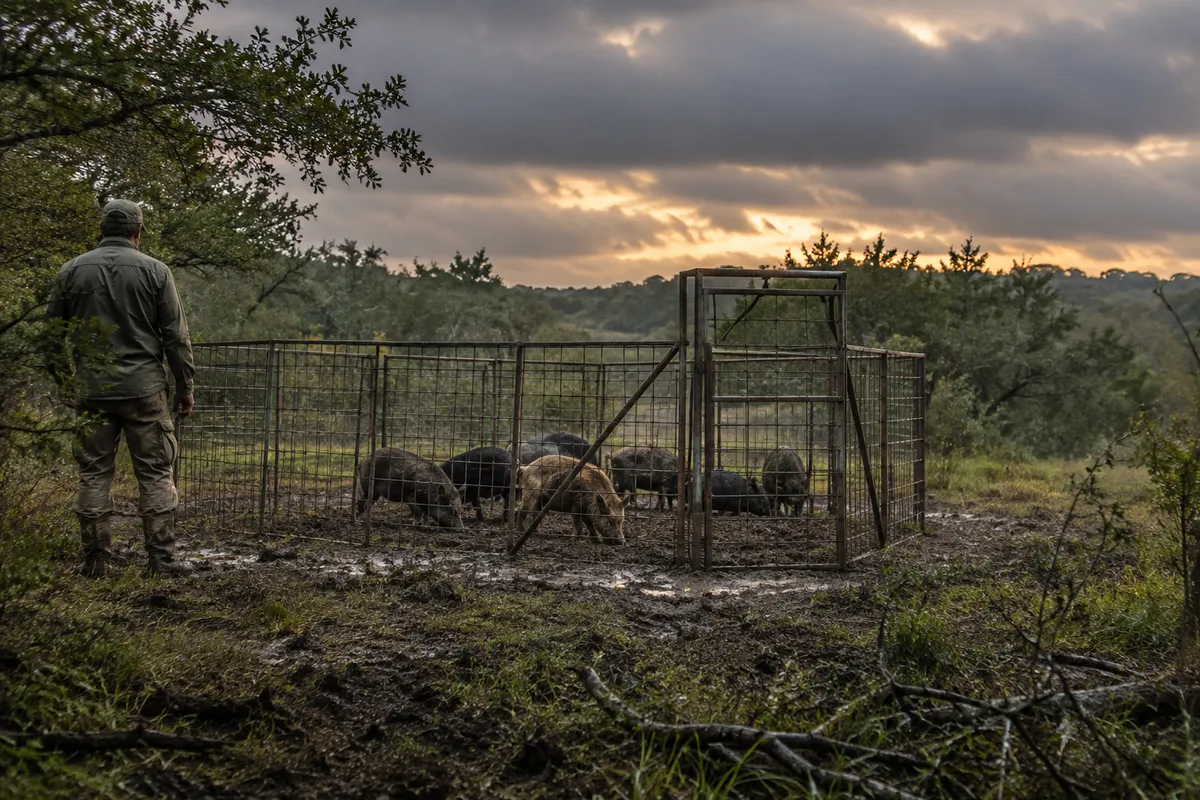
A corral trap is a fenced enclosure with a gate or other agency-compliant entry system. It is generally considered when multiple hogs are using a predictable site and the operator can inspect and maintain the setup. Smaller cage traps may be more manageable in some settings, but they can be less suitable for a group and may capture non-target wildlife. The best choice depends on the local rules, the animals’ pattern, the site, and the person responsible for daily checks.
| Site condition | What it may favor | Important limitation |
|---|---|---|
| Repeated visits by a group | A properly sized corral trap | Capturing only part of a group can make remaining animals more cautious |
| Narrow, established travel route | A smaller enclosure may be considered | Confirm it will not obstruct access or capture non-target animals |
| Frequent non-target wildlife | A different site or method | Bait and placement can attract animals other than hogs |
| Remote site that is hard to inspect | Delay setup or arrange local help | A trap must be monitored as required by law and animal-welfare practice |
| Uncertain ownership or public access | Do not set the trap yet | Permission and agency guidance must come first |
Use equipment that is structurally sound and appropriate for the animals and conditions. A damaged gate, loose panel, sharp edge, or unstable anchor can create escape and injury hazards. Follow the manufacturer’s instructions for commercial equipment, and have a qualified local wildlife professional assess designs or sites you are unsure about. Avoid improvising mechanisms that could injure people, pets, livestock, or non-target wildlife.
Select and prepare the site carefully
Choose a location based on repeated evidence, not convenience alone. A site should allow safe access for inspection, reduce the chance of contact with the public, and avoid sensitive areas such as wetlands or places where a trapped animal could be exposed to extreme conditions. Consider drainage, shade, flood risk, nearby roads, livestock movement, and the ability to reach the trap in poor weather.
Use cameras to observe how hogs approach the area and whether the proposed placement interferes with their normal movement. Keep the setup away from property lines unless you have permission and coordination. Tell household members and anyone who works on the land where the equipment is located. Post warning notices when required or prudent, and keep children and pets away. A trap is not a substitute for fencing, crop protection, or a coordinated management plan.
Pre-bait and monitor before setting
In places where baiting is legal, some managers first allow hogs to feed at the site without activating the capture gate. This can help determine whether the full group is visiting and whether animals are comfortable entering the enclosure. The precise approach—including bait type, amount, placement, and duration—should follow local rules and advice from the agency or a qualified professional. Do not use bait where it is prohibited or where it could attract bears, deer, livestock, or other non-target animals.
Camera observations help answer a key question: are all members of the group entering? If only a few animals investigate, changing the location or waiting may be preferable to setting the trap prematurely. Hogs that witness an unsuccessful capture or escape can become more difficult to catch. Keep a simple log of visits, weather, observed group size, maintenance, and any non-target activity. That record helps you make decisions without relying on memory.
Set, inspect, and respond responsibly
Only activate the trap when the setup is legal, secure, and likely to capture the intended animals. Follow the equipment directions and agency requirements exactly. Inspection frequency is governed by local law, but a legal minimum is not always the best welfare standard: check as often as practical, especially after severe weather or when temperatures are extreme. Remote cameras can help monitor activity, but they do not replace required physical inspections or a plan to respond promptly.
Do not enter an enclosure with hogs inside. Feral hogs are powerful wild animals, and a confined animal may charge or injure a person. Keep bystanders back, secure pets and livestock, and contact the relevant wildlife agency or a trained professional if you are uncertain how to proceed. Any required dispatch must be carried out only by a legally authorized, competent person using a lawful method. This guide does not provide weapon-use instructions. If you cannot safely and legally manage a capture, do not set the trap—or arrange help before doing so.
A capture may include non-target wildlife. Follow the agency’s instructions for lawful release and seek professional assistance when release could be unsafe. Never leave a trapped animal unattended beyond legal limits, and never transport live hogs unless the authorities explicitly confirm it is lawful. Disease-control rules can apply to carcasses and equipment; ask the appropriate state or local authority about handling and disposal.
Common problems and what to do
Hogs visit but will not enter. Recheck camera evidence, site disturbance, and the trap’s condition. People, vehicles, unfamiliar objects, or a poor approach can change animal behavior. Consider moving the site or consulting a local expert rather than repeatedly changing a mechanism without guidance.
Only some of the group enters. Do not rush to activate the trap. Continue observation if legal, and seek advice about how to reduce the chance of leaving wary animals behind. One capture does not necessarily remove the group or stop new arrivals.
Non-target animals appear. Stop and reassess bait, placement, and timing under local rules. Do not knowingly create a repeated hazard for protected species or domestic animals.
The trap is damaged or flooded. Keep people away, do not handle a compromised gate under load, and contact the equipment provider or a qualified professional. Repair it before use and reassess whether the location is suitable.
Make trapping part of a wider plan
Trapping is most useful when it fits a larger, coordinated effort. Share information with adjacent landowners where appropriate, maintain fences and other protections, and keep records of damage and captures. If hogs continue to cause significant harm, contact your state wildlife or agriculture agency for current management options and referrals. Some regions have organized programs that coordinate landowners and trained operators; availability and rules vary.
The key principles are straightforward: verify activity, know the law, choose equipment for the site and group, monitor it consistently, and never take risks around a confined hog. A careful plan may reduce damage, but no single trap guarantees control. Local guidance and realistic expectations are essential parts of doing the job responsibly.
Frequently asked questions
Do I need a permit to trap feral hogs?
It depends on your state, county, and land status. Ask the responsible wildlife or agriculture agency about permits, equipment, bait, inspection, and handling rules before setting a trap.
What kind of trap is commonly used for feral hogs?
Corral-style traps are often considered for groups, while smaller enclosures may suit some sites. Local rules, group size, non-target risks, and safe inspection access should determine the choice.
How often should a hog trap be checked?
Follow the inspection interval required by local law and check as often as practical. Remote cameras can supplement monitoring but do not replace required inspections or timely response.
Is it safe to approach hogs caught in a trap?
No. Keep people and pets away, do not enter the enclosure, and contact an authorized wildlife professional or agency if you are unsure how to proceed.
Sources & further information
Consult these primary sources for current regulations, technical information and local guidance.