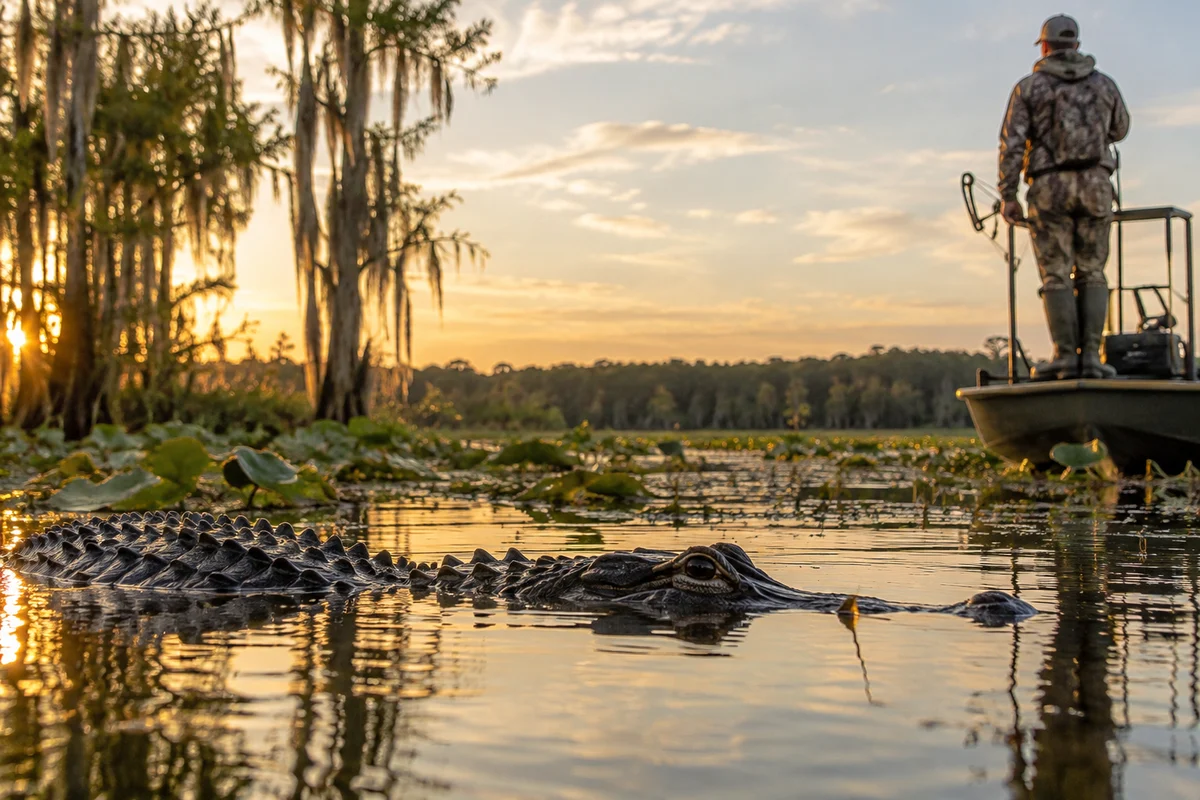
Alabama alligator hunt: rules, seasons and preparation
Alabama alligator hunting is a tightly regulated, permit-based opportunity—not an open season. This guide explains how to verify current rules, prepare responsibly, and avoid relying on outdated headlines or unconfirmed records.
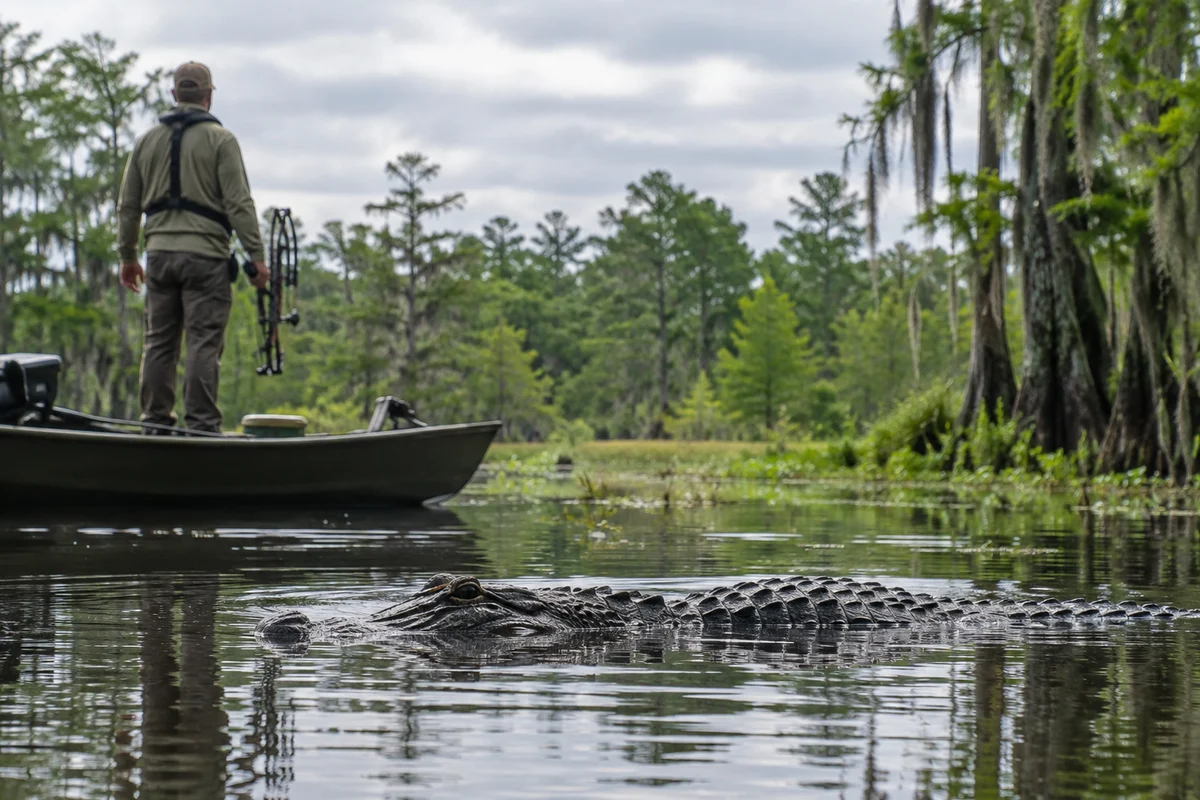
An Alabama alligator hunt is not a matter of simply choosing a waterway and setting out: participation is limited by state rules, designated areas, season dates, and permit requirements that can change. A headline about a large alligator or a past hunt does not establish what is legal this year. The practical first step is to consult the Alabama Department of Conservation and Natural Resources (ADCNR) for the current season notice and official instructions, then plan around those terms rather than an old account.
This guide offers a framework for understanding the hunt and preparing responsibly. It does not provide current dates, permit availability, or a guarantee of eligibility; those details must be verified directly with the state before making plans.
How Alabama’s alligator hunt is controlled
Alabama manages alligator hunting through a limited, regulated program. The state determines the season, participating areas, permit process, eligibility rules, and required reporting or tagging procedures. A permit or authorization is specific to the program’s terms; it should never be treated as permission to hunt outside the named area, dates, or conditions.
Rules can be revised from year to year. Before applying or traveling, find the current ADCNR alligator-hunting page and read the complete official notice, not just a summary or social-media post. Confirm the applicable zone, dates and times, application window, permit conditions, and any required license or documentation. If the official language is unclear, ask the agency for clarification before acting.
A useful distinction is between three kinds of information:
- Current regulation: the season notice and applicable state rules for the year in question.
- Historical account: a report about a prior season, which may describe a different process or rule set.
- Unverified claim: a circulated story, photograph, or claimed weight that has not been confirmed by the responsible authority.
Only the first category can establish what is currently allowed. For broader context about how regulated big-game opportunities work, see our big-game hunting guide.
What to verify before applying
Treat application details as a checklist rather than assumptions. A friend’s experience from a previous year can be useful background, but it cannot substitute for the current instructions. Pay particular attention to dates and eligibility: missing an application deadline or misunderstanding a permit condition can end a plan before the season begins.
| Item to confirm | Why it matters | Where to verify |
|---|---|---|
| Application period and process | A limited drawing or application window may have strict deadlines. | Current ADCNR alligator-hunting notice |
| Eligibility and required credentials | Requirements may differ by participant or location. | Official state instructions and licensing pages |
| Designated area and boundaries | Authorization may apply only to specified waters or zones. | Official map and permit terms |
| Season dates and legal hours | A past season’s calendar is not evidence of this year’s dates. | Current season notice |
| Permitted methods and equipment | Allowed methods are set by regulation and may have conditions. | Current rules; ask ADCNR if uncertain |
| Tagging, reporting, and transport requirements | Documentation may be required after a harvest. | Permit terms and official reporting instructions |
| Access and landowner permission | A hunting authorization does not automatically grant property access. | Landowner or managing agency, plus permit terms |
Save or print the current official notice and keep required documents accessible. If the agency issues an update, follow the newer instruction. Do not rely on a screenshot without checking its date and source.
Planning for water, weather, and access
Alligator hunting takes place around water, often in darkness or low light under the conditions set by the season rules. That combination calls for conservative planning. Review the route and access points in daylight when possible, identify who controls the site, and secure permission where needed. A public-water boundary does not necessarily settle questions about a launch, bank, road, or adjacent private land.
Check the forecast and water conditions close to departure. Heavy rain, changing current, fog, heat, and low visibility can make a trip unsafe or complicate navigation. Use a properly fitted personal flotation device on the water, carry reliable communication, and make sure someone responsible knows the planned area and return time. Do not continue if conditions exceed the group’s skills or equipment.
Agree in advance on roles, communication, and a stop-work signal. Each participant should understand the plan and the official restrictions. Avoid alcohol or impairing substances, and do not let excitement about a large animal override safe judgment. If a situation becomes uncertain—whether about identification, boundaries, or a rule—pause and resolve it before proceeding.
The broader lesson resembles other big-game preparation: understand the animal and setting, but also know when to defer. Our guide to hog hunting tips discusses the value of preparation and restraint in a different regulated hunting context. For wildlife encounters outside a hunt, our overview of how to use bear spray emphasizes planning around safety rather than assuming a tool guarantees an outcome.
Responsible handling and reporting
A successful hunt does not end when an animal is secured. Follow the permit’s instructions for tagging, documentation, reporting, and any required check-in. Keep records accurate and complete; never make a claim about a harvest’s size or status without a reliable measurement and the documentation the rules require.
Handling a large wild animal presents serious hazards. Use only the procedures and equipment permitted by current law, and do not improvise beyond your training. Plan for capable help and a safe way to manage the animal and equipment. If the situation is beyond the group’s ability, stop and seek qualified assistance. Do not put a person in the water or in an unstable position to recover gear or complete a task.
Food use and processing also require care. Keep meat clean, cool it promptly, and follow recognized food-safety guidance. Ask the appropriate state agency about any species-specific handling or testing guidance. Avoid consuming tissue that is spoiled or of uncertain condition. Local wildlife rules and public-health recommendations both matter.
How to assess a “record” or giant-gator story
Large-animal headlines can be compelling, but a photograph or social post does not establish an official record. Claims may involve different measurement methods, species identification, estimated rather than verified dimensions, or a record category maintained by a particular organization. “Largest seen,” “largest harvested,” and “official record” are not interchangeable descriptions.
To evaluate a claim, identify who measured the animal, what measurement was taken, when and where it occurred, and which record category is being claimed. Then check whether an official recordkeeper recognizes that category and publishes a verification process. If no authoritative confirmation is available, describe the claim as unverified rather than repeating it as fact. For a state hunting-season question, ADCNR remains the authority on program rules; a record organization’s recognition does not decide legality.
This distinction is especially important when old news is recirculated. A past hunt may be real and still tell readers nothing about current permits, current boundaries, or whether a similar opportunity is available today.
A practical go/no-go framework
Before committing to a trip, ask four questions:
- Is the plan legal now? Have you verified the current season, area, authorization, methods, and reporting rules from official sources?
- Is access settled? Do you have permission for the launch, land, and route, and do boundaries match the authorization?
- Can the group manage the conditions? Are weather, water, light, communication, and safety equipment appropriate for the plan?
- Is the outcome manageable? Have you planned for lawful handling, documentation, transport, and safe food care?
If any answer is uncertain, delay the trip and verify it. A limited season rewards preparation, not guesswork. The most reliable Alabama alligator hunt plan begins with current state instructions, respects the limits of the permit, and puts safety ahead of the pursuit.
Frequently asked questions
Do you need a permit to hunt alligators in Alabama?
Alabama’s program is regulated and permit-based. Check ADCNR’s current season instructions for eligibility, application steps, and required credentials.
When is Alabama alligator season?
Dates can vary. Use the current Alabama Department of Conservation and Natural Resources season notice rather than a prior-year article or social post.
Can an Alabama alligator permit be used anywhere in the state?
Do not assume so. Verify the designated area and boundaries on the current official map and follow the exact terms attached to the authorization.
Does a large-gator news story prove an official record?
No. A record claim needs a defined category and verification by the relevant official recordkeeper; a headline or photograph alone is not proof.
Sources & further information
Consult these primary sources for current regulations, technical information and local guidance.