Flats Fishing in Florida: Read the Water, Tide, and Wind
A practical guide to Florida flats fishing, from choosing habitat and timing tides to presenting flies or lures and protecting shallow-water ecosystems. Conditions vary by region and season, so use local regulations and current forecasts to shape every trip.
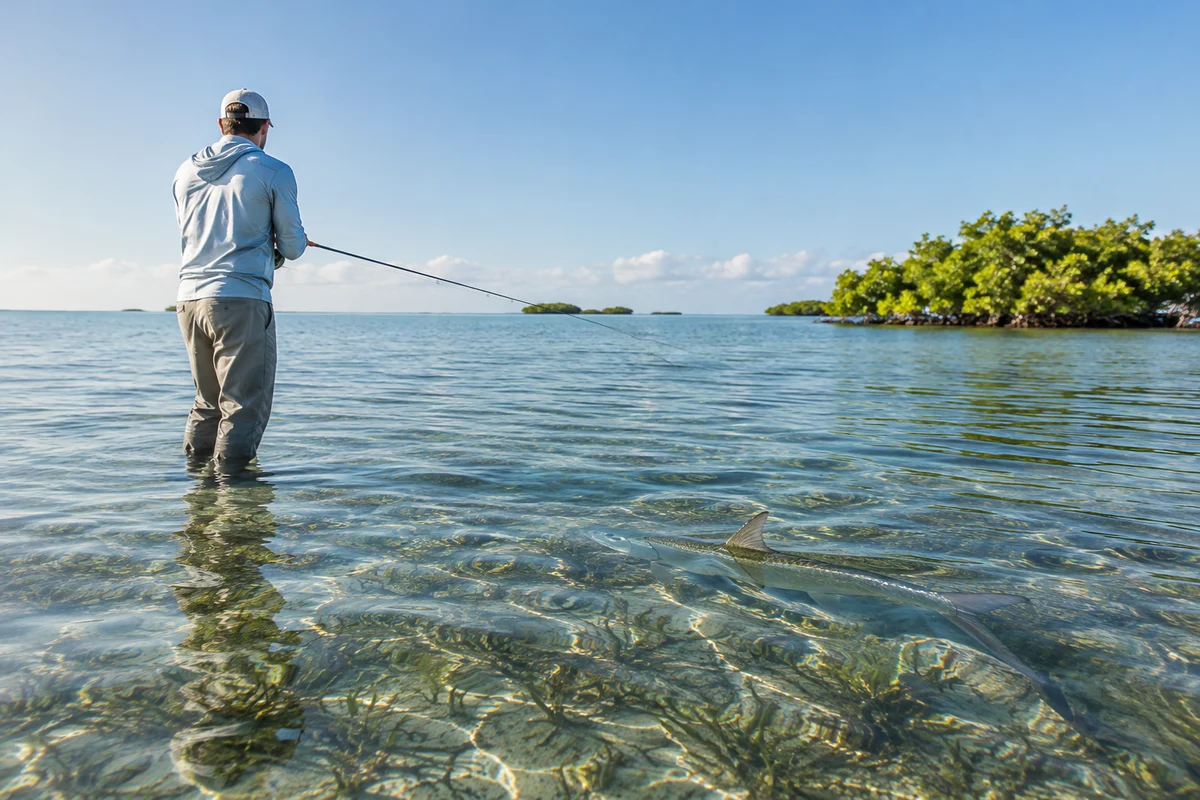
Florida’s shallow flats can look deceptively simple: a sheet of clear water, scattered grass, a mangrove edge, perhaps a pale strip of sand. But flats fishing in Florida is really a study in changing depth, light, current, and fish behavior. The same flat can be lively on a moving tide and nearly empty an hour later, or productive at dawn and difficult once wind roughens the surface. Reading those changes matters more than arriving with a complicated tackle collection.
The broad approach is consistent across the state, but the details are local. South Florida’s expansive bays, the Keys, the Gulf Coast, and the northeast coast differ in access, species, regulations, and seasonal patterns. Before you go, identify the waterbody and target species, then check current state rules and weather. For a wider look at coastal opportunities, browse our saltwater fishing hub.
What counts as a Florida flat?
A flat is a broad, relatively shallow area where fish can feed or travel over seagrass, sand, mud, shell, or a mix of bottom types. It may sit beside a channel, mangrove shoreline, oyster structure, or deeper bay water. The word “flat” describes the shape and depth profile, not one uniform habitat.
That distinction is useful. A grass flat may hold bait and offer cover; a sandy pothole interrupts the grass and can create a feeding lane; a mangrove edge provides shade and a route between shallow and deeper water. Fish often use transitions rather than spreading evenly across a featureless-looking expanse. Look for edges, channels, points, drains, and changes in bottom color.
Common inshore targets vary by region and season. Anglers may encounter red drum, spotted seatrout, snook, tarpon, or other species, but no particular fish is guaranteed. Regulations also differ: seasons, size limits, bag limits, gear rules, and special management areas can change. Confirm the rules for the exact species and location with the Florida Fish and Wildlife Conservation Commission before keeping a fish.
How do tides shape the bite?
Tide changes determine how much water covers a flat and whether fish can reach it. On a rising tide, water can spread across shallow grass or over a shoreline edge, giving fish access to areas that were previously too thin. On a falling tide, water drains from those areas and funnels through cuts, channels, and creek mouths. Those exits can concentrate both bait and predators.
There is no universally best tide stage. A high tide may be useful when fish move onto a shallow edge, while a falling tide may make a drain more obvious. The relevant question is what the water is doing at your chosen location. A tide prediction is a forecast, not a guarantee: wind, pressure, local geography, and inlet flow can affect observed water levels and current.
Use a tide table or trusted local forecast as a planning aid, then compare it with what you see. If the water is moving and bait is present, a modest change in depth can matter. If the flat is still, murky, or exposed, shift to a nearby edge or deeper route rather than repeatedly casting at empty water.
A simple flat-selection framework
Before launching or wading, narrow your choices with a few practical questions:
| What to assess | What to look for | How it can guide your choice |
|---|---|---|
| Access and depth | A safe route in and out; enough water for your craft | Avoids grounding, unsafe wading, or a difficult return |
| Bottom and cover | Grass, sand holes, a channel edge, or shoreline structure | Helps you choose a lure path and likely fish travel lanes |
| Tide | Direction and approximate stage, plus nearby drains | Suggests whether to fish the flat itself or its edge |
| Wind and visibility | Wind direction, surface chop, clarity, and glare | Determines whether sight-fishing is realistic and how quietly to approach |
| Wildlife and restrictions | Seagrass, nesting areas, manatees, closures, and posted rules | Helps prevent habitat damage and unintentional violations |
Treat this as a comparison tool, not a promise of fish. A nearby protected shoreline or restricted area may be off-limits even when it looks ideal. Consult current maps and local notices before entering unfamiliar water.
How should you approach a shallow flat?
Shallow water carries sound and movement. A push pole, paddle, or quiet electric motor can help reduce disturbance, but no method makes a boat invisible. Avoid running across grass beds, especially where the depth is uncertain. Propeller scars can damage seagrass and persist long after a trip; use marked channels where appropriate and lift or tilt a motor only when it is safe and suitable for the boat.
When visibility allows, scan ahead rather than staring only at the water beside the boat. Polarized sunglasses can reduce surface glare, though clouds, wind, and water color may still limit sight-fishing. Watch for wakes, nervous bait, surface disturbances, and changes in the bottom. If you spot fish, pause and consider their direction of travel before casting. A cast that lands beyond or to the side of a moving fish is often less disruptive than dropping a lure directly on top of it.
Wading can provide a quiet, low-profile approach, but it brings its own risks. Check bottom firmness, depth, currents, weather, and local hazards; use footwear suited to the area and avoid stepping where visibility is poor. Let someone know your plan, carry communication appropriate to your location, and do not wade through channels or conditions beyond your ability.
What tackle and presentations work?
A versatile inshore spinning outfit is enough for many trips: a rod and reel matched to the local target and conditions, a suitable line and leader, and a small selection of lures. Exact tackle choices depend on fish size, wind, water clarity, cover, and personal preference. Check local rules before using natural bait or any restricted gear.
Soft-plastic paddletails, jerk-style plastics, weedless presentations, spoons, and topwater lures can each suit different conditions. A weedless rig can pass through scattered grass with fewer snags; a spoon can provide flash and distance in open water; a surface lure may draw attention when fish are feeding near the top. These are options, not universal prescriptions. Match the lure’s size and movement to the bait you observe, and keep the presentation manageable in the wind.
Make the first casts count. Cast to the edge of a pothole, along a grass boundary, or ahead of a fish’s path instead of repeatedly covering empty water. Retrieve steadily at first, then adjust speed or pauses based on the response. If a fish follows without striking, a small change in pace or direction may help. If nothing is visible, fan-cast a likely transition and move methodically rather than standing in one spot for too long.
Anglers who prefer bait can adapt the same location-reading principles. Use legal bait and methods, handle bait responsibly, and avoid leaving line or discarded tackle behind. Keep any bait presentation controlled so it does not unnecessarily disturb shallow habitat.
What changes by region and season?
Florida is not one uniform fishery. In the Keys and parts of South Florida, extensive shallow bays and mangrove shorelines create varied opportunities, while boat traffic, protected areas, and changing weather demand careful planning. Gulf Coast flats may feature broad grass beds and estuaries, but local access and water clarity can vary. Atlantic-side conditions can be shaped by inlets, coastal currents, and surf-driven weather.
Seasonal patterns are real but not fixed dates on a calendar. Water temperature, rainfall, wind, bait availability, and cold fronts can shift where fish feed. During a seasonal transition, nearby deeper water may offer a useful alternative when a flat becomes too shallow, cold, or exposed. Ask a local bait shop, guide, or public agency for current area-specific information, and treat general seasonal advice as a starting point rather than a guarantee.
For related saltwater reading, see our guides to tarpon fishing around Islamorada and blue crab bait for redfish. Their subjects differ, but both reinforce a central flats lesson: location and conditions shape how fish encounter a presentation.
A practical pre-trip checklist
- Choose a specific area: Check access, launch conditions, navigation hazards, and any closures or protected-zone boundaries.
- Check tide and weather: Review the tide trend, wind, rain, lightning risk, and marine forecast; recheck before departure.
- Plan for the return: Consider changing water levels, daylight, fuel or battery needs, and a safe route back.
- Pack for shallow water: Bring water, sun protection, polarized glasses, appropriate footwear, communication, and basic first aid.
- Protect habitat: Avoid running through seagrass, dragging anchors across sensitive bottom, or disturbing wildlife.
- Verify regulations: Review current licensing, species rules, seasons, and area-specific restrictions through FWC.
- Keep and release fish carefully: Use appropriate tackle, minimize handling and air exposure, and follow current release guidance and regulations.
What are the limits of sight-fishing?
Clear water and visible fish make a memorable day, but sight-fishing is not a reliable measure of whether a flat holds fish. Glare, cloud cover, wind chop, water color, and viewing angle can hide fish that are present. Conversely, a visible fish may be resting, moving through, or unwilling to take a lure. Avoid chasing every fish across the flat; repeated close approaches can disrupt both wildlife and the fishing.
Conditions can also make an apparently safe location hazardous. Shallow water may leave a boat stranded as the tide falls, while a sudden squall or strong wind can make a familiar crossing difficult. If the forecast deteriorates or the route is uncertain, change plans. No catch is worth ignoring a developing safety problem.
Keep the flat healthy
Seagrass beds support coastal food webs and provide habitat, but they are vulnerable to physical damage. Navigate slowly in unfamiliar shallows, use established channels when available, and avoid repeated propeller contact with the bottom. Pack out line, hooks, bait containers, and all other waste. Give manatees, shorebirds, and other wildlife room, and follow posted speed zones and seasonal protections.
A productive flats trip depends on attention more than certainty: observe the water, make a quiet plan, and adapt when tide, wind, or fish behavior changes. Learn one area at a time, record what the conditions were rather than assuming a pattern will repeat, and let current regulations and habitat protection guide the day.
Frequently asked questions
When is the best tide for flats fishing in Florida?
It depends on the flat. Rising water can open shallow feeding areas, while falling water can concentrate movement at drains and channels. Check local predictions and confirm conditions on the water.
What fish can you catch on Florida flats?
Depending on region, season, and regulations, anglers may encounter species such as red drum, spotted seatrout, snook, or tarpon. Check current FWC rules for your location and target.
Can you flats fish in Florida from shore or while wading?
Sometimes. Access, bottom conditions, currents, wildlife protections, and local restrictions vary. Verify access and safety before wading, and avoid entering unfamiliar water without a suitable plan.
What should I bring for a Florida flats fishing trip?
Bring tackle suited to local conditions, water, sun protection, polarized glasses, appropriate footwear, communication, and a current weather and tide plan. Also check licensing and species regulations before fishing.
Sources & further information
Consult these primary sources for current regulations, technical information and local guidance.