Blue Crab Bait for Redfish: How to Choose and Fish It
Blue crab can tempt redfish in marshes, bays, and coastal channels, but success depends on matching bait size and presentation to current, cover, and fish behavior. This guide explains practical options and their limits.
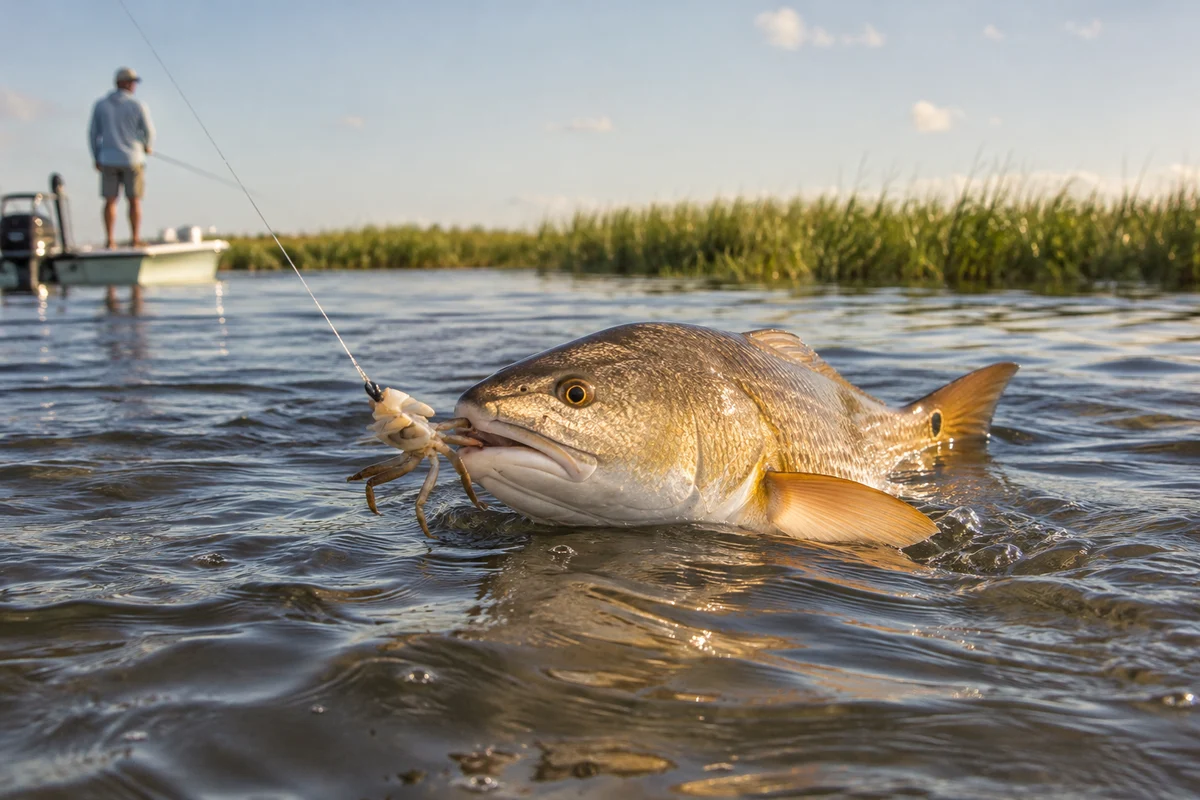
Blue crab bait for redfish works because it presents a familiar, substantial meal in waters where crabs are part of the local food web. The useful question is not simply whether to use crab, but which portion to present, how to keep it in the strike zone, and when a different bait would be more practical. Redfish feed across a wide range of coastal habitats, and conditions vary by region, season, tide, and local rules. Treat the suggestions below as a flexible starting point rather than a guarantee.
Choose the crab presentation to fit the conditions
Whole small crabs, halves, and sections of larger crabs each have advantages. A whole crab gives a fish a natural-looking target and can be useful when larger redfish are feeding on sizable prey. A half or a leg-bearing section can be easier to cast and may expose scent and meat more readily. Small pieces can suit smaller hooks or situations where fish are picking cautiously, but tiny bait is also more likely to be stripped by bait-stealing species.
Use fresh, legally collected or purchased bait. Check local regulations before collecting crabs; seasons, size limits, closures, and gear restrictions vary. Keep bait cool and out of direct sun, and avoid using dead or spoiled bait. If you are uncertain about a crab’s condition, replace it rather than relying on it.
| Situation | Starting presentation | What to watch for |
|---|---|---|
| Current over a channel edge | A compact crab section on a suitable bottom rig | Whether the bait holds near the bottom without rolling away |
| Calm, shallow water | A small crab or section under a float, where lawful and practical | Fish response, shallow snags, and the float’s drift |
| Larger fish sign or substantial forage | A larger section or whole small crab | Whether the hook and tackle suit the bait and expected fish |
| Frequent bait theft | A firmer, securely hooked piece or a different bait | Whether small fish or crabs are removing the bait |
| Heavy grass, oysters, or wood | A streamlined presentation positioned beside—not blindly into—cover | Snags, abrasion, and a safe route for landing a fish |
This is a decision aid, not a fixed recipe. Adjust for depth, wind, water movement, hook rules, and the tackle you can manage responsibly.
Prepare bait without making it difficult to cast
For a larger crab, remove or trim hard parts that interfere with the hook or create an awkward shape. Keep enough shell and meat for the bait to stay together. A half crab can be a useful compromise: it gives a substantial profile while being easier to secure than a bulky whole crab. For a smaller bait, a leg-bearing section may provide a natural outline, but it should not spin wildly in current.
Hook placement should hold the bait firmly and leave the point and gap unobstructed. The precise placement depends on the hook design and bait shape. Avoid burying the point in thick shell or packing meat around the gap. Check local hook regulations, including any requirements for circle hooks in particular fisheries. If a fish takes the bait, follow the rules and guidance for your area, and avoid unnecessarily delaying release.
Crab shell can be slippery, and handling can lead to cuts or pinches. Use care with bait tools and hooks, and keep fingers clear of the point. A small bait container or board makes preparation more controlled than cutting bait over an open tackle box.
Pick a rig that holds the bait where fish are feeding
A bottom rig is a common starting point when redfish are feeding close to the bottom or when current carries food along a channel, inlet, or drop-off. The weight should be only as heavy as needed to maintain useful contact; excessive weight can make the offering feel unnatural and increase the chance of snagging. The appropriate amount depends on depth, current, wind, and bottom type, so there is no universal weight recommendation.
A float can help suspend a crab section above grass or other bottom structure in calm, shallow water. It also makes drift and bait position easier to observe. In moving water, however, a float may pull the bait too quickly or carry it into cover. A free-line or lightly weighted approach may work where conditions allow, but it is harder to control in wind or current.
Use tackle appropriate to the fish and the setting. Redfish can make strong runs, and shell, pilings, oysters, and other structure can abrade line. At the same time, unnecessarily heavy tackle can make a fight longer or less sporting if it is poorly matched. Inspect line and knots regularly, especially after contact with rough structure, and replace damaged sections.
For more on saltwater species and approaches, browse the saltwater fishing hub. For a contrasting approach to pursuing another coastal game fish, see this overview of how to catch amberjack. The species and habitat differ, but the same basic lesson applies: match presentation to depth, current, and structure rather than treating a rig as universally effective.
Find likely feeding water, not just attractive scenery
Redfish use varied coastal environments, including bays, estuaries, marsh edges, channels, and nearshore areas. Look for signs of accessible food and a manageable presentation: current seams, a change in depth, a point or creek mouth, or a quiet edge beside moving water. These features can concentrate forage, but fish presence is never assured. Local conditions and seasonal movement matter.
A rising or falling tide can change access to shallow flats and marsh edges. Instead of assuming one tide stage is always best, observe where water is moving and whether baitfish or crabs are exposed or carried along an edge. In shallow water, keep distance from feeding fish and avoid noisy approaches. In deeper water, use sonar or charts responsibly and pay attention to navigation hazards and restricted areas.
Do not cast repeatedly into dense cover just because it looks productive. Oysters and pilings can damage line, and hooked fish can become difficult to control there. Choose an angle that leaves room to fight and release a fish. If conditions make that impossible, move to a safer location.
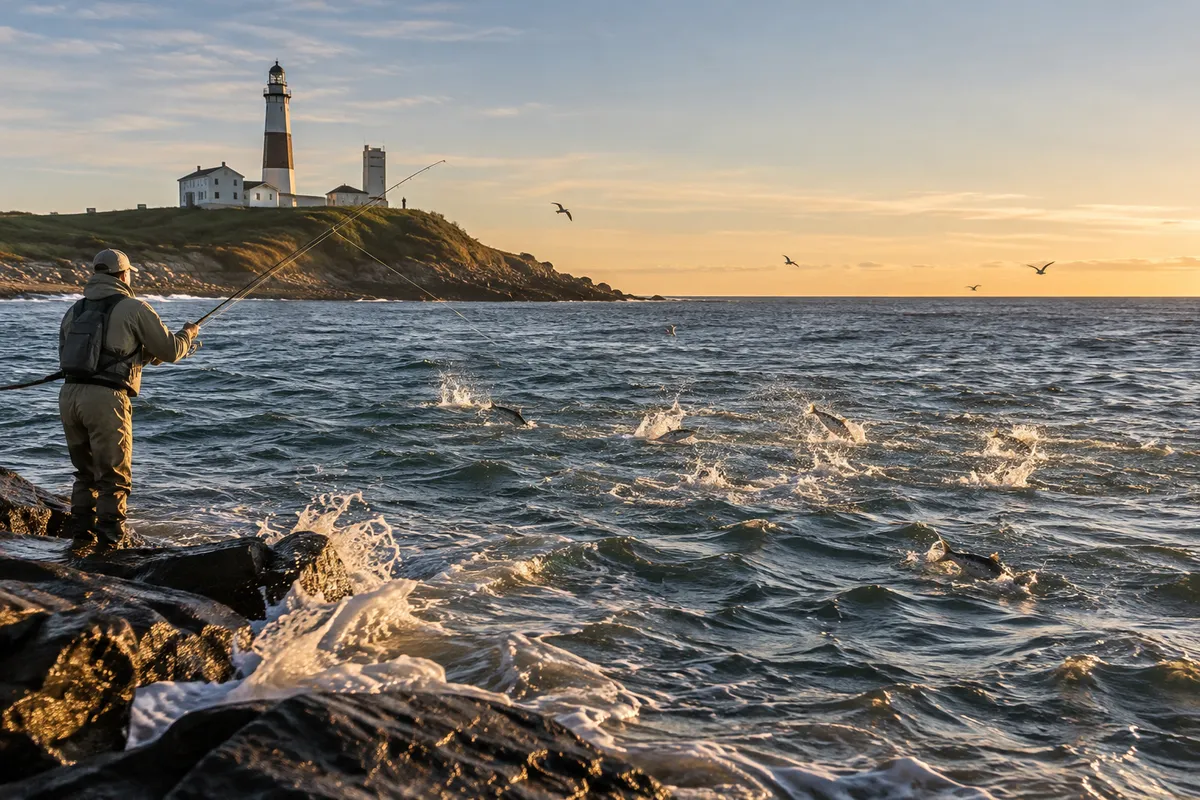
A related example of reading coastal conditions is Montauk striped bass fishing. It concerns a different fishery, so its tactics should not be copied directly; the broader value is in observing where current and forage meet and adapting to what the water is doing.
Set the hook and handle the fish with care
A crab can be a substantial bait, and a fish may need a moment to take it. Avoid reacting to every tap with a forceful strike. Keep the line controlled and follow the hook manufacturer’s and local fishery guidance for the hook style you are using. Circle hooks are designed to hook in a different way from traditional J-hooks; anglers should not automatically apply the same striking motion to both.
Once hooked, maintain steady pressure and steer the fish away from hazards without creating an unnecessarily prolonged fight. Use a net or other suitable landing method when appropriate. Wet your hands before handling, support the fish’s body, and keep it in the water as much as possible. Remove the hook promptly if it is safe to do so; if deeply hooked, cutting the line may be the better choice under local guidance. Photograph quickly and release the fish with care when required or when choosing to let it go.
Check current state and federal rules before fishing. Regulations can govern seasons, harvest sizes, bag limits, gear, and protected areas, and they can change. Consult the relevant state wildlife or marine agency for the exact location. NOAA Fisheries provides a useful federal starting point for recreational fishing regulations and guidance.
Troubleshoot common problems
The bait keeps coming off. Make the piece more compact, secure it through a firm section, and check that the hook point and gap remain clear. A long cast or strong current can magnify a poor fit between bait and hook.
Small fish remove it quickly. Try a firmer or larger section if appropriate, move to a different depth or location, or use another legal bait. Do not assume that a bigger crab will necessarily attract only larger redfish.
The rig drifts or rolls. Reconsider the angle and location before adding weight. A different sinker shape, a more sheltered position, or a float may improve control. Use only enough weight to keep the bait in the intended zone.
You are getting snags. Shorten the distance to cover, change the rig, or fish the edge rather than the center of the obstruction. Repeatedly pulling hard can break line and leave tackle behind.
There are no bites. Check bait freshness, depth, current, and whether fish or forage are actually present. Give a spot a reasonable opportunity, then adjust one variable at a time—location, bait size, or presentation—so you can learn what changed.
A simple on-the-water checklist
- Confirm local licenses, seasons, size and bag limits, hook rules, and access restrictions.
- Keep crab fresh and select a piece that casts securely.
- Match weight and float choice to current, depth, and bottom structure.
- Keep the hook point clear and inspect line after contact with rough cover.
- Watch for bait movement and feeding signs; change location if the water gives no reason to stay.
- Plan how you will land and release fish safely before casting near structure.
Blue crab is a versatile redfish bait, but it is one option among several. Its best use comes from a sound match between bait size, rig, and the water you are fishing. Let local regulations and conditions guide the final choices, and be ready to change the plan when the fish or current tells you to.
Frequently asked questions
Should I use a whole blue crab or pieces for redfish?
Use a whole small crab when a substantial bait suits the conditions; halves or smaller sections are easier to cast and may stay put better. Let current, fish size, hook fit, and bait theft guide the choice.
Where should I fish blue crab bait for redfish?
Try accessible edges where current, depth changes, and forage meet, such as channel margins or creek mouths. Redfish use many habitats, so observe local conditions rather than assuming one spot or tide is always best.
How do I keep crab bait on the hook?
Choose a compact piece, secure it through a firm portion, and keep the hook gap and point clear. If it repeatedly comes off, adjust bait size or rig and consider whether current or casting force is too great.
Are there special rules for using blue crab as bait?
Rules vary by location and can cover crab collection, seasons, gear, hooks, and protected areas. Check the current regulations from the state agency responsible for the water you plan to fish.
Sources & further information
Consult these primary sources for current regulations, technical information and local guidance.