The Biggest Amberjack Ever Caught: What the Record Really Means
The phrase “biggest amberjack ever caught” sounds like a simple leaderboard, but species identification, line class, and official verification all matter. Here’s how to interpret the record and find the authoritative answer without relying on viral claims.
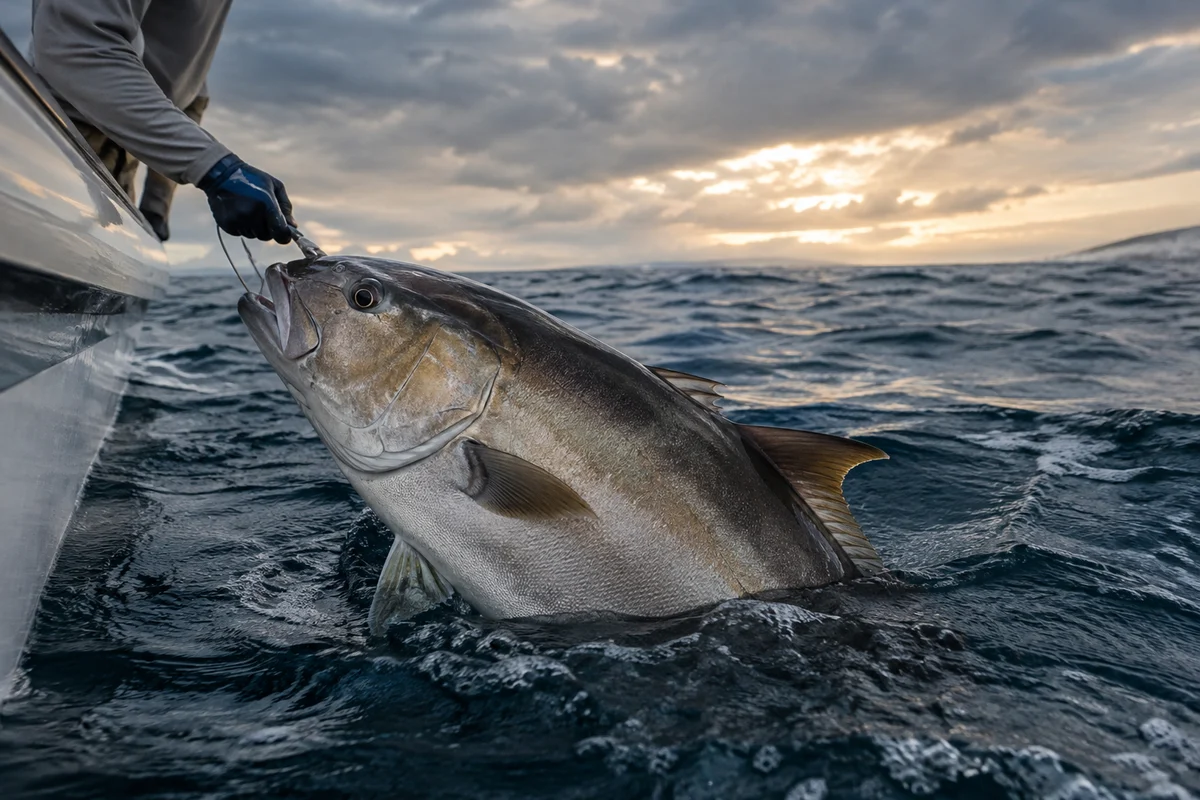
Amberjack records are easy to misstate because several related fish share the name, and “biggest” can refer to different record categories. If you are searching for the biggest amberjack ever caught, first establish which species and record system a claim concerns. A photograph, a dockside estimate, or a social-media caption is not the same thing as a verified world record.
The most useful starting point is the International Game Fish Association (IGFA), which maintains recognized world-record categories and publishes rules for documenting catches. Its listings can change as applications are reviewed, so treat the current official record database—not an undated article or repost—as the authority. This guide explains what to look for, why reports can conflict, and how to read an amberjack claim carefully.
What does “biggest amberjack ever caught” mean?
There is no single answer until the question is narrowed. A record may apply to a particular amberjack species, a specific line class, an all-tackle category, or another defined division. A fish described casually as an “amberjack” may also be a different member of the jack family. Names used by anglers and regional fisheries can vary, so the fish’s identification matters as much as its reported size.
For a record claim, check these distinctions:
| Record detail | Why it matters | What to verify |
|---|---|---|
| Species | Similar common names can refer to different fish | The official species name attached to the listing or application |
| Record category | All-tackle and line-class records are not interchangeable | The category and line class shown by the recordkeeper |
| Status | A catch can be reported before it is accepted | Whether the authority lists it as current and approved |
| Measurement | A scale reading needs reliable documentation | The recorded weight and the rules used to establish it |
| Date and place | These help identify the particular claim | Details in the official entry, not only a caption |
The distinction is practical: a large fish can be notable without holding a world record, and a record in one category does not automatically replace records in all others.
How are amberjack records verified?
IGFA record applications are evaluated against the organization’s requirements. The process is designed to document both the fish and the circumstances of the catch. Requirements can include information about identification, tackle, line, weighing, witnesses, and supporting materials. Consult the current IGFA rules and application guidance for the applicable category; do not assume that an old checklist or a news account captures every current requirement.
This is why an announcement that an angler has “submitted a record” is different from an accepted record. Submission means a claim is under consideration. Acceptance means the recordkeeper has reviewed the application and recognizes it under its rules. A fish may be accurately described as exceptionally large while its record status remains unconfirmed—or may not qualify for the category being discussed.
When checking a claim, use this short verification sequence:
- Find the official record listing. Search the recordkeeper’s current database for the species and category.
- Match the category. Confirm that the claim is for the same species, tackle class, and record type.
- Check the status and date. Make sure the entry is approved and current, rather than a pending application or a dated snapshot.
- Compare the source details. Look for consistent species identification, weight, location, and catch date.
- Treat missing information as uncertainty. If the official listing does not support the claim, describe it as reported or unverified rather than as the record.
Why do reported amberjack sizes conflict?
A few common issues explain many discrepancies. First, species identification can be difficult from a brief image or a fish photographed at an angle. Second, a reported weight may be an estimate, a scale reading without enough documentation, or a measurement later corrected. Third, record categories get collapsed in headlines: a line-class record can be presented as “the world record” even though it is not an all-tackle record.
There is also a timing problem. Record pages are updated when applications are processed, and older pages may preserve a former record. A post can be accurate about what was recognized when it was published and still be out of date today. Always look for a current official entry before repeating a superlative.
A careful summary should therefore state the species, category, and verification status. If any of these are unclear, the safest wording is “a reported large amberjack” or “a claimed record catch,” followed by what remains to be confirmed. That phrasing is more informative than an unsupported claim that a fish was the biggest ever.
What kind of amberjack is involved?
“Amberjack” is a common name used for several jacks, and species names and local usage can differ by region. Identification may depend on more than overall shape: coloration, body proportions, fin features, location, and other characteristics can contribute. A photo by itself may not provide enough evidence for a definitive determination, especially when color changes after capture or lighting alters appearance.
For anglers, reliable identification matters for more than recordkeeping. Species can have different regulations, seasons, size limits, or handling guidance depending on location. Consult the responsible local fisheries agency for rules before retaining a fish. Federal or state guidance may also address species-specific health advisories, which should be checked independently of record claims.
If a catch is being considered for a record, follow the recordkeeper’s current identification and documentation instructions. Do not rely on a common name alone or try to infer a species from a headline. A qualified identification and complete supporting information make a claim easier to assess.
How does the record connect to amberjack fishing?
Amberjack are powerful offshore fish, and pursuing them is a different question from establishing a record. Anglers planning a trip should learn the local season and retention rules, understand safe handling, and work with a captain or guide familiar with the area. The techniques and regulations vary by location, and this article is not a substitute for local rules or a trip-specific briefing.
For a general overview of approaches and location considerations, see our guide to how to catch amberjack. For broader saltwater context, browse the saltwater fishing hub. Record stories also benefit from comparison with other species: our explainer on IGFA world records outlines why categories and official verification matter across game fish.
These links are useful for context, not proof of a specific record. The recordkeeper’s own current listing remains the source to cite for record status.
A responsible way to report a record claim
If you are writing, sharing, or discussing an unusually large amberjack, make the claim precise. Name the species only when it has been reliably identified. Attribute a reported weight to its source, distinguish a submitted application from an approved record, and state the category. If a current official listing cannot be found, say so plainly.
Avoid turning an estimate into a fact through repetition. Viral images can circulate without the original date, location, scale information, or identification. A caption that says “largest ever” may refer to a local catch, a personal best, a category record, or simply an eye-catching fish. Ask what the words mean before repeating them.
For anglers documenting a potential record, check the IGFA’s current requirements before the trip if possible. Follow applicable fishing regulations and handling practices, preserve the evidence requested by the recordkeeper, and avoid improvising documentation after the catch. The exact requirements depend on the category and can change; the official rules control.
The bottom line
The biggest amberjack ever caught is not a safe claim to answer with an unsupported number. It depends on species, record category, documentation, and the recordkeeper’s current approval. Check the live IGFA record information, confirm that the listing matches the claim, and use cautious language whenever a detail is missing. That approach respects both the fishery and the difference between a remarkable catch and a verified record.
Frequently asked questions
Where can I check the biggest amberjack record?
Check the current IGFA world-record listings and confirm the species and category. The official database is more reliable than an undated article or social-media post.
Does a submitted amberjack record count as a world record?
Not yet. A submitted application is a claim under review; it becomes a recognized record only if the recordkeeper approves it under the applicable rules.
Why do sources give different amberjack record weights?
They may refer to different species or categories, report an estimate, reflect an older listing, or describe a pending rather than approved claim.
Are all fish called amberjack the same species?
No. The common name can cover multiple related fish, and regional usage varies. Verify the scientific identification and check local fisheries rules.
Sources & further information
Consult these primary sources for current regulations, technical information and local guidance.