Tarpon Fishing Islamorada: A Practical Guide to the Keys
Islamorada offers access to tarpon habitat across channels, flats, bridges and backcountry edges. Use this guide to plan around tides and conditions, choose a fishing approach, and handle fish responsibly while checking current regulations.
By ODU Magazine Staff
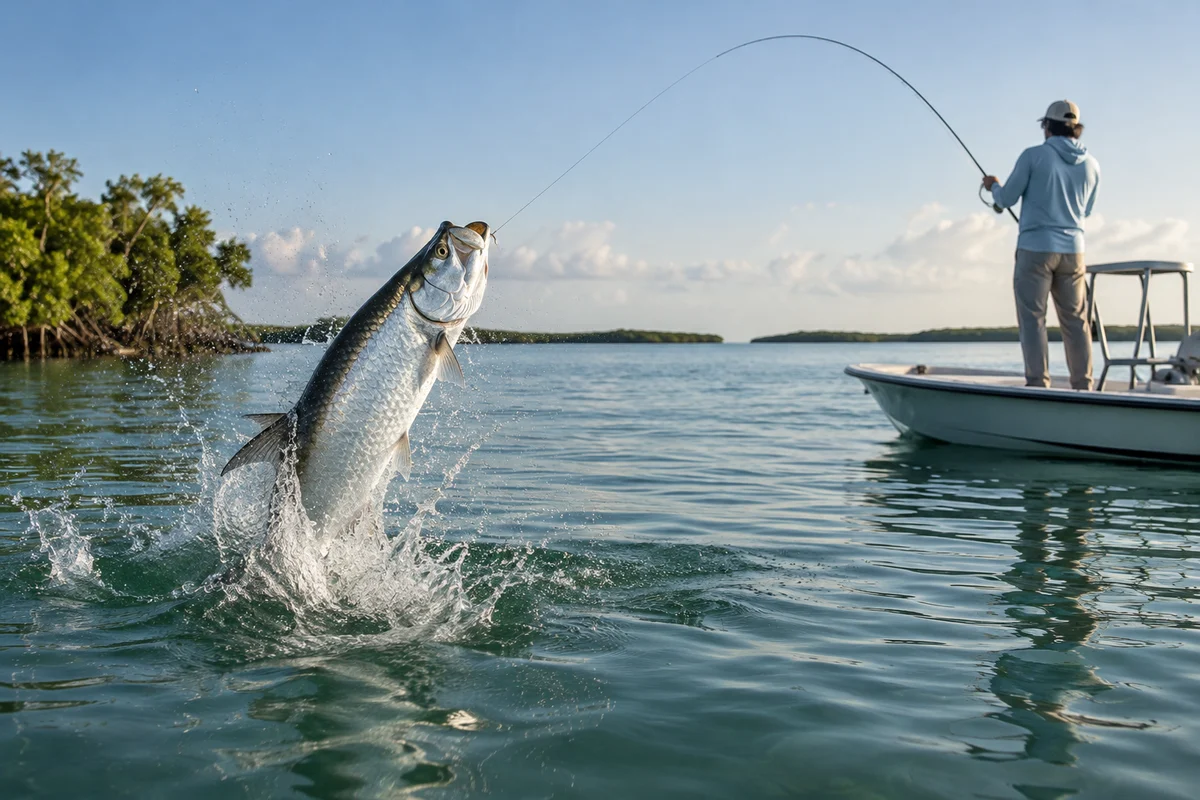
Tarpon fishing Islamorada can mean sight-fishing shallow flats at first light, working a moving tide near a pass, or presenting a bait along a channel edge. The right choice depends on water clarity, wind, current, boat traffic and the fish you can actually see—not just the calendar. Islamorada sits amid varied Florida Keys habitat, so a useful plan begins with matching your method to conditions and leaving room to change course.
Tarpon are powerful fish, but no outing can guarantee a hookup. Their presence and willingness to feed vary, and local rules may change. Treat this as a planning framework, confirm regulations before fishing, and ask a current local guide or tackle shop about access and conditions. For other saltwater reading, browse the saltwater fishing hub, including our guides to how to catch amberjack and Montauk striped bass fishing.
When is the best time to fish for tarpon in Islamorada?
Tarpon activity in the Keys is seasonal, but there is no single date that guarantees fish. Warm-season migrations draw attention to the region, while resident and passing fish may be encountered at other times. Weather fronts, water temperature, bait availability and fishing pressure all influence what happens on a particular day. Ask locally about recent sightings rather than treating a seasonal expectation as a promise.
Time of day matters because light and water conditions shape how anglers locate fish. Early and late light can make fish easier to spot against a shallow bottom, while glare and wind can reduce visibility. On deeper edges, current may matter more than sight. Choose a realistic window with enough time to observe conditions, and avoid rushing to a location simply because it is popular.
Choose a setting that matches the conditions
Islamorada’s surrounding waters offer several broad approaches. Each has trade-offs; local access, boat traffic, weather and conservation rules should guide the final decision.
| Setting | What can make it promising | Main limitation | A sensible approach |
|---|---|---|---|
| Shallow flats | Clear water and visible movement can support sight-fishing | Wind, glare and shallow-draft access can constrain the day | Move quietly, scan ahead and give fish space |
| Channels and passes | Moving water can concentrate bait and fish | Current, boat traffic and changing tides complicate presentation | Position safely and avoid obstructing navigation |
| Bridges and deeper edges | Structure and depth provide a defined area to observe | Crowding and overhead or submerged hazards may be present | Follow local access rules and maintain safe distance |
| Backcountry banks and cuts | Protected water may be more comfortable in some wind directions | Conditions and fish location can change quickly | Use a chart, check weather and keep a route back in mind |
This is a decision aid, not a map of guaranteed spots. Avoid disclosing or entering sensitive private access points, and do not anchor where doing so creates a hazard. In unfamiliar water, use current charts and heed navigational markers.
How tides and weather shape the plan
A tide is useful context, not a complete forecast of fish behavior. Moving water may bring bait past an edge or through a channel, but the best stage varies with the location and conditions. Check a reliable tide prediction for the specific area, then compare it with local observations. Wind can alter water level and clarity, so the predicted tide and the water you see may not align perfectly.
Before leaving, check the marine forecast, wind direction, precipitation, lightning risk and any advisories. Florida Keys conditions can change, and a small craft can become uncomfortable or unsafe in wind or thunderstorms. Set a conservative turnaround point. If visibility is poor, traffic is heavy or the water is rough, switch to a protected option—or call the trip off.
On the water, look for signs rather than forcing a schedule: rolling fish, bait movement, current seams and changes in water color. These observations can inform a move, but none proves that tarpon are feeding. Give an area time to reveal itself without repeatedly running close to visible fish.
Tackle and presentation: keep it manageable
Tarpon tackle needs to balance casting, line control and the strength to manage a large, fast fish. Choose a rod, reel, line and leader suited to the fish size you reasonably expect and the setting. There is no universal setup: a presentation for a shallow flat differs from one used around deeper current. Ask a knowledgeable local tackle shop or guide to match equipment to current conditions and regulations.
Keep terminal tackle simple and inspect it before the trip. Check knots, leader for abrasion and hooks for damage. Carry appropriate pliers and cutters where they can be reached without rummaging. A hook that is difficult to remove may be safer to cut than to wrestle with, particularly when a fish is alongside the boat.
Bait, lures and flies all have their place, and local rules may restrict methods or areas. The practical choice is the method you can present accurately without crowding other anglers or repeatedly disturbing fish. If a fish refuses, changing presentation or moving on is usually better than pursuing it through a tight, busy area.
A simple decision framework for the day
Use this sequence before committing to a location:
- Check legality and access. Confirm current Florida rules, any area-specific restrictions, and whether you may fish from the intended access point.
- Read the forecast. Decide whether wind, visibility and lightning risk permit safe travel and fishing.
- Match habitat to conditions. Favor a flat when visibility and access allow; consider a deeper edge when current and safe positioning make that more practical.
- Observe before casting. Look for fish and bait while maintaining distance and avoiding interference with other boats.
- Set a limit. Agree on a turnaround time and a fish-care plan before the first hookup.
This framework helps prevent the common mistake of treating a named location or ideal tide as more important than actual conditions.
Fight and release tarpon with care
Tarpon are valued sport fish, and their size and jumping ability make handling a serious responsibility. Keep the fight as efficient as your tackle and skill allow; prolonged exhaustion can increase stress. Do not lift a large fish out of the water for a photograph. Keep it in the water, support it appropriately if local guidance calls for it, and minimize handling and air exposure.
Have the camera ready before bringing a fish close. Avoid placing hands near the mouth or gill structures, and do not drag a fish onto a deck or shoreline. If a hook cannot be removed promptly and safely, cutting the leader close to the hook may be the better choice. Revive the fish in the water by allowing water to pass naturally over the gills, without pulling it backward, and release it when it can swim away strongly.
Regulations are especially important for tarpon. Florida’s rules can distinguish between catch-and-release fishing and situations involving a tag or other specific authorization. Do not assume a general saltwater license alone covers every activity. Review current Florida Fish and Wildlife Conservation Commission guidance before the trip and follow any applicable requirements.
What to bring and what to confirm
A compact checklist reduces avoidable problems:
- Current fishing license and a saved copy of relevant rules.
- Marine forecast, tide information and a charged communication device.
- Sun protection, drinking water and basic first-aid supplies.
- Tackle checked for worn line, damaged knots and accessible cutting tools.
- A landing and release plan that keeps the fish in the water.
- A backup location or a decision to postpone if conditions deteriorate.
If hiring a guide, discuss the intended style of fishing, expected trip conditions, safety practices, what equipment is supplied and how fish are handled. Confirm details directly; services and availability vary. A guide can offer local judgment, but no one can promise fish or favorable weather.
Make the day about more than a catch
A productive Islamorada tarpon day is not measured only by a landed fish. Reading water, traveling safely, respecting other anglers and releasing a fish in good condition are meaningful outcomes. Keep expectations flexible: if tarpon are absent or conditions are poor, enjoy the broader Keys fishery without pressuring a spot or taking unnecessary risks.
The best plan is specific enough to guide decisions and flexible enough to change. Check the rules, watch the forecast, select habitat that fits the conditions, and let what you observe—not a guaranteed claim—determine the next move.
Frequently asked questions
When is tarpon season in Islamorada?
Tarpon are especially associated with the warmer-season migration, but timing and local presence vary. Check recent local reports and conditions rather than relying on a fixed date.
What tide is best for tarpon fishing in Islamorada?
There is no universally best tide. Moving water can help in some channels and edges, while visibility and fish movement may matter more on a flat. Check the specific-area forecast and observe conditions.
Can you keep a tarpon caught in Florida?
Tarpon regulations are specific and may require authorization for certain activities. Check current Florida Fish and Wildlife Conservation Commission rules before fishing; do not assume keeping a fish is permitted.
How should I release a tarpon safely?
Keep the fish in the water, minimize handling and air exposure, avoid lifting it for a photo, and remove or cut the hook or leader as appropriate. Follow current local guidance and release it when it swims away strongly.
Sources & further information
Consult these primary sources for current regulations, technical information and local guidance.