How to Fish a Frog: Read Cover, Control the Pause, Set the Hook
A hollow-body frog can draw bass from more than thick vegetation. Learn how to choose cover, tune your retrieve, handle missed strikes, and adapt without assuming every bite needs the same response.
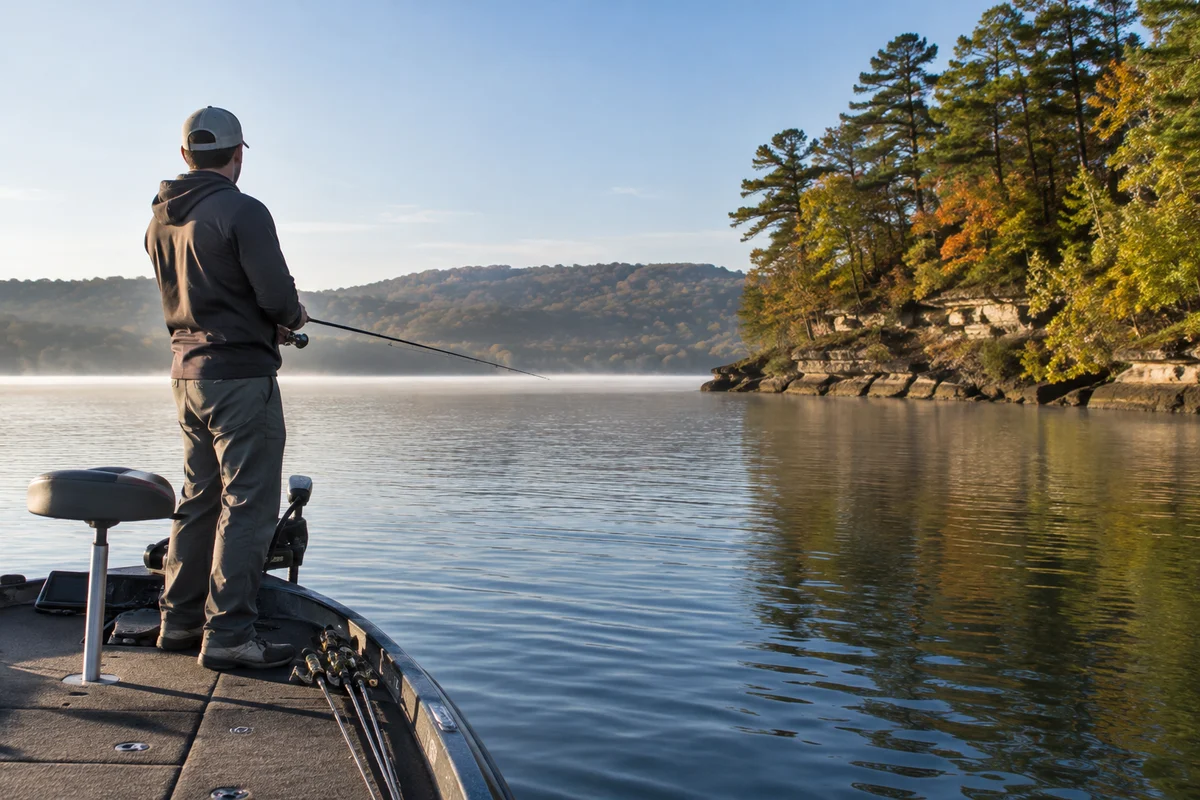
A frog lure is most often associated with lily pads and matted grass, but learning how to fish a frog means looking beyond vegetation. Bass may also respond around shade lines, laydowns, docks, seams in current, and open-water edges when forage or conditions make a surface presentation useful. The key is not to work the lure everywhere in the same way: identify likely holding water, present the frog naturally, and adjust based on what the fish show you.
A hollow-body frog is a soft, buoyant topwater bait with hooks riding close to its body. That profile helps it pass over some snag-prone cover, though it is not snag-proof and is not the only kind of frog-style lure. Gear, cover, fish activity, and local regulations all influence how and where to use one.
Where to fish a frog beyond thick weeds
Start by looking for a reason a bass might be near the surface. Shade, a change in depth, nearby forage, and a defined edge can matter as much as dense cover. A frog can be especially useful when you want to cover a shallow lane without dragging a treble-hooked lure through every obstruction.
- Laydowns and overhanging branches: Cast beyond the outer limbs when possible, then bring the frog beside trunks and through gaps. Watch the shaded side and the point where a branch meets the water.
- Dock edges and shade: Work posts, floats, and dark pockets methodically. Leave room for a fish to turn away from the structure; a cast that lands directly on a dock can spook fish or create an awkward retrieve.
- Open-water edges: Try the outside edge of a weedline, a visible seam between calm and rippled water, or a shallow point near deeper water. These are possibilities, not guarantees; wind, light, and baitfish activity can change the picture.
- Current breaks: In rivers and creek arms, a bass may hold where current softens beside a bank, log, or point. Present the frog along the slower-water boundary rather than assuming fish will sit in the strongest flow.
- Scattered cover: Isolated pads, reeds, or brush can make useful targets. Cast past the target and bring the lure across or alongside it, instead of landing right on top of the likely holding spot.
For broader seasonal context, see our guide to summer bass fishing tips and the overview of swimming jigs for bass, another way to work edges and cover below the surface.
Choose the frog and tackle for the water
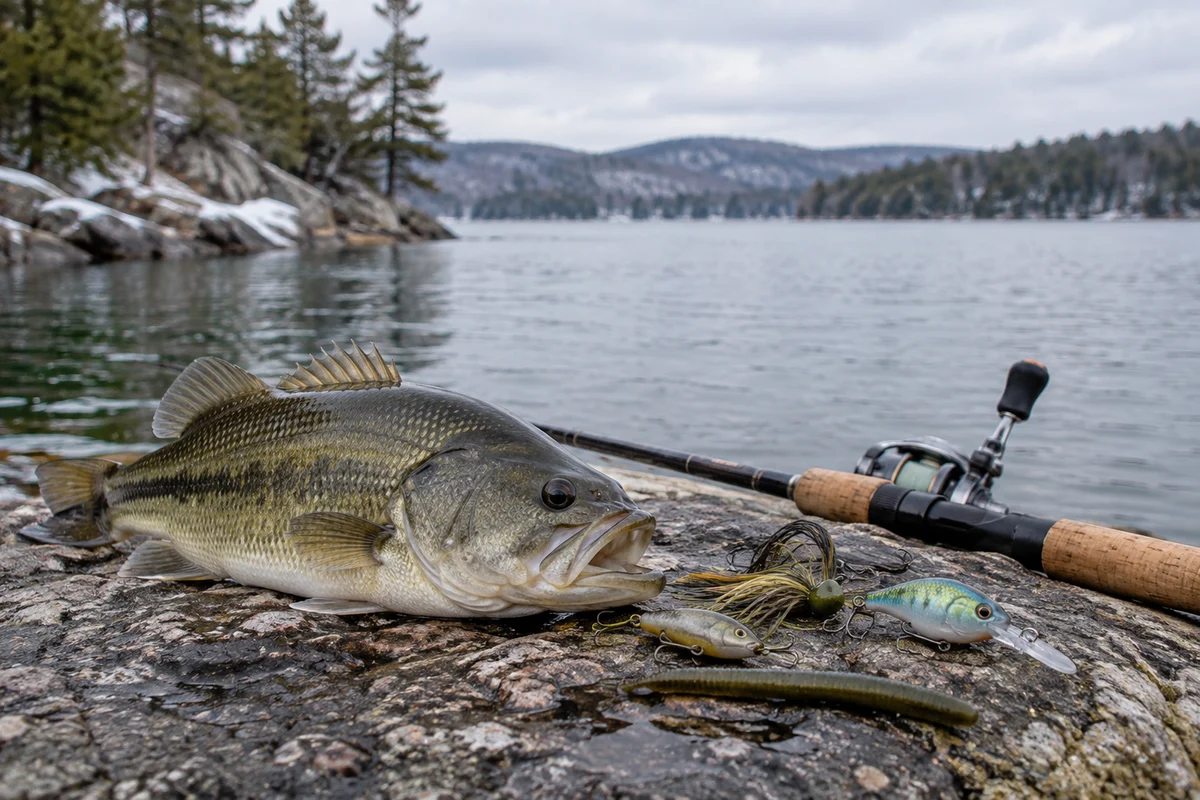
A hollow-body frog is a sensible starting point when you need a weed-resistant topwater profile. Some models are designed to walk side to side; others have a different body shape or leg style that changes their action. Check the maker’s guidance for the particular lure, and test it in open water before casting into cover. A frog that rolls over, tracks poorly, or gathers debris may need a different retrieve or a different choice of bait.
Rod, reel, and line should suit the cover and your ability to control a fish. Many anglers choose a stout, responsive rod and heavier line for dense vegetation, while more open water may allow a less forceful setup. There is no universal combination: lure weight, casting comfort, hook design, vegetation, and local fish size all matter. Use equipment within its stated limits and avoid forcing a setup that you cannot cast or handle safely.
| Situation | Starting approach | What to reassess |
|---|---|---|
| Thick, matted vegetation | Use a frog intended for cover; make deliberate casts and keep line management controlled. | Can the lure cross the mat cleanly? Is your tackle appropriate for the vegetation and fish? |
| Docks or laydowns | Cast beyond or beside the target, then work a short, precise path. | Are repeated casts disturbing the spot? Can you steer a hooked fish away from hazards? |
| Open-water edge | Cover a longer lane, varying speed and pauses. | Are fish following, striking short, or ignoring the surface? Consider changing location or presentation. |
| Wind or surface chop | Keep the lure visible to you and experiment with cadence and angle. | Does the chop hide the bait or make accurate placement difficult? A subsurface option may be more practical. |
The table is a decision aid rather than a rulebook. Conditions can change within a single bank or shoreline, so use the response of the fish and the limitations of your gear to guide adjustments.
Work the frog with a repeatable retrieve
Begin with accurate placement. A clean landing near a likely target is generally more useful than an unnecessarily long cast that puts the lure in an awkward position. After the splash, pause briefly. Bass sometimes follow or approach a bait as it settles, and an immediate, fast retrieve can pull it away before it has a chance to draw attention.
Then choose a cadence. For a walking retrieve, use small, controlled rod-tip movements while taking up slack; the aim is a side-to-side glide, not a series of large jerks. If the frog is designed to move straight or make a different action, follow its intended behavior instead. Around a small opening or isolated piece of cover, short movements and pauses can keep the bait in the strike zone. Along a long edge, a steadier pace can help you search water efficiently.
Change one variable at a time: pause length, speed, cast angle, or distance from cover. That makes it easier to notice what changes the fish’s response. If a bass boils behind the lure without taking it, pause or alter the next pass rather than assuming the same speed will work. If the bait repeatedly catches vegetation, clear it and adjust the route; a fouled frog is hard for fish to track.
A practical sequence is: cast past the target, let the rings settle, work the lure through the target zone, pause at the far edge, and continue until it is out of the likely holding water. Repeat from a new angle before abandoning a productive-looking feature. Angle changes can reveal whether bass are positioned on the shaded side, the outside edge, or a specific opening.
Handle strikes and missed fish calmly
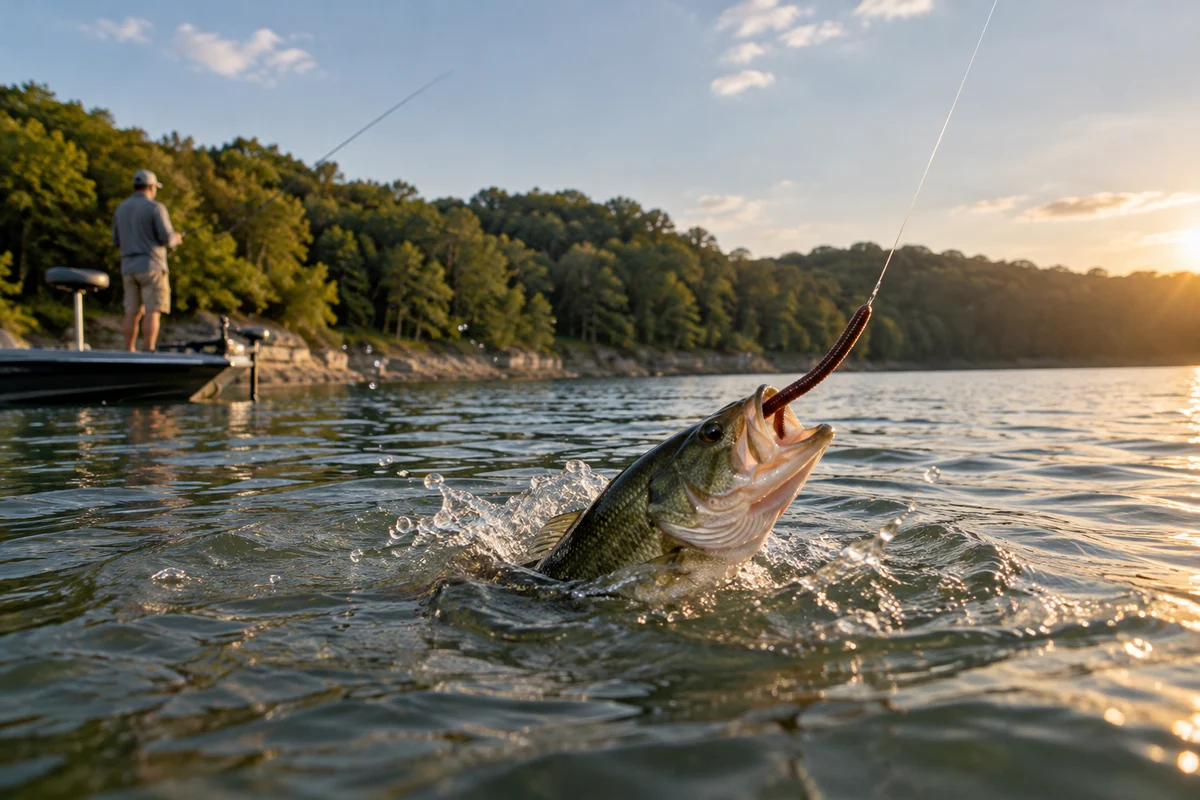
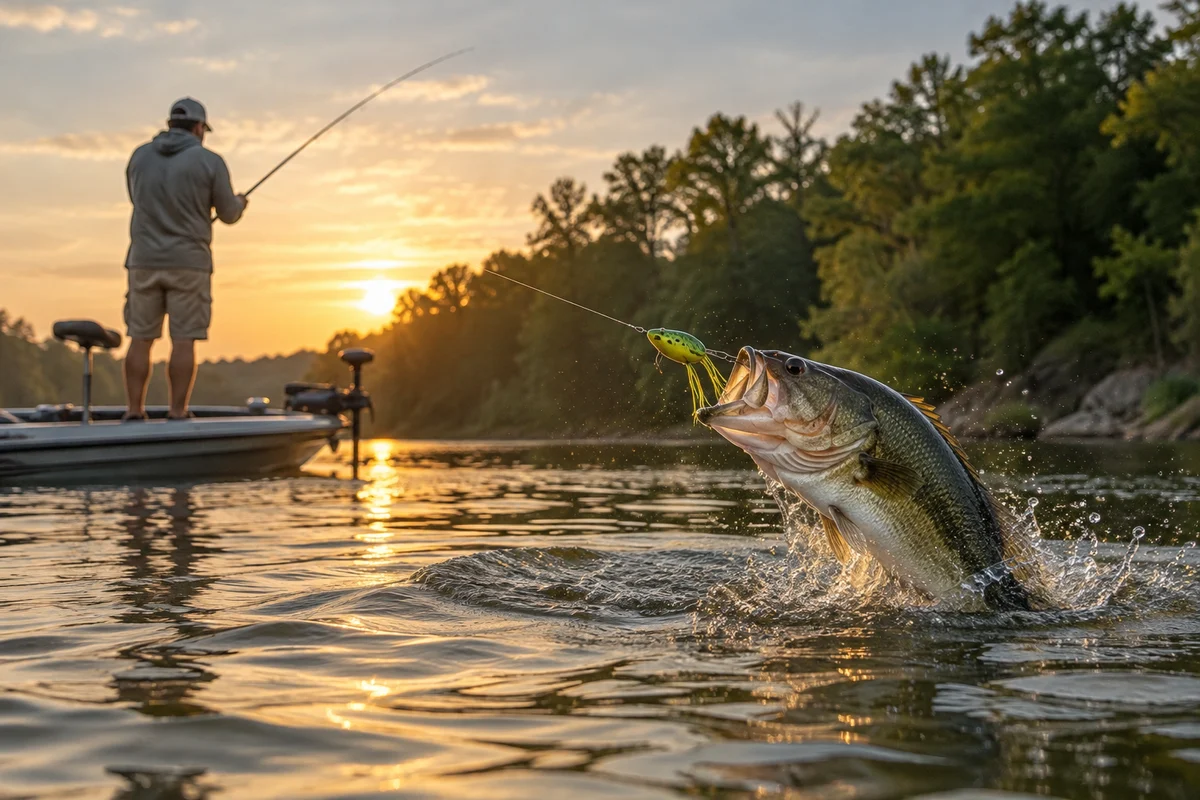
A surface strike can be dramatic, and the instinct is to react instantly. Instead, watch the lure and wait until you feel the fish or see the line move decisively before setting the hook. A bass can miss, swipe, or briefly hold the frog without taking it. A premature hookset may pull the bait away. Once the fish is clearly connected, use a firm, controlled hookset suited to the tackle and cover; avoid swinging without regard for nearby people, branches, or boats.
If the fish misses, keep the frog in the area if it is still in good condition and the line is clear. A short pause or a modest change in direction may prompt another opportunity, but there is no guarantee it will strike again. Check for weeds on the hooks, damage to the body, and a line that has wrapped around cover. If the lure is fouled, retrieve and clear it rather than dragging debris through the next presentation.
For anglers still building foundational skills, our bass fishing for beginners guide can help connect lure choice with basic casting, observation, and fish-handling habits.
Adjust to light, weather, and fish activity
Low light can make shallow targets easier to approach, while bright conditions may concentrate fish in shade or encourage them to hold tighter to cover. These are tendencies, not fixed rules. Wind can break up the surface and make a frog harder to track, but it can also reduce visibility for fish and create useful edges. In heavy chop, strong current, or water where the lure is difficult to see, a different surface bait or a subsurface presentation may be more effective.
Water temperature alone does not tell you whether to use a frog. Consider visible forage, surface activity, cover, and whether bass are feeding shallow. If repeated, careful passes produce no signs of interest, move to another feature or change depth and presentation. A frog is a tool for particular opportunities, not a requirement for every shallow-water trip.
Make the presentation responsible and efficient
Use local fishing regulations and access rules, and handle fish with care. Keep casts controlled around docks, other anglers, wildlife, and overhead branches. If you fish from a boat, maintain awareness of passengers and secure loose hooks and tackle. Avoid disturbing nesting wildlife or damaging shoreline vegetation to reach a target.
A useful frog-fishing routine is simple: identify a likely edge or piece of cover; select a lure and tackle that fit it; make a precise cast; vary cadence deliberately; and respond to the fish rather than to the splash. Thick weeds are only one setting. With thoughtful placement and a willingness to change pace—or leave the frog behind when conditions call for it—you can explore docks, wood, shade, current breaks, and open-water transitions with the same methodical approach.
For more, explore our bass fishing fishing freshwater guides.
Frequently asked questions
Can you fish a frog in open water?
Yes. Try open-water edges, points, shade lines, or visible forage activity. If bass do not respond, change location, cadence, or lure depth.
Should I pause after a bass strikes a frog?
Watch the lure and wait until you feel the fish or see the line move decisively before setting the hook. A fish may miss or swipe at the bait.
What cover is best for frog fishing besides weeds?
Docks, laydowns, overhanging shade, isolated cover, current breaks, and weedline edges can all be worth testing when they offer bass a reason to hold shallow.
How should I retrieve a hollow-body frog?
Start with a brief pause after landing, then use controlled movements suited to the lure’s design. Vary speed and pauses, changing one factor at a time.
Sources & further information
Consult these primary sources for current regulations, technical information and local guidance.