How to Drag a Deer Safely and Efficiently
A calm, practical deer recovery starts before you pull: assess the terrain, choose a manageable route, and use help or mechanical assistance when the load is too much. This guide covers safe preparation, field methods, and when to stop or change plans.
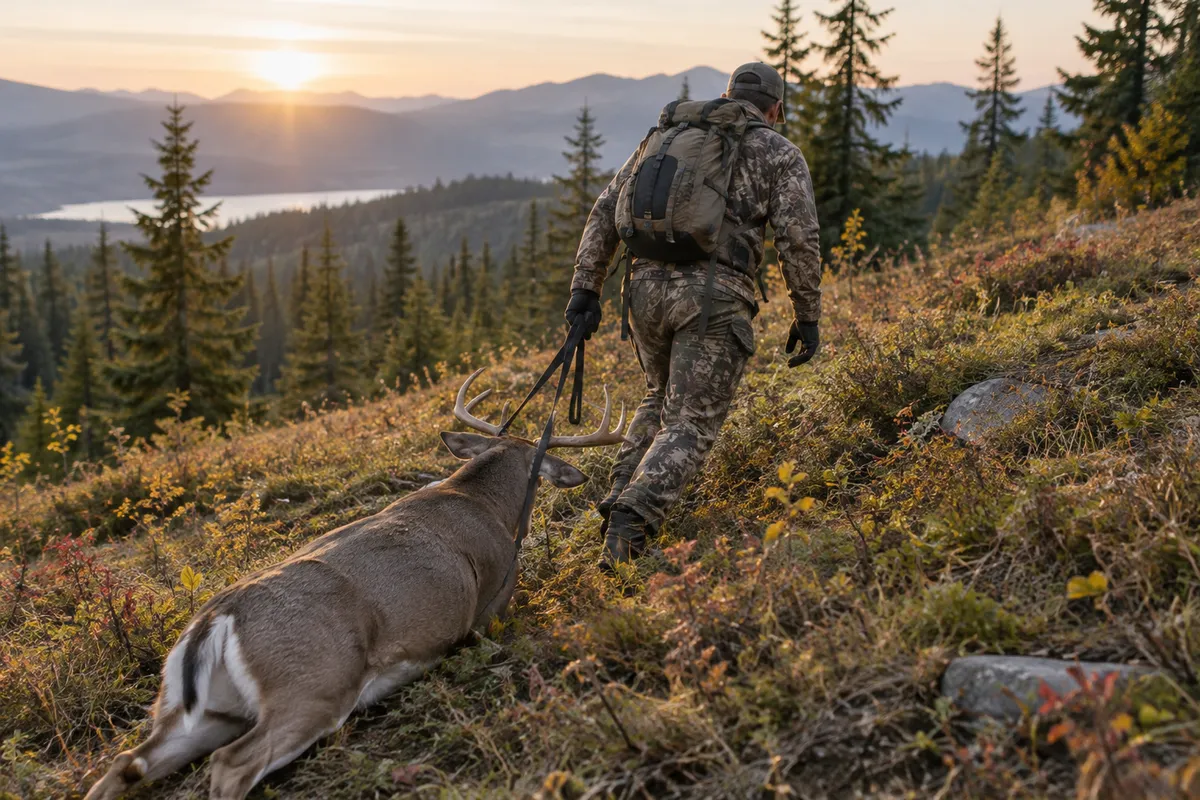
Recovering a deer is part of the hunt, but the work can become risky when fatigue, rough ground, or an awkward load turns a short pull into a struggle. Knowing how to drag a deer begins with a simple rule: do not treat the animal’s weight as the only challenge. Distance, slope, footing, weather, and your own condition matter just as much. Plan the route, keep the load controlled, and ask for help before strain or poor judgment sets in.
Before moving the animal, confirm that it is dead and approach cautiously. Follow local tagging, transport, and reporting rules. If you are unsure about the animal’s condition, your safety, or the regulations, pause and contact a qualified local authority or hunting partner.
Make a recovery plan before pulling
Take a moment to inspect the ground between the deer and your destination. Choose the shortest route that is also safe, rather than automatically choosing a straight line. A longer path around steep slopes, slick rocks, dense brush, or water may require much less effort and reduce the risk of a fall.
Check the route for obstacles that could catch the animal or your line. Look for loose logs, hidden holes, wire, and sharp branches. In low light, use a headlamp or flashlight and keep your hands free when walking. Mark the starting point if you need to return for equipment or help, and make sure someone knows your planned route and expected return time.
Consider the whole recovery, not just the first few yards. A deer that can be moved to a nearby trail may still need to be transported farther to a vehicle. If the ground is steep, the distance substantial, or the animal too heavy for you to control, arrange assistance or use a suitable cart, sled, or vehicle where permitted. Never improvise a vehicle recovery in a way that could pull you off balance or place you in the path of a moving machine.
Choose equipment that fits the terrain
A properly made deer drag, sturdy rope, or purpose-built harness can help transfer effort from your hands to a stronger, more balanced pulling position. Inspect straps, knots, and connectors before use. Avoid frayed webbing, damaged hardware, and improvised attachments that may slip or fail under load. Follow the equipment maker’s instructions, and do not attach a line to a part of the animal that could tear free unexpectedly.
A sled can work well on snow or other smooth, firm surfaces; a game cart is often more useful on trails or relatively even ground. Neither is a universal solution. Wheels can snag in roots and rocks, while a sled may drag poorly over dry brush. If conditions change, reassess rather than forcing unsuitable gear through.
| Situation | Practical option | Main caution |
|---|---|---|
| Short, level route with clear footing | Drag strap or harness | Keep the line secure and your posture balanced |
| Snow or smooth ground | Sled, if appropriate | Watch for hidden holes and uncontrolled downhill movement |
| Firm trail with room to maneuver | Suitable game cart | Check load stability and avoid steep, rough slopes |
| Long distance, steep terrain, or heavy load | Get help or change the plan | Do not rely on a solo pull beyond your capacity |
| Poor light or uncertain footing | Pause, improve lighting, or wait | Fatigue and falls are more dangerous than delay |
Equipment does not remove the need for judgment. A cart or sled should be rated and used as its manufacturer directs, and local rules may restrict how game can be moved. When in doubt, check the rules for your location.
Set up the deer and your body
Keep the deer’s legs and loose parts from catching on brush where practical, and orient the animal so it travels smoothly along the chosen route. Do not place yourself directly downhill of a load that could slide. On a slope, work from a position where you can stop, release, or redirect the pull without being dragged along with it. If you cannot control the animal, stop and get help.
With a harness, adjust it so the pull is spread comfortably and does not restrict breathing or movement. Stand upright, keep your back in a neutral position, and take short, steady steps. Use your legs and body weight rather than twisting your torso or making sudden jerks. Keep the line clear of your feet and hands. Gloves can improve grip and protect against abrasion, but they are not a substitute for a secure connection or safe footing.
Pull in manageable intervals. Stop before exhaustion, drink water when appropriate, and check the route and equipment periodically. If the line shifts, a knot loosens, or the deer snags, do not yank harder. Release tension safely, clear the obstruction if you can do so without placing yourself under or downhill of the load, then reset.
Know when not to drag alone
There is no reliable weight or distance threshold that makes a solo drag safe for everyone. Physical condition, weather, clothing, terrain, and experience all change what is manageable. Pain, numbness, dizziness, shortness of breath beyond ordinary exertion, or loss of balance are reasons to stop. Do not push through symptoms to save time.
A second person can share the work and help manage the route, but coordinate before pulling. Agree on commands to stop, keep people out of the line’s path, and avoid having one person pull while another stands where the deer might slide. If you are alone and the recovery exceeds your ability, secure the situation as best you can, note the location, and get assistance. A delayed recovery is preferable to an injury.
If a vehicle or powered winch is considered, use only equipment designed for the task and follow its instructions. Keep bystanders clear of tensioned lines, never stand in line with a loaded cable or strap, and do not use a vehicle to pull from an unstable position. Avoid public roads, protected areas, or other locations where such use is prohibited. If safe operation is uncertain, do not proceed.
Keep the recovery clean and legal
Use gloves when handling the animal, avoid contact with bodily fluids, and wash hands and equipment afterward. Keep meat clean by minimizing contact with dirt, leaves, and standing water. Move the animal promptly to an appropriate processing location, taking temperature and local handling guidance into account. For disease concerns, especially in areas with chronic wasting disease, follow current state wildlife agency instructions on testing, carcass transport, and disposal. Our overview of chronic wasting disease explains why local guidance matters.
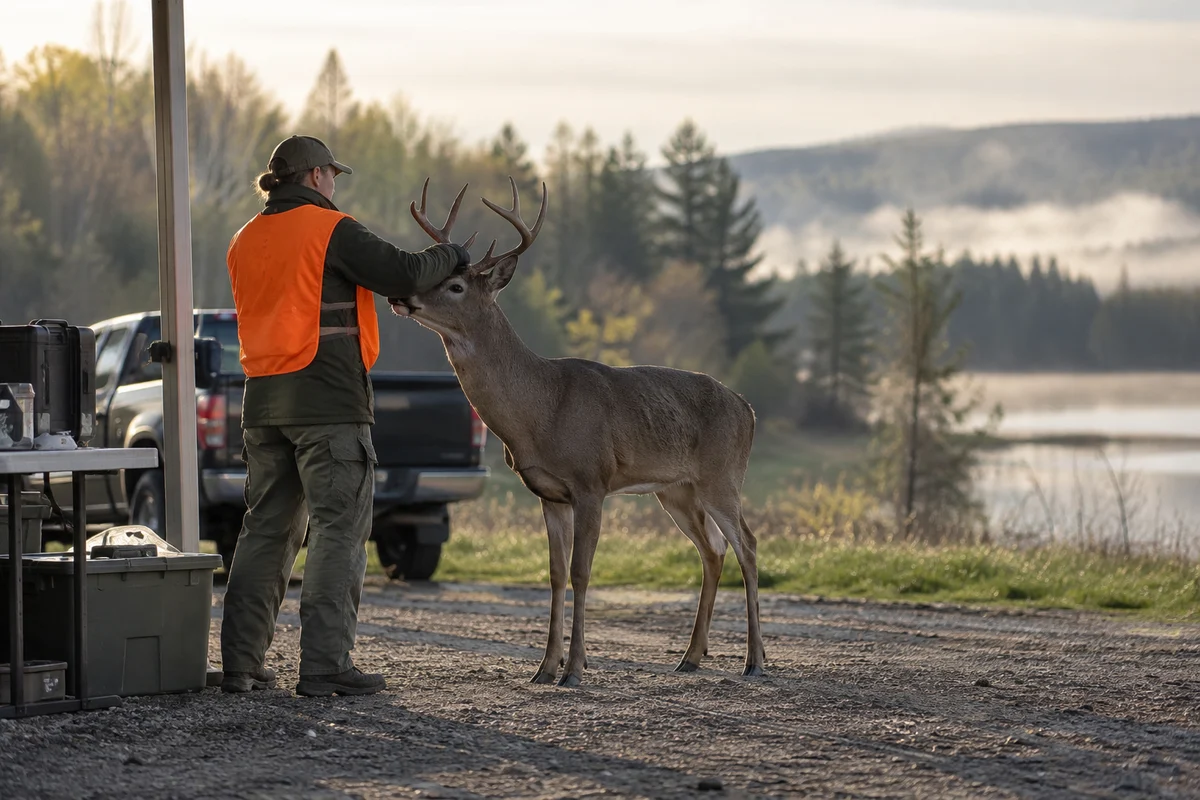
Check current hunting regulations for tagging, evidence of sex, transport, and reporting requirements before you leave the field. Rules vary by jurisdiction and can change. The deer hunting hub is a useful starting point for related planning, while our deer hunting guide covers broader preparation. For season readiness beyond the recovery itself, see steps to prep for deer season.
A field checklist before the first pull
- Confirm the animal is dead and approach carefully.
- Check the route for slope, footing, obstacles, and a safe stopping point.
- Choose a drag, sled, cart, or assistance suited to conditions.
- Inspect straps and connections; keep people clear of tensioned lines.
- Use steady steps, avoid twisting, and stop when control or comfort declines.
- Keep the carcass and meat as clean as conditions allow.
- Follow current tagging, transport, reporting, and disease-control rules.
Frequently asked questions
Is it better to drag a deer headfirst or feet first?
There is no single best direction for every route. Orient the deer to reduce snagging and keep the pull controlled; terrain, brush, and equipment determine what works safely. Reposition only when you can do so without straining or losing control.
Can one person drag a deer?
Sometimes, over a short, manageable route with suitable equipment and good footing. There is no universal safe limit. If the slope, distance, load, or your physical condition makes control uncertain, stop and get help.
Is a rope enough to drag a deer?
A suitable rope can be part of a recovery setup if it is in sound condition and attached securely. A harness or purpose-built drag may improve comfort and control. Follow the manufacturer’s directions and keep clear of a tensioned line.
What should I do if the deer is too difficult to move?
Do not keep pulling until you are exhausted. Reassess the route, get another person, use appropriate equipment where allowed, or arrange a safe later recovery. Mark the location and follow local rules for the animal and its transport.
Should I drag a deer through water?
Avoid routes that risk losing control, contaminating meat, or entering unsafe water. Choose a dry, stable alternative when possible. Follow local guidance on carcass handling and any disease-related transport restrictions.
Frequently asked questions
Is it better to drag a deer headfirst or feet first?
There is no single best direction for every route. Orient the deer to reduce snagging and keep the pull controlled; terrain, brush, and equipment determine what works safely.
Can one person drag a deer?
Sometimes, over a short, manageable route with suitable equipment and good footing. If the slope, distance, load, or your condition makes control uncertain, stop and get help.
Is a rope enough to drag a deer?
A suitable rope in sound condition can be part of a recovery setup. A harness or purpose-built drag may improve comfort and control; follow instructions and keep clear of tensioned lines.
What should I do if the deer is too difficult to move?
Stop before exhaustion, reassess the route, and get help or appropriate equipment where allowed. Mark the location and follow local rules for recovery and transport.
Sources & further information
Consult these primary sources for current regulations, technical information and local guidance.