Cold-Water Bass Lures: What to Throw and When
Cold water changes bass location and willingness to chase, but it does not call for one magic lure. Match a manageable presentation to depth and forage, then adjust retrieve speed based on what the water and fish tell you.
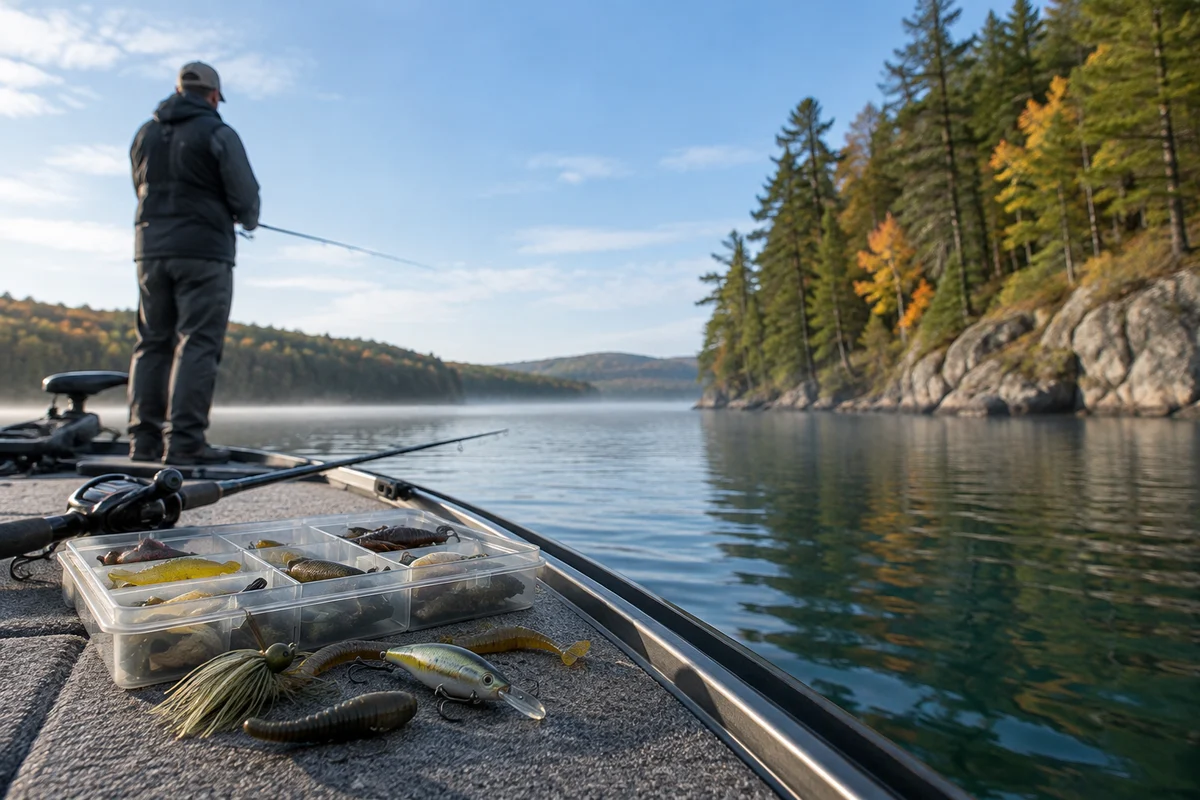
Cold water bass lures are most effective when they let you fish deliberately at the depth bass are using, without assuming every cold day calls for the same slow presentation. Water temperature matters, but so do weather, season, clarity, available forage, and whether fish are moving between shallow and deep areas. Treat lure choice as a starting point: make a few controlled adjustments, watch for evidence, and change only what you can evaluate.
This guide focuses on common freshwater bass presentations rather than fixed temperature thresholds. Seasonal patterns vary by region and species, and a cold front or warming afternoon can change activity quickly. For broader context, visit our freshwater bass fishing hub and related guides to swimming jigs for bass and plastic worm rigs for bass.
Start with depth, not a temperature number
A thermometer can help you notice a trend, but it cannot tell you exactly where fish are holding. In cooling seasons, bass may use points, creek channels, steep banks, submerged cover, or remaining vegetation as they shift between feeding areas and deeper water. In winter, some fish may stay near deeper structure, while others use shallow water when conditions and forage make it worthwhile. The pattern is local, not universal.
Begin by identifying a few depth changes and cover options: a point that drops into deeper water, a channel edge, a dock line, or the outside edge of vegetation. If you have electronics, use them to understand bottom contours and baitfish presence, not as a promise that a mark is a catchable bass. Without electronics, a map, visible shoreline features, and repeated casts along a bank can still help you build a useful picture.
Make the first lure choice based on how you can cover that depth. A compact jig or slowly worked soft plastic can probe cover and bottom. A suspending jerkbait or a baitfish-shaped swimbait can work above fish or along a break. A blade bait or lipless crankbait can cover open water and contact a range of depths, provided the bottom and snags allow it. These are options, not a universal ranking.
A practical cold-water lure framework
| Situation | Starting presentation | How to adjust | Main limitation |
|---|---|---|---|
| Bass near bottom or isolated cover | Jig or Texas-rigged soft plastic | Shorten hops, pause, and keep contact | Snags and soft bottoms can make control difficult |
| Fish suspended near baitfish | Suspending jerkbait or soft swimbait | Vary pause length and retrieve pace | Fish may be scattered or deeper than the lure runs |
| Open water with a defined depth range | Blade bait or lipless crankbait | Count down, use a steady retrieve, or add pauses | Treble hooks can foul cover and vegetation |
| Shallow cover during a mild warming period | Compact jig or moving bait | Test a modestly faster retrieve, then compare | A sunny bank does not guarantee active fish |
| Unclear location or uncertain forage | Search bait over a manageable area | Cover water, then slow down around evidence | Repeatedly changing lures can hide the pattern |
Use this as a decision aid, not a prescription. The right choice depends on local conditions, tackle, cover, and the fishery’s rules.
Jigs and soft plastics for a controlled presentation
A jig is useful when you need to work a specific piece of cover or maintain contact with the bottom. Make accurate casts to the edge of a dock, a laydown, a rock transition, or another likely holding area. Let the lure settle, move it a short distance, and pause. A slow presentation does not mean leaving a lure motionless indefinitely; it means avoiding unnecessary speed while still making the bait look plausible and keeping track of what it is doing.
Soft plastics provide flexibility. A worm or stick-style bait can be rigged to fall through cover, drag along the bottom, or hover above it, depending on the rig and weight. If the lure repeatedly buries in silt, hangs in cover, or falls too quickly, adjust the rig or move to a nearby piece of structure. Our guide to plastic worm rigs for bass covers common ways to change a worm’s action and snag resistance.
Use tackle that lets you detect contact and land fish without forcing a fight. Check knots, hooks, and line before fishing, and avoid assuming a subtle tap is always a bite: bottom, weeds, and debris can produce similar sensations. When fishing around cover, balance lure control with the risk of breaking off or damaging habitat.
Jerkbaits and swimbaits around suspended fish
When bass are holding above the bottom, a bottom-contact lure may pass beneath them. A suspending jerkbait can be worked with twitches and pauses, while a soft swimbait can provide a steadier baitfish profile. Begin with a consistent retrieve so you can tell whether fish respond, then alter one variable at a time: pause duration, twitch intensity, depth, or speed.
“Suspending” is not an absolute guarantee that a lure will stay at one depth. Buoyancy can vary with the specific lure, hooks, line, and water conditions. Observe its behavior beside the boat or bank when practical, and do not infer the precise depth of fish from a lure’s label alone. If you see baitfish or fish activity at a particular level, try to keep the presentation near that zone rather than repeatedly changing color without evidence.
Blade baits and lipless crankbaits for covering water
A blade bait or lipless crankbait can search a broad area efficiently, especially where the bottom is relatively clean and you can control depth. Cast, allow the lure to reach a chosen level, and retrieve it steadily. If fish are near bottom, a lift-and-fall motion may be worth testing. If vegetation or snags collect on the hooks, change the angle, depth, or location instead of dragging through the same obstruction repeatedly.
Moving baits are not automatically too fast for cold conditions. Their usefulness depends on where fish are, how they respond, and whether the lure passes through the right zone. If a fast retrieve produces no information, slow down or switch to a more controlled option. Conversely, if fish follow but do not commit, a pause or change in cadence may help you learn whether speed is the issue.
A simple way to find the day’s pattern
Use a repeatable sequence rather than cycling through a tackle box at random:
- Choose a location type. Pick a point, channel edge, cover line, or other feature that gives bass access to more than one depth.
- Make a short search pass. Use a lure that covers the likely zone without constant snagging.
- Look for evidence. Note bites, follows, baitfish, cover contact, and where the lure is in the water column when something happens.
- Slow down on promising water. Revisit a productive depth or cover area with a jig or soft plastic.
- Change one factor. Alter depth, cadence, or lure type—not everything at once—so the result teaches you something.
A few unproductive casts do not prove a location is empty. But repeating the same presentation through several likely areas without any sign of life is a reason to reassess depth, location, or forage rather than simply fishing slower and slower.
Weather, clarity, and seasonal limits
Cold water is not one stable condition. A cold front, wind, cloud cover, rain, or a short warming trend can affect fish and the comfort of fishing. Wind may push baitfish toward a bank or make boat control harder; stained water can reduce visibility, while clear water may make long casts and subtle presentations more useful. These are tendencies to test, not rules that guarantee a result.
Water temperature also differs across a lake and through the day. A shallow cove may warm faster than a deep main-lake area, but that alone does not establish where bass will feed. Local species, forage, habitat, and seasonal timing matter. Use current regional fishing information as context and verify regulations with the relevant wildlife agency. A guide to swimming jigs for bass offers another moving presentation to consider as conditions shift.
Keep fish and anglers safe
Cold weather adds practical risks. Dress for conditions, use appropriate flotation, and plan for changing weather and reduced daylight. Handle fish with wet hands when possible, support the fish’s body, and minimize time out of water, especially when conditions are harsh. Follow local size, season, bait, and harvest rules; regulations differ by location and can change.
The most reliable cold-water approach is a process: locate a plausible depth and cover combination, choose a lure you can control there, and make measured adjustments based on evidence. No lure, color, or retrieve is a guarantee. Keep notes on conditions and results, and let the day’s pattern—not a fixed temperature chart—guide the next cast.
Frequently asked questions
What lures are good for bass in cold water?
Jigs, soft plastics, suspending jerkbaits, swimbaits, blade baits, and lipless crankbaits can all be useful. Choose based on fish depth, cover, forage, and how well you can control the presentation.
Should I fish slowly for bass when the water is cold?
A slower presentation is a sensible starting point, especially around bottom structure, but it is not a universal rule. Test retrieve speed and pauses while keeping the lure in the likely strike zone.
Are jerkbaits effective for cold-water bass?
They can be, particularly when bass suspend near baitfish. Vary pauses and cadence, and remember that actual running depth depends on the lure, line, hooks, and retrieve.
How do I find bass in cold water?
Check depth changes, points, channel edges, and available cover, then use a search presentation to look for baitfish or fish activity. Revisit promising areas more slowly and adjust one variable at a time.
Sources & further information
Consult these primary sources for current regulations, technical information and local guidance.