Cayuga Lake Bass Fishing: Seasonal Tactics and Habitat
Cayuga Lake offers broad, varied habitat for smallmouth and largemouth bass, but conditions shift with season, weather and water clarity. Use this guide to build a flexible plan around structure, local regulations and careful observation.
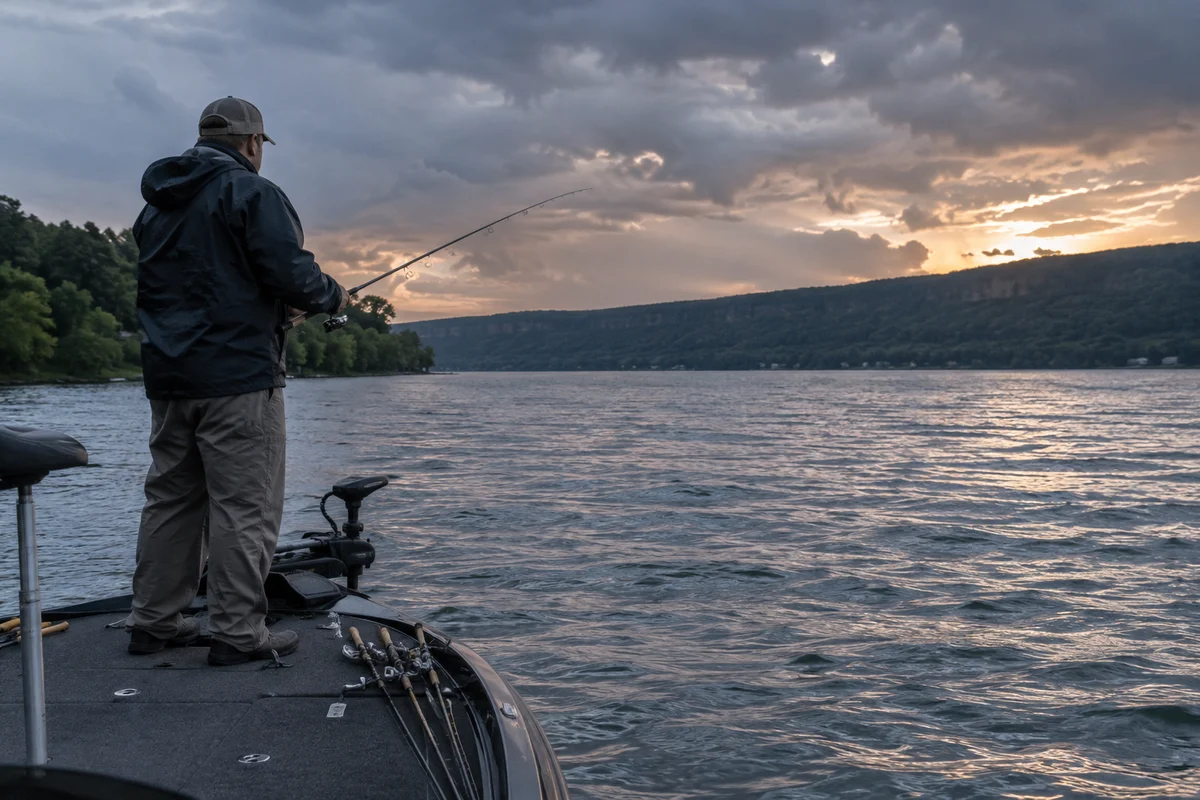
Cayuga Lake bass fishing is less about finding one magic stretch than learning to match a presentation to the lake’s changing habitat. The long Finger Lake includes open water, points, coves, vegetation and hard-bottom areas; each can matter differently as temperatures, wind and seasonal fish behavior change. A useful day begins with a simple plan, then adjusts to what the water actually shows.
This guide focuses on practical habitat-reading and seasonal decisions, not tournament schedules or guaranteed catches. Bass locations vary from day to day, and access, weather and regulations should shape every outing. For broader fundamentals, see our freshwater bass fishing hub and our guides to plastic worm rigs for bass and summer bass fishing tips.
What makes Cayuga Lake a varied bass fishery?
Cayuga is a large, deep Finger Lake, but fishing does not happen only in deep water. Its shorelines and bays provide contrasting conditions: shallow cover can warm quickly, points and breaks create transitions, and exposed areas can be affected by wind and waves. Vegetation offers both cover and feeding opportunities where present, while rocky or firmer bottom may attract fish at other times.
Both largemouth and smallmouth bass are part of the lake’s fishing picture. Rather than assume a specific species occupies a particular spot, let habitat guide your search. Dense weeds, protected coves and shallow inside edges are sensible places to investigate for largemouth. Rock, points and clearer or more exposed transitions can be worth checking for smallmouth. These are starting hypotheses, not rules; local conditions can overturn them.
How should you plan by season?
Seasonal patterns are useful as a framework, not a calendar of certain outcomes. Water temperature, recent weather, wind direction and the lake’s current conditions can shift fish behavior. Check current New York regulations before fishing, including season dates and any special rules that apply to the water you intend to fish.
| Conditions | Areas to investigate | Practical starting approach |
|---|---|---|
| Spring warming | Protected shallows, coves and nearby transitions | Fish methodically and avoid assuming every shallow area has the same temperature or activity. |
| Summer warmth | Weed edges, shade, points and deeper transitions | Work cover efficiently, then check adjacent water if fish are not responding. |
| Cooling water | Remaining vegetation, breaks and rock-to-weed edges | Try a moving search bait, then slow down around promising cover. |
| Windy or changing weather | Sheltered shorelines and wind-affected points | Prioritize safe boat control and visibility; change location if conditions become uncomfortable. |
In spring, sheltered water may warm sooner than exposed stretches, but cold fronts can make fish less willing to chase. Make deliberate casts to likely cover and nearby transitions. In summer, vegetation and shade can provide useful reference points; early or late light may make shallow water worth checking, while bright conditions can call for cover edges or a slower approach. As water cools, fish may relate to remaining weeds, nearby breaks or firmer bottom. Keep sampling rather than treating any seasonal pattern as a promise.
How do you read a shoreline or weed edge?
Start by identifying a feature, not simply choosing a lure. Look for a point that projects into the lake, a cut or cove, a distinct weed edge, a change in bottom, or a transition between sheltered and open water. Fish the feature from more than one angle when it is safe and practical. A breeze can push surface activity toward one bank, but wind also affects boat handling, casting and visibility; do not let a fishing hunch override safe conditions.
When vegetation is thick, target openings, outside edges and irregularities rather than making identical casts along a uniform wall. A soft plastic can be useful for probing gaps and cover; a moving presentation can help cover water when fish seem active. If you are deciding how to rig a soft bait, our plastic worm rig guide compares common approaches. For warm-weather outings, the summer bass fishing guide offers additional planning ideas.
A simple decision framework keeps adjustments purposeful:
- Choose one habitat clue. For example, a weed edge, point or sheltered cove.
- Make a controlled pass. Keep boat position and casting angles consistent enough to learn from the result.
- Change one factor. Alter depth, pace or presentation rather than changing everything at once.
- Reassess. If the area shows no signs of life, move to a different habitat type instead of repeating unproductive casts indefinitely.
What tackle and presentations make sense?
A versatile outfit suited to the cover you plan to fish is more valuable than a long list of specialized gear. In open water, a moving bait can search a stretch; around vegetation, a weed-conscious presentation may reduce snags; and a soft plastic can slow the approach when fish appear reluctant. Match line and tackle to cover, the size of fish you are pursuing and your own ability to handle the setup safely. No single rig is best for every part of Cayuga.
Keep a small selection organized by purpose: one option for covering water, one for working cover slowly and one for probing a different depth or structure. Check hooks, knots and line for wear, and follow the manufacturer’s instructions for any equipment. If fish follow but do not commit, consider changing speed or depth before switching to a completely different lure category.
What should anglers check before going?
Cayuga is a substantial lake, so preparation matters as much as lure choice. Review a current forecast and marine conditions, share your plan, carry required safety equipment and wear a properly fitted life jacket. On a boat, account for changing wind and waves, and keep a safe distance from other anglers, swimmers and shoreline users. Shore anglers should confirm public access and respect posted restrictions; access can change, and private property is not public entry.
New York fishing rules can change and may include species-specific seasons, size limits, possession limits or special waters regulations. Consult the New York State Department of Environmental Conservation’s current rules before keeping fish or planning a trip. Handle fish gently, wet hands before contact where possible, minimize time out of water and release fish promptly when not retaining them legally.
A flexible plan beats a fixed spot
The most reliable approach to Cayuga is to connect observations to decisions: identify habitat, test a presentation, note the response and adjust one variable. Keep a simple record of conditions—wind, clarity, temperature if available, and the kind of structure that produced activity. Those notes can help you recognize patterns without mistaking one day’s result for a permanent rule. Be patient, respect the lake and let current conditions—not an old report—determine where you fish next.
Frequently asked questions
Are both largemouth and smallmouth bass found in Cayuga Lake?
Both are part of Cayuga Lake’s bass fishery. Look for different habitat clues, but confirm what conditions are producing rather than assuming a spot holds one species.
What is a good starting area for bass on Cayuga Lake?
Begin with a visible feature such as a weed edge, point, cove or bottom transition, then test nearby depths and angles. Conditions vary, so no single area is dependable every day.
Which lures should I bring for Cayuga Lake bass fishing?
Bring a versatile moving presentation for searching, a cover-friendly option for vegetation and a soft plastic for slower work. Match tackle to the cover and conditions.
Where can I check Cayuga Lake fishing regulations?
Check current New York State Department of Environmental Conservation fishing regulations before your trip, including special rules for the water and species you plan to fish.
Sources & further information
Consult these primary sources for current regulations, technical information and local guidance.