Smithwick Elite 8 Rogue: How to Choose and Fish It
A practical guide to understanding the Smithwick Elite 8 Rogue name, checking the exact lure configuration, and adapting your presentation to depth, cover, and bass behavior.
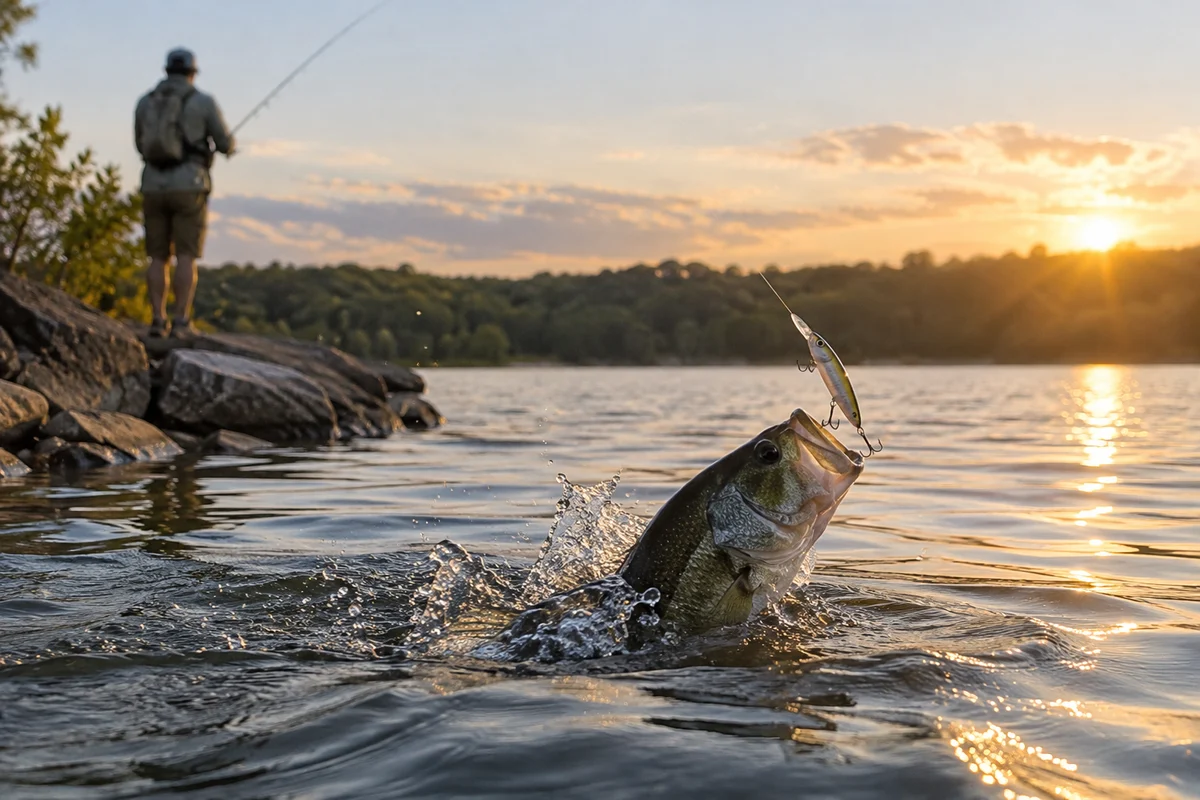
The Smithwick Elite 8 Rogue is a name that invites a simple assumption: that “8” tells you exactly how deep the lure runs. Don’t rely on that alone. Product names, versions, and package details can differ, and the most useful first step is to identify the exact bait in hand. Once you confirm its intended depth and action, you can fish it as a deliberate tool for reaching bass around suspended bait, points, and deeper cover—not as a lure whose name does all the explaining.
This guide focuses on practical selection and presentation, while separating general Rogue-style hard-bait principles from specifications that should be checked against the manufacturer’s current information or the original package. For broader techniques and seasonal ideas, visit the freshwater bass fishing hub.
What does “Elite 8” tell you about the lure?
Treat “Elite 8” as a model identifier until you verify what the number means for the specific version. It may be tempting to interpret it as a running-depth promise, but a name by itself is not a reliable substitute for a product description. Confirm the model name, diving range, buoyancy, dimensions, and recommended line information from the manufacturer or packaging. If those details are unavailable, fish it experimentally and describe your conclusions as observations about that lure—not universal specifications for every Smithwick Rogue.
The Rogue name is associated with a family of hard baits, so do not assume every Rogue has the same bill, body size, buoyancy, or retrieve. A deep-running bait and a shallow suspending jerkbait call for different placements and pauses. Look at the lure’s bill and body, inspect any legible model markings, then compare those clues with an authoritative product listing. The PRADCO Outdoors site is a sensible starting point for manufacturer and brand information; if the exact variant is not listed, avoid filling the gaps with guesses.
When is a deeper-running Rogue-style bait useful?
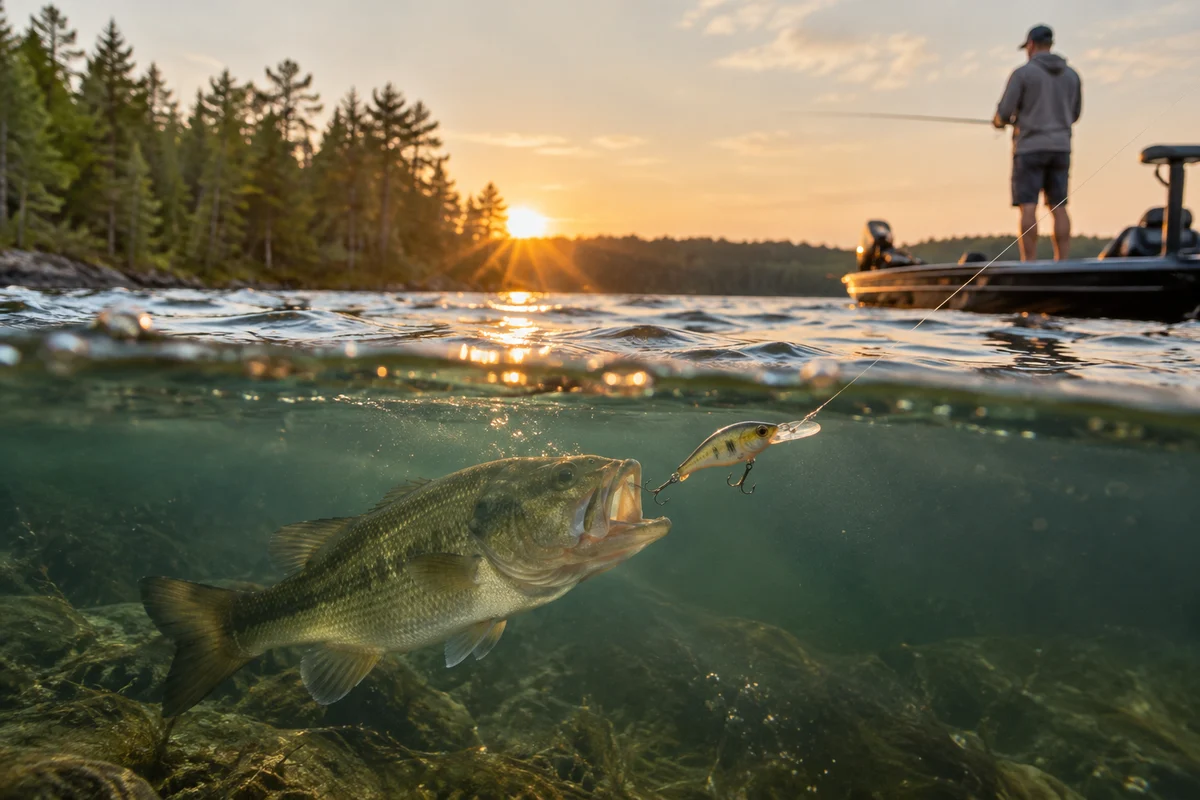
A deeper-diving hard bait can help search water where bass are holding below the surface, especially along a break, a channel edge, a point, or the outside of submerged vegetation. It can also reach fish relating to baitfish when surface activity is limited. These are starting locations, not guarantees: depth, water clarity, forage, temperature, and fishing pressure all change where bass position.
Use electronics, visible cover, and the shoreline’s shape to build a working depth range. Make a few casts across a point or along a contour rather than repeating one cast angle. If the lure contacts bottom or cover, note where that happens and adjust your path. Contact can help a bait deflect and draw attention, but persistent snagging means the lure is running into the wrong cover or your retrieve is too low for that route.
If bass are feeding high in the water column or chasing bait near the surface, a deep-running lure may be inefficient. Compare its role with a surface option such as a floating buzz bait when conditions and local rules suit topwater fishing. Match the lure to where fish are feeding rather than forcing one presentation through every condition.
How should you retrieve it?
Start with a steady retrieve at a pace that lets the bait work without losing control. Watch the lure close to the boat or bank: it should track consistently rather than rolling, veering sharply, or fouling. Then vary one factor at a time—speed, pauses, or direction—so you can tell what changes the response. A pause is most useful when the lure’s buoyancy and action make it appropriate; verify whether your particular model floats, suspends, or sinks instead of assuming all Rogue-style baits behave alike.
When bass are following but not committing, try a brief pause or a modest change in cadence. In cooler conditions, a slower presentation may keep the bait in a target zone longer, but water temperature alone does not dictate a single correct retrieve. If fish are active, a more continuous pace may cover water efficiently. Let bites, follows, cover contact, and the lure’s behavior guide adjustments.
Line and tackle affect how a hard bait works. Line diameter, line type, rod angle, casting distance, and retrieve speed can all influence its running depth and action. Use tackle that handles the lure comfortably and keeps control of a fish around the cover you are targeting. If a product-specific recommendation is not available, begin with balanced equipment rather than treating any unverified setup as a required specification.
How can you check action and depth on the water?
Before making a long cast, test the lure in clear, shallow water beside you. Confirm that it tracks straight and that the hooks are not fouled by weeds or line. If it pulls persistently to one side, inspect the line tie and hardware for visible damage; do not assume that a dramatic adjustment is needed. Make only small corrections if you know how the lure is designed to be tuned, and stop if the hardware appears bent or compromised.
To estimate how it behaves at a distance, repeat a cast with consistent line, rod position, and retrieve speed. Pay attention to how far the lure travels before contacting bottom, reaching a visible weed edge, or beginning to rise on a pause. Those observations help you fish a contour, but they are not a laboratory measurement. Record the conditions mentally or in a fishing log, especially line type, approximate cast length, and retrieve pace, so the comparison remains useful.
Change the cast angle before changing every piece of tackle. A cast that runs parallel to a drop-off keeps the lure near a depth band longer; a cast across it shows where the transition begins. If the bait repeatedly digs into snags, move outward or raise the rod tip. If it never reaches the target zone, try a different angle or a lure whose verified depth better matches the water.
What should you inspect before fishing it?
A quick check protects the lure’s action and helps prevent avoidable problems:
- Confirm the exact model and any available buoyancy or depth information; do not infer specifications from “8” alone.
- Check the body for cracks, loose components, or damage that could affect performance.
- Inspect hooks and split rings for corrosion, bends, or looseness, and replace damaged parts with compatible components.
- Make sure the line is tied securely and does not interfere with the lure’s movement.
- Test the bait near shore or beside the boat before committing to a long cast.
Sharp hooks require careful handling, particularly when removing a bait from a fish or clearing vegetation. Keep hands clear of exposed points, use suitable tools, and follow local rules for fishing methods and protected waters. Regulations vary by location, so consult the relevant state wildlife agency; Texas Parks and Wildlife is one example of an official state resource, not a substitute for the rules where you fish.
How does it fit with other bass lures?
Think of the Elite 8 Rogue as one possible depth-and-action choice, not a replacement for every search bait. A lipless crankbait can cover water with a different profile and retrieve, while a finesse presentation can help when fish respond poorly to a fast-moving hard bait. For a contrasting approach, see this guide to early-season bass and lipless crankbaits and the Ned rig finesse system.
A useful rotation is based on evidence from the water: try a hard bait to locate active fish, then slow down or change depth if you get follows without strikes. If the bait is not reaching the fish, change its route or choose a model with verified characteristics suited to that zone. The goal is not to keep casting one named lure because it sounds specialized; it is to match action and depth to the fish you can reasonably target.
Before relying on any model-specific claim, check current manufacturer information and the markings on your own bait. That small verification step keeps “Smithwick Elite 8” from becoming a guess—and makes your time on the water more informative.
Frequently asked questions
Does the “8” in Smithwick Elite 8 mean it dives eight feet?
Do not assume that from the name alone. Check the exact model’s packaging or manufacturer information for its stated running depth and other specifications.
Is the Smithwick Elite 8 Rogue a suspending jerkbait?
Verify the buoyancy and action for the specific model. Rogue-family baits can have different configurations, so the name alone does not establish whether a particular lure floats, suspends, or sinks.
How can I tell whether the lure is running correctly?
Test it close to shore or beside the boat, confirm that it tracks consistently, and check for fouled hooks, line interference, or visible damage before making longer casts.
Sources & further information
Consult these primary sources for current regulations, technical information and local guidance.