How to Catch Trout: A Practical Guide for Rivers and Lakes
A practical, adaptable guide to catching trout in lakes and streams, from choosing a simple setup to adjusting your presentation as conditions change.
Trout fishing becomes much easier when you treat it as a search for feeding fish rather than a hunt for one perfect lure. To learn how to catch trout, start by identifying the water you can access, checking local rules, and choosing a presentation suited to the fish’s likely food and the current conditions. A light spinning outfit or a basic fly setup can both work; careful observation and small adjustments usually matter more than specialized gear.
This guide covers stocked and wild trout in lakes, ponds, and flowing water. Species, seasons, and regulations vary widely, so use the current rules for your specific water before fishing. For more freshwater context and related reading, visit our trout and salmon fishing hub.
Start with the water and local rules
Before tying on a hook, check the fishing regulations for the exact waterbody. Rules may specify open seasons, legal methods, bait restrictions, minimum or maximum lengths, daily limits, and special catch-and-release zones. A statewide summary may not include a stream-specific exception. Confirm the current rules with the relevant state or provincial fisheries agency, and check access guidance for private land, parks, and protected areas.
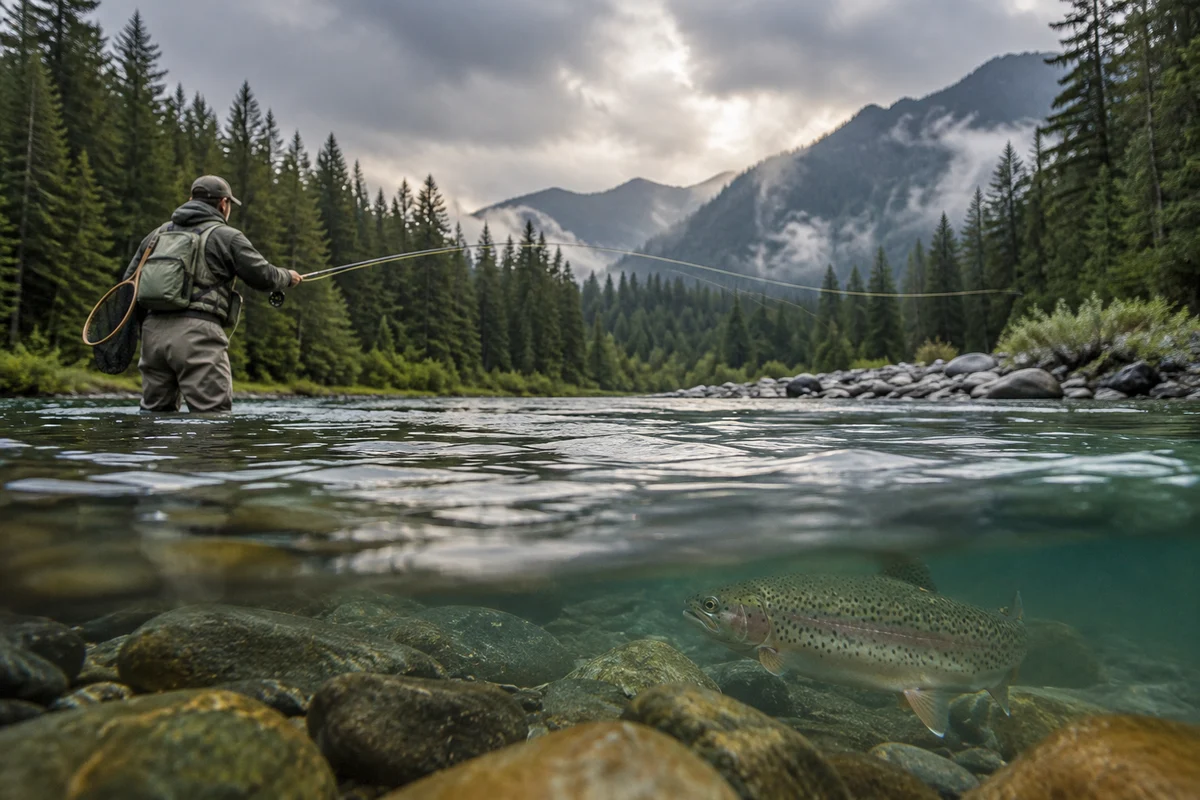
Learn what kind of water you are fishing. In a lake, trout may cruise near shore, hold around drop-offs, or move deeper as light and temperature change. In a stream, look for places where current delivers food while giving fish a manageable resting position: the downstream edge of a boulder, a pool below a riffle, or a seam between fast and slow water. These are clues, not guarantees. Trout shift with flow, weather, food, and fishing pressure.
If the water is unfamiliar, spend a few minutes watching. Look for rising fish, insects, baitfish, current seams, and safe approaches. Avoid trampling stream banks or wading through likely holding water before you fish it. On small streams, a cautious approach can be as important as the choice of lure.
Choose a simple trout setup
A light or ultralight spinning rod paired with a matching reel is a versatile starting point for many lakes and streams. Use line and tackle appropriate to local conditions and the fish you expect; there is no single best strength for every water. Lighter line can be less visible and easier to cast with small offerings, but it also gives less margin around snags and larger fish. Follow the line and hook guidance in your local regulations.
For bait fishing, a small hook and a modest offering can be effective where natural bait is legal. Keep the bait presentation controlled, and use a method that lets you recognize a bite without leaving unattended gear. Where regulations require artificial lures or barbless hooks, follow those rules exactly.
For lures, start with a small spoon, spinner, or minnow-shaped plug suited to the water’s depth and current. A compact lure is easier to cast on light tackle; a heavier one may be useful in deeper water or stronger flow. Retrieve steadily at first, then vary speed or add pauses. Our overview of trout and salmon lures explains broad lure categories without assuming one option works everywhere.
Fly anglers can begin with a simple floating line and a small selection of flies that resemble common local insects or bait. If fish are visibly rising, observe the size and behavior of insects on the water before choosing a fly. If there is no clear surface activity, a subsurface presentation may be a better starting point. Keep the fly selection manageable; presentation and drift often matter more than carrying every pattern.
Find trout in a stream
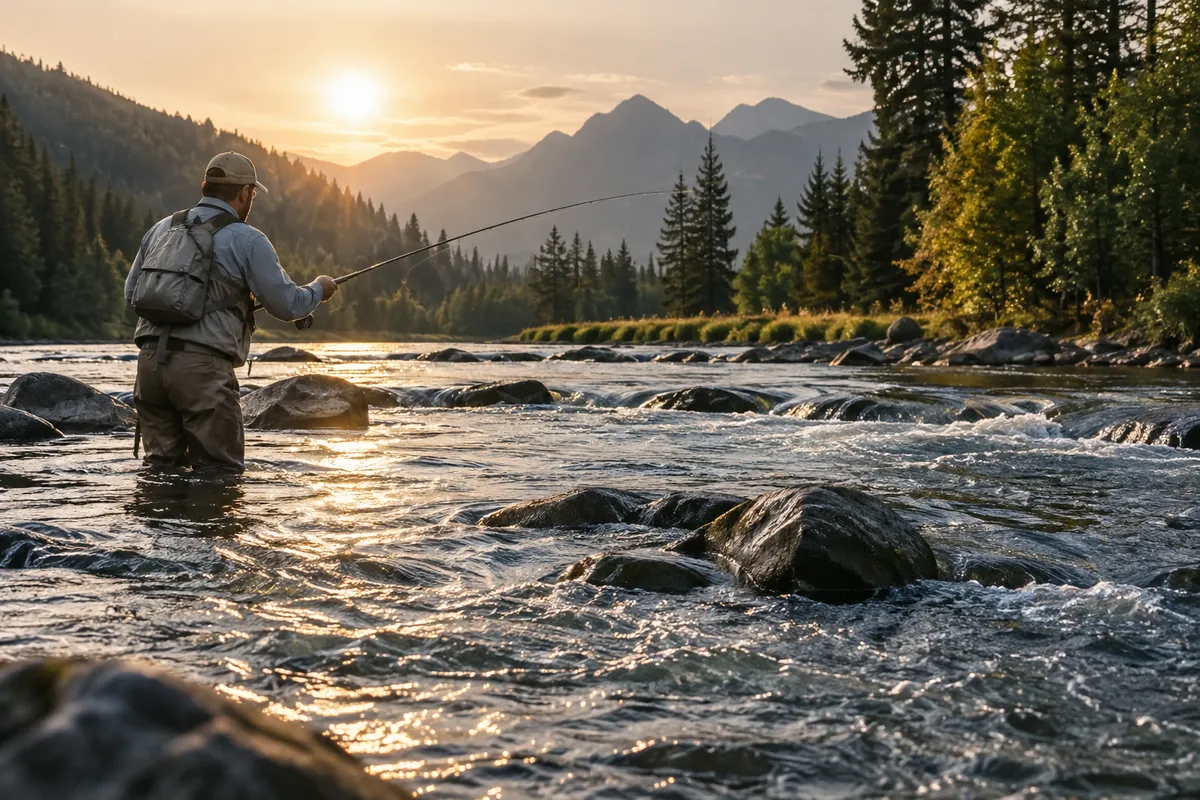
Read the current from near to far. Trout commonly use current breaks where they can intercept food without holding in the fastest flow. Cast upstream or across-and-upstream when practical, then let the offering travel naturally through the target area. With bait or a fly, control slack enough to notice a take while avoiding a drag that pulls the presentation unnaturally. With a spinner or spoon, retrieve so it works consistently without sweeping out of the intended lane.
Work likely water methodically. Try the near edge first, then the seam, then the deeper portion of a pool. Make a few thoughtful presentations from one position before moving. If you wade, move slowly and avoid stirring sediment in front of the water you plan to fish. In clear, shallow streams, stay low and use available cover; fish can be wary of sudden movement and shadows.
A natural drift is a useful goal, not a rigid rule. Current speed and depth change over short distances, so adjust casting angle, line control, weight where lawful, or retrieve speed to keep the offering in the strike zone. If you repeatedly snag bottom, lighten or raise the presentation. If it races past above the fish, slow it or work a deeper lane.
Search a lake or pond
In still water, cover water in a deliberate pattern. Begin near shore if access and depth make it practical, especially during low-light periods or when fish are cruising shallow. Cast parallel to the bank as well as outward: trout may travel along a contour rather than directly away from shore. Fan casts across a small area, then move a short distance before repeating.
If you see no activity, change one variable at a time. Try a different depth, retrieve pace, or lure profile before changing everything. A slow, steady retrieve is a useful baseline for many small lures. Add pauses if the lure allows them, but avoid letting it sink into weeds or snags. In warmer conditions, trout may favor cooler or deeper water; take care not to exhaust fish by repeatedly playing them in stressful conditions.
Where bait is legal, a stationary presentation can help cover a depth while you watch for a bite. Keep hooks and bait methods within local rules, and retrieve promptly when a fish takes. Some baited fish swallow hooks deeply, making survival after release less likely. If you intend to release fish, consider artificial lures or other methods that reduce deep hooking, and follow local guidance.
A quick decision framework
| What you observe | First adjustment to try | What to watch next |
|---|---|---|
| Fish rising at the surface | Match the general size and type of visible food; present gently | Whether rises continue in the same lane |
| No visible activity in a stream | Target current seams, pool edges, and current breaks | Whether the offering reaches fish-level depth naturally |
| No activity from shore on a lake | Fan-cast, then try a different depth or move along the bank | Whether follows, taps, or surface signs appear |
| Frequent snags | Raise or lighten the presentation, or change the casting lane | Whether the lure still reaches the likely holding zone |
| Fish follow but do not take | Alter retrieve speed or pause briefly | Whether a smaller or less aggressive presentation helps |
| Fish are hooked deeply or stressed | Stop using the method causing harm; review release guidance | Whether conditions are suitable for continued catch-and-release |
Treat each change as a test of a fishing hypothesis, not proof that one lure is universally superior. Wind, clarity, light, flow, and pressure can all alter the result.
Set the hook, land, and handle fish carefully
When you feel a take, respond in a controlled way rather than striking with maximum force. A sharp sweep can pull a small hook free or break light line. Keep the rod bent and maintain steady pressure as you guide the fish away from cover. Use a landing net when appropriate, particularly if you plan to release the fish, and avoid dragging it across rocks or dry ground.
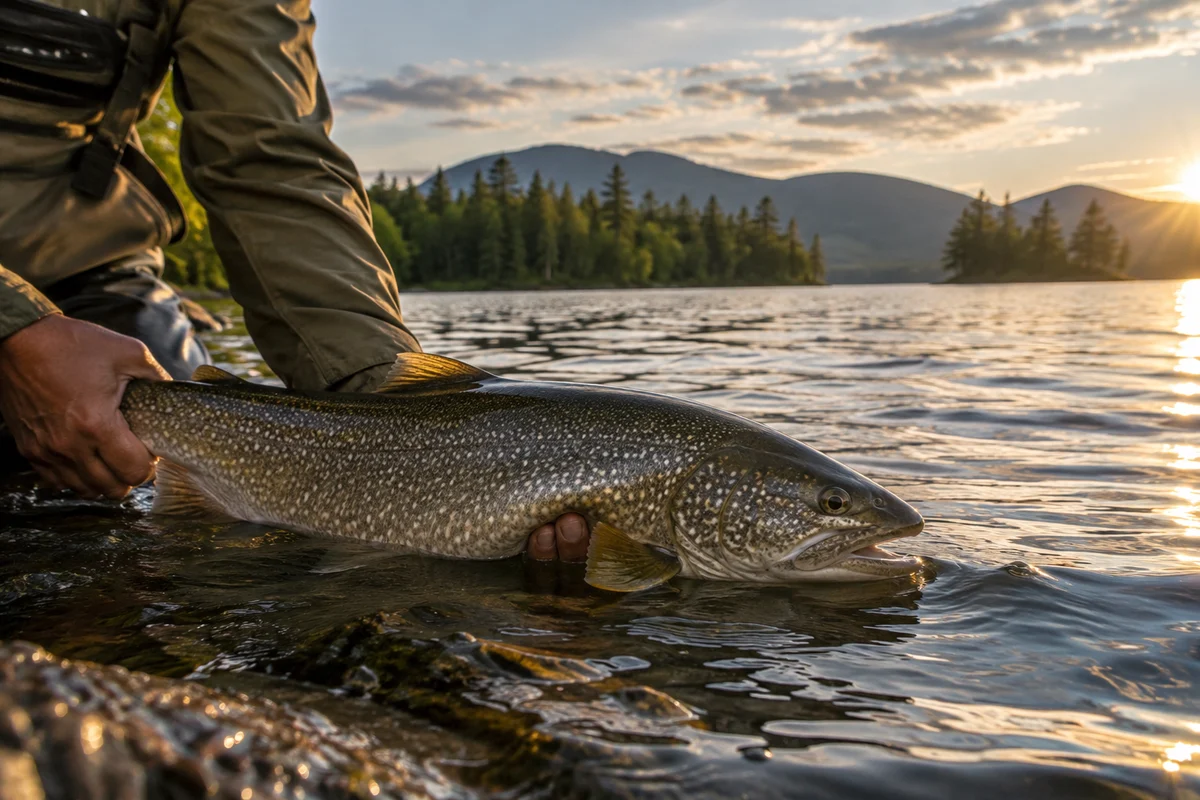
For catch-and-release, check the local rules and handling recommendations before fishing. Wet your hands before touching a fish, keep it in the water as much as possible, and remove the hook quickly with suitable forceps. If the hook is deeply lodged, cutting the line may cause less harm than forcing it out, subject to local guidance. Revive a fish gently in clean water until it can swim away under its own power. In hot water or other stressful conditions, releasing fish may not ensure survival; consider stopping rather than continuing to catch fish for release.
If you plan to keep a legal fish, dispatch and cool it promptly, and follow food-safety guidance. Our related guide to cleaning a salmon discusses general preparation considerations for a different fish; species-specific rules and handling needs still apply to trout.
Common mistakes and how to correct them
Fishing only the obvious spot: A popular pool or dock may be pressured or temporarily empty. Cover nearby water and revisit a productive-looking area after conditions change.
Changing too many things at once: If you swap location, lure, depth, and retrieve together, you cannot tell what helped. Change one factor, make several deliberate casts, and assess the result.
Using tackle that is too heavy or too light for the setting: Oversized tackle can make small offerings difficult to present; gear that is too light can fail around snags or larger fish. Match tackle to the fish, water, and legal requirements.
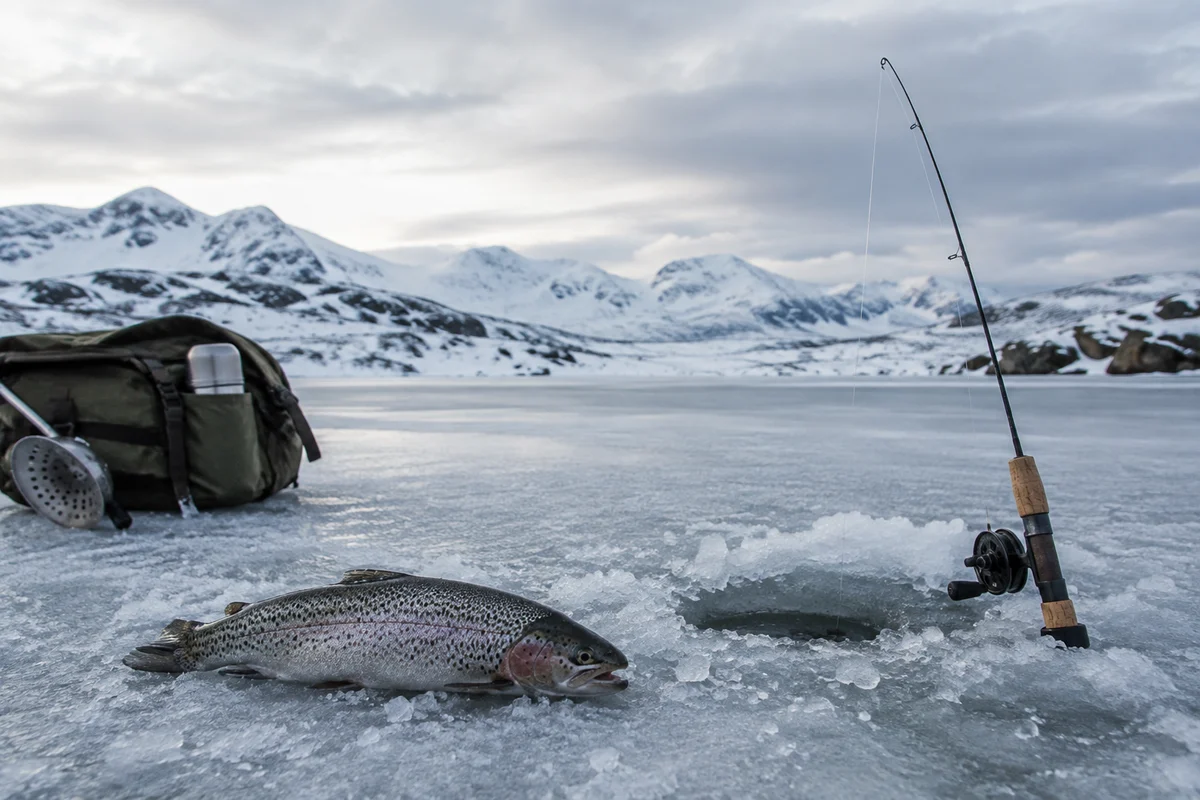
Ignoring access and safety: Slippery banks, cold water, sudden flows, and unstable ice can turn a fishing trip dangerous. Wear suitable footwear, avoid wading beyond your ability, and never assume a familiar reach is safe under different conditions.
Make the next trip easier
Keep a brief log of the water, time, weather, depth or current, and what presentation you tried. Record observations rather than assuming a pattern from one outing. Over time, notes can show which approaches deserve another try on similar conditions. For fly anglers, basic line care also helps keep tackle functioning; see our guide to cleaning fly line.
The most reliable way to catch trout is to combine legal, appropriate tackle with a patient search for feeding fish. Start simply, present an offering naturally for the water, and adjust one detail at a time. Respecting local regulations, access, and fish-handling limits makes the method more useful—and the fishing better for the next visit.
Frequently asked questions
What is the easiest way to catch trout for a beginner?
Use a simple light spinning setup, check local rules, and try a small legal lure or bait in likely holding water. Make deliberate casts and adjust one variable at a time.
Where should I look for trout in a river?
Start at current breaks such as pool edges, seams between fast and slow water, and the downstream side of structure. Trout locations vary with flow, temperature, and food.
Do trout bite better in the morning or evening?
Low-light periods can bring trout into shallower or more accessible water, but conditions and local patterns vary. Observe activity and adjust rather than relying on a fixed time.
Can I use bait when trout fishing?
That depends on the specific water and current regulations. Check local rules for bait restrictions, hook requirements, seasons, and special management areas before fishing.
Sources & further information
Consult these primary sources for current regulations, technical information and local guidance.