How to Clean Salmon: A Safe, Step-by-Step Guide
A careful salmon-cleaning routine protects the fish’s quality and helps you work safely, whether you are preparing a whole fish at home or after a fishing trip. Follow these steps, then chill the portions promptly and observe local handling guidance.
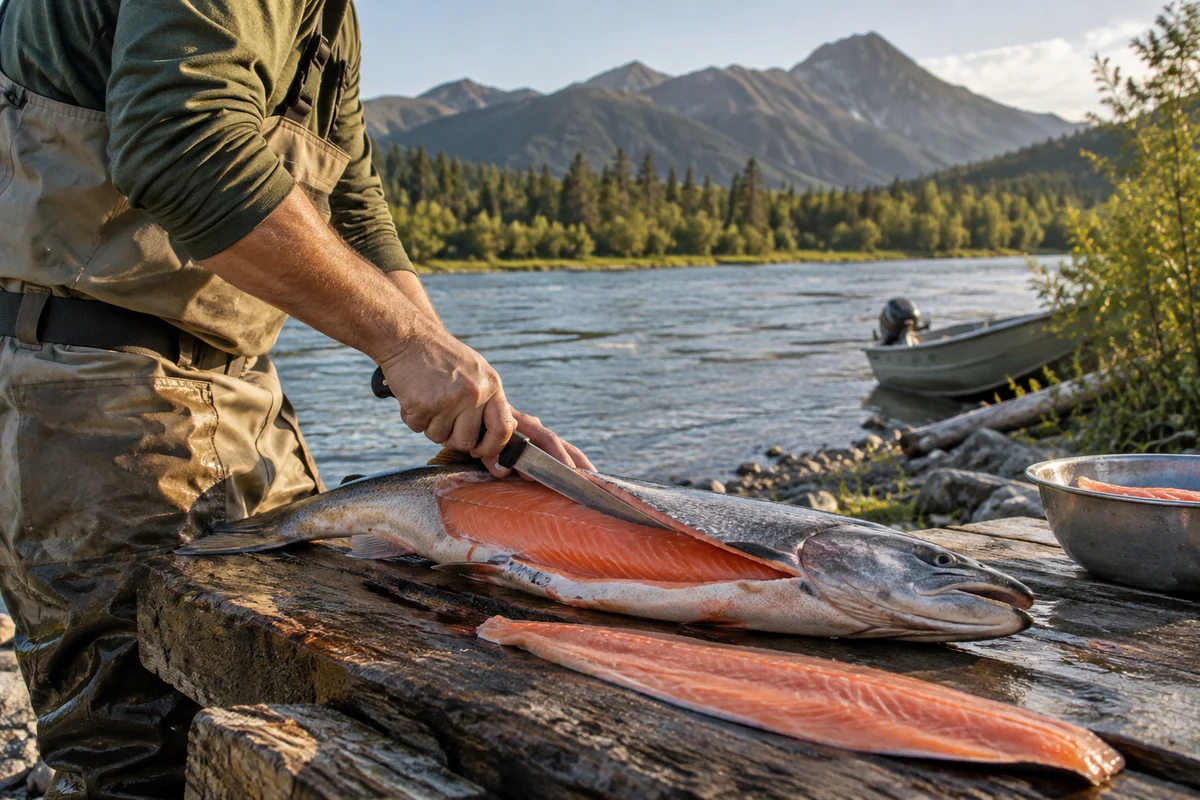
Salmon is easier to prepare well when you know how to clean salmon before reaching for a knife: keep the fish cold, set up a stable work surface, and decide whether you want skin-on fillets, skinless portions, or a dressed fish for cooking whole. The exact approach varies with fish size and condition, but the priorities do not: clean hands and tools, controlled cuts, removal of unwanted parts, and prompt refrigeration.
This guide covers a whole salmon from a legal, properly handled catch or a market purchase. It is a kitchen-preparation overview, not a substitute for local fish-handling rules or public-health advisories. If a fish smells strongly sour or ammonia-like, has been warm for an uncertain period, or otherwise seems spoiled, do not taste it to decide whether it is safe.
What you need before cleaning salmon
Use a clean, nonslip cutting board large enough to support the fish, a sharp flexible fillet knife, a separate small knife if useful, paper towels or a clean cloth, and a bowl or tray for edible portions. Keep a waste container nearby so scraps do not spread across the work area. A fish scaler is optional; if you plan to remove the skin, scaling is usually unnecessary.
Wash your hands with soap and water before and after handling raw fish. Clean and sanitize the board, knife, sink, and nearby surfaces after preparation, and keep raw salmon separate from ready-to-eat food. A dull blade requires more force and can slip; if the knife is not sharp, pause and sharpen it safely rather than pressing harder.
| Preparation choice | Useful when | Main consideration |
|---|---|---|
| Skin-on fillets | Grilling, roasting, or pan-cooking with skin | Scale the skin if it will be eaten |
| Skinless fillets | A recipe calls for skinless portions | Separate skin with steady, shallow cuts |
| Whole, gutted fish | Baking or grilling the fish intact | Remove gills and viscera, then keep the cavity clean |
For an overview of the fishery context, see the Columbia River salmon runs article. Anglers can also review early fall king salmon trolling tactics and our trout and salmon lures guide. These are related fishing reads, not handling or food-safety instructions.
Keep the fish cold and set up safely
If the fish was caught, follow the applicable local rules for dispatching and handling it, and cool it as soon as practical. Keep it shaded while preparing to transport it; use a clean cooler with ice or another reliable cold source, and prevent the fish from sitting in meltwater. At home, refrigerate it while you gather tools. Work in small stages and return the fish or finished portions to the refrigerator if preparation takes longer than expected.
Do not clean a fish on an unstable surface, in poor light, or while holding it in your lap. Place the board on a flat counter, with a damp towel underneath to reduce slipping. Position the knife so its path moves away from your supporting hand. Hold the fish by a secure part of the body, not by gripping the blade-side area.
How to gut a whole salmon
Rinse visible dirt from the fish under cool potable running water, if needed, then pat it dry so it is easier to hold. Avoid splashing raw fish water around the kitchen. If scales will be eaten, remove them before filleting: work from tail toward head with short, controlled strokes, keeping the fish low in the sink or in a contained work area. Rinse away loosened scales and clean the area afterward.
To open the belly, lay the fish on its side. Insert the knife tip into the vent near the tail, taking care to keep the blade shallow so it does not puncture the intestines. Draw the cut toward the head along the belly seam. Open the cavity gently and remove the viscera by hand or with the knife tip, avoiding unnecessary pressure that could rupture them. Put the waste directly into the container.
Look inside the cavity for remaining tissue and the dark kidney line along the backbone. Lift it carefully with the knife tip or a spoon, then wipe the cavity with clean paper towel. If rinsing is needed, use cool potable water and dry the fish afterward. Do not use soap, detergent, or household cleaners on the fish.
If keeping the salmon whole for cooking, remove the gills if they remain: they can affect flavor and are not usually kept for a simple whole-fish preparation. Use a controlled cut around their attachments, without forcing the knife. If you are unsure how to handle a particular fish or local rules require a specific method, consult the relevant fisheries agency.
How to cut salmon into fillets
For two fillets, place the gutted fish on its side with the head facing away from your cutting hand. Make a cut just behind the gill plate down to the backbone, stopping when you feel the spine rather than sawing through it. Turn the blade toward the tail and keep it close to the backbone. Use long, smooth strokes, letting the knife follow the bones; lift the fillet gradually as it separates.
At the rib cage, angle the blade over the ribs and continue toward the tail. Keep the free hand above the blade path and use it to steady the loosening fillet. Turn the fish over and repeat on the other side. For a smaller salmon, shorter strokes may give you better control; for a large fish, reposition it rather than stretching across the board.
Trim ragged edges if desired. Check the flesh by touch for pin bones, which are small bones embedded in the fillet. Remove them with clean fish tweezers or pliers, pulling in the direction they point to avoid tearing the flesh. Run your fingers over the centerline and inspect the surface in good light; bone size and number vary among fish.
Skinning, portioning, and using the trim
For skin-on portions, check for scales and leave the skin attached. For skinless fillets, place one fillet skin-side down with the tail end toward you. Hold the tail end securely, make a small cut between flesh and skin, and keep the blade nearly parallel to the board. Move the knife forward with shallow sawing strokes while holding the skin taut. Do not pull the knife upward into the flesh.
Cut fillets into portions suited to the planned meal, using a clean knife and board. Keep trimmings chilled and separate. The collar, belly, and other usable pieces may be cooked if they are clean and handled promptly; discard material that has been contaminated by gut contents or that you do not intend to use. Follow local rules on disposal of fish remains, especially when cleaning outdoors.
Chill, store, and clean up
Place cleaned salmon in a covered container or wrap it securely and refrigerate promptly. Keep raw fish below ready-to-eat foods so drips cannot contaminate them. Cook or freeze it within a timeframe appropriate to its condition and your refrigerator; follow current food-safety guidance rather than relying on smell alone. For longer storage, wrap portions to limit air exposure, label them with the date, and freeze at a stable freezer temperature. Thaw in the refrigerator, not on the counter.
Wash knives and boards with hot, soapy water, then sanitize food-contact surfaces with a product used according to its label. Wash hands, faucet handles, and any surfaces touched during raw-fish preparation. Discard paper towels and scraps safely, and wash reusable cloths before using them again.
Important limits: species, advisories, and local rules
“Salmon” includes different species and populations, and their condition, size, and permitted harvest can differ. Regulations may govern seasons, retention, identification, and disposal; check the agency responsible for the water where the fish was caught. Fish from some waters can also be subject to consumption advisories based on contaminants. Those advisories are location-specific and can change, so consult current state or local public-health guidance rather than assuming a general cleaning method makes a fish safe to eat.
This process improves preparation and hygiene; it cannot remove every contaminant or make spoiled fish safe. When the source or cold-storage history is uncertain, choose caution. If you bought the fish, ask the seller about its handling and follow the package instructions.
A quick salmon-cleaning checklist
- Keep the fish and finished portions cold; use a clean, stable work surface.
- Wash hands and separate raw fish from ready-to-eat foods.
- Open the belly shallowly, remove viscera carefully, and clean the cavity.
- Fillet along the backbone with controlled strokes; inspect and remove pin bones.
- Skin or scale according to how you plan to cook it.
- Refrigerate promptly, follow current local advisories, and sanitize the work area.
Careful cleaning is mostly a matter of preparation, patience, and temperature control. If you make steady cuts and keep the fish cold, you can produce neat portions without rushing or relying on a single technique for every salmon.
For more, explore our troutsalmon fishing guides.
Frequently asked questions
Should I wash salmon before cleaning it?
Rinse only if needed to remove visible dirt, using cool potable water, then pat it dry. Avoid splashing raw fish water around the kitchen and clean the sink and nearby surfaces afterward.
Do I need to remove the scales before filleting salmon?
Not if you plan to remove the skin. Scale the fish if you intend to eat the skin, using short, controlled strokes and containing the loose scales.
How do I find pin bones in a salmon fillet?
In good light, run clean fingertips along the centerline of the flesh. Remove any bones you feel with clean tweezers or pliers, pulling in their direction.
How soon should cleaned salmon be refrigerated?
Return the cleaned fish or portions to refrigeration promptly and keep raw fish cold. Follow current food-safety guidance for storage time and temperature; cleaning cannot make fish safe if it has spoiled or been stored improperly.
Sources & further information
Consult these primary sources for current regulations, technical information and local guidance.