How to Get In and Out of a Kayak: A Steady, Safe Method
A calm entry and exit begin before you touch the kayak: choose a protected spot, secure the boat, and use deliberate movements that keep your weight low and centered. These methods cover shorelines and docks, plus what to do when conditions make a launch unwise.
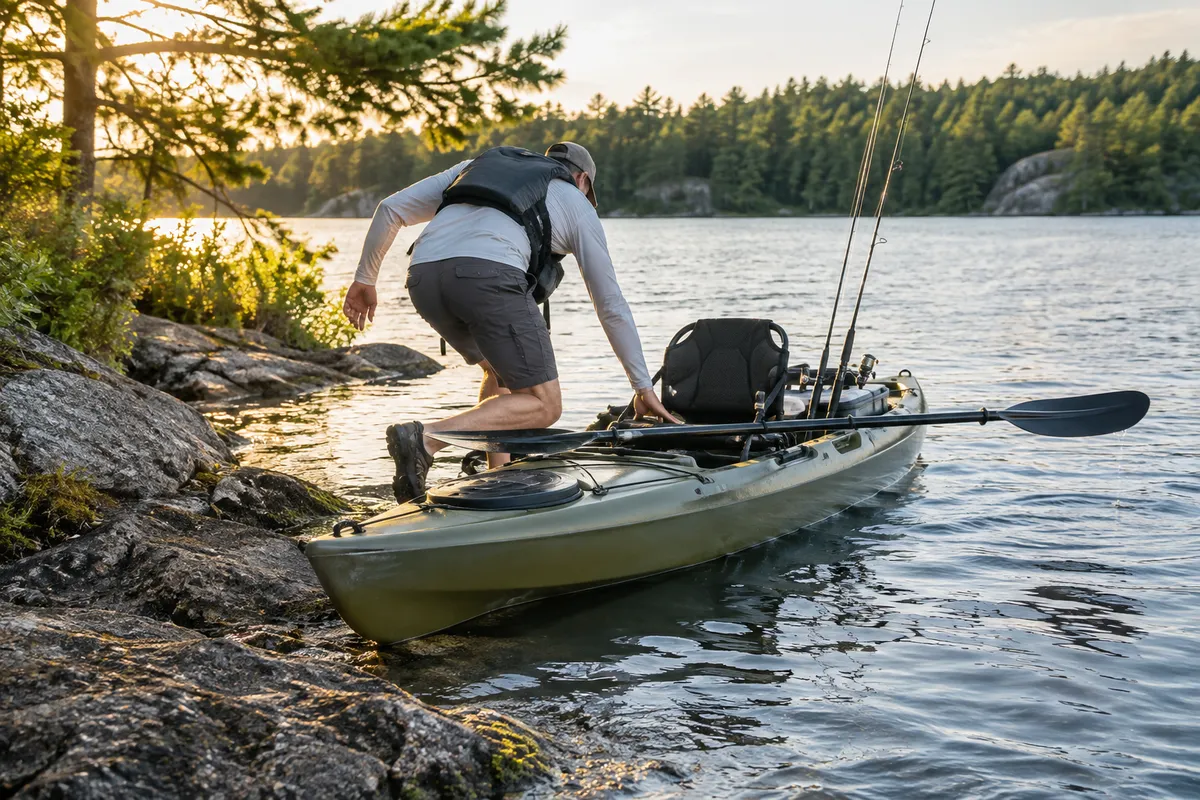
Getting in and out of a kayak is often the moment when paddlers feel least stable: the boat is narrow, the shoreline may be slippery, and a small shift in weight can make the hull roll. Learning how to get in and out of a kayak is less about strength than choosing a good launch point, keeping support close, and moving slowly with your weight low. Practice on calm, shallow water before adding current, wind, a loaded boat, or a dock.
The basic method is simple: prepare the kayak and gear first, secure the hull so it cannot drift, sit down close to the boat, then bring your legs in one at a time while keeping your torso over the centerline. For the exit, reverse the sequence. Wear a properly fitted personal flotation device (PFD), and follow its label and local requirements. A PFD is not a substitute for sound judgment or paddling skills.
Before you launch: make the landing easier
Choose a sheltered place with a gently sloping, firm bottom and enough room to maneuver. Avoid steep banks, slick rocks, tangled vegetation, boat traffic, and places where waves are breaking. Check wind, water level, current, weather, and access rules. A quiet launch can become difficult if wind pushes the kayak away from shore or a current runs along the landing.
Prepare everything before the boat enters the water. Fasten the PFD, secure loose gear, stow a phone and keys in a protected place, and make sure the paddle is within reach. If fishing, keep rods and hooks controlled: a loose hook can catch clothing or a PFD during entry. Do not overload the kayak or let a heavy bag shift while you board.
A partner can steady the bow or stern, but should not pull the kayak sideways or hold it at an angle. Agree on which end will be controlled and communicate before moving. If launching alone, orient the kayak so its bow points into the small waves, if practical, and keep a hand on the hull until you are seated.
Shoreline entry: the sit-down method
For a typical sit-on-top or recreational kayak at a low, calm shoreline, use this sequence:
- Set the boat in shallow water. Place it parallel to the shoreline, with enough of the hull afloat to avoid dragging, but close enough that you can reach the seat. Keep the bow pointed toward open water or small incoming waves.
- Stabilize the hull. Hold the near side of the cockpit or deck. If a helper is available, have them steady the opposite side or the stern. Do not rely on a paddle laid across the boat as a brace; it can roll or slip.
- Lower yourself to the seat. Stand close to the cockpit, turn so your back is toward the seat, and crouch or sit on the rear deck only if the kayak’s design and the manufacturer’s guidance allow it. Keep your hands on secure points and your chest over the boat’s centerline.
- Sit before bringing your legs in. Lower your hips into the seat with one hand supporting you on the shore or a stable part of the kayak. Avoid standing on the seat, deck, or gunwale.
- Bring your legs aboard one at a time. Keep your weight low and centered; slide each leg in rather than making a large twisting motion. Settle your feet where the kayak’s foot braces or footwells are designed to be used.
- Check readiness. Confirm that the paddle is in hand, gear is secured, and the boat is clear of the bottom before pushing away gently.
Some kayak designs require a different entry. A sit-inside cockpit, a high-sided fishing kayak, and an inflatable craft may have different handholds and balance characteristics. Follow the manufacturer’s instructions, and do not step on areas that are not intended to support body weight.
How to get out without tipping
Approach the landing slowly and choose the same kind of protected, shallow spot you would use to launch. Point the bow toward the shoreline and let the boat settle before trying to stand. If wind or current is pushing the kayak, angle in cautiously and ask for help rather than reaching far from the seat.
Once the hull is stable, keep one hand on the kayak and reverse the entry sequence: bring one leg out, then the other, while remaining seated and centered. Put both feet on firm ground before rising. Stand only after you have stepped clear of the cockpit or deck and confirmed that the bottom is not soft, steep, or slippery. On a sit-inside boat, make sure your legs can exit freely and that clothing or gear is not snagged.
Do not use a distant rock, branch, dock ladder, or another person as a long reach while your hips remain in the kayak. Reaching far to one side moves your center of gravity and can roll the hull. If the shoreline is awkward, move to a more suitable landing rather than forcing the exit.
Dock entry and exit
A dock can be convenient, but its height, movement, and distance from the kayak matter. Use a low, stable dock with a clear edge when possible. Bring the kayak alongside and keep it parallel to the dock. Hold the dock and the kayak close together, or have a partner stabilize the boat. Avoid tying the boat so tightly that it is pulled under or pinned by changing water levels.
To board, sit on the dock edge first if it is safe and accessible. Keep your hands on the dock and a secure kayak handhold, then lower your hips into the seat before swinging your legs aboard. Keep your weight low; do not stand in the kayak to reach the dock. To exit, bring the kayak flush to the dock, sit near the edge if needed, and move one leg at a time onto the dock before standing.
A tall dock, slippery surface, moving floating dock, or strong current can turn this into a fall hazard. If there is no stable way to keep the boat alongside, choose a shoreline launch instead. Do not jump between dock and kayak.
Quick decision guide
| Situation | Safer approach | Reconsider or get help when… |
|---|---|---|
| Gently sloping, sheltered shore | Sit down close to the hull; bring legs in one at a time | The bottom is soft, steep, slick, or obstructed |
| Low, stable dock | Keep kayak parallel and supported; sit before transferring | Dock is high, moving, crowded, or slippery |
| Wind or current moving the boat | Choose a more sheltered access point; use a partner | You cannot keep the kayak close without reaching or straining |
| Loaded fishing kayak | Secure rods and tackle, reduce loose gear, board slowly | Gear shifts, blocks the cockpit, or makes the boat unstable |
| Cold water or remote location | Wear suitable clothing and a PFD; plan for assistance | You lack a reliable way to get help or manage immersion |
This is a general guide, not a substitute for instruction in your particular kayak. Hull shape, seat position, cockpit size, load, water temperature, and individual mobility all affect stability. The safest choice may be to wait for calmer conditions or use a different access point.
Common mistakes and useful practice
The most common mistake is trying to balance while standing in the kayak. Another is boarding from a steep bank, where a sliding foot or sudden drop can tip the boat. Large twisting movements, reaching far sideways, and carrying loose equipment in your hands also make the transfer less controlled. Keep the paddle secured until seated, and avoid using a fishing rod as a handhold.
Practice the sequence close to shore on calm, shallow water with a companion nearby. Try entering and exiting several times without a fishing load, then add secured gear only when the movement feels routine. If you paddle alone, tell someone your route and expected return, and carry a communication device protected from water. Learn appropriate self-rescue skills from a qualified instructor; simply being able to climb into a kayak at shore does not mean you can re-enter it after a capsize.
For broader freshwater planning, browse our freshwater fishing tips. If electronics are part of your setup, our overview of Lowrance vs. Garmin fishfinders can help frame what to compare without assuming one unit suits every boat. For a simpler outing, see our guide to choosing a best fishing spoon for the conditions and species you have in mind.
When not to launch
Postpone or change plans when wind, waves, current, lightning, poor visibility, cold exposure, or heavy boat traffic exceed your ability and equipment. Water conditions can differ from what the shore suggests, and a forecast cannot describe every sheltered cove or exposed crossing. Check local advisories and access restrictions, and respect closures. If you cannot enter or exit without a risky climb, a long reach, or an unstable transfer, the launch site is not suitable for that trip.
A reliable routine is deliberately unhurried: prepare first, stabilize the kayak, sit low, move one leg at a time, and leave from a place where you can reverse the process safely. Good access and sound conditions matter more than getting on the water quickly.
Frequently asked questions
Should a kayak be parallel or perpendicular to shore when boarding?
At a calm, gently sloping shoreline, placing it parallel often makes it easier to sit down and keep the hull close. Conditions and kayak design vary; orient the bow toward small waves when practical.
Can I use my paddle to steady the kayak while getting in?
Do not rely on a paddle as a brace across the kayak and shore or dock; it may slip or roll. Keep a hand on a secure part of the kayak and use a stable partner or access point when available.
How do you get out of a kayak at a dock?
Bring the kayak alongside and keep it supported and parallel. Stay seated, move one leg at a time onto the dock, then stand only when your feet are secure. Avoid jumping or reaching far sideways.
What should I wear when entering a kayak?
Wear a properly fitted PFD and clothing appropriate for the water temperature and weather. Secure loose straps and fishing gear so they cannot snag or shift during the transfer.
Sources & further information
Consult these primary sources for current regulations, technical information and local guidance.