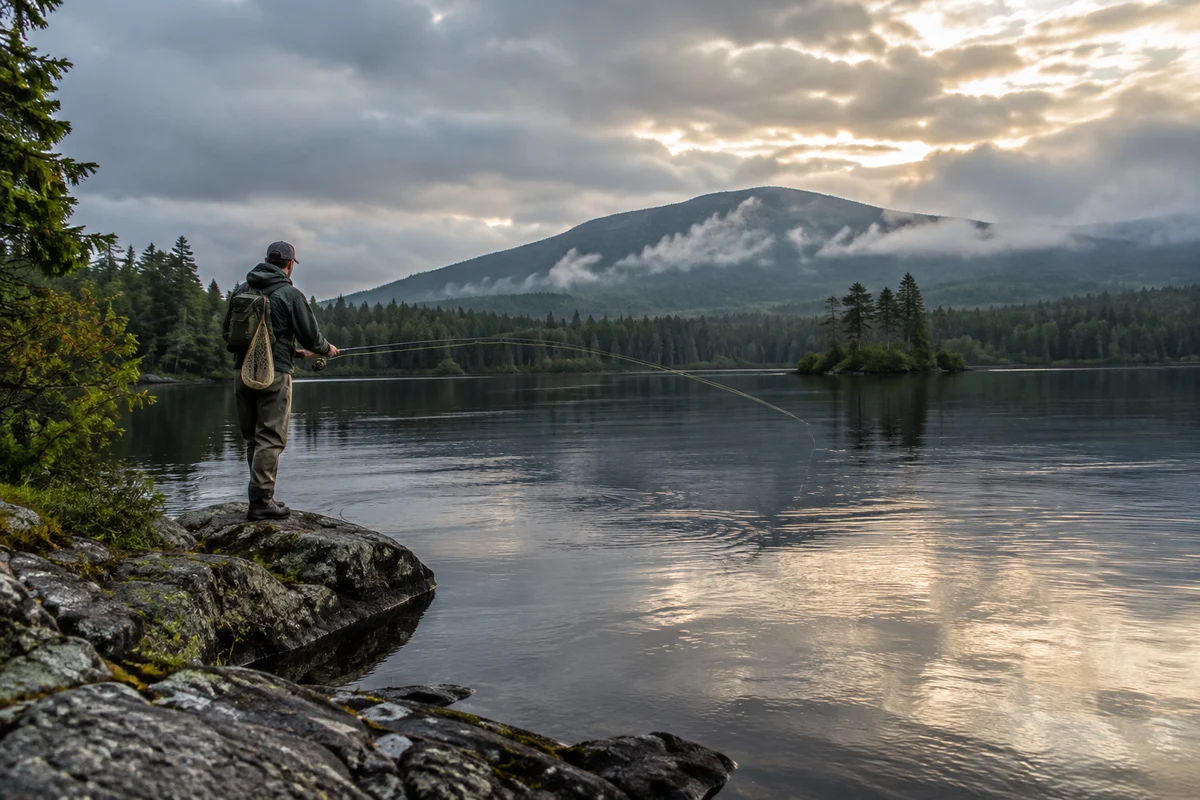
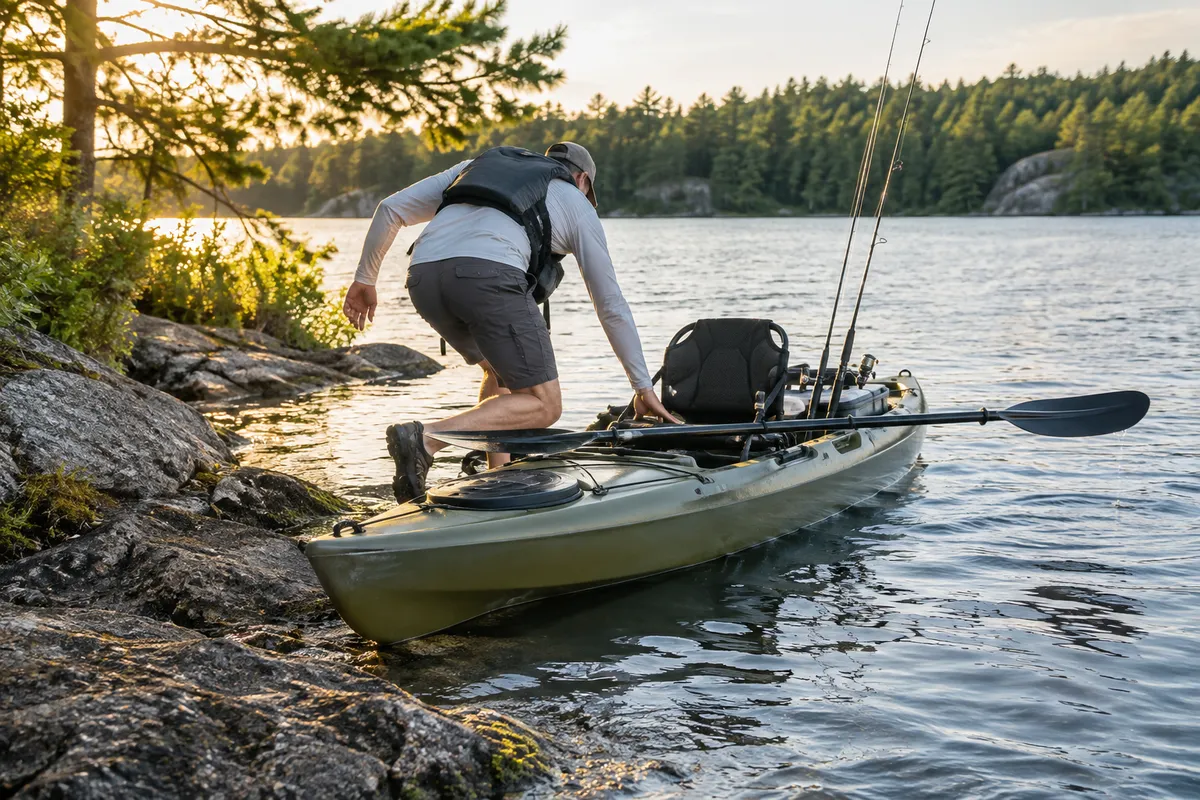
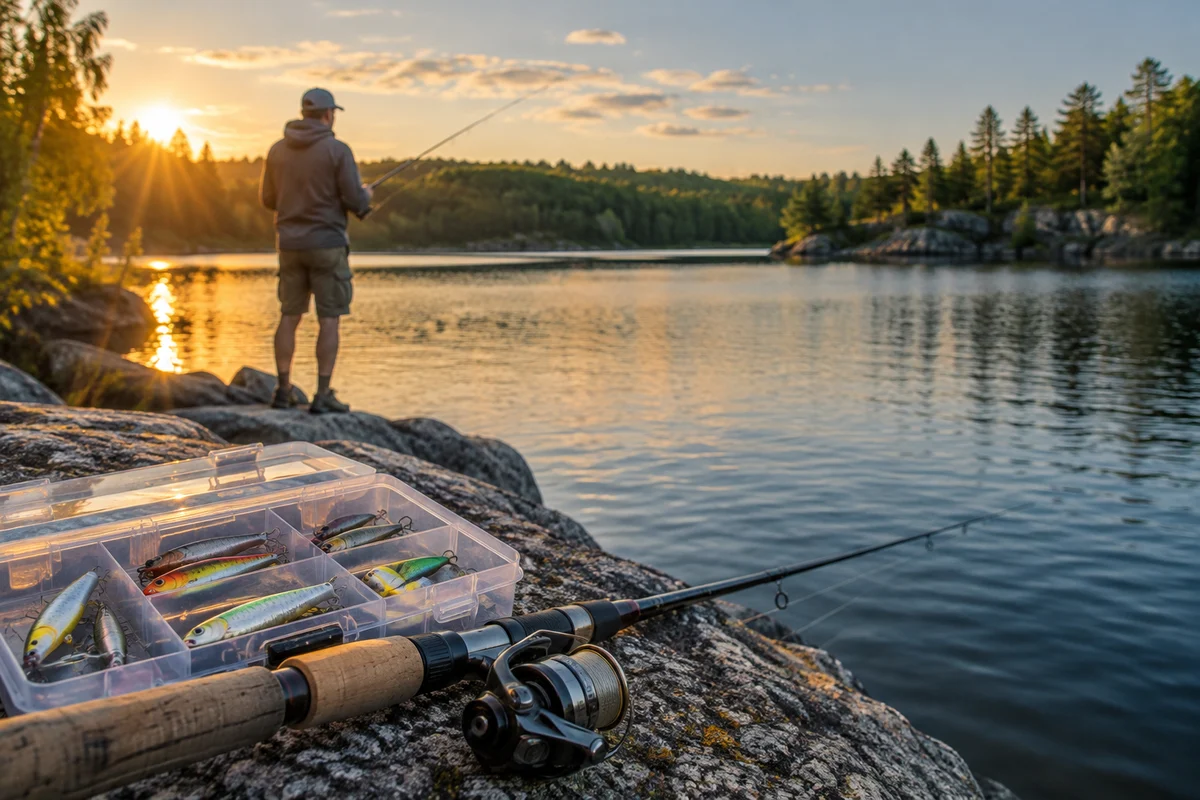
Go Early, Go Shallow, Go Small: Bass Fishing Tips That Adapt
Early starts, shallow water, and compact presentations can be a useful starting framework—not a guarantee. Learn how to adjust the approach to season, weather, clarity, and fish behavior.
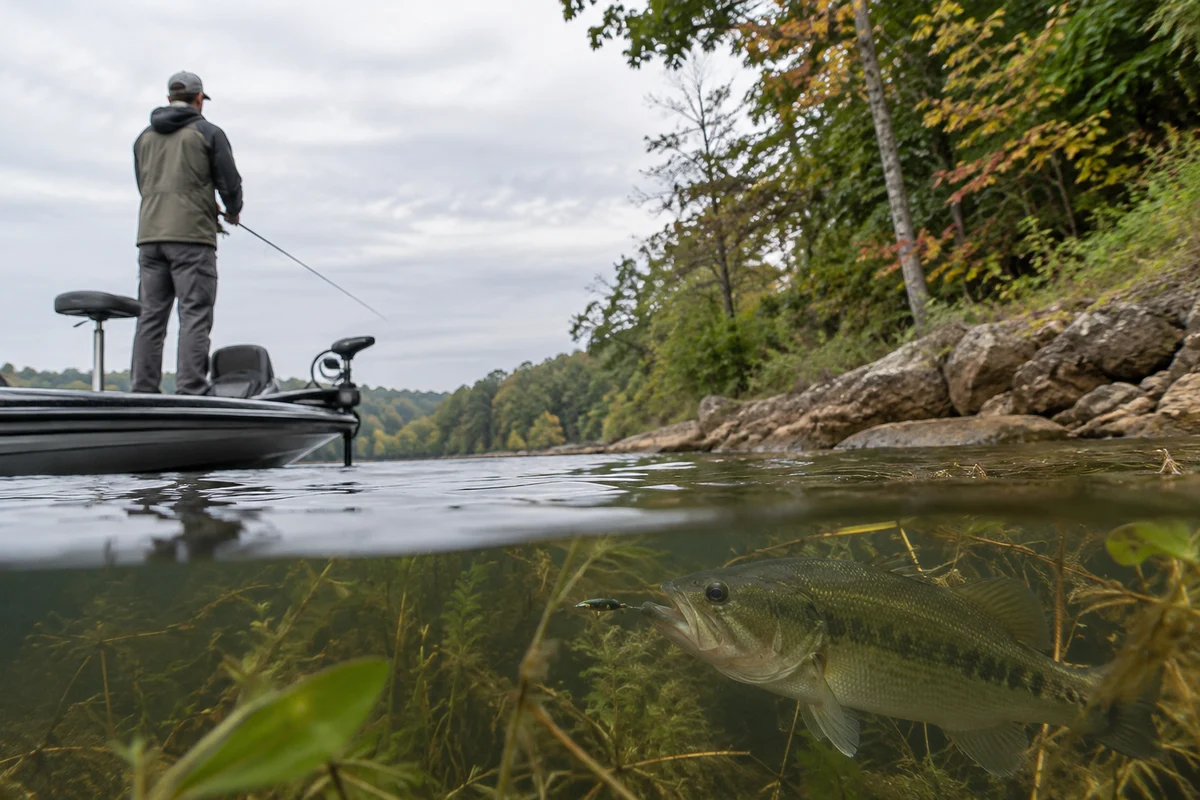
The familiar phrase “go early, go shallow, go small” is a starting point, not a bass-fishing law. These bass fishing tips work best when treated as questions: Is low light making shallow cover more inviting? Are bass feeding near the bank, or holding deeper? Would a smaller presentation match the available forage—or is a larger profile more appropriate? Observe the water, make a measured first choice, and change one variable at a time.
An early arrival can offer cooler air, quieter shorelines, and lower light, conditions that sometimes bring bass close to cover or forage. But dawn does not guarantee a bite, and fish do not follow a clock. Wind, fronts, water temperature, season, fishing pressure, and local habitat all matter. A useful plan is to begin with accessible shallow structure, then let evidence—not a slogan—determine where you spend the rest of the day.
What “early, shallow, small” really means
Early means taking advantage of a period when light, temperature, and activity may differ from midday. It does not mean every bass feeds at sunrise. On a cloudy, breezy morning, favorable conditions may last longer; on a bright, calm day, the shallow bite may fade quickly. Treat the first hour as an opportunity to learn, not a deadline.
Shallow means checking the bank-adjacent areas and cover that bass can use, rather than assuming fish are always far offshore. Depending on the lake, useful places to investigate include weed edges, docks, wood, rock, points, and the mouths of small coves. Bass may also suspend or hold along deeper edges, especially when conditions change. If shallow water gives no signs of activity, widen the search.
Small refers to a restrained lure profile or subtle presentation—not necessarily a particular bait or size. Compact offerings can be useful when forage is small, water is clear, or fish have seen a lot of pressure. In stained water, heavy cover, or when bass are pursuing larger forage, a more visible or larger profile may make more sense. Match the conditions and local rules; no single size works everywhere.
Start with a simple read of the water
Before making repeated casts to the same stretch, pause and gather clues. Note water clarity, wind direction, cloud cover, surface activity, nearby cover, and any visible forage. Look for transitions: a weed edge beside open water, a rocky patch among softer bottom, a point that meets a channel, or shade beside a sunlit bank.
A fishfinder can help describe depth and underwater structure, but it does not identify every mark with certainty or replace observation. Interpret the display as one source of information, and learn its limits. For a broader look at reading electronics, see our guide to Lowrance vs Garmin fishfinders.
Make a short, deliberate first pass. Cast to likely cover from a position that avoids pushing directly into it, where practical. Give each distinct piece of cover a few accurate presentations from different angles. If a lure catches vegetation or repeatedly snags, change the angle, retrieve, or presentation rather than forcing the same approach.
Choose a presentation with a decision framework
Use this table as a way to organize observations, not as a promise of results. Local forage and cover can change the best choice.
| What you notice | A reasonable first adjustment | What to watch for |
|---|---|---|
| Low light and shallow cover | Begin near cover with a controlled, visible presentation | Follows, surface activity, or fish leaving cover |
| Clear water and wary fish | Reduce disturbance; consider a compact, natural-looking offering | Whether fish track the lure but refuse it |
| Stained water or wind | Improve visibility or keep the lure in contact with a target area | Whether the lure is detectable without becoming difficult to control |
| Small visible forage | Try a smaller profile or a faster, forage-like retrieve | Forage size and whether bass respond to movement |
| No signs shallow | Check the nearest drop, point, or deeper edge | Bait, cover, and changes in depth rather than depth alone |
| Repeated snags or fouling | Adjust casting angle, retrieve speed, or lure style | Whether the presentation passes cleanly through the intended cover |
Keep the experiment understandable: change one feature at a time. If you change location, lure profile, retrieve speed, and color together, it becomes difficult to tell what mattered. A simple note on the time, conditions, location type, and presentation can help you make better decisions on future trips without assuming one day predicts the next.
When shallow water deserves your attention
Shallow areas are most useful when they offer something bass can use: food, cover, shade, a route between habitats, or a change in depth. A bare, featureless bank may be less promising than a nearby point with vegetation or rock, though fish can still move through apparently simple water. Look for combinations, not just isolated objects.
Season changes those combinations. During warming periods, fish may use shallows more often, while seasonal movements vary by region and waterbody. During hot weather, shade, current, oxygen conditions, and nearby depth may become important. In cold conditions, activity and location may shift, and a slower or deeper approach can be worth testing. These are broad patterns, not a calendar: latitude, weather, lake characteristics, and the particular day all influence what happens.
If you are fishing a pond, do not assume it behaves like a large reservoir. Small waters can have limited cover and rapid changes in temperature or clarity. Our overview of best fishing destinations offers a related reminder: the setting matters, and the most useful plan begins with the water in front of you.
How to make an early start count
Arrive with a short sequence rather than a rigid route. First, identify a few nearby areas with different features—perhaps a shaded bank, a point, and a weed edge. Begin where wind, light, and visible forage make the strongest case. Fish efficiently, but do not rush past a productive stretch simply because the sun is rising.
After the first pass, ask three questions:
- Did I see evidence of activity? Surface movement, baitfish, follows, or a strike can help refine the search, though absence of visible signs proves little.
- Was the presentation reaching the intended water? A lure that rides above cover or fouls constantly may not be testing the target effectively.
- What changed? A shift in wind, light, cloud cover, or water conditions may justify revisiting an area or changing depth.
If the shallow pattern weakens, move progressively rather than abandoning the whole area at once. Check the outside edge of cover, nearby points, and the first meaningful depth change. If fish or forage appear on electronics, use that information cautiously and compare it with the surrounding structure. You can also explore more general freshwater fishing tips for approaches that apply beyond one bass pattern.
Scale “small” to conditions and tackle
A compact lure can be easier to present naturally, but downsizing is not automatically more effective. Tiny offerings may be hard to cast or control in wind, and a light presentation may be unsuitable around thick cover. Choose tackle that lets you make accurate casts, detect contact, and land fish responsibly within the limits of your gear and local regulations.
Color is another variable to keep in proportion. Start with a sensible choice for visibility and local forage, then adjust if conditions or fish response give you a reason. Avoid cycling through colors without a plan. Retrieve speed, depth, and time spent near cover can matter as much as appearance.
There is no universal lure list for every lake. Forage differs, habitats differ, and the same shoreline can change with water level and weather. Where you are uncertain about local species, seasonal rules, or permitted methods, consult the relevant fish and wildlife agency before fishing.
A practical checklist before the first cast
- Check current local fishing regulations, access rules, and any waterbody-specific restrictions.
- Note light, wind, water clarity, and visible cover before selecting a starting area.
- Begin with one or two likely shallow targets, but keep a nearby deeper option in mind.
- Choose a presentation you can control accurately and safely around the cover.
- Change one variable at a time and observe the response.
- Reassess when conditions change; “early, shallow, small” is a hypothesis, not a rule.
- Handle fish carefully and follow local guidance for release or harvest.
The best use of these bass fishing tips is not to repeat a formula, but to make a clear first decision and improve it with evidence. Start early if it suits your schedule, inspect shallow cover when conditions support it, and try a compact presentation when it matches the forage and water. If the clues point elsewhere, follow them. A flexible approach makes the day more informative even when the fish do not cooperate.
Frequently asked questions
Are bass always easier to catch early in the morning?
No. Low light can make shallow feeding opportunities more likely in some conditions, but weather, season, waterbody, and fish behavior vary. Treat dawn as a useful window to investigate, not a guarantee.
Should I always use a small lure for bass?
No. A compact profile can suit small forage, clear water, or pressured fish, while larger or more visible presentations may fit other conditions. Consider local forage, cover, and how well you can control the lure.
What should I try if bass are not in shallow water?
Check nearby weed edges, points, drop-offs, and other depth transitions. Use visible activity and electronics as clues, while remembering that neither can confirm every fish location.
Does the early-shallow-small approach work in every season?
No. Seasonal patterns vary by region and waterbody, and weather can shift fish location and activity. Use the approach as a starting framework and adjust depth and presentation to current conditions.
Sources & further information
Consult these primary sources for current regulations, technical information and local guidance.