How to Choose the Best Fishing Spoon for Your Water
The best fishing spoon is the one that reaches the fish at the right depth and moves like available forage. Learn how to choose a shape, finish, and retrieve—and when a spoon is the wrong tool.
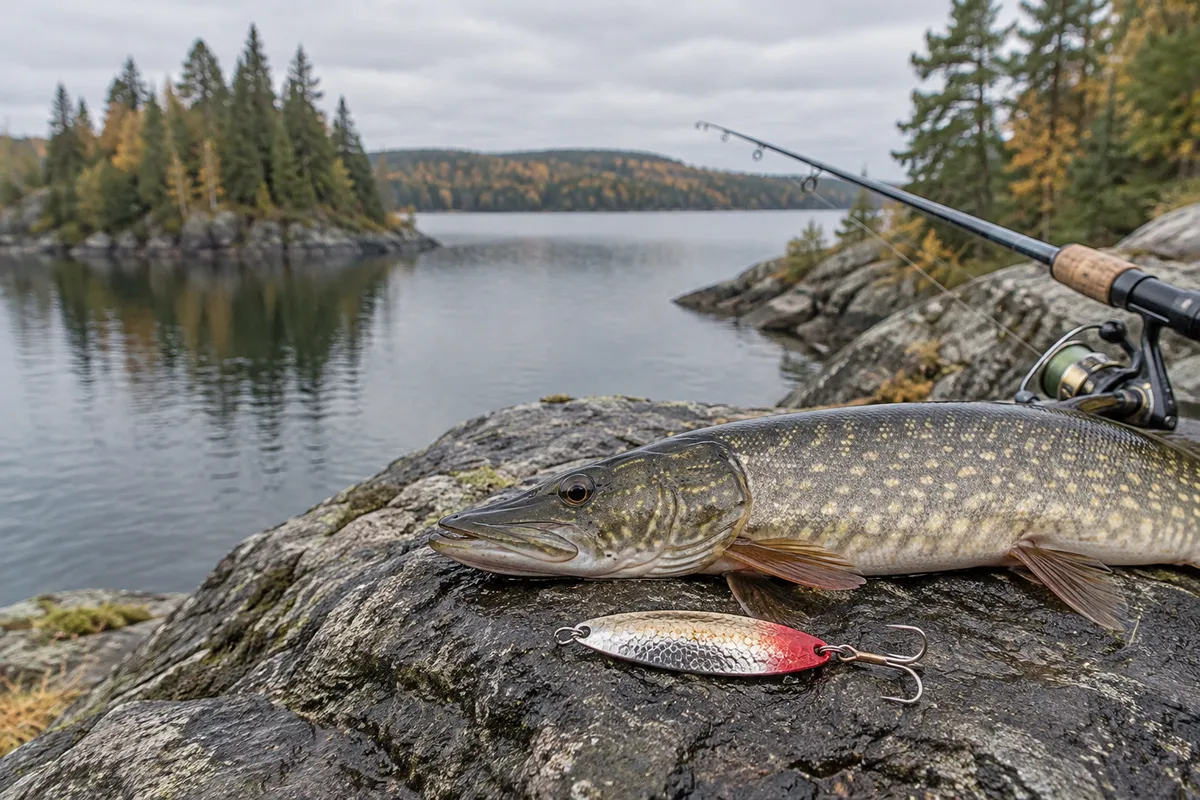
A best fishing spoon is not a single lure model: it is the spoon that stays in the fish’s strike zone and gives a convincing flash or wobble under the conditions you face. Water depth, current, cover, forage, and retrieve speed all matter more than a universal “best” pick. A compact spoon can excel around shallow structure, while a heavier, narrower one may be easier to control in deep water or current.
The useful starting point is to choose a spoon for the job, then tune its presentation. This guide covers common spoon styles, a practical selection framework, and ways to adjust without assuming a particular brand or fishery.
What makes a fishing spoon work?
A spoon is a metal lure shaped to wobble, flash, or flutter as it moves through water. Its curved profile displaces water and reflects ambient light. Different shapes and retrieve speeds produce different actions: some spoons swing widely, while others track more tightly or flutter as they fall.
That motion can suggest a small baitfish, but a spoon is not limited to imitating one exact species. Fish may respond to its movement, contrast, or sudden flash. In stained water or low light, a visible silhouette and steady vibration may matter more than a mirror finish. In clear, bright water, a subtler presentation may be less conspicuous.
A spoon can be cast, jigged, trolled, or allowed to flutter, depending on its design and the fishery. Always check local rules for restrictions on hooks, lure types, and fishing methods.
Choose the spoon by depth, current, and cover
Start by asking where the fish are likely to be and whether the lure can remain there. A lure that sinks too slowly may drift over deep fish; an overly heavy spoon can plunge into weeds or snag-prone bottom. Current adds drag, and line diameter and line angle affect how quickly the lure reaches depth.
| Conditions | Useful starting point | What to watch |
|---|---|---|
| Shallow water or weeds | Lighter, broader spoon; controlled retrieve | Keep it above vegetation; slow down if it rises too high |
| Open water at moderate depth | Midweight spoon with a stable wobble | Count down consistently and note the depth where strikes occur |
| Deep water or stronger current | More compact, heavier spoon | Avoid letting it fall into snags; account for line bow and drift |
| Suspended fish | A spoon that can be retrieved or jigged through a chosen band | Repeat the same countdown and retrieve path |
| Clear water and bright sun | Natural or subdued finish as a starting point | Reduce flash or speed if fish follow without striking |
| Stained water or low light | Higher-contrast or reflective finish | Prioritize a detectable profile and maintain contact with the lure |
These are starting points, not guarantees. Spoon action varies with shape, speed, line, and hardware. Test a lure beside the boat or at the bank where permitted, then adjust until it runs cleanly rather than spinning or tumbling unexpectedly.
Match the shape to the presentation
Broad, curved spoons often produce a wider wobble and can be useful at slower speeds. Narrower profiles commonly track more tightly and may be easier to keep moving in current or at a faster pace. This is a general tendency, not a standard shared by every maker: inspect the lure’s stated intended use and observe its action.
For casting, consider how far the spoon needs to travel and whether it can be controlled on the fall. For vertical jigging, choose a design that behaves predictably as it rises and drops. For trolling, use a spoon intended to maintain its action at the planned speed, and follow manufacturer guidance rather than assuming every casting spoon will track properly behind a boat.
Hook arrangement matters too. A treble can catch from multiple angles but is more likely to snag and can complicate release. A single hook may be easier to remove and may be required or preferred by local regulations. Pinching a barb can simplify release, but check rules and consider your ability to keep steady pressure. Carry appropriate hook-removal tools and handle fish carefully.
Pick a finish for visibility—not superstition
Silver, gold, painted, and patterned finishes provide different levels and kinds of contrast. Sun angle, water clarity, depth, and the color of local forage can change what is visible. Rather than treating a color chart as a rule, compare a bright and a subdued option when conditions are uncertain.
A simple decision sequence helps:
- Assess visibility. In clear, bright conditions, begin with a restrained finish; in low visibility, try a stronger contrast or flash.
- Match the local scene. Consider common forage colors and the water’s own tone, without expecting an exact imitation to be essential.
- Change one variable. If fish follow but do not strike, change speed or depth before replacing several parts at once.
- Record the result. Note light, water clarity, depth, and retrieve so you can repeat a productive presentation.
Retrieve with control
A steady retrieve is a useful baseline. Cast, allow the spoon to sink to a repeatable count, then retrieve at a pace that produces a consistent wobble. If fish follow, try a brief pause, a modest speed change, or a slightly different depth. Avoid abrupt changes that make the lure spin unless that action is intentional for the particular design.
When jigging, lift the rod smoothly and let the spoon fall on controlled line. Watch for a tick, slack line, or a pause in the descent; strikes can happen on the drop. Keep enough tension to detect contact without preventing the lure from moving naturally. In current, position and line angle influence the fall, so repeat the same approach before concluding that a spot is unproductive.
For a broader look at seasonal and presentation choices, browse our freshwater fishing tips hub. If you are fishing unfamiliar water, our guide to best fishing destinations offers another way to think about access and trip planning. Electronics can help interpret depth and structure; see our overview of Lowrance vs. Garmin fishfinders for context on using fish-finding tools.
Common problems and practical fixes
The spoon spins or twists the line. Slow the retrieve, check that the lure is not bent or damaged, and verify that any swivel or connector is suitable and correctly attached. Some spoon designs are intended to wobble rather than rotate continuously.
It snags repeatedly. Fish higher in the water column, shorten the fall, change your casting angle, or choose a hook configuration suited to the cover and legal in that water. A heavier spoon is not automatically better if it reaches the bottom too quickly.
Fish follow but do not commit. Try a small change in retrieve speed, depth, or finish. A short pause can trigger a response, but too much slack can make it harder to detect a strike or control the lure.
You cannot tell how deep it is running. Use a consistent countdown and retrieve, then adjust one count at a time. Wind, current, line thickness, and casting distance all affect the result, so treat the count as a repeatable comparison—not a precise depth measurement.
A compact field checklist
Before tying on, check the target depth, current, cover, local rules, and likely forage. Select a spoon that can reach the zone without constantly snagging, then confirm its action at the water’s edge. Begin with a controlled retrieve, change one variable at a time, and inspect hooks and line regularly. If conditions make a spoon difficult to control—or fish are feeding on something a spoon cannot imitate well—switching lure types is a sensible decision, not a failure.
No spoon is best in every lake, river, or season. The most dependable choice is a well-maintained lure whose action you can control at the depth and speed the fish require.
Frequently asked questions
What is the best fishing spoon for beginners?
Start with a versatile spoon sized for the fish and water you target, and choose a design that runs steadily at a moderate retrieve. Learn its sink rate and action before changing colors or hardware.
Should I use a silver or gold fishing spoon?
Neither finish is universally best. Consider water clarity, light, and contrast, then compare finishes while keeping depth and retrieve consistent.
How do I keep a spoon from snagging weeds?
Use a lighter or more weed-suited option where appropriate, fish above the vegetation, and shorten the fall or adjust your retrieve. Follow local rules for hook configurations.
Can I use the same spoon for casting and trolling?
Not always. Some spoons are designed for particular speeds or presentations. Check the manufacturer’s guidance and observe how the lure tracks before using it in a different way.
Sources & further information
Consult these primary sources for current regulations, technical information and local guidance.