How to Fish Spoons: A Practical Guide to More Strikes
Spoons catch fish by flashing and wobbling as they move through the water, but the right presentation depends on where fish are and how they are feeding. Use this practical guide to select a spoon, control its action, and adjust your approach without guessing.
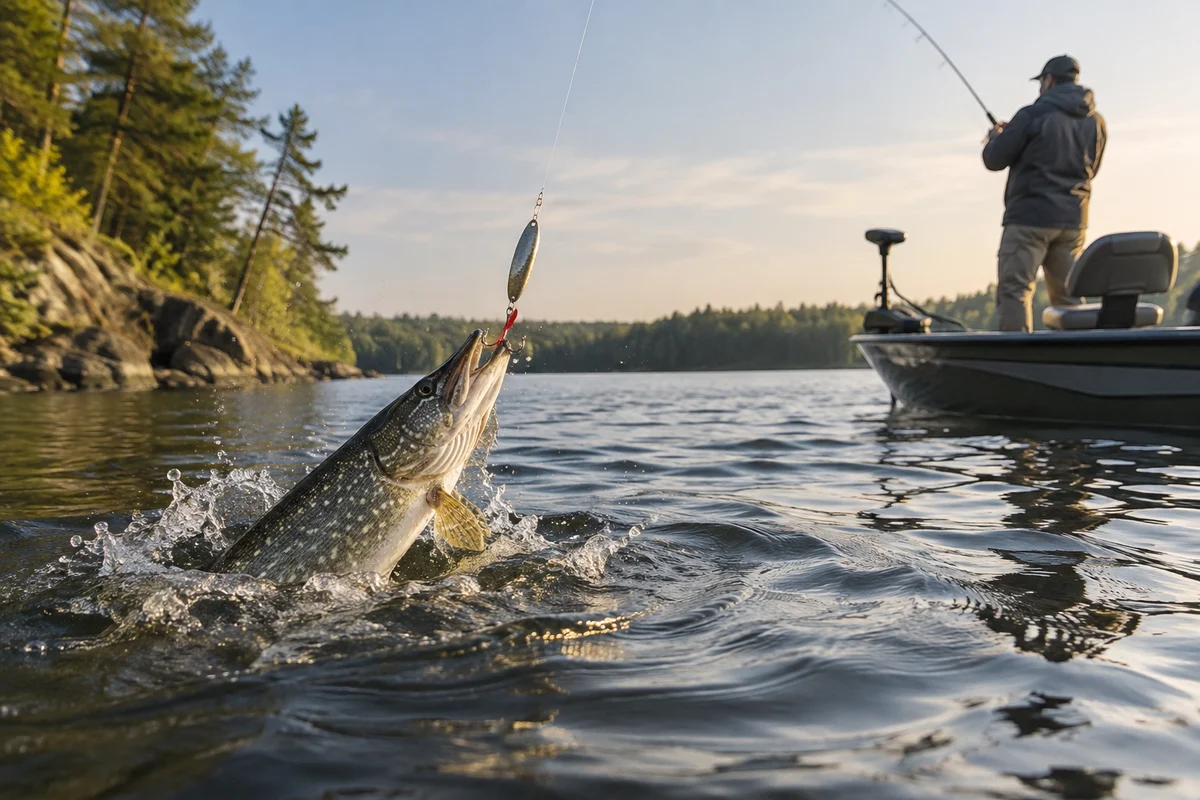
A spoon can be one of the simplest lures to fish—and one of the easiest to use badly. Its curved metal or molded body flashes and wobbles as it moves, imitating a small fish or other moving prey. Learning how to fish spoons is less about casting farther or retrieving faster than everyone else and more about matching the lure’s action and depth to the situation. Start with a controlled retrieve, watch what the lure does, and make one adjustment at a time.
Spoons are useful in freshwater and saltwater, from open-water casting to vertical fishing, but no single size or presentation works everywhere. Water clarity, current, depth, vegetation, target species, and local rules all matter. If you are deciding which style to start with, see our guide to the best fishing spoon; this article focuses on how to present one effectively.
What makes a spoon work?
A spoon’s shape creates movement as it travels. A slender, relatively straight model usually tracks with a tighter wobble and is often suited to faster retrieves or current. A wider, more curved spoon tends to swing and flash more at slower speeds. These are tendencies, not guarantees: thickness, weight distribution, hooks, and the exact bend all affect action.
A useful first check is to cast near shore or lower the lure beside a dock in clear, safe water. Retrieve it at several speeds and watch whether it swims cleanly, flashes, or begins to spin. A spoon that spins continuously may be moving too fast or may not be running as intended. Slow down, inspect the line and hardware, and try again. Don’t assume a lure’s advertised action will look identical across every rod, line, and speed.
The flash can attract attention, while the wobble suggests movement. Fish may strike because the lure resembles prey, because it crosses a feeding lane, or because a sudden change triggers a reaction. Anglers cannot reliably know which explanation applies to an individual strike, so use observable clues—depth, bait activity, current, and follows—to guide adjustments.
Choose a spoon for the water, not just the species
Before tying on, ask three questions: How deep do I need to fish? How much current or wind is affecting the line? Is the lure likely to snag in the cover? A compact, heavier spoon can reach depth and stay manageable in wind, while a lighter or broader design can be easier to keep shallow. The same weight may behave differently depending on its shape and the line attached.
| Situation | Starting point | What to watch | Adjustment if it is not working |
|---|---|---|---|
| Open water, fish near the surface | Castable spoon and steady retrieve | Whether the lure tracks cleanly and bait is present | Change speed or cast angle before changing everything |
| Deeper water | Heavier spoon or controlled vertical presentation | Line angle, sink time, and likely bottom or fish depth | Use a heavier lure only if needed to maintain control |
| Current or wind | A profile that stays manageable at a moderate pace | Bow in the line and whether the lure holds its depth | Reposition, shorten the cast, or alter the retrieve |
| Vegetation or submerged cover | Weedless-style spoon where legal and suitable | Weed fouling and the lure’s path through openings | Slow down, target edges, or choose a less snag-prone route |
| Clear water or wary fish | Smaller or less aggressive presentation as a trial | Follows, refusals, and visibility | Reduce speed, increase distance, or change angle |
Treat this as a starting framework rather than a species chart. Fish behavior changes with season, temperature, light, and local conditions. A spoon that is effective in one lake or tide may be a poor match in another.
How to fish spoons with a steady retrieve
For a basic cast-and-retrieve approach, cast beyond the area you want to cover when conditions allow, let the spoon sink to a chosen level, and retrieve smoothly. Count the sink time rather than trying to estimate depth precisely; the count is only a comparison tool, since wind, current, line diameter, and lure design change the fall.
Begin at a moderate pace. The rod tip should not need to make the lure work constantly. If the spoon tracks well, sweep a fan of casts across likely water, varying the angle and sink count. Keep the rod at a comfortable height and maintain enough contact to detect a strike without pulling the lure unnaturally fast.
Then vary one element at a time:
- Change speed. Try a slightly slower or faster retrieve while keeping the same cast angle and sink count.
- Add a brief pause. Let the spoon flutter or fall for a moment, then resume. Keep enough line control to notice a pickup.
- Change depth. Allow a longer or shorter sink before retrieving, taking care around snags.
- Change direction. Cast across, along, or toward an edge instead of repeatedly covering the same line.
If the spoon rolls or spins rather than wobbling, slow down and inspect it. If it repeatedly catches bottom or cover, shorten the sink count or move to a clearer lane. A follow without a strike can justify a modest change in speed, angle, or lure size; it does not prove that the fish wants a particular color or action.
Jigging a spoon vertically
In deeper water, a spoon can be lowered and worked with short lifts followed by a controlled fall. Keep the movement measured: lift the rod enough to make the lure move, then lower it while recovering slack so you remain aware of the line. The fall is often when a fish takes the lure, so pay attention to a line that stops, twitches, or moves differently from the expected descent.
Use electronics or other reliable observations to understand where fish or structure may be, but don’t treat a screen as a guarantee of a catch. If you are learning to interpret sonar, our overview of Lowrance vs. Garmin fishfinders offers context on what fish-finding technology can and cannot tell you. Without electronics, work a known drop-off or other safe, familiar area in a deliberate sequence rather than letting the spoon fall unchecked.
Vertical jigging is not a license to let a heavy lure slam into sensitive habitat. Be aware of bottom type, snags, and local restrictions. If the spoon reaches bottom, lift it promptly and adjust the next drop to spend less time there.
Working around weeds and other cover
A spoon can be useful around vegetation, but exposed hooks will still catch weeds. Weedless designs reduce some fouling; they do not make a lure snag-proof. Fish the edge of a weed bed, openings, or a clear lane first. Make controlled casts that let you identify where the lure begins to collect vegetation, then shift your angle or retrieve to keep it cleaner.
For submerged timber, rocks, docks, or other obstacles, avoid dragging a spoon blindly through the cover. Start outside the obstruction and work its edges. If you feel a snag, stop and assess rather than pulling hard while pointed at the lure; a sudden release can send hooks back toward you. Handle hooks carefully, use appropriate eye protection, and keep other people outside the casting arc.
Tackle, hooks, and safe handling
Choose a rod and line that can cast the lure’s actual weight and manage the likely fish, while still fitting the environment. There is no universal setup: a spoon used for light casting is not the same task as controlling a heavier lure in deep water or current. Check the rod’s stated lure range and inspect knots, line, split rings, and hooks regularly.
A swivel can reduce line twist in some setups, but added hardware may change a small spoon’s action. Test the lure in clear water after tying it on. Hook regulations and permitted tackle differ by location and waterbody, so check the relevant fishing rules before changing hooks or using a particular rig. Handle any fish in accordance with local regulations and minimize time out of the water when releasing it.
A simple on-water decision process
When a spoon is not producing, avoid swapping through a whole tackle box at once. Use this sequence:
- Is the lure moving correctly? Check it beside shore or close to the boat.
- Is it at a plausible depth? Adjust sink time or presentation, and account for current and line angle.
- Is the route clean? Reduce contact with weeds, bottom, or snags.
- Are fish likely to be present? Look for bait, current seams, structure, or other credible signs rather than repeating casts without a reason.
- What single change will test your idea? Alter speed, depth, angle, or spoon profile, then compare the result.
Keep brief notes about conditions and what changed. They need not be elaborate: water clarity, wind, location type, sink count, and retrieve style can help you recognize patterns on future trips. For other freshwater ideas and related skills, browse the freshwater fishing tips hub or read about lake-effect fishing.
Limits and local considerations
Spoons are not equally effective in all conditions. Heavy vegetation, extremely shallow water, snag-filled bottoms, or fish that are not feeding may call for another technique. Color preferences are especially context-dependent; visibility and contrast change with light, water clarity, depth, and background. Try a simple, visible option first, then change it only when you have a reason.
Seasonal closures, size and possession limits, hook restrictions, and rules for particular waters vary by jurisdiction and can change. Consult the responsible state or regional fish and wildlife agency before fishing. Use a life jacket where conditions warrant, keep casts clear of people, and transport hooks securely. The most dependable spoon presentation is the one you can control safely and repeat long enough to learn from.
Frequently asked questions
What is the easiest way to fish a spoon?
Cast it, let it sink for a controlled count, and retrieve at a steady pace that makes the lure wobble without spinning. Adjust speed or depth one step at a time.
Should I let a spoon hit the bottom?
Only when the bottom is suitable and you can control the lure. In snaggy or sensitive areas, shorten the sink count and keep the spoon above the bottom.
Can you fish a spoon around weeds?
Yes, especially along weed edges or open lanes. A weedless-style spoon may reduce fouling, but it can still catch vegetation or other cover.
Why does my spoon spin instead of wobble?
It may be retrieved too quickly, fouled, or not tracking properly. Slow down, inspect the lure and its connection, and test it beside shore before casting again.
Sources & further information
Consult these primary sources for current regulations, technical information and local guidance.