Fishing the Amazon River: A Practical Guide to Planning
A practical overview of planning an Amazon fishing trip, from choosing a region and reading seasonal water to gear, safety, permits, and conservation. Conditions and rules vary widely, so confirm details with local authorities and an experienced operator before travel.
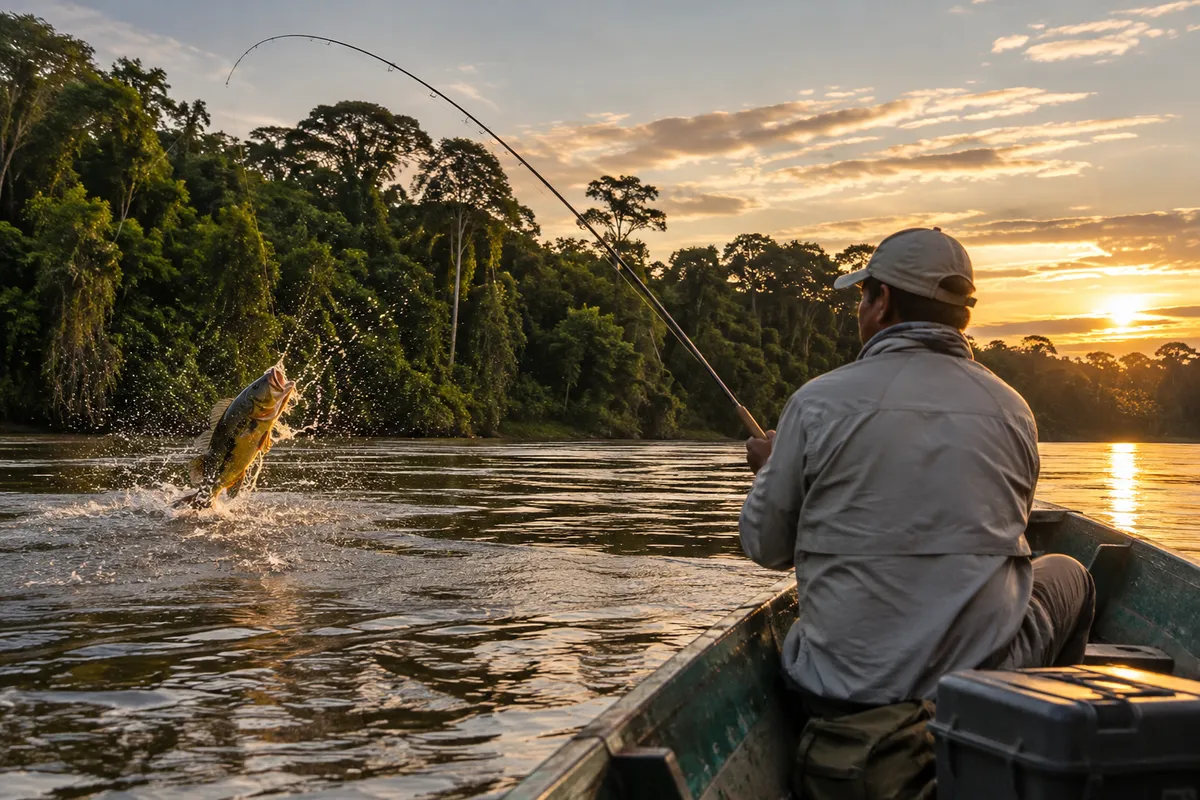
Fishing the Amazon River is not one fixed experience: the basin spans multiple countries, vast distances, and river systems that change dramatically with rainfall. A productive trip depends less on a universal lure or calendar than on choosing a specific destination, understanding its seasonal water, and working with local people who know its regulations and conditions. Plan for a remote wilderness journey as well as a fishing outing.
The first decision is where to go. The Amazon basin includes the main river and countless tributaries, floodplain lakes, and connected channels. Access, target species, travel time, language, permits, and health precautions differ between locations. Treat a destination advertised simply as “the Amazon” as an invitation to ask more questions: which river, which community or town, how many hours by boat, and what happens if weather or water levels alter the itinerary?
For a broader look at choosing a trip, see our guide to best fishing destinations. The right destination is the one whose access, expectations, and conservation practices you can verify—not necessarily the most remote one.
Choose a region before choosing a season
The basin’s seasonal rhythm is shaped by rainfall, and the timing and intensity vary from one subregion to another. Rising water can connect flooded forest and lakes, opening new habitat and routes. Falling water can concentrate fish in channels and remaining pools, while also changing navigation and access. These are useful patterns, not a guaranteed fishing calendar. A season that suits one tributary may not describe another, and unusually wet or dry conditions can shift local expectations.
Ask a prospective operator how water level affects the exact route and fishing plan. Request a realistic explanation of travel time, backup options, and what conditions might cancel or shorten a day. Avoid relying on a single basin-wide “best month” claim. Local knowledge matters because the same water level can affect fish movement, boat access, and safety differently in separate watersheds.
Set expectations for species and methods
Anglers commonly associate Amazon trips with powerful freshwater fish, including peacock bass in some areas, but available species depend on the location and local rules. Names used in tourism and fishing conversations can refer to several related species or local categories. Ask the guide which fish are naturally present at the destination, which are in season, and whether the trip focuses on catch-and-release or lawful harvest.
Method should follow the water and the guide’s advice. A broad selection of sturdy, familiar tackle is more useful than a large collection chosen from generic online lists. Ask about typical casting space, vegetation, current, boat arrangements, and the tackle the operator supplies. For a general comparison of sonar tools used in other settings, see Lowrance vs. Garmin fishfinders; electronics availability and usefulness on a remote Amazon itinerary are site-specific, so confirm rather than assume.
| Planning question | What to confirm | Why it matters |
|---|---|---|
| Destination | River or tributary, nearest community, and country | “Amazon” alone is too broad to establish access or rules |
| Water season | Local water-level pattern and current conditions | Flooding and drawdown can change routes, habitat, and safety |
| Fishing plan | Likely target fish, lawful methods, and harvest policy | Species and regulations vary by location |
| Logistics | Transfers, boat time, lodging, communications, and contingencies | Remote travel needs realistic margins and backup plans |
| Conservation | Catch-and-release handling, protected areas, and local benefits | Responsible practice depends on local context and enforcement |
Select an operator with clear answers
A reputable local operator should be able to explain the itinerary in concrete terms, including who provides guiding, where the trip begins, how transfers work, what is included, and what happens when conditions change. Ask which permits or permissions apply and who is responsible for confirming them. Rules can differ among countries, states or provinces, Indigenous territories, protected areas, and individual fisheries. Do not assume that a guide’s presence replaces your responsibility to follow local law.
Ask how the operation works with nearby communities and whether local guides, staff, and suppliers are involved. Request clear information about safety equipment, emergency communication, drinking water, and evacuation arrangements. If answers remain vague, compare alternatives before committing. This is also a good point to discuss whether fish are released, how handling is minimized, and whether any species or areas are off-limits.
Pack for heat, rain, and remote travel
Build a compact kit around protection and reliability. Lightweight, quick-drying clothing, a brimmed hat, sun protection, and rain gear help with changing weather. Bring insect protection suitable for the destination and follow current advice from qualified travel-health professionals. Pack personal medication in its original packaging, with a backup supply where practical, and keep essential items dry. A headlamp, spare power, and a waterproof way to carry identification and travel documents can be useful on remote itineraries.
For tackle, ask the operator what is available locally and what they recommend for the specific fishery. If bringing equipment, favor dependable rods, reels, line, terminal tackle, and a small selection of proven presentations that match the guide’s advice. Check airline and border rules for rods, hooks, knives, batteries, and other restricted items before departure. Do not bring live bait, plants, or other biological material unless authorities explicitly allow it; moving organisms between waters can spread invasive species or disease.
Put safety ahead of the catch
Remote river travel deserves serious attention. Follow the guide’s instructions around boats, shorelines, weather, and wildlife. Wear an appropriate personal flotation device when directed and ensure it fits before boarding. Keep hands and feet clear during boat landings, stay seated when the boat is moving, and do not enter unfamiliar water without local guidance. Heat, dehydration, slippery banks, and sudden changes in weather can create more immediate risks than the fishing itself.
Before departure, share your itinerary with someone who is not traveling and agree on how and when you will check in. Ask the operator what communications work along the route and what emergency plan is available beyond mobile-phone coverage. Review current government travel advisories and consult a travel-health clinic well in advance; health guidance depends on your itinerary, medical history, and current conditions. General guidance is not a substitute for personalized medical advice.
Fish responsibly in a living river system
The Amazon basin supports exceptional biodiversity and many communities whose livelihoods and cultures are closely connected to rivers. Responsible fishing begins with respecting local rules and community guidance, not treating a remote place as unregulated. Keep fish in the water where practical, wet hands before handling, minimize time out of water, and use tackle and handling practices recommended by local guides. If a fish is deeply hooked or visibly stressed, ask the guide how best to respond rather than prolonging handling for photographs.
Follow any local limits on harvest, protected species, seasons, and fishing areas. Never move live fish or bait between waters, and pack out line, hooks, food waste, and other rubbish. A catch-and-release label alone does not guarantee low impact: handling, water conditions, and local rules all matter. Ask the operator how its practices account for the fishery and the people who depend on it.
A practical pre-trip checklist
- Identify the exact country, river or tributary, meeting point, and travel route.
- Confirm dates against local water conditions with the operator; keep a flexible plan.
- Check current entry, fishing, protected-area, and equipment rules with relevant authorities.
- Clarify what is included, what you must bring, and how delays or emergencies are handled.
- Arrange appropriate travel-health advice and follow current official recommendations.
- Pack sun, rain, insect, and water protection, plus secure document storage.
- Agree on fishing methods, harvest or release expectations, and local conservation practices.
- Share your itinerary and emergency contact plan with someone at home.
Fishing the Amazon River can be rewarding precisely because each destination is different. Treat regional variation as part of the planning, verify current details with local sources, and let the people who know the water shape your expectations. A thoughtful trip is measured not only by fish caught, but also by safe travel, respect for local rules, and care for the river and its communities.
For more, explore our fishing tips fishing 2 guides.
Frequently asked questions
When is the best time for fishing the Amazon River?
There is no single best month for the whole basin. Water seasons differ by tributary, so ask a local operator about the destination’s current levels and seasonal access.
What fish might anglers target in the Amazon basin?
Species depend on the exact river and local regulations. Peacock bass are associated with some fisheries, but confirm which fish are present and lawful to target at your destination.
Do I need a guide for an Amazon fishing trip?
Remote access, local rules, and changing river conditions make experienced local guidance especially valuable. Confirm the operator’s route, safety plan, permissions, and emergency arrangements.
What should I bring on an Amazon fishing trip?
Ask your operator for a destination-specific list. Common priorities include sun and rain protection, insect protection, secure dry storage, personal medication, and tackle suited to the local fishery.
How can I fish the Amazon responsibly?
Follow local laws and guide instructions, avoid moving bait or organisms between waters, minimize fish handling, respect protected areas, and pack out line and rubbish.
Sources & further information
Consult these primary sources for current regulations, technical information and local guidance.