Ice Fishing Lake of the Woods: A Practical Planning Guide
A practical guide to planning an ice-fishing trip on Lake of the Woods, from choosing an access point to managing changing ice and weather. Conditions and regulations vary, so verify local guidance before every outing.
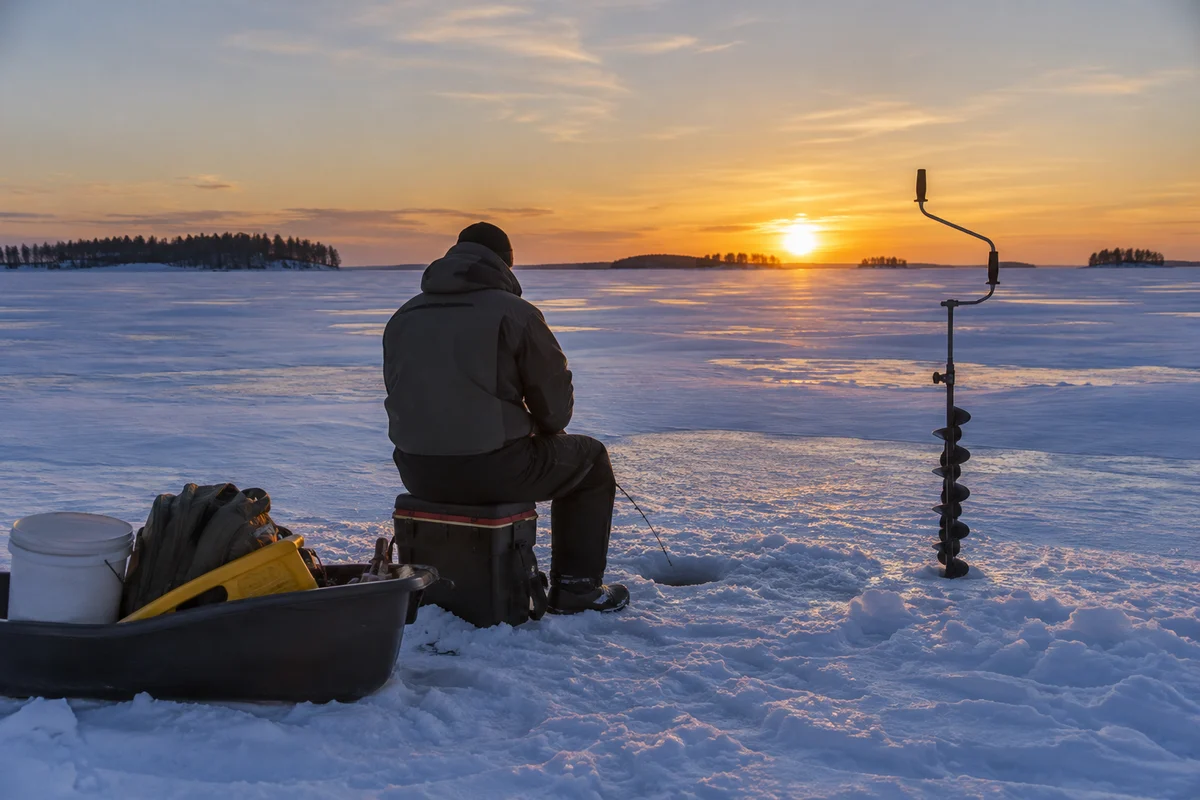
Lake of the Woods is a vast, cross-border fishery, and ice fishing Lake of the Woods requires more than picking a promising spot on a map. Ice, snow, wind, access, and regulations can differ across the lake and change quickly. Treat every trip as a fresh decision: confirm where you can travel, check current local conditions, and be ready to turn around if the information or the ice does not support your plan.
This guide is for trip planning, not a claim that any route or area is safe today. No report can certify the exact stretch of ice you will encounter. Local authorities, resort operators, guides, and other experienced people can provide useful recent information, but each visitor remains responsible for assessing conditions and following applicable rules.
Start with access, not a fishing spot
Lake of the Woods spans Ontario, Manitoba, and Minnesota. Your launch point determines which jurisdiction’s fishing rules apply, what roads or trails are open, and what services may be available. Decide which side of the border you intend to fish before packing, then consult that jurisdiction’s current regulations and official travel guidance.
Ask an access provider or local authority specific questions: Which routes are open today? What kinds of vehicles are permitted? Are there marked trails, and where do they end? Are there known pressure ridges, cracks, or areas of moving water nearby? When was the information last updated? A general statement that “the lake is good” is not a route report.
If you are unfamiliar with the area, consider a guided trip or established access service. Follow posted boundaries and instructions, and never assume a track remains safe simply because another vehicle used it earlier. For general precautions to build into your plan, review these ice fishing safety tips and ice fishing safety sticks.
Check conditions repeatedly
Ice thickness alone cannot describe ice quality or certify a route. Ice can vary over short distances because of currents, inflows, springs, wind, changing water levels, snow cover, and pressure ridges. Snow can hide cracks and open water; a route that was passable yesterday may be unsafe today. Do not use a single measurement, online post, or trail as a guarantee.
Before leaving, look for current reports from the specific access point you plan to use. Check weather forecasts and warnings, including wind and visibility. On arrival, reassess: observe the shoreline and route, note fresh cracks or water, and follow the advice of local authorities. If you cannot establish that the route is appropriate for your group and travel method, choose a different activity or postpone.
Carry a charged phone in a protected, accessible place, but do not rely on cellular service. Tell someone your route and return time. Travel with a companion when possible, keep the group together, and avoid crossing unverified areas. If conditions deteriorate, retreat by the route you know rather than pressing farther out.
Plan gear around exposure and mobility
Cold-weather comfort is a safety issue because fatigue and poor dexterity can make ordinary tasks harder. Dress in layers that can be adjusted while moving, protect exposed skin, and bring dry backup gloves and socks. Check that clothing allows you to move freely and that flotation or safety equipment is worn as intended rather than buried in a sled.
A compact checklist helps expose gaps before departure:
| Need | What to prepare | Why it matters |
|---|---|---|
| Current information | Local route update, forecast, regulations, contact details | Conditions and rules vary by location and date |
| Communication | Charged phone, backup power, trip plan shared with someone | Coverage and battery life can be limited in cold weather |
| Personal safety | Appropriate flotation, ice picks, whistle, first-aid supplies | Keep emergency equipment accessible and know its intended use |
| Warmth | Adjustable layers, face and hand protection, dry spares | Wet or wind-exposed clothing quickly reduces comfort |
| Fishing basics | Rods, line, a small selection of lures, bait where legal | A focused kit is easier to manage on the ice |
| Return plan | Fuel or power reserve, daylight margin, route check | Avoid being forced to travel in worsening conditions |
This is a planning aid, not a substitute for training or official safety guidance. Learn how to use any emergency equipment before you need it. Keep sharp tools secured, and do not let fishing activity distract from changing weather or route conditions.
Choose a simple fishing approach
Lake of the Woods is known for multiple species, but target opportunities depend on location, season, regulations, and current conditions. Before choosing tackle, check local rules for species, season dates, size limits, possession limits, bait, and any special area restrictions. Do not assume one side of the lake follows the same rules as another.
For a first outing, keep the setup manageable: a small selection of lures suited to your target, a reliable rod and reel, line appropriate to the presentation, and only the tools needed to handle fish responsibly. A basic ice fishing combo guide can help you think through rod-and-reel choices without turning the trip into a gear haul. For lure selection, see this overview of jigs for ice fishing; match any lure or bait to the rules where you will fish.
Use a map and local advice to understand the area, but do not treat structure shown on a map as proof of safe ice or a guaranteed bite. Keep notes about weather, location, depth if known, and presentations that produced interest. A calm, methodical change—such as adjusting lure size or cadence—is more useful than changing everything at once.
Respect the lake and the rules
Carry out line, bait containers, food packaging, and other waste. Keep fish handling efficient and follow local retention and release requirements. Regulations can change, and special rules may apply to particular waters or seasons; consult the responsible agency’s current materials rather than relying on an old article or informal recollection.
Be considerate around other anglers, access points, homes, and working communities. Give other groups room, avoid blocking routes, and follow instructions about parking and travel. On a lake this large, the most productive-looking route may still be inappropriate if it crosses a restricted or uncertain area.
A go-or-no-go framework
Use three questions before setting out and again when conditions change:
- Is the information current and specific? If reports do not cover your access point and intended route, uncertainty remains.
- Can the whole group travel safely by the planned method? A route suitable for one vehicle or experienced group may not suit another.
- Can you return with a margin? Consider weather, daylight, visibility, fatigue, and the time needed to retreat.
A “no” or “not sure” is a reason to stop, ask more questions, select a safer alternative, or reschedule. No fish is worth taking a route you cannot verify.
The best Lake of the Woods outing is one planned with humility: check regulations, use current local information, carry appropriate safety gear, and remain willing to change plans. Conditions are never uniform across the lake, and a careful decision to stay off the ice is still good judgment.
For more, explore our ice fishing guides.
Frequently asked questions
When is Lake of the Woods safe for ice fishing?
There is no fixed date or universal thickness that makes the entire lake safe. Conditions vary by location and weather; consult current local authorities and access providers, and assess the specific route.
Do fishing regulations differ around Lake of the Woods?
Yes. The applicable jurisdiction and local area determine the rules. Check current regulations for the exact location, species, season, and method before fishing.
What should I ask before using an ice road or trail?
Ask whether it is open today, which travel methods are permitted, where it runs, what hazards are known, and when the report was last updated. Do not treat a route report as a guarantee.
What safety equipment should I bring ice fishing?
Prepare accessible, appropriate flotation and emergency equipment, communication and backup power, first-aid supplies, warm layers, and a shared trip plan. Learn how to use equipment before the outing.
Sources & further information
Consult these primary sources for current regulations, technical information and local guidance.