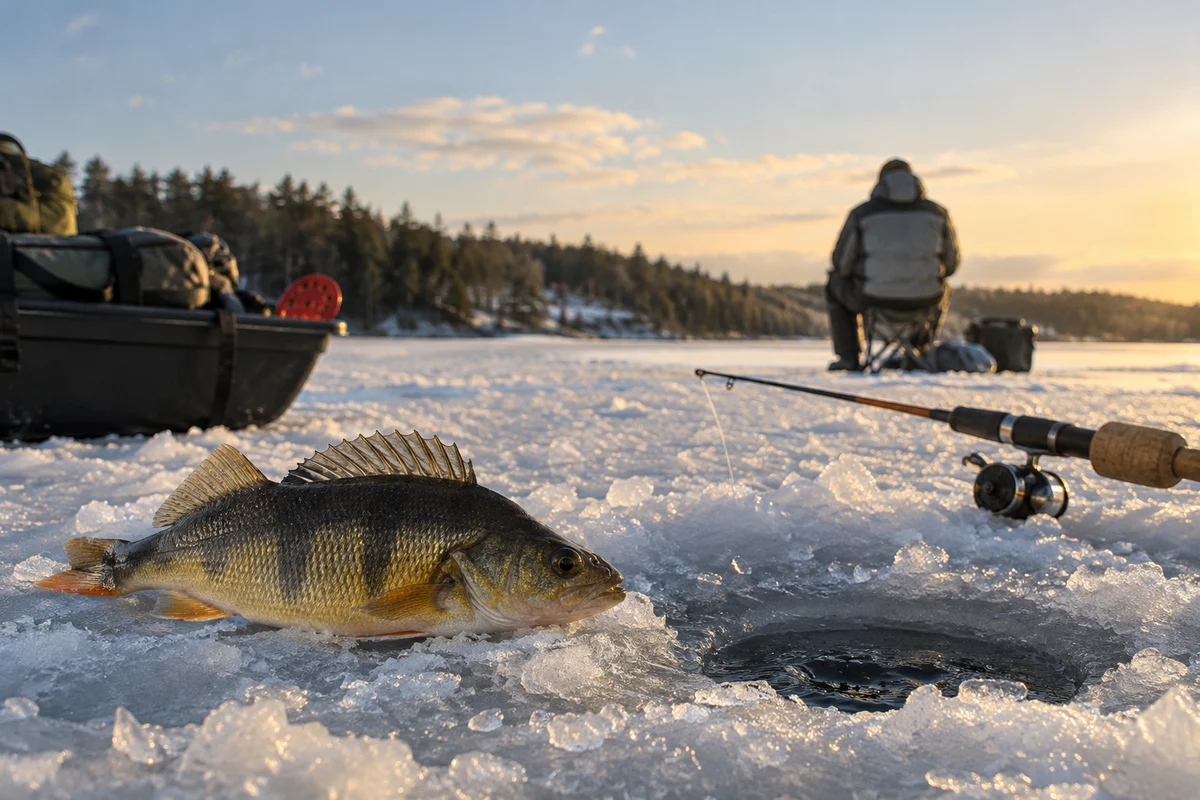
Ice fishing safety tips: a practical guide to safer ice
Ice can vary sharply across a lake and change with weather, currents, and human activity. Use this practical framework to plan conservatively, recognize warning signs, and know when to turn back.
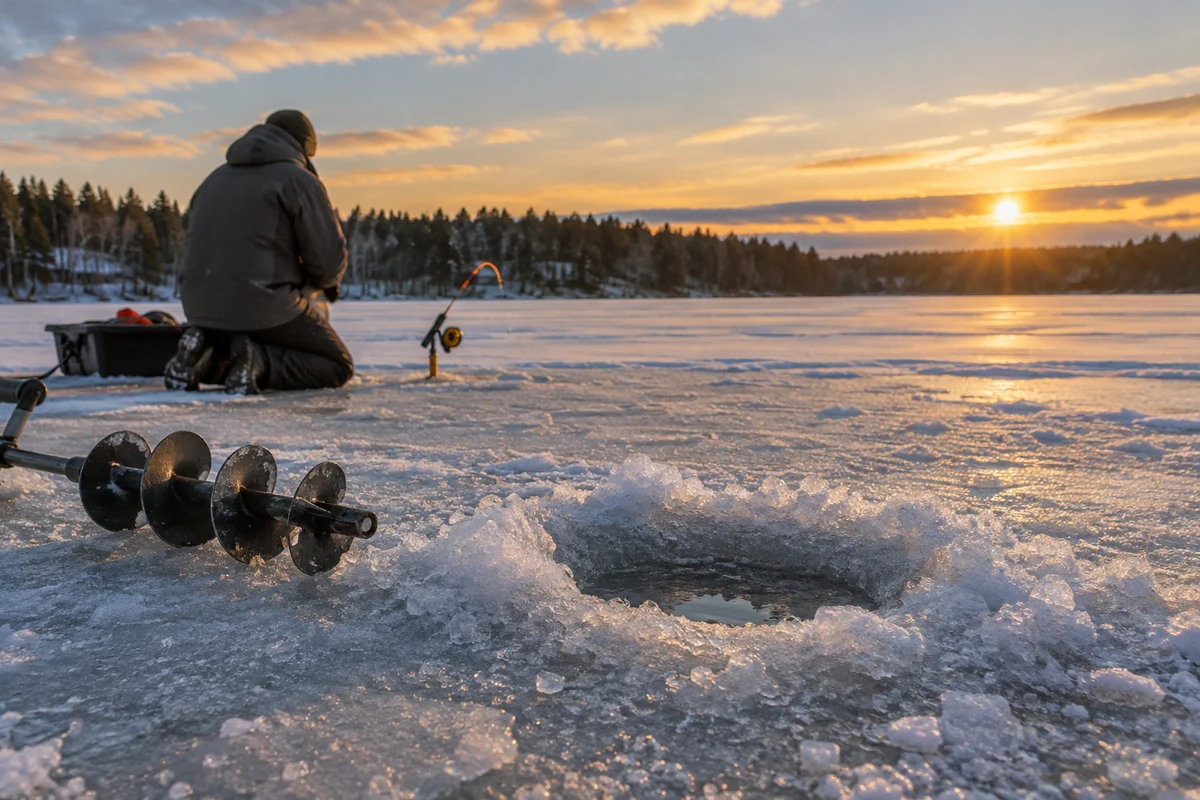
Ice fishing safety tips begin with one essential fact: no ice is guaranteed safe everywhere or for the entire day. Thickness can change within a few steps, and snow, current, springs, pressure cracks, and fluctuating temperatures can hide hazards. Treat every outing as a fresh assessment—not a routine—and be willing to cancel or retreat.
Check local conditions before leaving
Start with current guidance from the state or provincial agency responsible for waterways. Ask local authorities or a reputable bait shop about recent conditions, but treat reports as observations from particular places and times, not a lake-wide clearance. A route that was passable yesterday may have changed overnight.
Check the forecast for air temperature, wind, precipitation, and temperature swings. Wind can push floating ice, open leads, or shift pressure ridges; rain and warm spells can weaken surfaces. On rivers, channels, narrows, bridges, culverts, and areas near dams, moving water can make ice unreliable even during sustained cold. Springs and inflows can also create thin patches.
Plan where you will go, how you will return, and when someone on shore should expect to hear from you. Share the access point and route with a trusted person. If the lake is unfamiliar, conditions are uncertain, or local officials advise against travel, choose another activity.
Assess the surface, not just the calendar
There is no single thickness number that makes a whole lake safe. Ice strength depends on its quality, structure, location, and recent weather, as well as the load on it. Clear, solid-looking ice and white or snow-covered ice are not interchangeable; layers can conceal slush, cracks, or weak spots. A reading at one hole tells you only about that point.
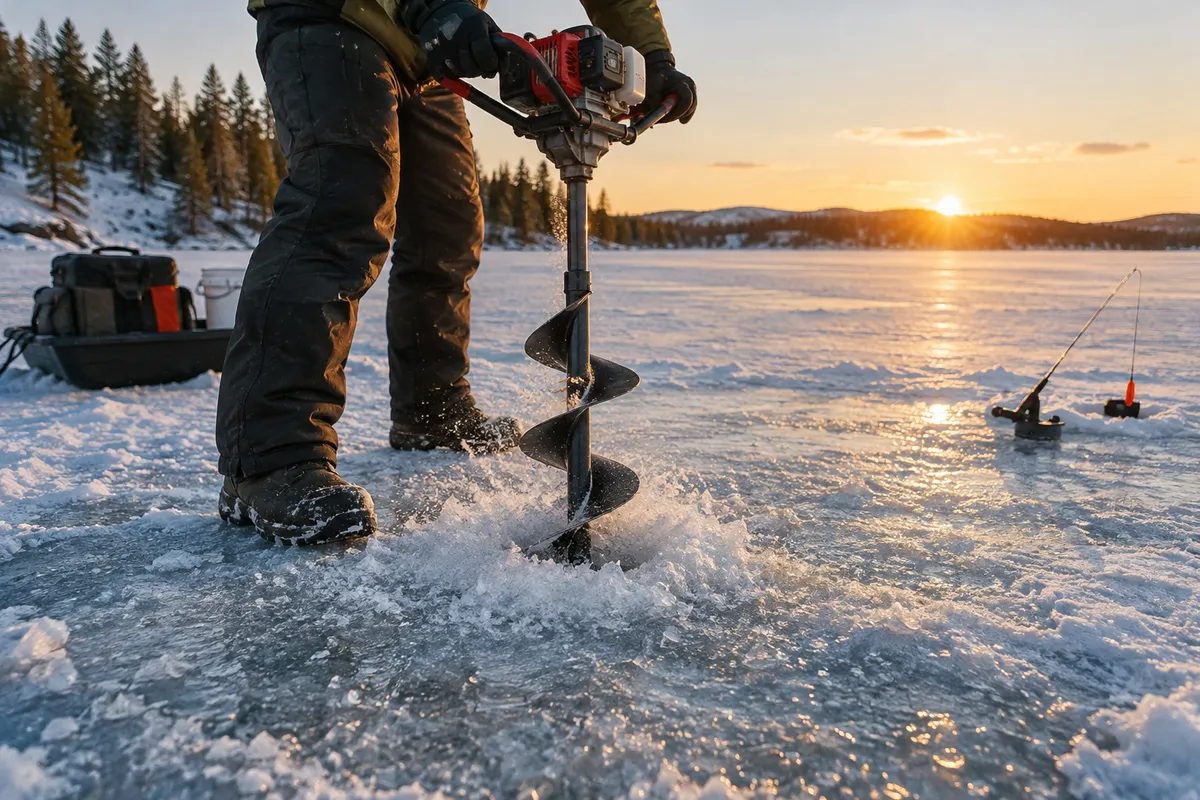
Move slowly and keep checking conditions as you go. Use an appropriate ice chisel or spud bar to probe ahead, and stop if you encounter unexpectedly soft, slushy, or fractured ice. Do not assume a familiar route is safe because it was used before. Avoid areas with visible flowing water, open seams, unusual discoloration, wet spots, or pressure ridges unless local experts have specifically assessed them as passable.
A useful rule is to turn around early, before a questionable stretch becomes the only way home. If you cannot confidently assess the route, do not proceed.
Build a simple go-or-no-go decision
| Check | Go only if | Stop or change plans if |
|---|---|---|
| Local advice | Current guidance supports the chosen area and activity | Advisories warn of unsafe conditions, or reports are unclear |
| Ice and route | You can assess the route continuously and avoid suspect features | You find thin, wet, slushy, cracked, or moving ice |
| Weather | Forecast and visibility allow a timely return | Wind, precipitation, warming, or poor visibility may trap or disorient you |
| People and gear | You have a partner, communication plan, and rescue equipment | You are alone without a reliable plan, or essential gear is missing |
| Return plan | The route back remains clear and conditions are monitored | Conditions change or the return route becomes uncertain |
This is a conservative planning aid, not a guarantee. Local rules and conditions take precedence, and a “go” on one row cannot cancel a serious warning on another.
Carry rescue and communication equipment
Wear a properly fitted flotation garment designed for cold-water exposure, and dress in layers that remain useful if outer clothing gets wet. Carry ice picks where you can reach them quickly, not buried in a pack. A whistle can help attract attention; a charged phone in a waterproof case can help you call for assistance, although cold reduces battery performance and coverage may be limited. Keep the phone warm and tell your contact when plans change.
A throw rope is useful when traveling with others. Keep it accessible, and know how to throw it from a stable position without moving onto suspect ice. A small emergency kit, dry insulating layers sealed in a waterproof bag, and a headlamp can support a safer return. Bring traction appropriate to the surface and avoid carrying gear in a way that prevents quick movement or access to rescue equipment.
For a broader look at equipment that can support mobility and warmth, see our guide to ice fishing safety sticks and the overview of hub ice shelters. Equipment helps only when it is accessible and you know its limits; it does not make weak ice safe.
Travel with a partner and keep space
Whenever possible, go with another person and keep enough distance that you are not loading the same small area. Avoid gathering a group tightly around one hole or moving together onto a questionable section. Agree on signals, a turnaround point, and what each person will do if the other falls through. Do not let a shelter, vehicle, or heavy load tempt you onto ice you would not otherwise cross.
Never drive onto ice unless local authorities explicitly allow it and the route has been assessed for that vehicle and current conditions. Even then, follow local requirements, keep occupants belted when directed by authorities, and know how to exit promptly if an emergency occurs. A vehicle’s weight and momentum introduce hazards that foot travel does not.
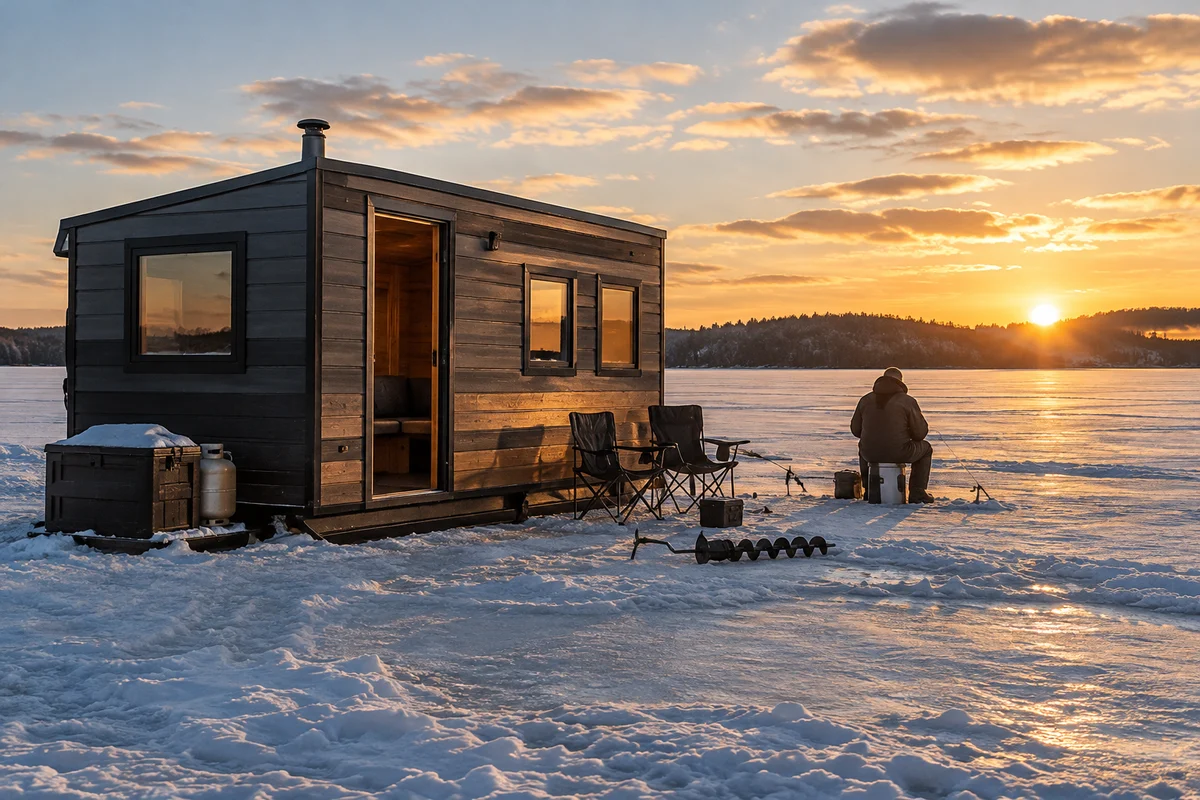
Shelters can block wind and improve comfort, but they can also reduce visibility and make it easier to lose track of weather or surrounding conditions. Check outside regularly and secure a shelter against wind according to its instructions. If weather worsens, pack up and leave while the route remains manageable.
If someone falls through
A fall into icy water is an emergency. Call emergency services as soon as possible, and give a clear location. Do not rush onto the same weak area: a rescuer can become another victim. From a stable position, extend or throw a rope, branch, or other long object if available, keeping as much distance as possible. Follow dispatcher instructions and local emergency guidance.
If you fall in, focus on staying calm and keeping your airway clear. Use ice picks if you have them, turn toward the direction you came from, and try to work back onto the surface without standing immediately. Once out, move away from the break using a low profile and seek urgent help and warmth. Cold-water immersion can cause serious injury even when someone appears alert; do not treat a successful exit as proof that medical care is unnecessary.
These are general emergency principles, not a substitute for hands-on cold-water and ice-rescue training. A group should learn its local emergency procedures before the season, not during an incident.
Make the conservative choice
A productive fishing plan is never more important than a safe return. Check local guidance, assess the route continuously, carry accessible rescue equipment, communicate your plan, and leave when conditions become uncertain. If the ice, weather, or your own assessment raises doubt, fish from shore or postpone the trip.
For trip planning and gear context, browse the freshwater ice-fishing hub and our overview of ice-fishing shelters. Keep in mind that gear recommendations cannot replace current local ice information or sound judgment.
Frequently asked questions
Can a thickness measurement prove an entire lake is safe?
No. Ice varies by location and over time, and one measurement describes only that spot. Check conditions continuously and follow current local guidance.
What should I carry for ice fishing safety?
Consider accessible ice picks, a flotation garment, a whistle, a charged phone protected from water and cold, and a throw rope when traveling with others. Learn to use your equipment before heading out.
Are rivers and lakes equally predictable in winter?
No. Current, springs, inflows, dams, bridges, and culverts can weaken ice, especially on moving water. Avoid uncertain areas and consult local authorities.
What should I do if someone falls through the ice?
Call emergency services, avoid rushing onto the weak area, and try to reach or throw a rope or long object from a stable position while following dispatcher instructions.
Sources & further information
Consult these primary sources for current regulations, technical information and local guidance.