Elk Hunting Tips: Read the Country, Plan the Hunt
Good elk hunting starts with understanding the landscape and the rules, then adapting to wind, weather, animal behavior and your own limits. Use this field framework to prepare deliberately and make sound decisions in unfamiliar country.
Elk hunting tips are most useful when they help you make decisions in the field, not promise a shortcut to an animal. Elk move through varied terrain, hunting conditions change quickly, and regulations differ by place and season. A practical plan combines current local rules, careful scouting, realistic physical preparation and a willingness to change course when conditions do not support the original idea.
Start with the hunt you are legally and physically prepared to undertake. Identify the unit or property, season dates, license and tag requirements, access rules, weapon restrictions and any reporting obligations through the relevant wildlife agency. Then study the landscape at a scale that makes decisions possible: where you can enter, where you can travel safely, and how you will return if weather or daylight changes your plan.
Begin with regulations and access
Before choosing a route, confirm what is open and what is allowed. Regulations may vary between units and can change from year to year. Verify season dates, legal animal definitions, method-of-take rules, boundary lines, road closures, motorized access and special restrictions using the current official regulations—not an old map, social post or last season’s notes.
Land access deserves equal attention. On public land, check agency maps and posted notices for closures, fire restrictions and seasonal limitations. On private land, obtain explicit permission and understand where it applies. A line on a map is not permission to cross a property, and a road shown online may be closed or unsuitable. Keep a saved offline map, but treat signs and current agency information as authoritative.
Use the big-game hunting hub to explore related planning and field topics. For hunts involving records or claims about exceptional animals, the world record elk overview is a useful reminder to distinguish verified information from rumor; official recordkeepers define their own measuring and verification processes.
Scout for patterns, not guarantees
Scouting is about forming and revising hypotheses. Look for the combination of cover, food, water, terrain and access that could make an area useful at a particular time. Maps and aerial imagery can help you identify ridges, drainages, openings and likely travel corridors, but they cannot tell you exactly where elk will be. Recent weather, human activity, forage conditions and hunting pressure may change animal movement.
When possible, gather observations at different times without disturbing animals unnecessarily. Note fresh sign, tracks, droppings, feeding areas and routes between cover and open ground. Record when and where you observed them, alongside wind and weather. A single sign is weak evidence; repeated observations that fit a broader pattern are more useful. Avoid treating a well-used trail as a promise that animals will be there when you return.
Build a short list of alternatives rather than betting the hunt on one basin or access point. For each option, note how you would reach it, the likely wind exposure, the escape route, the distance back to camp or vehicle, and what would make you leave. Keep sensitive wildlife locations private and follow local guidance about disturbance and closures.
Let wind and terrain shape your approach
Wind can carry human scent and also affect how clearly you hear and interpret sounds. Check it often, especially after a change in terrain or weather. A breeze that seems steady on an exposed ridge can shift in a drainage or near a slope. Treat wind tools as one input, not a guarantee: terrain, thermal movement and changing conditions can make scent travel unpredictable.
Choose a route that lets you move quietly and see enough to make safe decisions. Thick vegetation may conceal movement but also reduce visibility. Open slopes can improve sight lines while exposing you to weather and making approach difficult. There is no universally best terrain; the right choice depends on legal access, wind, cover, visibility, your experience and the animal’s likely response.
Avoid pushing closer merely because you have found sign or heard a call. Pause, assess the wind and terrain, and ask whether continuing would increase disturbance or create an unsafe shot opportunity. If you cannot positively identify an animal, know what lies beyond it and remain within your legal and personal limits, do not take the shot. Identification and a clear, safe background take priority over urgency.
Choose calls and observation carefully
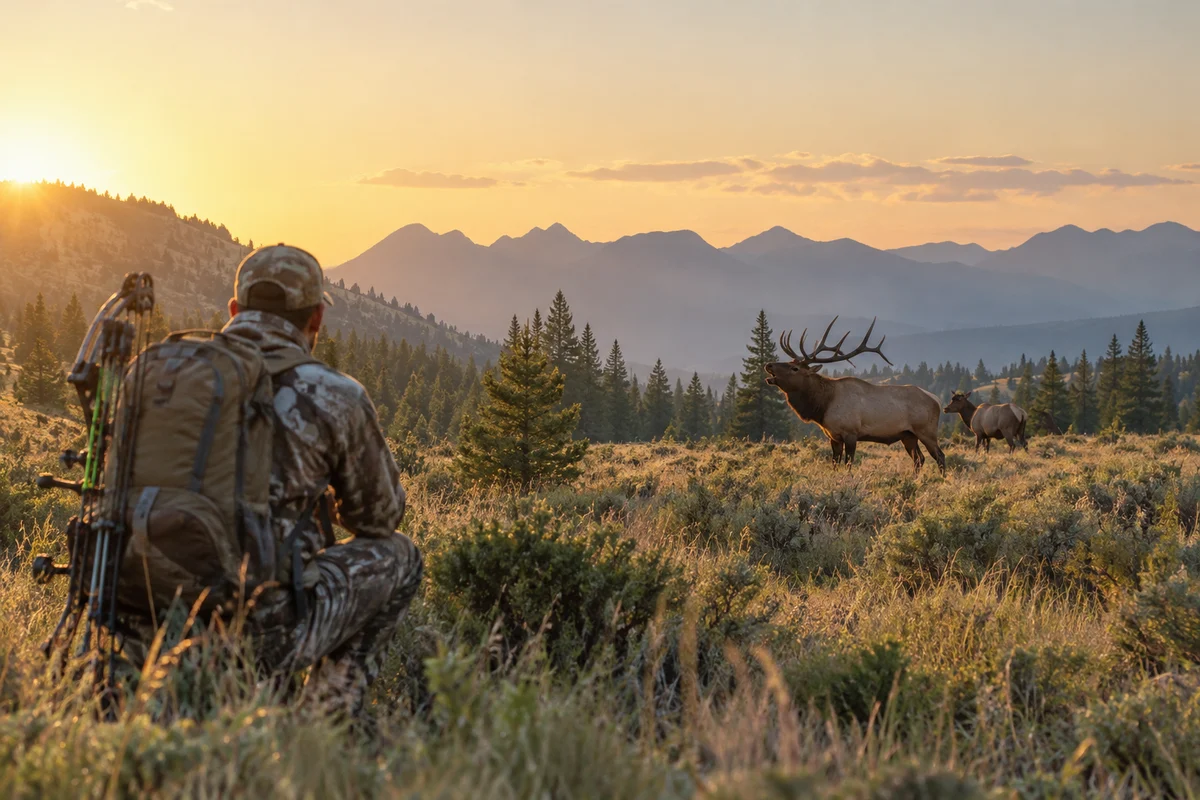
Calling may be part of some elk hunts, but it is not a substitute for locating animals or reading conditions. Calls can attract attention, have no effect, or alert animals that something is wrong. Use calls only where lawful and appropriate, and learn local practices before the season. When other hunters may be nearby, take extra care to identify people and maintain safe separation; never move toward a sound or silhouette without confirming what it is.
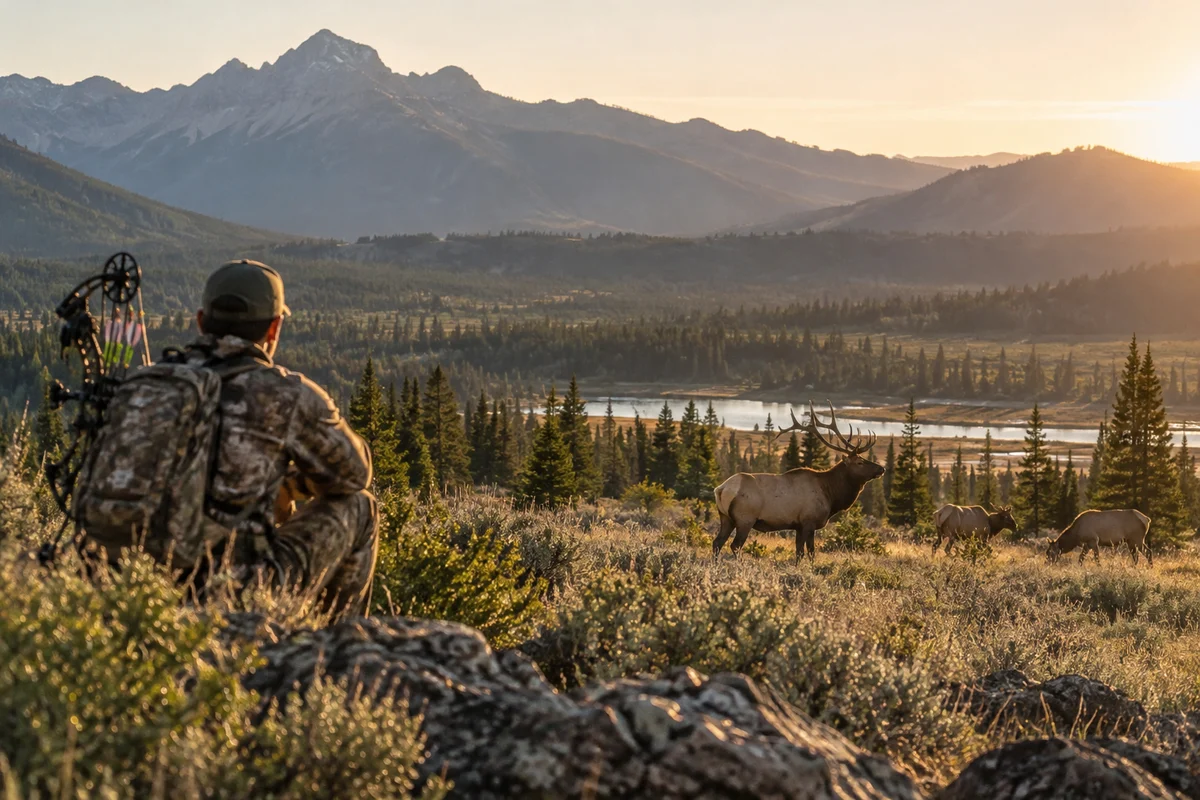
Quiet observation can be just as valuable. Pause at vantage points, scan likely openings methodically and listen before changing position. If conditions are poor—wind is wrong, visibility is limited, or animals are moving away—reset rather than forcing an approach. A patient decision to wait or relocate can protect both the hunt and the landscape.
Prepare for distance, weather and uncertainty
A successful outing is not measured only by harvest. Remote terrain can turn a routine walk into a demanding day, and cold, heat, precipitation or smoke can change the risk quickly. Build fitness gradually for the expected elevation and pack weight. Practice walking on uneven ground with the gear you intend to carry, and plan a route within your actual capacity rather than an idealized pace.
| Planning question | What to check | Decision point |
|---|---|---|
| Is the area legal and accessible? | Current regulations, boundaries, closures and permission | Do not enter until uncertain access is resolved |
| Can I return safely? | Distance, elevation, daylight, weather and exit routes | Set a turnaround time before leaving |
| Are conditions suitable? | Wind, visibility, temperature, precipitation and fire notices | Relocate or stop if conditions exceed your limits |
| Can I identify a safe opportunity? | Positive identification, legal criteria, background and other people | Pass if any essential element is uncertain |
| What if plans change? | Offline map, communication method, first aid and emergency plan | Tell someone the route and check-in time |
Carry navigation that works without cell service, a charged phone or other suitable communication device, water, food, weather-appropriate layers, a headlamp and a basic first-aid kit. Choose equipment for the specific trip and know how to use it before leaving. Tell a trusted person where you plan to go, when you expect to return and what to do if you miss a check-in. Do not rely on a single battery-powered device or assume help can reach every location quickly.
Make safety part of every decision
Hunting safety is a continuing process, not a final check at the moment of a shot. Keep firearms handled according to established safety rules and applicable law, maintain control of the muzzle, and keep the action and safety status appropriate to the circumstances. Identify the target and what is beyond it. Never shoot at movement, sound or an obscured shape. Store firearms securely when not in use, especially around children and others who should not have access.
Wear required hunter-orange clothing where regulations call for it, and consider visibility to other people even where it is not mandatory. Know how to contact local emergency services and how to describe your location. Weather, injury, fatigue and disorientation can impair judgment; agree in advance that anyone in the group may call for a stop or return without pressure.
For broader field awareness, see these bear safety tips. Bear presence, food storage requirements and response guidance vary by region, so check the local wildlife agency’s advice and follow posted rules. Keep food and scented items secured as directed, and do not approach or feed wildlife.
If you harvest an elk
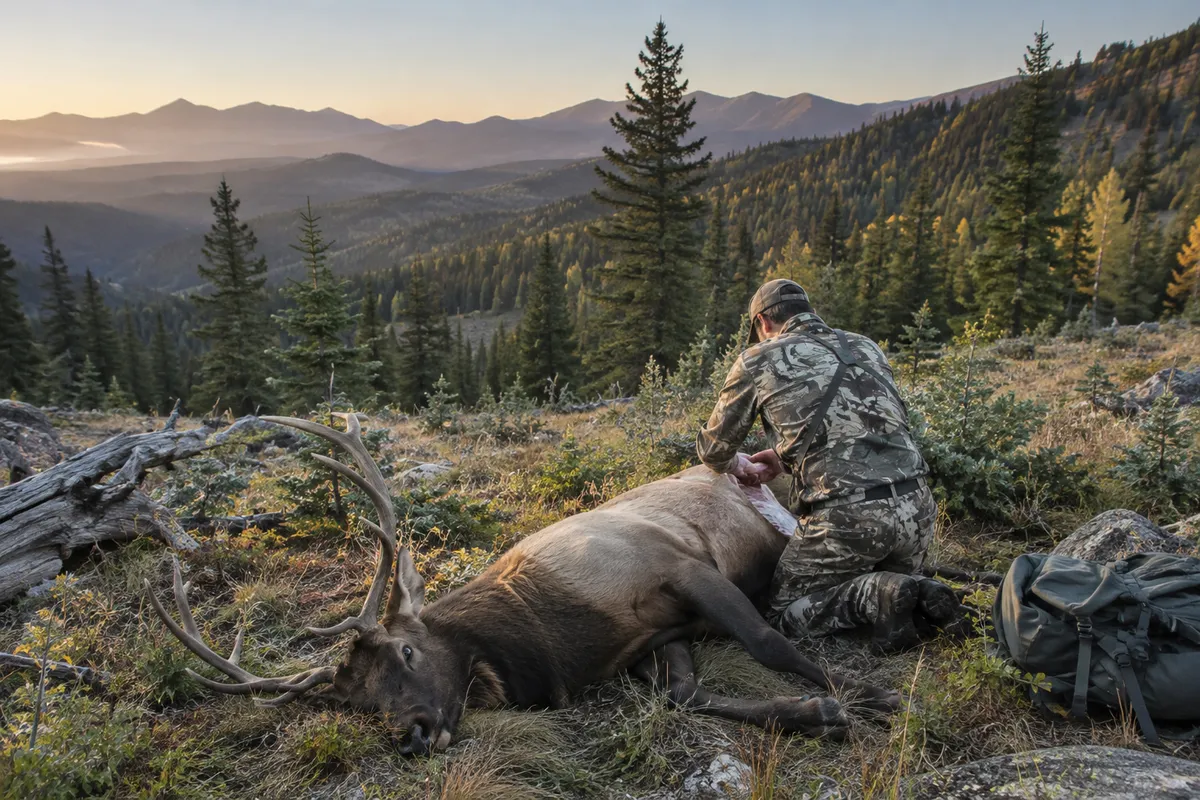
A harvest creates new responsibilities. Follow the local agency’s requirements for validating a tag, reporting the harvest, transporting the animal and preserving any required evidence of sex or species. Those details vary by jurisdiction, so confirm them before the hunt and carry the relevant instructions. Plan for field care and retrieval realistically: distance, temperature, terrain, available help and daylight all matter. If you do not know how to meet local requirements or care for meat safely, learn from a qualified local source before the season.
Do not let a difficult recovery become a reason to ignore boundaries or safety. Mark the location, use lawful access, communicate with your group and seek appropriate help when needed. If an animal is wounded, follow local rules and responsible tracking practices, and notify the relevant authority where required.
A flexible plan is the strongest plan
The best elk hunting tips are grounded in preparation and restraint. Confirm rules and access, scout for patterns rather than certainties, account for wind and terrain, and set clear limits for weather, time and physical effort. Make safety and positive identification nonnegotiable. A hunt may call for a new route, a longer pause or an early return; adapting is part of sound field judgment, not a failure of planning.
Frequently asked questions
What should I check before an elk hunt?
Confirm current season dates, license and tag requirements, legal animal definitions, access permissions, closures and method-of-take rules with the relevant wildlife agency.
How should I use elk sign while scouting?
Treat tracks, droppings and trails as clues, not guarantees. Record repeated observations with time, location and conditions, then revise your plan as weather and activity change.
How do wind and terrain affect an elk approach?
Wind direction, shifting terrain currents, cover and visibility can all affect an approach. Recheck conditions often and abandon it if you cannot move safely or maintain a clear, lawful opportunity.
What safety preparations matter on a remote hunt?
Plan navigation and an exit, check weather and daylight, carry suitable water and emergency essentials, tell someone your route and return time, and identify every target and what lies beyond it.
Sources & further information
Consult these primary sources for current regulations, technical information and local guidance.