Field Judging Elk: A Practical Guide to Reading Antlers
A practical framework for estimating elk antler characteristics from a lawful, safe viewing position. Learn what you can judge, what angle can mislead you, and why field impressions are not official measurements.

Estimating an elk’s antlers at a distance is a skill of observation, not a substitute for an official measurement. Field judging elk means comparing visible features—beam length, tine length, mass, symmetry and spread—while allowing for distance, cover, posture and viewing angle to distort what you see. A careful estimate can help you describe an animal or make a lawful, responsible hunting decision; it cannot establish a record score from a single glance.
Start with a clear purpose. If you are watching elk, take time to observe without pressuring them. If you are hunting, follow the regulations and conditions for your unit, identify the animal positively, and make decisions only when you have a safe, lawful opportunity. Antler appearance never overrides species identification, a legal requirement, a safe backstop or respect for other hunters and wildlife.
What field judging can—and cannot—tell you
Most antler-scoring systems convert a set of measurements into a standardized score. Depending on the system, measurements may include main-beam length, individual tine lengths, circumference at specified points, inside spread and deductions for asymmetry. Those details require a suitable view and, for an official result, a qualified scorer applying the current rules. A field estimate is not a score and should not be presented as one.
At a distance, you can make broad comparisons: whether the antlers appear light or heavy, whether the beams look long relative to the head, and whether the rack appears balanced or notably uneven. You may also be able to count visible points, but points can be hidden by overlap, vegetation or the angle of the head. Do not assume that a rack visible from one side is complete or symmetrical.
For record categories and verification, consult the official recordkeeping organization rather than relying on a photograph or a field impression. The Boone and Crockett record book guide offers context on why standardized rules and verification matter. For the organization’s current information, see Boone and Crockett Club.
A repeatable field checklist
Use the same sequence each time. A consistent routine reduces the temptation to fixate on one dramatic feature, such as spread, and helps separate observation from guesswork.
| Feature | What to observe | Common source of error |
|---|---|---|
| Main beams | Direction and apparent length from the burr toward the tips | A beam angled toward or away from you looks shorter or longer |
| Tines | Number, relative length and spacing of visible points | Overlap, dark backgrounds and brush hide points |
| Mass | Thickness at several places along each beam | Shadows and distance make antlers look heavier or thinner |
| Spread | Width relative to the head, viewed as square-on as possible | A turned head changes apparent width dramatically |
| Symmetry | Similarity between the two sides | One side may be concealed or foreshortened |
| Whole animal | Body size and head position as context | Body proportions vary; posture changes the apparent rack-to-body ratio |
First, establish the view. Note whether you see the elk head-on, broadside, or at an oblique angle. A broadside view may reveal beam shape and tine sequence, while a head-on view can help compare spread—but neither view shows every feature equally well. If possible, observe the animal as it naturally turns. Do not approach, crowd, call, or otherwise disturb it merely to improve your view.
Next, compare proportions rather than guessing a number. Ask whether the beams extend well beyond the head, whether the tines are long relative to the beam, and whether the antlers retain noticeable thickness along their length. These comparisons are more defensible than claiming an exact spread or score without measurements.
Then check both sides. Look for a matching sequence of points and similar beam shape, but record uncertainty when a side is blocked. A rack may look unusually narrow because the far beam is hidden behind the near one. Conversely, a near beam angled toward the observer can exaggerate apparent length. If you cannot see a feature, mark it as unknown rather than filling the gap with an assumption.
Finally, step back mentally and describe the entire rack. Useful notes might say “heavy-looking beams, several long visible tines, far side partly obscured, head at an angle.” That description captures what was actually observable. “A specific score” implies measurements and rules that a distant view cannot provide.
Why angle and distance fool the eye
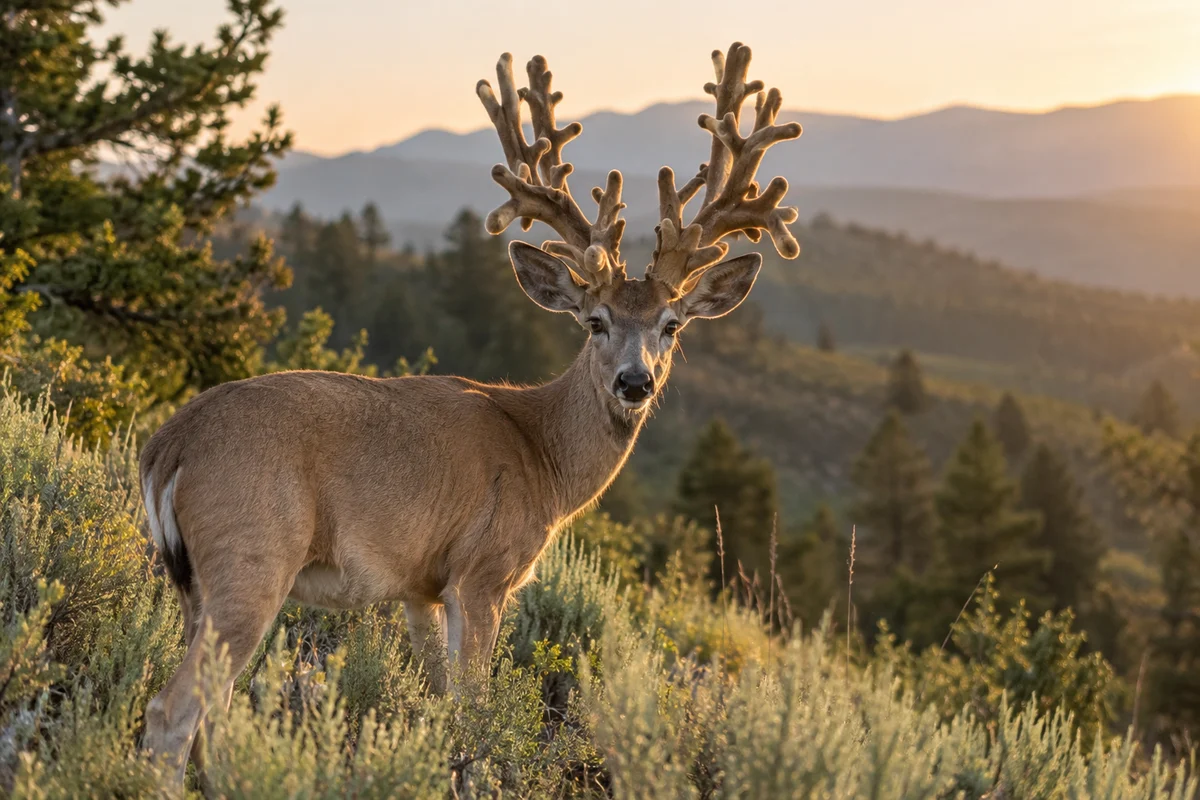
Perspective compresses depth. When one beam points toward you, its projected length is reduced; when it lies closer to the plane of your view, it appears longer. A head turned slightly can make a balanced rack seem uneven. The far antler may disappear behind the near one, and a dark tree line can erase the outline of a tine.
Distance adds other problems. Small details blur, and the brain tends to complete partial shapes into familiar patterns. Light changes the apparent thickness: backlighting can turn antlers into a flat silhouette, while bright side light creates shadows that exaggerate edges. Heat shimmer, rain, snow and vegetation further reduce confidence. Binoculars can help you observe from a distance, but magnification does not eliminate perspective or make an estimate official.
The animal’s posture matters too. A lowered or tilted head changes the visible span and makes the rack’s relationship to the body hard to compare. Avoid relying on a single frozen image or a single brief look. When observation is appropriate, use several calm views and note what remains uncertain.
A simple confidence framework
Before drawing a conclusion, rate the view rather than the elk. This keeps a weak observation from becoming a confident claim.
- High confidence in broad traits: Both sides are visible, the head is near a useful angle, and the outline is clear. You may describe relative mass, beam shape and visible tine pattern, but still avoid an official score.
- Moderate confidence: One side is partly hidden, the head turns, or distance softens details. Describe only the traits that remain clear and qualify the rest.
- Low confidence: The animal is moving through cover, strongly backlit, far away or seen briefly. Record the sighting without estimating antler dimensions.
This framework is about observation quality, not a guarantee of accuracy. There is no universal visual shortcut that converts a rack into an exact score. Scoring procedures and categories can differ, so verify the current rules with the relevant organization before comparing measurements or discussing record status.
Keep field judgment ethical and lawful
For hunters, antler estimation is only one small part of a decision. Check the current regulations for the exact location, season and license, including any definitions of legal animals or point restrictions. Regulations change, and rules can differ between jurisdictions and hunting units. Use the official wildlife agency for the area you are in; do not treat an old article, map or social post as current legal guidance.
Identify the animal and what is beyond it before taking any shot. If a safe, clear opportunity is absent, do not take it. Follow local firearm or archery requirements, safe handling practices and any land-access rules. After a harvest, follow the jurisdiction’s reporting, tagging, transport and inspection requirements. If you are uncertain about legality or identification, pause and seek guidance from the relevant agency or a qualified local authority.
Field observations can also inform conservation-minded behavior. Keep a respectful distance, avoid pushing animals from cover, and observe access restrictions and seasonal closures. To explore related conservation and record context, see ODU Magazine’s overview of the world record elk topic and the report on a Nebraska record elk claim. Those topics illustrate why claims should be checked against reliable documentation rather than inferred from appearance.
When you need a reliable answer
If the question is whether an elk qualifies for a particular record category, a field estimate is only a reason to seek proper verification—not the result. Preserve accurate photographs and notes where lawful, avoid altering or misrepresenting evidence, and contact the appropriate recordkeeper about current eligibility, measurement procedures and scorer requirements. For a hunting regulation question, consult the wildlife agency responsible for the precise location and date.
A useful field judgment is modest: it identifies visible traits, explains the viewing conditions and admits what cannot be known. The best observers do not confuse confidence with precision. By checking the angle, considering both sides, using a consistent checklist and verifying consequential claims through authoritative sources, you can describe an elk’s antlers more clearly without pretending that a distant view is a tape measure.
For more, explore our big game hunting guides.
Frequently asked questions
Can you accurately score an elk from a photograph?
A photograph can help document visible features, but perspective, lens distance, posture and hidden antlers limit accuracy. Official scores require the current measurement rules and a qualified process.
Which antler features should I look at first?
Observe beam shape and apparent length, visible tine pattern, mass, spread and symmetry. Note the viewing angle and any obstruction before drawing comparisons.
Does a wider-looking rack always have a greater score?
No. Apparent spread is affected by head angle and perspective, and scoring systems may include several other measurements and deductions.
Where can I verify whether an elk is a record?
Check the current rules and verification process with the official recordkeeping organization, such as Boone and Crockett Club, rather than relying on a field estimate.
Can field judging determine whether an elk is legal to harvest?
Not by itself. Check current regulations for the exact hunting area and season, identify the animal positively, and follow all safety and legal requirements.
Sources & further information
Consult these primary sources for current regulations, technical information and local guidance.