Ever Seen Atypical Mule Deer or Whitetail Racks?
A deer with many apparent points can prompt a memorable question, but unusual antlers are not proof of a record or even a reliable count. Here is how to assess the rack carefully and responsibly.
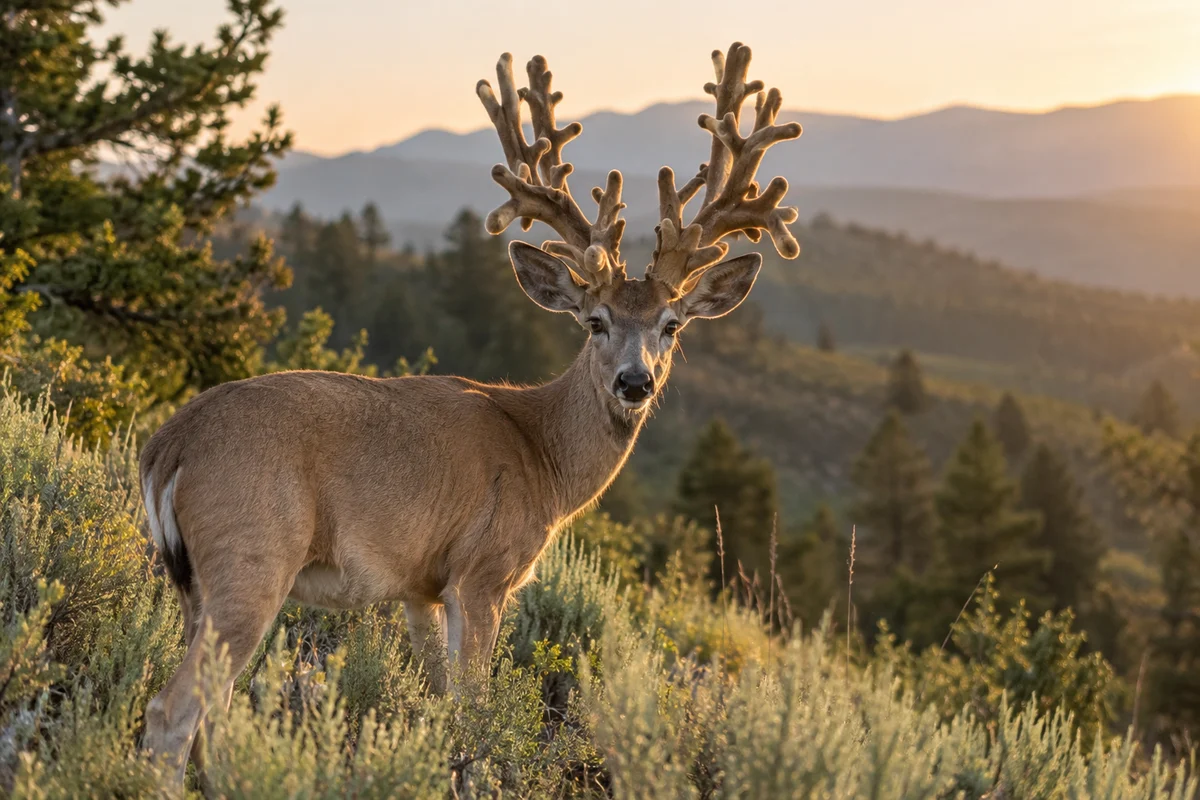
Atypical mule deer or whitetail racks can look startling in a photograph: extra tines, uneven beams, or antlers that seem to branch in several directions. But a striking silhouette is not enough to establish a point count, species, age, cause, or record status. If you encounter a deer described as a “30-point doe,” treat that wording as a claim to investigate—not a verified fact. A careful look at anatomy, image context, and record-keeping standards helps separate an unusual sighting from a confirmed measurement.
What does “atypical” mean in a deer rack?
Deer antlers usually grow as paired structures from pedicles on the skull. Their form varies, and some racks develop irregular growths or extra points that do not fit the familiar, symmetrical pattern. In scoring terminology, “typical” and “nontypical” describe the arrangement of antler features under a particular measuring system; they are not judgments about the animal’s health or worth.
The phrase “atypical rack” is often used casually for anything unusual. A formal scorer, however, follows specific rules about what qualifies as a point, how measurements are taken, and how abnormal points are recorded. Systems also differ by organization and species. A casual count of visible tips cannot substitute for an official score.
A high point count is not a species identifier. Whitetail and mule deer have different common antler shapes, but their ranges overlap in appearance, and a photo may conceal details needed for identification. In areas where species ranges meet, use several features—including ears, tail, face, body, and antler structure—rather than relying on one dramatic rack.
Can a doe grow antlers?
Female deer are generally antlerless, but antlered females are occasionally reported. A photograph of an antlered deer does not by itself establish that the animal is female. Antlers can be misidentified in a distant or obstructed image, and body shape or behavior may not settle the question. Sex identification is more reliable when observers can see relevant anatomy clearly and lawfully, rather than infer it from a caption.
There are also biological exceptions. Some female deer develop antlers in association with hormonal or reproductive conditions. The details are not always knowable from a field photograph, and a dramatic rack does not reveal its cause. Avoid labeling an animal as a doe solely because a post or headline does so; describe what the image actually shows and leave uncertain details open.
How should you count apparent points?
Begin with a clear, full view of both sides of the rack. Distinguish the main beam from projecting tines, and look for places where branches overlap. A tine can be hidden behind another antler, while a split or damaged tip can create a shape that resembles multiple points. Perspective matters too: a close antler may look much larger than the far one, and branches can appear to connect when they do not.
For a reliable count, use a series of unobstructed images from different angles, if they are available. Note which points you can actually see and which are uncertain. Do not count every small bump as a point under formal scoring rules; measurement systems set minimum and structural criteria. If a record claim matters, consult the relevant scoring organization and its current rules rather than applying a rule remembered from another system.
It is useful to keep three statements separate: “the photograph appears to show many points,” “an observer counted a particular number,” and “a recognized scorer verified a score.” Each represents a different level of evidence. A social-media caption is not an official measurement, and a record claim requires more than an impressive image.
What can make antlers look unusually branched?
Antlers are living tissues while growing and mineralized structures after hardening. Their shape reflects biology and development, but the appearance of an individual rack can also be affected by injury, damage during growth, and the angle or quality of a photograph. Without examination, it is not responsible to assign a cause to an unusual branch or asymmetry.
A single unusual rack does not prove that a local herd has changed, that a new genetic trait is spreading, or that a specific injury occurred. Those claims require evidence beyond one sighting. Even a clear image may not show the animal’s age, health, or history. The most useful account sticks to observable details: location at an appropriate level of privacy, date if known, habitat, image conditions, and what is visible from each side.
What makes a record claim verifiable?
First identify what kind of claim is being made. Is it a high point count, an unusual female, a species identification, a measured antler score, or a state or world record? These are not interchangeable. A verified registry entry, a qualified measurement, an anecdotal report, and a viral image carry different evidentiary weight.
Then look for documentation: the scoring organization, the applicable rules, the scorer or verification process, and any public record entry. Check whether the claim refers to a whitetail or mule deer and whether the score is typical or nontypical under that system. For a harvested animal, legal documentation and measurement procedures may also matter; requirements vary by jurisdiction. Follow local wildlife regulations and never approach or handle wildlife in a way that creates risk or violates rules.
If the story provides no source for its number, phrase it as an unverified report. That is more accurate than repeating an exact count as fact. For broader context on responsible big-game coverage, see more outdoor coverage, including our guide to Nebraska record elk claims and an overview of reported cougar sightings in Marquette County.
How to photograph an unusual deer responsibly
Observe from a lawful, safe distance. Do not crowd, chase, bait, or corner a deer to improve a photograph. Use a camera’s zoom rather than walking toward the animal, and keep roads, private property, and other people’s safety in mind. If the deer appears injured or distressed, contact the appropriate state wildlife agency instead of trying to handle it.
For documentation, take a few steady images from different angles when the animal is naturally visible. Include enough surroundings to convey distance and orientation, but avoid publishing sensitive location details if sharing them could encourage disturbance. Keep original files and avoid edits that alter antler shape. Cropping and brightness adjustments can help visibility, but filters, composites, and generative alterations should never be presented as documentary evidence.
A striking rack is a sighting, not a conclusion
Unusual antlers deserve curiosity, not instant certainty. Identify the species cautiously, distinguish visible features from inferred details, and verify formal scores through the organization responsible for them. If the animal is called a doe, remember that a caption cannot establish sex; if a post calls it a record, look for the registry and scoring documentation.
That approach preserves the wonder of seeing a rare-looking deer while respecting wildlife and the limits of a photograph. It also gives readers something more useful than a sensational number: a clear account of what is known, what remains uncertain, and how a claim could be checked.
Frequently asked questions
Is a 30-point doe automatically a record?
No. The phrase may describe an unverified visual count, and the animal’s sex may not be established by the image. A recognized record requires the applicable scoring and verification process.
Can you identify a mule deer or whitetail from antlers alone?
Not reliably in every case. Antler shape is one clue, but it varies and may be obscured by angle, age, or unusual growth. Use other visible characteristics and consult a credible wildlife reference when identification matters.
Should I approach an antlered deer to get a better photograph?
No. Keep a safe, lawful distance and use optical zoom. Do not pursue or disturb wildlife; report an injured animal to the appropriate wildlife agency.
Sources & further information
Consult these primary sources for current regulations, technical information and local guidance.