Coyote Hunting Tips for Safer, More Thoughtful Hunts
Good coyote hunting starts before the call: learn the ground, confirm the wind, and make a plan that puts safety and local regulations first. Use this field guide to build a repeatable approach and adjust when conditions change.
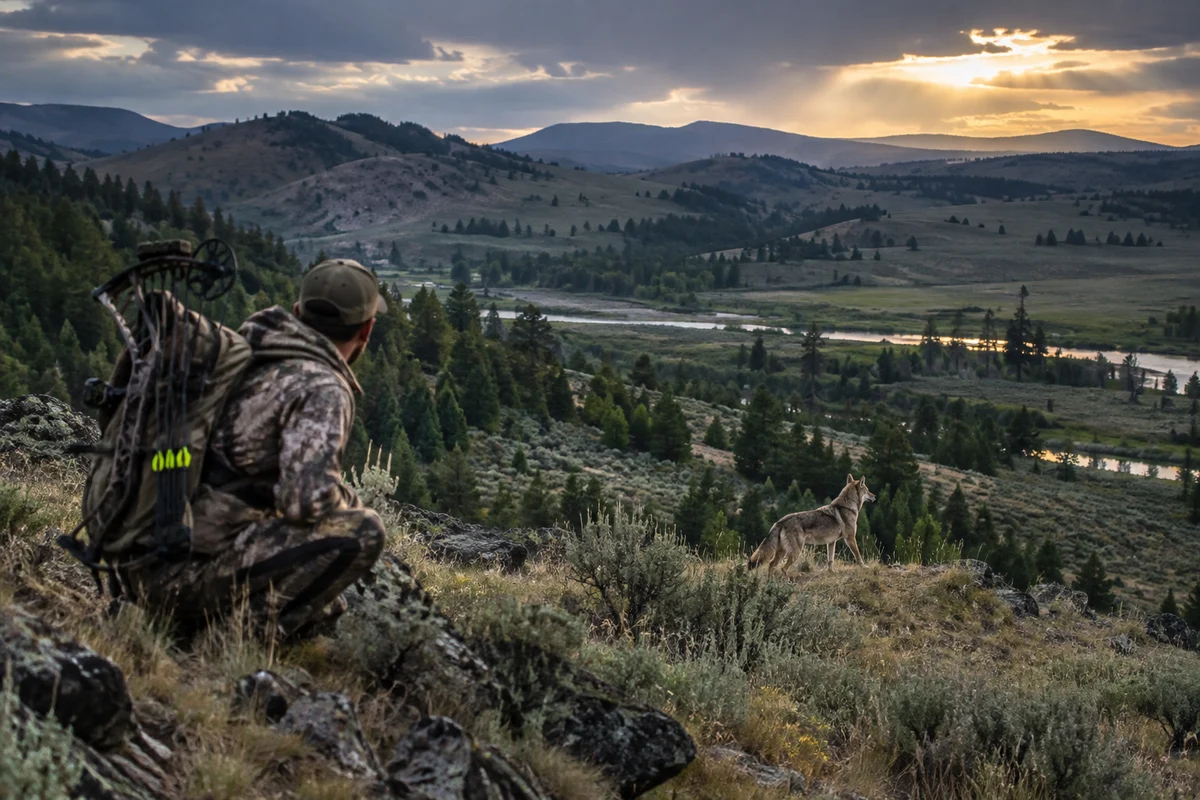
Coyote hunting tips are most useful when they help you make sound decisions in changing conditions—not when they promise a guaranteed response. Coyotes are adaptable, wary animals, and their behavior varies with season, food, pressure, weather, and local habitat. A careful hunt begins with permission and regulations, then moves through scouting, setup, calling, and a deliberate decision about whether a shot is safe and appropriate.
This guide focuses on general fieldcraft and responsible hunting. It does not replace local regulations, landowner requirements, or in-person instruction. Rules for seasons, legal equipment, methods, tagging, and night hunting differ by jurisdiction and can change; check the current rules before every outing.
Start with permission, rules, and a plan
Confirm written or clearly documented permission wherever required, and identify property boundaries before setting out. Public-land access rules may differ by unit, season, or land manager. Look up current state or provincial wildlife regulations, check for closures and special restrictions, and ask the relevant agency if a rule is unclear. Do not assume that a method permitted in one county or season is legal in another.
Share your route and expected return time with someone who is not on the hunt. Carry a charged phone or other communication device, a map that works offline, water, weather-appropriate clothing, and a first-aid kit. In remote country, plan for limited reception and changing conditions. Wear the legally required visibility clothing, and use additional conspicuous clothing when other hunters may be nearby.
Before choosing a stand, establish safe directions of fire and identify what lies beyond any likely target. Never shoot at sound, movement, or an animal you cannot positively identify. A coyote may appear near livestock, roads, homes, or other people; if there is any doubt about the target, background, or legal boundary, do not shoot.
Scout for travel, not just sightings
A sighting can tell you that a coyote passed through, but it does not by itself reveal a reliable route or schedule. Look for several clues together: tracks in soft soil or snow, scat, tracks along field edges, tracks at a crossing, and repeated observations from a landowner. Record where and when you find sign, along with wind direction, temperature, and recent weather. A small notebook or offline map can help distinguish a recurring pattern from a one-time passage.
Think about the landscape at a broad scale. Coyotes may use edges between cover and open ground, drainage lines, fencelines, or other travel features, but a feature that looks promising on a map may be noisy, inaccessible, or too exposed on the ground. Walk in quietly, avoid crossing the area you hope to watch, and leave enough room to approach without skylining yourself.
Scouting should also reveal human and livestock activity. Avoid stands near occupied buildings, roads, trails, livestock operations, or places where a shot could endanger people or animals. If you cannot determine the safe and legal boundaries of a location, choose another one.
For a broader overview of this hunting category, see the predator hunting hub. If your interest is a particular firearm topic, the overview of coyote hunting rifle cartridges discusses how to evaluate claims and fit without treating one choice as universally best.
Set up with wind and visibility in mind
Wind is a planning factor, not a guarantee. Before settling in, note the wind at your position and consider how it may carry scent toward likely approach routes. Wind can shift around terrain, vegetation, and buildings, so reassess rather than relying on a forecast alone. If conditions make a quiet, safe approach unlikely, delay or select another location.
Choose a position that lets you see likely openings while keeping your outline subdued. A natural backstop such as a substantial earthen bank can improve safety when it is present and appropriate, but it does not replace identifying the target and its full background. Keep the sun, vegetation, and terrain in mind: glare can reduce visibility, while dense cover may conceal people, livestock, or other wildlife.
Sit or stand where you can remain comfortable and still. Fidgeting, repeated scanning with large movements, and unnecessary noise may draw attention. Arrange essential items before beginning, silence alerts, and keep a clear path for leaving. Do not position yourself where a safe shot would require sweeping across a road, trail, occupied property, or another hunter’s likely location.
Calling: make a measured choice
Calls can imitate prey sounds or coyote vocalizations, but no sound is a dependable lure. Local coyotes may have heard similar calls, and responses depend on context. Electronic-call laws vary, and some places restrict particular devices or methods. Verify the rules first and use only calls permitted where you hunt.
Start at a modest volume suited to the distance and surroundings. A loud call in a small, quiet area can be conspicuous; a soft call may not carry in wind or across open ground. Give the sound time to work, watch likely approaches, and avoid changing sounds constantly just to fill silence. If you use a mouth call, practice beforehand so you can make a consistent sound without moving excessively at the stand.
Keep a realistic expectation: a coyote may investigate silently, approach from an unexpected direction, or never respond. A lack of response does not prove the area is empty. Likewise, hearing a vocalization does not establish that an animal is close or approaching. Stay alert, remain patient, and stop calling if another person, livestock, or a non-target animal enters the area.
A simple stand decision framework
Use this checklist before calling and revisit it whenever conditions change:
| Check | Proceed when… | Pause or leave when… |
|---|---|---|
| Permission and rules | Access and methods are confirmed for this place and date. | Boundaries, closures, or regulations are uncertain. |
| Wind and approach | You can enter without crossing the likely viewing area. | Wind shifts toward the approach or scent control becomes impractical. |
| Visibility | You can identify an animal and its background clearly. | Cover, glare, darkness, or distance prevents positive identification. |
| Safe direction | Any potential shot would have a safe, known background. | People, roads, homes, livestock, or unknown terrain are in the line of fire. |
| Other users | You know the area is clear enough to hunt safely. | Another hunter or public user may be in the shooting area. |
| Conditions | Weather and daylight allow a safe exit. | Visibility, footing, or weather makes the outing unsafe. |
This is a decision aid, not a substitute for training or legal requirements. The safest option is to pass on a shot whenever any essential check fails.
Shot discipline and what to do afterward
Take a shot only when you have positively identified the animal, know the target is legal, and can see a safe background. Be certain of your effective ability under the actual conditions; do not take a marginal shot because an animal may disappear. Avoid shooting toward a ridge, skyline, or any area where the projectile’s path or final resting place is unknown. If another hunter could be present, do not fire until the situation is clear.
After a shot, follow applicable tagging, reporting, and retrieval rules. Approach cautiously and maintain awareness of surroundings. If the animal is not immediately visible, do not rush through unfamiliar terrain or search in a way that risks another person’s safety. Follow local guidance for recovery and handling, and use appropriate hygiene precautions when handling wildlife.
When you encounter sign or an animal that raises a disease or public-safety concern, contact the relevant wildlife agency rather than making assumptions. For example, local agencies provide area-specific information about wildlife observations; the Michigan DNR’s wildlife resources are a starting point for Michigan questions. For details about equipment claims, consult the manufacturer directly; a predator choke overview is a reminder to distinguish general discussion from verified specifications.
Learn from each outing
A brief post-hunt note improves future decisions more than a dramatic story about one stand. Record the location in a private map, weather, wind changes, access route, call type, duration, and what sign you observed. Note where visibility or safety concerns changed your plan. Do not publish precise locations or share access details without permission.
Patterns can emerge over time, but treat them as local observations rather than rules for every coyote. If repeated activity suggests an issue involving livestock or public safety, coordinate with the landowner and appropriate wildlife professionals. Ethical hunting means respecting non-target wildlife, minimizing disturbance, recovering game responsibly, and accepting that a safe, uneventful stand is better than a risky opportunity.
Frequently asked questions
What is the best wind direction for coyote hunting?
There is no universal direction. Choose a setup that keeps likely approaches in view and reduces the chance that wind carries your scent toward them, then reassess for terrain-driven shifts.
How long should I stay at a coyote stand?
Conditions and local practice vary, so there is no fixed duration that guarantees success. Stay only while you can remain alert and safe; leave if weather, visibility, people, or wind make the setup unsuitable.
Do coyotes always respond to calls?
No. They may ignore a call, approach quietly, or be absent from the area. Calls are a possibility, not a promise, and their use must comply with local rules.
What should I check before hunting coyotes at night?
First verify whether night hunting is allowed and what restrictions apply to equipment, seasons, access, and visibility. If you cannot positively identify the target and a safe background, do not shoot.
Should I move to another stand if I see no sign?
Use the whole picture—fresh sign, access, wind, visibility, and safety—rather than one clue. If the location is unsuitable or activity is absent, moving quietly to a legal, safer location may be the better decision.
Sources & further information
Consult these primary sources for current regulations, technical information and local guidance.