How to Read the Signs of Feral Hogs on the Land
Feral hog activity can leave unmistakable damage, but no single clue proves what animal made it. Use this field guide to read tracks, rooting, wallows, and other evidence—and document uncertainty responsibly.
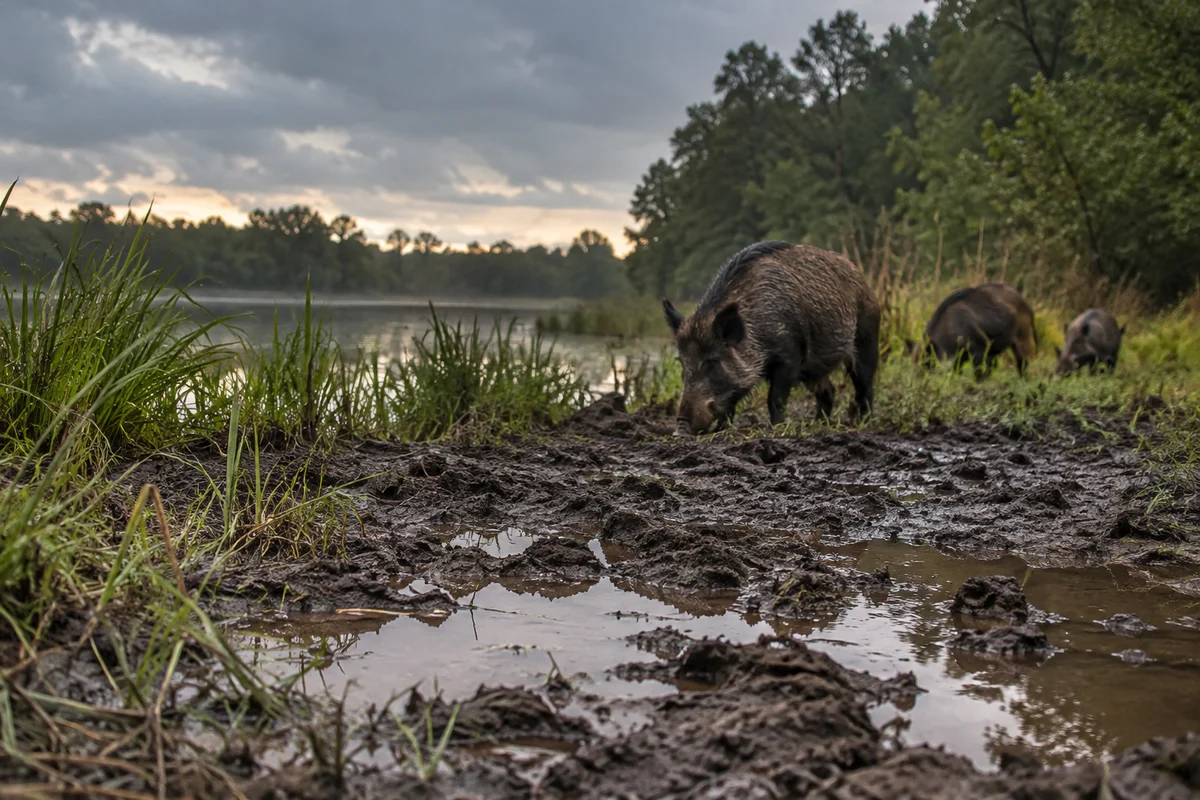
Feral hogs can be present even when you never see one. The most useful signs of feral hogs are often changes in the ground: torn-up soil, tracks, muddy wallows, and rubbed vegetation. Read several clues together rather than treating one disturbed patch as proof. Deer, livestock, bears, and other wildlife can leave overlapping evidence, and sign changes with soil, weather, and season.
If you find possible hog activity, note where it is, what the ground is like, and whether multiple clues occur together. Avoid approaching animals or handling scat, carcasses, or unfamiliar material. Local wildlife agencies can advise whether reports are useful and what rules apply in your area.
Start with the setting and pattern
Look across a broad patch, not just at the most dramatic mark. Hogs often forage by turning over soil in irregular areas, but the appearance depends on what they are seeking and how damp or soft the ground is. Freshly disturbed earth may be dark and moist; older disturbance can dry, settle, or grow over. Rain and wind can quickly blur edges.
Record the location, date, recent weather, and approximate size of the disturbed area. Photograph the whole patch and a closer view with a familiar object for scale, without touching the evidence. Note whether the disturbance follows a creek, field edge, trail, or other feature. These details are more useful than a confident guess based on one mark.
Common signs and what they can tell you
| Sign | What to look for | Important limitation |
|---|---|---|
| Rooting | Flipped sod, shallow pits, or a rough, churned surface | Other animals and machinery can disturb soil |
| Tracks | A cloven hoof impression, sometimes with smaller marks behind the main toes | Soft ground distorts prints; other hoofed animals overlap |
| Wallows | Repeated muddy depressions, often in wet or shaded spots | Cattle, deer, and other wildlife may use muddy areas |
| Rubs | Mud, hair, or scuffing on a post, trunk, or sturdy stem | A rub alone is not species identification |
| Droppings | Dark, variable material near feeding or travel areas | Appearance varies with diet and is not reliable by itself |
Rooting and feeding disturbance
Rooting is often the easiest sign to notice. Hogs use their snouts to turn over soil while searching for food, leaving patches of displaced vegetation and exposed earth. The disturbance may be shallow and scattered or more extensive, depending on the site. Check the edges: repeated hoof impressions or trails connecting separate patches add context, but still do not establish identity on their own.
Compare the disturbed ground with nearby undisturbed soil. A plowed strip, recent landscaping, or livestock activity may explain an otherwise puzzling patch. Look for continuity and multiple signs rather than assuming every turned-up lawn or field is hog damage.
Tracks and trails
A clear track can show two main toes with possible smaller dewclaw impressions behind them. Dewclaws may register in soft mud or snow but be absent in firmer ground. Print size and shape vary, and a partial impression is easy to misread. Do not use a single track as a precise measure of an animal’s size or age.
A trail may connect feeding areas, cover, and water, but many species use the same routes. Photograph a series of prints from above and include scale. If tracks cross, note which are freshest only when the edges are clear; avoid overstating the sequence when weather or other animals have obscured it.
Wallows and rubs
A wallow is a muddy depression or churned wet spot where an animal has rolled or cooled itself. Hogs may leave mud on nearby vegetation or sturdy objects, but other animals also visit water and mud. A nearby rub or track can strengthen a hog hypothesis, yet a wallow by itself is ambiguous.
Rubs may appear as mud, hair, or scraped bark on a post or tree. Their height and appearance depend on the object and conditions, so they are not a dependable way to estimate an animal’s dimensions. Photograph the mark in context and avoid disturbing it.
Droppings and other clues
Droppings can vary with food and habitat. Shape, color, and contents are too variable to identify a species reliably from a quick look. Do not handle scat or attempt to collect biological samples unless an agency specifically directs you. A camera image of the surrounding area can help officials assess the full pattern without contact.
Other clues may include trampled vegetation, hair, or repeated use of a muddy route. Each has alternative explanations. A cluster of independent signs—such as rooting plus a sequence of plausible tracks and a nearby wallow—is more persuasive than any single clue, but confirmation may still require an experienced local observer.
A practical field checklist
- Pause at a safe distance. Do not approach, corner, feed, or try to follow an animal. If hogs are present, give them room and leave the area calmly.
- Photograph context and detail. Take a wide image, then close views of tracks or disturbance. Include scale without placing your hands near scat or an animal.
- Write down conditions. Record date, location as appropriate, weather, soil, and nearby habitat. Distinguish what you saw from what you infer.
- Look for more than one clue. Compare rooting, tracks, wallows, and rubs, while considering livestock, deer, machinery, and other alternatives.
- Ask the right local authority. Contact the state wildlife agency, land manager, or agricultural extension service for reporting guidance. Rules and response options vary by location.
What signs cannot tell you
Field sign rarely establishes how many hogs were present, when they will return, or whether a population is established. A patch may have been made days earlier, while fresh rain can make old disturbance look recent. Track size is not a dependable stand-alone estimate of age, sex, or body size. Avoid making these claims from photographs alone.
Do not use the presence of damage as permission to trap, pursue, or harm wildlife. Laws governing feral swine, firearms, trapping, transport, and land access differ by jurisdiction and can change. Check current local rules and obtain landowner permission before any action. For broader predator-field context, see our predator-hunting hub, our guide to coyote sightings in Michigan, and our overview of how to call wolves.
When to report a possible sighting
Report suspected feral hog activity when your wildlife agency or land manager requests reports, or when damage affects a farm, public land, or sensitive habitat. Share photographs and observations, not conclusions beyond the evidence. Include the location as precisely as is safe and appropriate, and ask whether officials want additional information. Do not post sensitive locations publicly if doing so could draw people onto private land or disturb wildlife.
A careful report helps agencies distinguish a verified sighting from a look-alike disturbance. The best field practice is simple: observe without contact, document several clues, acknowledge uncertainty, and follow local guidance.
Frequently asked questions
What is the clearest sign of feral hogs?
A combination of clues is more useful than one sign. Rooted soil together with a series of plausible hoof tracks and other nearby evidence can support a report, but local confirmation may still be needed.
Can you identify a feral hog from its tracks alone?
Not reliably in every case. Mud, snow, and partial prints alter track shape, and other hoofed animals can leave similar impressions.
Does rooted-up soil always mean feral hogs are present?
No. Livestock, other wildlife, and machinery can disturb soil. Compare the pattern with surrounding conditions and look for independent clues.
What should I do if I find suspected feral hog sign?
Keep your distance, photograph the evidence without touching it, note the conditions, and ask your state wildlife agency or land manager how to report it.
Sources & further information
Consult these primary sources for current regulations, technical information and local guidance.