Cooking in Paper Bag: A Safer Camp Breakfast Method
The paper-bag camp breakfast is a simple idea with important caveats: direct flame, grease, paper, and undercooked eggs are a poor combination. Here is how to assess the method, choose safer alternatives, and plan a satisfying breakfast outdoors.
By ODU Magazine Staff
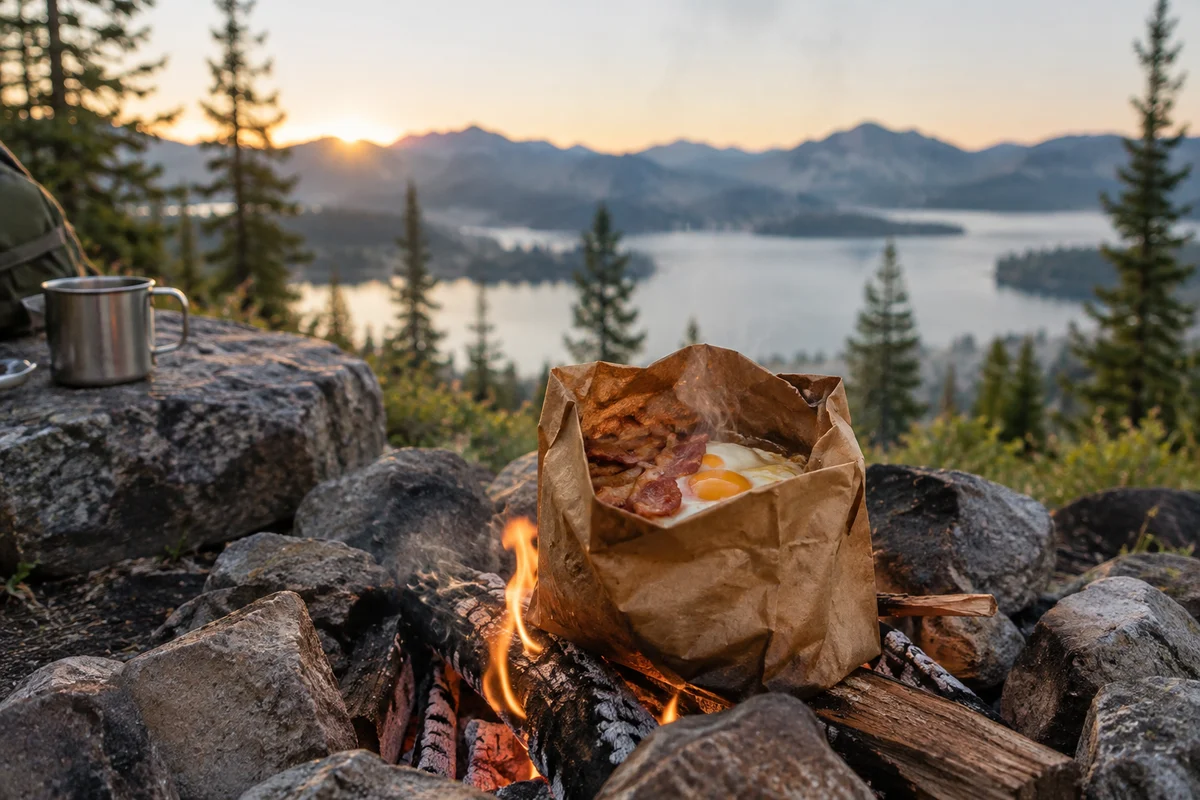
Cooking in paper bag is an old-fashioned campfire technique often described as a way to make bacon and eggs with little cleanup. The method sounds tidy, but it depends on a delicate balance of heat, paper, fat, and food safety. It is not a dependable choice over an open flame, and it should never be treated as a substitute for a stable pan or purpose-built camp cookware. With a careful setup—and a willingness to change plans when conditions are wrong—you can understand the tradition without taking unnecessary risks.
The basic idea is to place food inside a greased paper bag and warm it near coals so the contents cook in their own rendered fat. The difficulty is that paper can scorch or ignite, bacon grease can flare, and the bag provides no reliable way to confirm that eggs are safely cooked. A safer camp breakfast starts with the right fire conditions, suitable equipment, and a backup plan.
What the paper-bag method is—and what it is not
Camp recipes vary. Some call for a small paper lunch bag, while others use multiple bags or a different arrangement around a stick or grate. Those variations do not make the method predictable: paper thickness, moisture, grease, coal temperature, wind, and distance from heat all change the result. Paper is combustible, and a campfire’s radiant heat is difficult to control precisely.
The bag also hides the food. You cannot easily judge browning or doneness without opening it, and opening it releases heat and may expose hands to steam or hot grease. Eggs and meat require particular care; appearance alone is not a dependable food-safety test. For these reasons, this guide treats paper-bag cooking as a campfire curiosity—not the recommended way to prepare breakfast.
If your goal is an easy outdoor meal, a lidded skillet on a stable grate, a camp stove, or a foil-free pan method is more controllable. For a broader morning routine, see our guide to how to make camp coffee and plan the meal alongside your water, fuel, and cleanup needs.
The main risks to consider
Fire and burn hazards
A paper bag can ignite when exposed to flame, sparks, or excessive radiant heat. Grease adds another hazard: hot fat can spill, smoke, or flare if it reaches an open flame. Do not hold a bag over a fire, put it into flames, or leave it unattended. Wind can shift embers and change the heat pattern quickly.
Only cook where fires are permitted, and follow current local restrictions and campground rules. Use an established fire ring when available, keep water or another appropriate extinguishing means nearby, and never cook during a fire ban. If a cooking fire becomes difficult to control, stop cooking and address the fire safely rather than trying to salvage the meal. The U.S. Forest Service’s general visitor information is a useful starting point for planning, but local land managers’ current rules take precedence.
Food safety
Raw bacon and eggs can carry foodborne pathogens. Keep them cold until cooking, prevent raw-food juices from contacting ready-to-eat foods, and wash hands and utensils after handling them. A bag makes temperature checks awkward, so it is especially easy to mistake warmed or partly cooked food for finished food.
Use a food thermometer and follow current government guidance for safe minimum internal temperatures. If you cannot check doneness, keep the food cold, or separate raw ingredients from other food, choose a simpler shelf-stable breakfast instead. Do not taste food to determine whether it is safe.
Waste and site impact
A greasy, scorched bag is not suitable for a fire ring or trail. Pack out food scraps and packaging according to site rules; do not leave grease, litter, or partially burned paper behind. Minimize wildlife attractants by securing food and disposing of waste properly. Our camping preparation guide covers the broader checklist that helps keep meals and camp chores organized.
A practical decision framework
| Conditions | Better choice | Why |
|---|---|---|
| Fire ban, high wind, or very dry surroundings | No campfire cooking; use an allowed stove or ready-to-eat food | Paper and grease add ignition risk, and restrictions may prohibit open fires |
| You need to cook raw bacon or eggs | Stable skillet or griddle with controlled heat | You can see the food and check its temperature more reliably |
| No thermometer or reliable cold storage | Shelf-stable breakfast | Avoids guessing about doneness and time-temperature handling |
| Paper-bag tradition is the attraction | Demonstrate with a non-food item only if local rules allow, away from flame | Keeps a risky method from becoming a meal-safety gamble |
| Uneven coals, gusty weather, or crowded fire ring | Stop and switch methods | Heat and sparks are not controlled enough for a paper container |
This is a decision aid, not a guarantee that any particular cooking method is safe. Local restrictions, equipment instructions, and current food-safety guidance should guide your choices.
A safer camp-breakfast workflow
- Check the rules before leaving. Confirm fire restrictions, stove allowances, and campground requirements. Conditions can change, so check again at the site.
- Choose a controllable cooking surface. A stable stove and pan or a grate set securely over a bed of coals lets you adjust distance and heat. Follow the equipment maker’s instructions and keep the cooking area clear of loose clothing and gear.
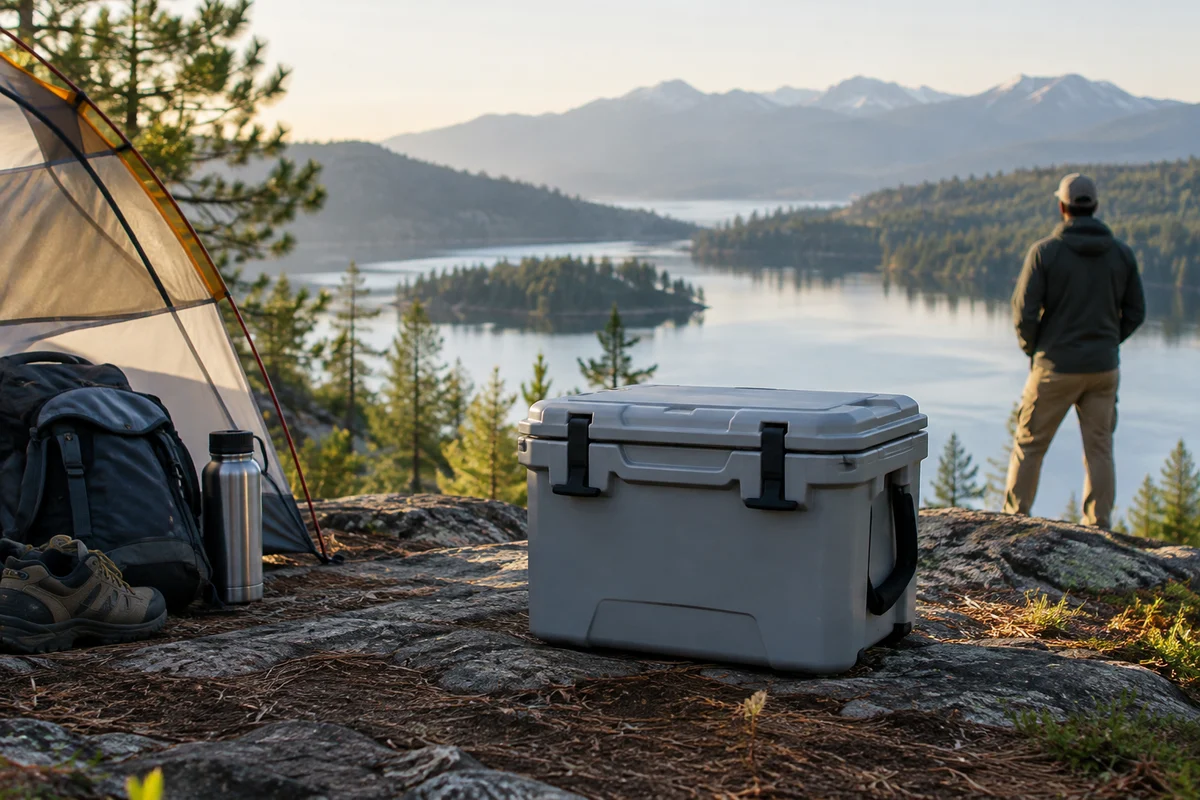
- Keep ingredients cold. Pack raw eggs and meat in a cooler that maintains safe cold storage, separated from ready-to-eat food. Bring only what you expect to use.
- Cook visibly and verify doneness. Avoid relying on a sealed bag or color alone. Use a clean food thermometer and official temperature guidance for each ingredient; if you cannot verify safety, do not serve it.
- Manage grease and cleanup. Keep fat away from flames, collect cooled grease as required by site rules, and pack out waste. Do not pour grease into soil, water, or a fire ring.
- Have a no-cook backup. Oatmeal, bread, fruit, nut butter, and other suitable foods can make breakfast possible when weather, restrictions, or equipment make hot cooking unwise.
For a camp kitchen, small details matter: set utensils on a clean surface, keep a separate plate for cooked food, and avoid placing cooked breakfast back on a plate that held raw ingredients. Bring enough clean water and soap or an appropriate hand-cleaning option, and follow site-specific sanitation requirements.
Why a skillet usually wins
A skillet does not remove every hazard, but it gives you more control. You can position it securely, move it away from excess heat, observe the food, and check doneness with a thermometer. A lid can help regulate splatter, although it does not replace temperature checks. A camp stove further reduces dependence on shifting coals, provided its use is permitted and it is operated as directed.
The simplest plan may be to cook bacon and eggs at home and reheat them only if your food-storage plan supports safe handling—or to choose breakfast foods that do not need refrigeration. Do not assume that a cool morning keeps perishables safe; temperature and time still matter.
When to leave the paper bag behind
Skip the method when there is an active fire restriction, wind is moving sparks, the fire ring is crowded, paper is damp or damaged, grease is pooling, or you cannot keep food cold and verify doneness. Also skip it when children or inexperienced cooks would need to handle a hot, unstable package. No camp recipe is worth risking a burn, an escaped fire, or an unsafe meal.
If you want to explore outdoor cooking, start with a stable cooking surface and a menu that matches your equipment. A dependable camping checklist can help you account for fuel, water, food storage, and cleanup; pair it with a simple hot drink from our camp coffee guide. The best camp breakfast is not the most novel one. It is the one you can prepare safely, clean up responsibly, and enjoy without leaving a trace.
For more, explore our camping hiking guides.
Frequently asked questions
Can you safely cook bacon and eggs in a paper bag over a campfire?
It is not a dependable method. Paper can scorch or ignite, grease can flare, and the bag makes it hard to verify doneness. A stable skillet or camp stove is a more controllable choice.
What is safer than cooking breakfast in a paper bag?
Use a stable pan on a permitted camp stove or grate, keep raw ingredients cold and separate, and verify doneness with a food thermometer and current food-safety guidance.
Should a greasy paper bag be burned or buried after cooking?
Do not leave it behind or bury it. Follow campground waste rules and pack out greasy packaging and food scraps; never pour grease into soil or water.
What if a fire ban is in effect?
Do not use a campfire. Check local rules for whether a camp stove is permitted, or choose a ready-to-eat meal.
Sources & further information
Consult these primary sources for current regulations, technical information and local guidance.