How to Choose Sunglasses for Fishing in Any Light
The right fishing sunglasses reduce glare, protect your eyes and help you stay comfortable through changing light. Use this practical guide to compare lenses, frames and fit without relying on hype or uncertain product claims.
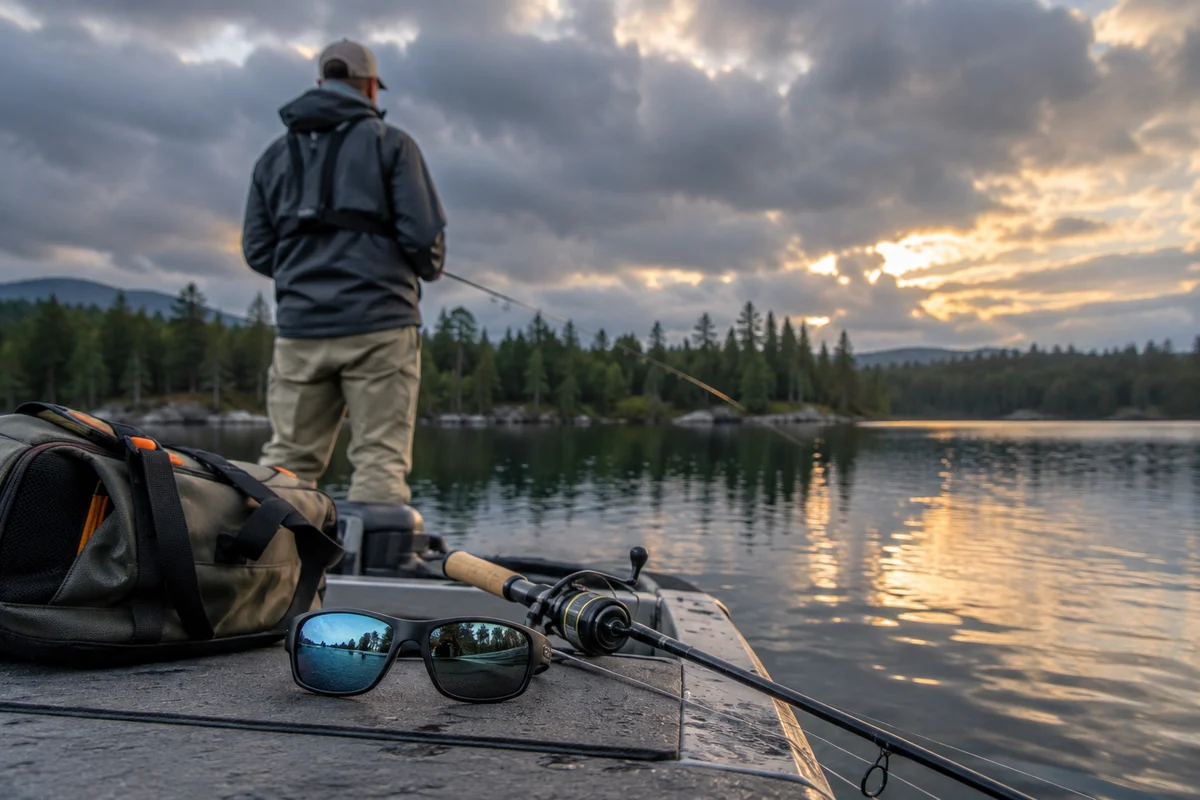
Fishing sunglasses are more than a comfort accessory: the right pair can cut reflected glare, help you watch the water and shield your eyes from ultraviolet radiation. Choosing sunglasses for fishing starts with understanding the conditions you face—not simply picking the darkest lens or assuming every polarized pair performs the same.
A useful decision begins with three questions: How bright is your usual fishing environment? Do you need to see beneath surface glare? And will the glasses stay secure and comfortable during a long day? Answer those, then compare lens protection, tint, polarization and fit. No lens makes a person’s vision perfect underwater, and visibility still depends on water clarity, angle, depth and light.
What matters most in fishing sunglasses?
Start with verified ultraviolet (UV) protection and a secure, comfortable fit. Then decide whether polarization and a particular tint suit your fishing. These features solve different problems: UV protection concerns exposure, polarization reduces a type of reflected glare, and tint affects how much visible light reaches your eyes and how the scene appears.
Look for clear manufacturer labeling that states the level of UV protection. A dark lens is not proof of UV protection. If labeling is unclear, ask the maker or an eye-care professional rather than guessing from lens color or price. For general background on eye and sun safety, consult the American Academy of Ophthalmology.
Polarized lenses are commonly useful around water because they reduce glare reflected from flat surfaces. That can make a bright day less tiring and may improve your view of the water surface. They do not guarantee that you will see fish, structure or a lure below it. Surface chop, suspended sediment, depth, sun angle and the contrast of the object all affect what is visible.
Polarized or nonpolarized?
For many anglers, polarization is a practical starting point, especially when fishing in bright conditions on open water or scanning shallow areas. It is not essential for every situation. Some anglers prefer nonpolarized lenses for particular tasks, and polarized lenses can make some screens harder to read depending on the display and the angle at which it is viewed.
Before committing to a pair, check it against the equipment you actually use. View your phone, chartplotter or other display through the lenses in the position you normally hold it. Some LCD screens may appear dim or show uneven patterns when viewed through polarized lenses. Screen behavior varies, so an in-person check is more reliable than a blanket rule.
Polarization also does not substitute for safe boating habits. Keep your view of other vessels, hazards and navigation aids clear, and use appropriate lighting and eye protection for the conditions. If a lens makes a necessary display unreadable or creates distracting visual effects, choose a different lens or adjust the viewing angle.
Choosing a lens tint for water and weather
Tint changes brightness and color perception. There is no universally best fishing tint; the most useful choice depends on light, water and the way you fish. Treat the following as a starting framework, not a promise of improved catch rates.
| Conditions or priority | What to consider | What to check |
|---|---|---|
| Bright, open water | A darker neutral or contrast-oriented tint may feel more comfortable | Confirm you can still see details and read displays |
| Variable cloud and shade | A medium or lighter tint may preserve a brighter view | Check comfort when moving between sun and shadow |
| Shallow-water sight fishing | Polarization and useful contrast may help reduce surface glare | Test in the actual water and remember clarity limits visibility |
| Low light, dawn or dusk | Avoid lenses so dark that they make the scene difficult to read | Consider whether clear or lightly tinted eyewear is more appropriate |
| Long days outdoors | Prioritize labeled UV protection, coverage and comfortable fit | Look for gaps around the sides and above the frame |
Lens color names are not standardized descriptions of performance. A “copper,” “brown,” “gray” or “blue” lens can differ between manufacturers in darkness and color transmission. Ask for the maker’s explanation of the intended conditions, and try lenses outdoors if possible. Do not infer UV protection from a tint name.
A lighter lens can be useful as light fades, but changing conditions may call for taking sunglasses off rather than keeping a dark pair on. If you move frequently between bright sun, tree cover and shaded banks, comfort and adaptability may matter more than a specialized tint. Some anglers carry a second pair, but that is a convenience choice rather than a requirement.
Fit and coverage: the overlooked essentials
A lens that works optically is no help if the frame slides, pinches or leaves your eyes exposed to bright light from the sides. Try the glasses while looking down, turning your head and mimicking the movement of casting. They should stay put without uncomfortable pressure at the nose or temples.
Consider wraparound coverage or broad lenses if side glare is a recurring problem. Coverage varies by frame, so look for actual gaps rather than relying on a style label. A hat brim can add shade, but it does not replace eyewear. Likewise, a strap may help prevent loss over water, though it should not catch on equipment or interfere with movement.
For prescription wearers, compare prescription sunglasses with clip-ons or fit-over options. Ask an optician about lens materials, prescription suitability and coverage. If you wear contacts, bring a backup plan for irritation or a lost lens. Comfort on the face is personal; a short fitting is worthwhile before a long day outdoors.
Match the pair to your fishing style
Bank anglers may spend much of the day looking across sunlit water, then turn toward shaded cover. A secure frame and a tint comfortable across those transitions can be more useful than a very dark lens selected only for noon. Keep a case available when the glasses are not on your face, and avoid placing lenses where grit can scratch them.
Boat anglers often deal with reflected light from the water, deck and nearby surfaces. Polarized lenses may reduce some of that glare, but check visibility of onboard displays before heading out. Fishing from a kayak adds another practical concern: secure fit and a retention option that does not snag are valuable because recovering dropped gear can be difficult.
If you are comparing other fishing gear for a specific setup, our guide to the best tackle backpack offers a separate way to think about carrying essentials, while the best fishing spoon guide covers a lure category. These are different decisions, but both benefit from matching equipment to conditions rather than buying by a broad label.
A quick checklist before you buy
Use this checklist in a shop or when reviewing a manufacturer’s product information:
- Confirm UV protection. Find an explicit, credible statement from the manufacturer; do not use darkness as a proxy.
- Decide whether polarization fits your needs. Consider surface glare and check your screens through the lenses.
- Match tint to typical light. Think about your usual water, weather and hours, not an idealized single condition.
- Check coverage and stability. Look for side gaps, slipping and pressure points while moving naturally.
- Try the actual view. If possible, compare lenses outdoors and observe a familiar surface or display.
- Plan for care. Use a protective case and clean lenses as the maker recommends; abrasive grit can damage coatings.
If you have an eye condition, take medication that increases light sensitivity, or have questions about UV exposure, ask an eye-care professional for guidance. Sunglasses are not a treatment for vision problems, and persistent eye pain or sudden vision changes warrant professional attention.
Care, limits and realistic expectations
Rinse dust or grit away before wiping lenses, and follow the manufacturer’s cleaning instructions. Store eyewear in a case rather than loose with hooks, tools or other hard objects. Salt, sunscreen and sweat can affect frames and coatings over time; routine cleaning helps, but no coating is immune to wear. Replace glasses when damage compromises clear vision or fit.
Even excellent sunglasses cannot remove every reflection or reveal what lies beneath opaque, deep or turbid water. Glare changes with sun angle, wind and your position. A visible shape may be vegetation, shadow or debris rather than a fish. Use sunglasses as one part of observation, alongside knowledge of the water and careful movement. For broader freshwater reading, explore the freshwater fishing tips hub and our guide to lake effect fishing.
The best choice is the one that provides stated UV protection, suits your light conditions, fits securely and lets you see comfortably. Start with those fundamentals, test the view with your own equipment, and treat claims about seeing deeper or catching more fish cautiously. Good fishing sunglasses make a day on the water easier on your eyes; they cannot control the water or guarantee what you will see.
Frequently asked questions
Are polarized sunglasses better for fishing?
They can reduce reflected glare from water and may make viewing the surface more comfortable. They do not guarantee underwater visibility, and some polarized lenses affect how displays look.
What color lens is best for fishing?
There is no single best tint for every condition. Compare the manufacturer’s guidance and choose a brightness and color that remain comfortable in your usual light and water conditions.
Do dark sunglasses provide UV protection?
Not necessarily. Lens darkness does not establish UV protection; look for explicit manufacturer labeling or ask an eye-care professional.
Can I read a fish finder while wearing polarized sunglasses?
It depends on the screen and viewing angle. Check the actual display through the lenses before relying on them on the water.
Sources & further information
Consult these primary sources for current regulations, technical information and local guidance.