Buck Movement During the Rut: Patterns and Field Signs
Rut movement is not a clockwork surge; it is a changing blend of breeding behavior, doe distribution, cover, and hunting pressure. Use fresh sign and local conditions to choose where and when to observe while keeping disturbance low.
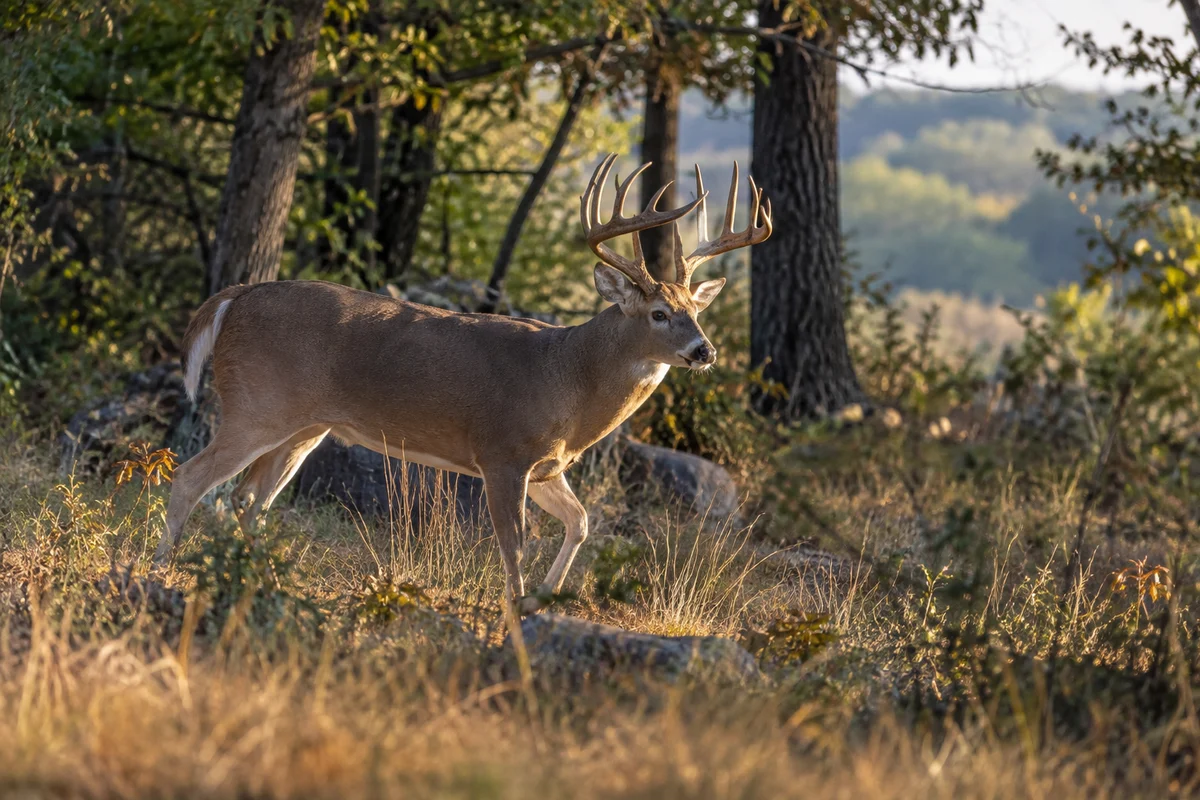
The rut can make a familiar property feel suddenly unpredictable. A buck that moved mostly after dark may appear in daylight, vanish for several days, then cross a field edge at an unexpected hour. Understanding buck movement during the rut means looking for the reasons behind those changes—not assuming every mature deer follows the same calendar or route.
The breeding season changes how bucks allocate time, but movement still depends on where does are, how they use the habitat, local weather, and disturbance. Treat phase dates as a broad planning aid, then let fresh tracks, scrapes, sightings, and trail-camera observations refine the picture. For broader context on habitat and seasonal planning, see our deer hunting guide and the deer hunting hub.
What changes a buck’s movement during the rut?
A buck’s movements reflect competing needs: finding receptive does, feeding, resting in secure cover, and avoiding people. Before peak breeding activity, bucks may expand their range and check doe-use areas more frequently. When a doe is receptive, a buck can stay close to her for a period, making his route less predictable to anyone watching a single trail. After breeding activity eases, feeding and recovery can become more prominent.
These are tendencies, not fixed stages on a universal schedule. Rut timing varies by region and year, and individual deer differ. A local wildlife agency’s season information and harvest or observation guidance is more relevant than a calendar copied from another state. The U.S. Fish and Wildlife Service offers a starting point for federal wildlife information; state wildlife agencies provide local deer-management details and regulations.
How the broad phases affect travel
Think of the season as a sequence of changing probabilities rather than a guaranteed sequence of sightings.
- Before heightened breeding activity: Bucks may inspect doe bedding areas, feeding routes, and existing sign. Daylight movement can increase, but it may remain concentrated near secure cover.
- As breeding activity builds: Searching can widen. Bucks may travel between areas used by does, follow fresh scent, and revisit routes that connect cover patches.
- During peak breeding: A buck may spend much of its time near one doe rather than covering a large visible area. A quiet trail can mean activity shifted nearby, not that deer left the property.
- After peak activity: Food sources and recovery needs can regain importance. Movement may become more regular around dependable feeding and bedding cover, though hunting pressure can still alter timing.
The calendar is only a starting estimate. In a specific area, doe behavior and local observations offer better clues than a generic rut chart.
Where are bucks likely to travel?
Start with the does. A buck searching for a mate is more likely to check areas where does feed, bed, and travel than to patrol every acre evenly. Identify the broad habitat pattern: secure bedding cover, food, water, and the sheltered connections among them. Look for edges, narrow crossings, wooded strips, drainages, and terrain features that funnel movement without assuming any one feature guarantees a pass.
A scrape or rub can show that a buck used a spot, but it does not prove he will return at a particular time. Freshness matters: newly exposed soil, damp tracks, recently disturbed leaves, or a clear sequence of prints can be more informative than an old sign cluster. Consider the direction of travel and whether the sign connects to cover or a food source. If you are preparing for the season, our guide to steps to prep for deer season covers planning and organization that can help keep observations consistent.
A practical observation framework
Use this simple framework to choose a watch location or decide whether to change one. It is a way to organize evidence, not a promise of a harvest.
| What you observe | What it may suggest | Sensible response |
|---|---|---|
| Fresh tracks crossing a cover edge | Recent travel between cover types | Note direction and look for a low-impact observation point downwind of likely approach |
| New rubs or a refreshed scrape | Recent buck activity in the area | Check nearby routes and revisit from a distance; do not assume the sign marks a fixed schedule |
| Doe sightings concentrated near food or cover | A local area may attract searching bucks | Prioritize nearby travel corridors, while keeping access routes quiet |
| Sign goes quiet after repeated visits | Pressure or changing deer use may be affecting observations | Pause, alter access, or shift to another part of the property rather than adding more disturbance |
| Activity appears mainly at night | Deer may be using the area but avoiding daylight exposure | Reassess entry and exit routes, cover, and observation distance; follow local laws on cameras and access |
Record date, wind, temperature trend, time, location, and what you actually saw. Separating observation from interpretation helps prevent one unusual evening from dictating the rest of the plan.
Why weather and hunting pressure matter
A weather change can alter comfort and movement, especially when it affects wind, precipitation, or temperature. But there is no single weather trigger that reliably brings bucks into view. A cold front may coincide with movement in one setting and have little noticeable effect in another. Food availability, cover, deer density, and disturbance all shape the outcome.
Pressure is often easier to overlook. Walking through bedding cover, repeatedly checking a scrape, or approaching from the same exposed route can change how deer use a location. A buck may shift to thicker cover, move after dark, or use a neighboring corridor. If sightings decline, that does not automatically mean the deer have disappeared. Consider whether your own access has become part of the pattern.
Keep observation discreet and lawful. Respect property boundaries, access restrictions, seasonal closures, and applicable rules for trail cameras and scouting. Avoid disturbing bedding areas simply to confirm a hunch.
How to adapt without chasing every sign
A useful plan has a primary observation area and at least one alternative. Choose based on current evidence: doe use, fresh tracks, cover connections, wind, and a quiet approach. Before heading out, ask whether conditions allow you to enter and leave without crossing the likely travel route. If not, wait or use a different location.
When evidence changes, update one part of the plan at a time. A new set of tracks may justify watching a nearby crossing; it does not necessarily justify abandoning all prior observations. If an area receives repeated human activity, give it time and reduce visits. On public land, account for other users and follow site-specific rules; deer movement can shift as people distribute across the landscape.
A compact field checklist:
- Locate doe activity: Note repeated feeding, bedding, and travel areas without intruding.
- Connect the map: Identify likely routes between those areas and secure cover.
- Check sign quality: Favor recent, interpretable evidence over a large pile of old sign.
- Plan around wind and access: Choose a position that minimizes scent and disturbance along the approach.
- Log the result: Record what happened, including no sightings, and adjust only when a pattern emerges.
Common interpretations to avoid
A large rub does not establish that a buck will appear nearby during daylight. A scrape can be revisited irregularly or become inactive. A day without sightings says little by itself, particularly when visibility is limited. Likewise, a widely shared “peak rut” date cannot replace local evidence; breeding timing and deer behavior vary by region.
Avoid treating trail-camera images as a complete census. Cameras sample only the locations and times they cover, and placement, settings, and changing routes can affect what they record. Use them alongside tracks, habitat knowledge, and direct observations, while complying with local rules and respecting privacy.
The useful takeaway
Buck movement during the rut is best understood as a response to breeding opportunity, doe distribution, security, food, weather, and pressure—not as a guaranteed burst of predictable daytime travel. Find where does are using the landscape, identify quiet connections between cover and resources, and let fresh local evidence guide your next move. Patience and low-impact observation usually teach more than repeated trips to the same sign.
FAQ
Do bucks move more during the rut?
They may travel more while searching for receptive does, but movement varies by phase, individual deer, habitat, and pressure. A buck attending one doe may move less broadly for a time.
What time of day do bucks move during the rut?
There is no dependable universal hour. Bucks can move at any time, and daylight activity depends on local conditions, security, breeding behavior, and disturbance.
Does cold weather make bucks move during the rut?
Weather can influence comfort and activity, but cold alone does not guarantee visible movement. Consider wind, precipitation, food, cover, and recent pressure together.
How can I tell if a buck is using an area now?
Look for recent tracks, freshly disturbed ground, and repeated observations, then compare dates and conditions. No single rub, scrape, or camera image proves a regular route or schedule.
Frequently asked questions
Do bucks move more during the rut?
They may travel more while searching for receptive does, but movement varies by phase, individual deer, habitat, and pressure. A buck attending one doe may move less broadly for a time.
What time of day do bucks move during the rut?
There is no dependable universal hour. Bucks can move at any time, and daylight activity depends on local conditions, security, breeding behavior, and disturbance.
Does cold weather make bucks move during the rut?
Weather can influence comfort and activity, but cold alone does not guarantee visible movement. Consider wind, precipitation, food, cover, and recent pressure together.
How can I tell if a buck is using an area now?
Look for recent tracks, freshly disturbed ground, and repeated observations, then compare dates and conditions. No single rub, scrape, or camera image proves a regular route or schedule.
Sources & further information
Consult these primary sources for current regulations, technical information and local guidance.