How to Drop Shot for Bass: A Practical Guide
A drop shot keeps a soft bait above a separate weight, helping anglers present a subtle offering at a chosen depth. This guide covers rigging, positioning, bait movement, and how to adapt the approach without assuming one setup fits every lake.
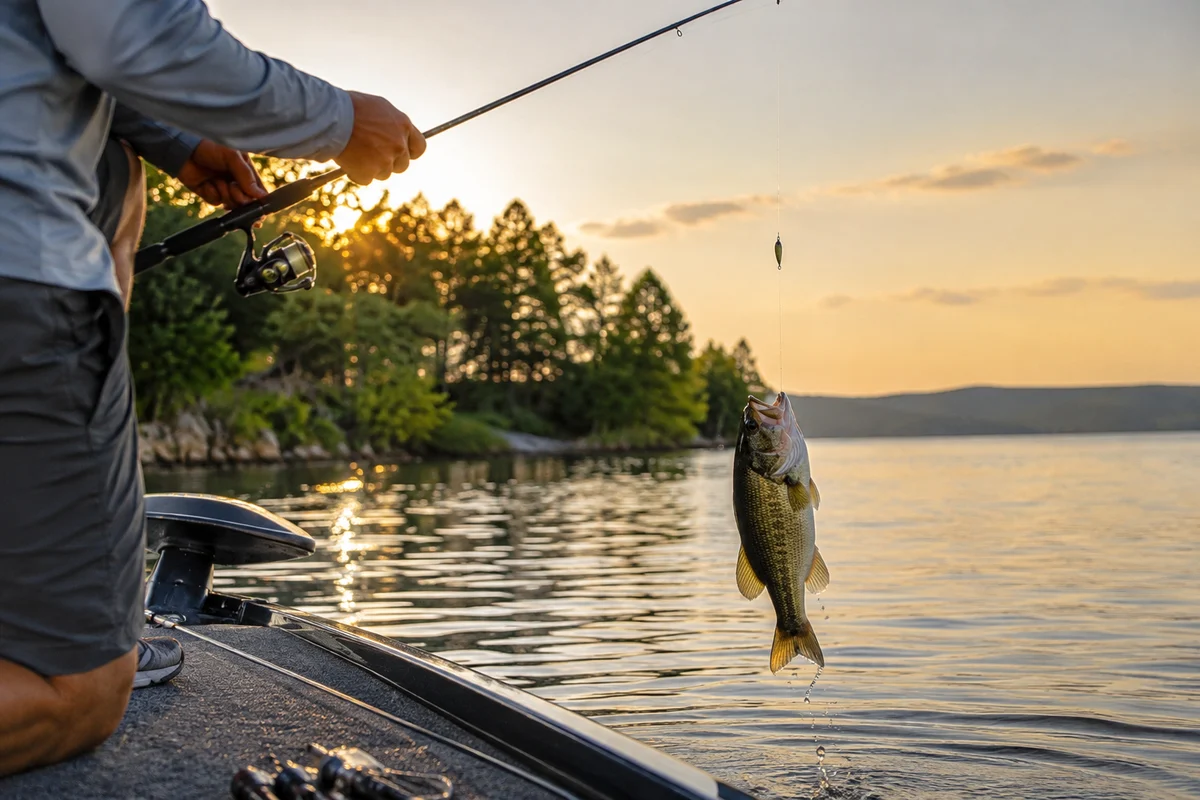
The how to drop shot for bass question comes down to controlling a small soft bait above a weight that touches bottom. That separation lets you hold an offering near a fish’s depth, make subtle movements, and keep the bait from immediately sinking into every patch of bottom cover. It can be useful from shore or a boat, in clear or pressured water, and across seasons—but it is not a magic presentation. Wind, current, vegetation, depth, and local rules all affect whether it is the right choice.
This is a practical starting point, not a claim that one hook, leader length, or bait will work everywhere. Check local fishing regulations, including rules on hooks and live bait, and use tackle suited to the fish and water you are fishing.
What a drop-shot rig does
A drop-shot rig places the hook on the line above a terminal weight. The weight rests on or near the bottom while the bait hangs above it. That arrangement gives you two useful controls: you can move the bait with small rod or line movements, and you can change how far above the bottom it sits by adjusting the distance between hook and weight.
It is especially useful when bass are holding near a defined depth, following a drop-off, or responding to a restrained presentation. It can also be fished over relatively clean bottom where you can keep the weight in contact without constant snags. In dense weeds, brush, or rocky crevices, another rig may be easier to manage.
If you are building a broader foundation, our guide to bass fishing for beginners explains basic tackle and fish-finding decisions. For other soft-plastic approaches, see plastic worm rigs for bass. This article belongs to the freshwater bass fishing hub, where related techniques can be explored together.
Basic tackle and rigging
Start with a rod and line that let you feel the weight and detect light bites while remaining appropriate for local conditions. A spinning outfit is a common, manageable choice for lighter line and small baits, but it is not the only possible setup. Match line strength and hook size to the cover, fish size, and regulations rather than relying on a universal prescription.
A basic rig consists of:
- A main line suited to the water and cover.
- A hook sized to the soft bait and intended presentation.
- A soft-plastic bait, often a compact worm or minnow-shaped bait.
- A drop-shot weight attached below the hook.
Tie the hook into the line so it sits perpendicular to the line, with the point oriented as intended for your chosen knot and bait. Leave a tag end long enough to pass back through the hook eye if your knot and setup call for it; this helps the hook stand out from the line. Attach the weight to the tag end using its designed line connection, and trim excess line while preserving enough length to retie if needed. Follow the hook and weight makers’ instructions, since attachment details differ.
The hook-to-weight distance is adjustable. A short separation keeps the bait near bottom; a longer separation raises it higher. Begin with a modest distance, observe how the rig behaves, and change it when fish location or bottom conditions suggest a different level. If the weight is well below the fish, the bait may not pass through their zone. If it is too close to the bottom, it may disappear in weeds or silt.
Rigging checklist
| Check | What to look for | Why it matters |
|---|---|---|
| Hook position | Hook sits outward from the line | Helps the bait move freely |
| Bait alignment | Bait hangs straight, not twisted | Reduces spinning and unnatural drag |
| Weight connection | Weight is secure and line is undamaged | Prevents avoidable loss |
| Separation | Hook is above the weight at the intended height | Places bait in the target zone |
| Local rules | Hook, bait, and tackle comply with regulations | Rules vary by water and jurisdiction |
How to fish a drop shot step by step
1. Find a useful target
Look for a depth change, a point, a weed edge, a dock edge, or another feature where bass may hold. Electronics can help from a boat, but shoreline anglers can work visible transitions and cast across likely routes. Avoid assuming that a mark or surface disturbance identifies a bass; treat it as a clue to test.
2. Make a controlled cast
Cast beyond or alongside the target rather than dropping directly onto it every time. Let the weight reach bottom while keeping enough line control to sense contact. In current or wind, the line may bow and the rig may drift; a heavier weight can improve contact, but excessive weight can make the presentation clumsy or increase snags. Use the lightest weight that allows you to maintain useful control under the conditions.
3. Keep the weight steady and animate the bait
Once the weight reaches bottom, take up slack carefully. Small shakes or slight rod-tip movements can make the bait quiver while the weight stays nearly in place. Often, less movement is more informative than constant hopping: begin with restrained motion, pause, and pay attention to the line and rod.
You can also drag the weight slowly along a clean bottom, pause at a transition, then make a few subtle movements. If the bottom is rough or snaggy, shorten the distance moved on each pull and lift the weight gently rather than dragging hard. The objective is to present the bait where fish can find it, not to keep the rod moving continuously.
4. Read the line and respond calmly
A bite may feel like a tap, added weight, a sudden slack line, or simply a change in the way the rig moves. Watch for line movement as well as feel. When something seems different, take up slack and make a controlled hook-setting motion appropriate to your hook and tackle. A sweeping lift is often more suitable for a small exposed hook than a forceful, exaggerated strike, but the right response depends on the rig and conditions.
If you miss a bite, pause before retrieving. A bass may still be nearby, though repeated casts are not guaranteed to produce another opportunity. Recheck the bait’s position and condition; a torn or crooked bait can spin and fish poorly.
Adjusting the presentation
Change one variable at a time so you can learn from the result. If fish appear suspended or are feeding above bottom, lengthen the hook-to-weight separation. If the bait repeatedly catches weeds, shorten the separation or move to cleaner water. If you cannot feel bottom because of wind, depth, or current, adjust weight or casting angle before making the bait more active.
| Condition | First adjustment to consider | Limitation |
|---|---|---|
| Calm water and cautious bites | Reduce unnecessary movement; pause longer | Fish may still prefer a moving bait |
| Wind or current | Improve line angle or use a weight that restores contact | More weight can snag more readily |
| Fish above bottom | Raise the bait by increasing separation | Fish depth can change as conditions shift |
| Light weeds | Keep the bait above the densest growth | A drop shot can still collect vegetation |
| Rock or brush | Lift and reposition rather than dragging | Some cover may make another rig more practical |
Bait choice is similarly conditional. A narrow bait can produce a restrained profile; a bulkier bait displaces more water and may be easier to locate in some situations. There is no dependable universal color or shape. Start with a bait that is legal and appropriate for the water, then use observed fish response and visibility to guide changes. Our related overview of best drop shot baits for bass discusses bait selection in more detail without treating any one option as a guarantee.
Common problems and practical fixes
The bait spins during the retrieve. Check that it is rigged straight and that the hook is not forcing it to rotate. Retrieve more slowly and inspect the bait after a cast.
The weight hangs up repeatedly. Avoid dragging through obvious cracks and heavy cover. Lift the weight, change the casting angle, or choose a more suitable presentation for that structure. A breakaway-style weight may be designed to release from the line, but its behavior depends on the product and setup.
You cannot tell whether the weight is on bottom. Reduce slack, change the angle of the line, or use a weight that improves contact. In strong wind or current, feel may remain imperfect; do not mistake uncertain contact for precise depth control.
You get bites but few fish. Check hook sharpness and bait alignment, and consider whether fish are mouthing the bait or whether line slack is masking the signal. Avoid assuming every missed bite requires a harder hook set.
When to choose another approach
Drop-shotting is a tool, not a rule. If bass are chasing fast-moving prey, a moving presentation may cover water more efficiently. If vegetation constantly fouls the hook, a weed-resistant rig may be more practical. If fish are not near the bottom and you cannot keep the bait at their level, adjust the presentation or search elsewhere rather than stubbornly fishing one setup.
Keep fish handling brief and follow local guidance on catch-and-release practices. Wet your hands before handling a fish, support it carefully, and return it promptly when release is intended. Regulations and conservation recommendations vary by location, so consult the responsible fish and wildlife agency for the water you plan to fish.
The takeaway
A sound drop-shot presentation begins with a bait that hangs straight, a weight that maintains workable bottom contact, and a hook positioned above it at a useful height. Cast to a reasoned target, move the bait subtly, monitor the line, and adjust one factor at a time. The method can make depth control easier, but it cannot substitute for locating bass or adapting to the specific water in front of you.
Frequently asked questions
How far should the hook be above the weight on a bass drop shot?
There is no fixed distance. Use a shorter separation to keep the bait near bottom and a longer one when fish are holding higher or weeds obscure the bottom layer.
Should you move a drop-shot bait constantly?
No. Start with small shakes and pauses while keeping the weight nearly steady. More movement is not always more effective, and the best cadence depends on fish activity and conditions.
What line is best for drop-shot fishing?
Choose line suited to the cover, depth, fish, and local rules. Lighter line can help with subtle presentations, while thicker or more abrasion-resistant line may be appropriate around rough cover.
Can you use a drop shot in weeds?
Yes, around sparse weeds or edges, but vegetation can foul the hook and bait. Adjust the bait height, fish cleaner lanes, or switch to a more weed-resistant rig if fouling persists.
Sources & further information
Consult these primary sources for current regulations, technical information and local guidance.