Choose a Boat Drink Holder That Stays Put and Keeps Drinks Secure
The right boat drink holder is less about looks than fit, drainage, reach, and a secure mount. Use this practical guide to compare styles and choose a location that works underway without creating a snag or trip hazard.
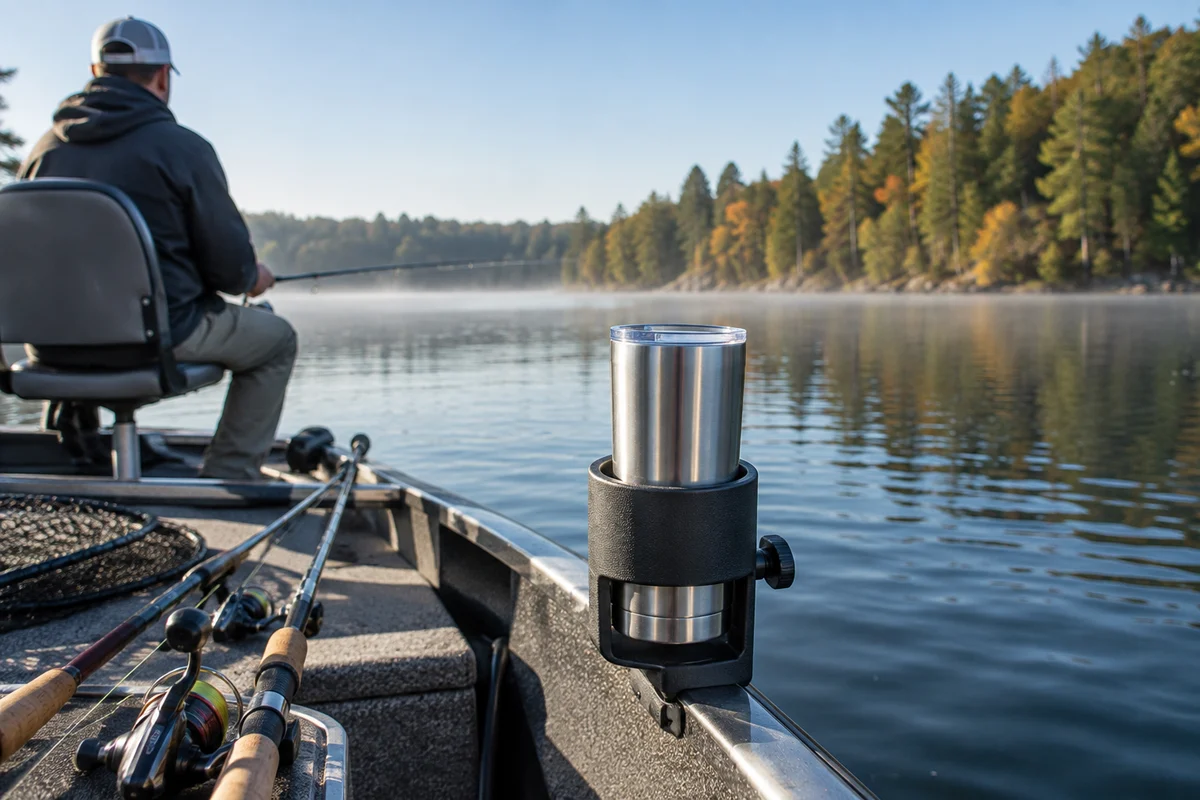
A boat drink holder seems like a small accessory until a wake sends a cup across the deck or a loose bottle rolls underfoot. Choosing a boat drink holder that suits your vessel starts with three questions: what containers do you use, where can a holder be mounted securely, and how will that spot behave when the boat moves? Answer those before comparing materials or appearance, and you are less likely to end up with a holder that wobbles, traps water, or blocks a walkway.
This guide covers common mounting styles, practical placement, measurements to take, and care. It is not a substitute for your boat or accessory manufacturer’s installation guidance. Boats differ, and drilling into a seat, console, rail, or hull can damage wiring, flotation, fuel-system components, or structural parts if you do not know what lies behind the surface.
What makes a boat drink holder work?
A useful holder keeps a container upright in ordinary use, drains or sheds water, and stays out of the way. “Ordinary use” depends on the boat: a holder that works well at a quiet dock may be inconvenient on a small fishing boat where passengers shift position, or on a boat that regularly encounters chop. No holder can guarantee that an open drink will not spill in rough conditions.
Start with the container, not the holder’s advertised label. Measure the diameter of the cup, mug, or bottle at the point where the holder will support it. Check the container’s height and shape as well. A tapered cup may sit differently from a straight-sided tumbler, while a handled mug may need more clearance than its base diameter suggests. If several people use different drinkware, take measurements for the widest and narrowest containers you expect to carry.
Also consider whether the container has a lid. A secure lid can reduce spills, but it does not make a drink invulnerable to motion. Keep hot drinks especially stable and away from children, controls, and places where a sudden movement could cause a burn.
Compare mounting styles before choosing
There is no single best mount for every boat. The right choice depends on available structure, how permanent an installation you want, and whether the holder must move or come off for storage.
| Style | Often useful for | Check before choosing |
|---|---|---|
| Recessed or built-in | A suitable flat panel or seat with room below | Hidden wiring, drainage path, panel strength, and access underneath |
| Clamp-on | A compatible rail or edge where drilling is undesirable | Exact rail shape and dimensions, clamp grip, padding, and movement |
| Surface-mounted | A sturdy, accessible panel | Fastener suitability, backing access, water entry, and clearance behind the panel |
| Flexible or fabric pocket | A soft-sided seat, storage area, or temporary setup | How it attaches, how it drains, and whether it can snag or swing |
| Portable or removable | Boats where permanent changes are not wanted | Stability, stowage, and whether the base can slide or tip |
A clamp is only dependable when it matches the rail or edge and can be secured as its maker specifies. A surface-mounted holder needs an appropriate mounting surface and fasteners. A recessed cup well may look tidy, but cutting an opening is irreversible and requires checking the space behind the panel. If you cannot identify the construction or confirm a safe installation area, ask the boat manufacturer or a qualified marine service professional.
Find a location that is reachable but out of the way
Choose a spot that a seated passenger can reach without leaning over the side, crossing a busy walkway, or stretching across steering controls. On a fishing boat, keep drinkware clear of casting areas, line paths, rod storage, and places where hooks or lures are handled. On any vessel, avoid locations where a container could obstruct throttle or steering movement, cover gauges, interfere with access to safety equipment, or become a hard object at knee or head height.
Think about movement through the boat. A holder beside a seat may be convenient while stationary but become a snag point when people step around it. A rail mount may preserve deck space, yet put the drink where it can be bumped or where a clamp projects into a passage. Sit, stand, and move through the intended area before settling on a location. If practical, use removable tape to mark the proposed footprint and check the space from each passenger’s position.
For a small fishing craft, equipment choices often interact. For example, the seating and open deck on a Tracker Targa V-20 WT fishing boat differ from the layout of other boats, so treat any example as a prompt to assess your own arrangement rather than a universal mounting recommendation. A multi-species deep-V boat layout likewise illustrates why passenger space, storage, and fishing access should be considered together.
A simple selection and installation checklist
Use this sequence before buying or installing:
- List your containers. Record the widest diameter, approximate height, and whether handles or tapered walls affect the fit.
- Choose the user and position. Decide who needs access and whether the boat is normally used seated, standing, or both.
- Inspect the mounting surface. Identify whether it is a rail, edge, seat, console, or panel; do not assume a surface is solid just because it looks sturdy.
- Check the space behind and around it. Look for wiring, plumbing, fuel-system components, moving hardware, and the clearances needed for controls and storage.
- Consider water and cleanup. A wet holder should not drain onto electronics, a passenger, or a slippery walking surface. Removable parts are easier to rinse and inspect.
- Review the manufacturer’s directions. Confirm compatible surfaces, hardware, load limits if provided, and any care restrictions. Do not infer specifications from appearance.
- Test before relying on it. With the boat safely secured and the engine off, check container fit, reach, movement, and whether the holder interferes with normal tasks. Recheck fasteners and mounts as directed by the maker.
If a holder relies on adhesive or suction, verify that the surface preparation and operating conditions match the manufacturer’s instructions. Heat, moisture, texture, and repeated movement can affect attachment. Do not place a removable holder where its release or failure could put a person at risk.
Materials, drainage, and maintenance
Marine environments expose accessories to water, sun, temperature changes, and cleaning products. Plastic, coated metal, stainless components, and fabric each have different care requirements; material names alone do not establish how well a particular item will last. Follow the maker’s care guidance, and check for corrosion, cracks, loose fasteners, damaged padding, or stretched fabric during routine boat cleanup.
Drainage matters even when the holder is used only for lidded bottles. Water can collect after rain, washing, or spray. A holder should not retain standing water in a way that creates a persistent mess or damages the surface beneath it. At the same time, a drain opening should not send water into an enclosed panel or onto equipment. Confirm where water goes, and keep drainage passages clear.
Rinse away salt and grit where appropriate, then dry or store removable pieces as their instructions allow. Avoid cleaners or solvents unless the manufacturer says they are suitable. If a mount begins to loosen, stop using it until you have identified the cause and corrected it safely; simply tightening a fastener may not solve a damaged panel or worn clamp.
Boat upkeep is a system, not a collection of isolated accessories. A drink holder is easier to keep useful when the surrounding surfaces are maintained; see this practical guide to cleaning a boat hull for a separate part of routine care. For other basic onboard skills, our guide to boating knots to know offers a reminder that equipment and seamanship both benefit from learning the right technique for the task.
Common mistakes to avoid
Buying by appearance alone. A wide opening may not support a narrow bottle, and a snug cup well may not fit a handled mug. Compare actual dimensions and shapes.
Assuming “universal” means every boat. A clamp or base can be broadly compatible while still being wrong for a particular rail, panel, or passenger layout. Check the maker’s stated fit and your boat’s construction.
Drilling before inspecting. Hidden wiring and other components can make an apparently simple installation risky. Consult boat documentation or a qualified professional when uncertain.
Mounting too close to controls or movement. Reach is valuable, but not if it obstructs steering, throttle, a walkway, fishing activity, or access to essential equipment.
Expecting spill-proof performance. Motion, container shape, fill level, and lid design all matter. A holder can reduce tipping without eliminating spills, especially in rough water.
Make the choice fit the boat
The best boat drink holder is the one that fits the containers you actually use, attaches appropriately to the available structure, drains sensibly, and stays clear of movement and controls. Measure first, inspect the mounting area, and follow product and boat-maker guidance. When installation details are uncertain, avoid cutting or drilling until you have competent advice. A modest, well-placed holder can make a day on the water more orderly; a poorly placed one can become another loose object to manage.
For more, explore our boat news guides.
Frequently asked questions
How do I measure for a boat drink holder?
Measure the container where the holder will support it, including its widest relevant diameter, height, and any handle or taper that affects fit. Check the holder maker’s stated dimensions.
Where should I mount a drink holder on a boat?
Choose a reachable place that does not obstruct controls, walkways, fishing activity, safety equipment, or passenger movement. Check the boat’s construction and the space behind any proposed mounting surface.
Are clamp-on boat drink holders secure?
They can be suitable when the clamp matches the rail or edge and is installed as directed. Verify fit, grip, clearance, and condition, and do not rely on a mount that shifts or loosens.
Can I drill a cup holder into a boat seat or console?
Only after confirming the panel is appropriate and checking for hidden wiring, plumbing, fuel-system components, and structural concerns. Consult boat documentation or a qualified marine professional if unsure.
Sources & further information
Consult these primary sources for current regulations, technical information and local guidance.