How to Clean Boat Hulls Without Damaging the Finish
A clean hull is easier to inspect and maintain, but the right method depends on its material, finish, and the kind of buildup. Use this practical guide to clean carefully, avoid common damage, and keep wash water out of sensitive waterways.
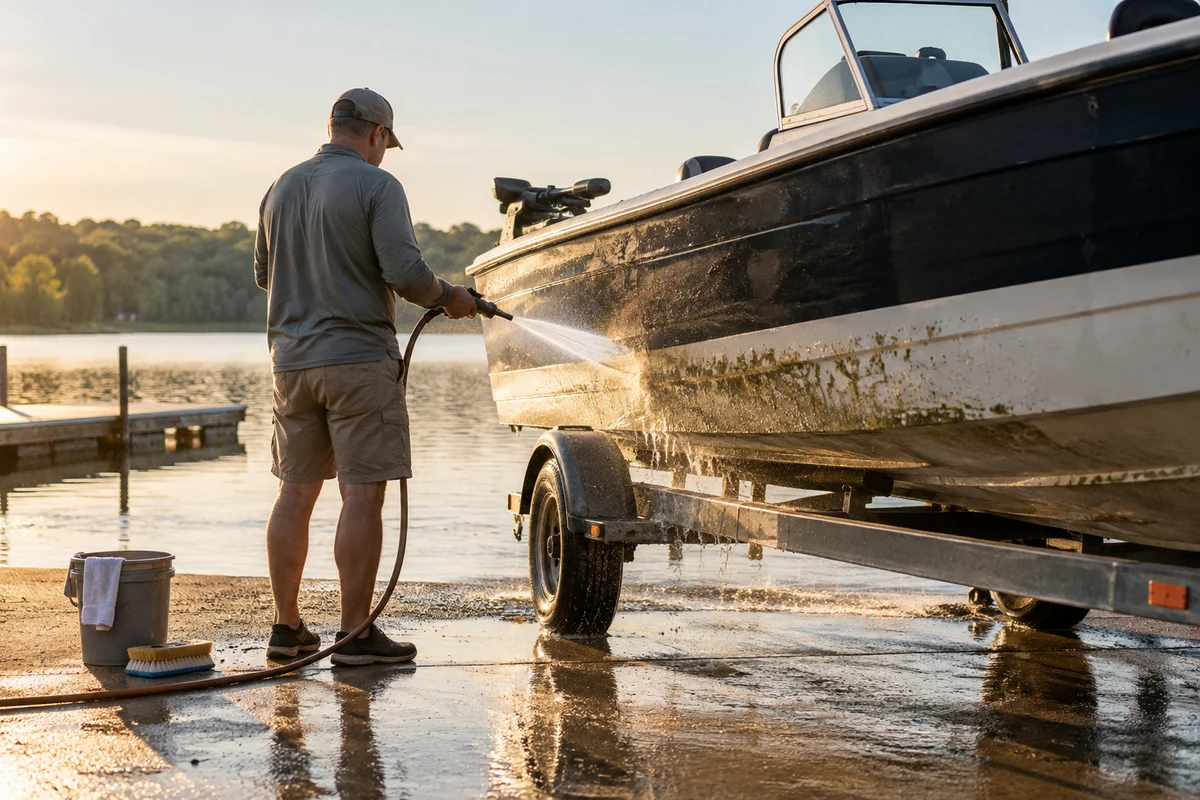
A boat hull collects more than water marks. Depending on where and how it is used, its surface may pick up mud, algae, slime, mineral deposits, or marine growth. Knowing how to clean boat hull surfaces without harming the gelcoat, paint, metal, or surrounding water starts with identifying both the hull material and the deposit. A gentle wash is often enough for routine dirt; stubborn growth calls for a more deliberate, label-guided approach.
This is a general care guide, not a substitute for the boat or coating maker’s instructions. Older finishes, repairs, and specialized coatings can react differently to cleaners and abrasives. If you cannot identify the surface or coating, check the manufacturer’s care guidance before proceeding.
Start with the hull material and the buildup
Look over the boat before wetting it. Note whether the hull is fiberglass with gelcoat, painted, aluminum, or another material, and check for peeling, blisters, cracks, loose fittings, or exposed repairs. Do not scrub over damage as though it were ordinary grime; cleaning can worsen a weak finish or conceal a condition that needs attention.
Identify what you are removing. Loose mud and dust usually need only a rinse and mild soap. A slick film or algae may respond to a soft brush and a cleaner approved for the surface. Chalky oxidation, hard-water marks, and attached aquatic growth are different problems and may require a product specifically labeled for that job. Avoid guessing with household acids, solvents, scouring powders, or concentrated bleach: a product that works on one material can stain, dull, or corrode another.
If the boat has been in freshwater, clean off plant fragments and mud before moving it to another waterbody. Invasive species can travel on boats and gear. Follow local inspection, draining, and drying requirements; cleaning at an approved station is preferable when required.
A low-risk cleaning sequence
Work in shade when possible, and avoid letting soap or cleaner dry on the surface. Choose a place where wash water can be captured or directed away from storm drains and open water. Wear eye protection and gloves if the product label calls for them, and never mix cleaning chemicals.
- Remove loose debris. Take off gear and rinse or brush away grit. Grit trapped under a sponge can scratch a finish.
- Test a small, inconspicuous area. Follow the label’s dilution and dwell-time directions. Stop if the test area changes color, gloss, or texture.
- Wash from the top down. Use a bucket of clean water, a mild boat-safe soap where appropriate, and a soft sponge or brush. Clean manageable sections rather than allowing suds to dry.
- Rinse thoroughly. Residue can leave streaks and may affect coatings. Use only as much water as needed, while keeping runoff contained.
- Address remaining spots individually. Use a surface-compatible cleaner as directed, then rinse. Do not increase strength or scrub harder just because a deposit is stubborn.
- Dry and inspect. A clean, dry surface makes it easier to spot chips, corrosion, or fresh damage. Use a soft cloth where water spots are a concern.
For detailed maintenance questions, the boat’s manual and coating maker take precedence. Owners comparing boat styles can also review our overview of the Tracker Targa V-20 WT boat and Tracker Deep V multi-species boats; hull shape and intended use affect how easily different areas can be reached and inspected.
Match the method to the surface
The safest cleaner is not necessarily the strongest one. Use a product whose label explicitly covers the hull material and finish, and follow its instructions. If the label does not address your surface, contact the manufacturer rather than experimenting.
| Surface or condition | Conservative starting point | Use extra care |
|---|---|---|
| Fiberglass gelcoat, ordinary dirt | Fresh water and a mild, compatible boat soap | Abrasives can dull the gloss; oxidation may need a separate gelcoat-care process |
| Painted hull | Water and a cleaner approved for the paint system | Avoid aggressive solvents and scrubbing; consult the coating instructions |
| Aluminum hull | Water and an aluminum-compatible cleaner | Some chemicals can discolor or corrode aluminum; check the label and boat guidance |
| Marine growth or attached organisms | Approved cleaning location and a method allowed by local rules | Scraping or washing in the water may release organisms or contaminants |
| Unknown or repaired coating | Identify the coating or ask its maker | Do not test harsh chemicals on an uncertain surface |
This table is a starting framework, not a product recommendation. Coatings vary, and even the same boat may have different materials above and below the waterline. Never use a pressure washer at close range or on a setting that could force water beneath paint, damage fittings, or erode a surface. If power washing is permitted for the hull and location, follow the equipment and boat maker’s distance and pressure guidance.
Prevent scratches, corrosion, and avoidable wear
Use separate tools for heavily soiled areas and delicate finishes. A stiff brush appropriate for a robust hull may still scratch polished gelcoat or paint. Do not use steel wool or an abrasive pad unless the manufacturer specifically approves it for that exact surface. Rinse brushes and cloths often so embedded grit does not become sandpaper.
On aluminum, use compatible products and clean tools; avoid leaving chemical residue in seams or around dissimilar metals. On fiberglass, aggressive rubbing can make oxidation look temporarily better while removing or thinning the surface. For oxidation, follow the gelcoat maker’s care process and consider a marine professional if the finish is badly chalked or uneven.
After cleaning, look at seams, fasteners, transducers, drain fittings, and the waterline. Cleaning is a convenient time to notice a loose fitting or damaged patch, but it is not a full structural inspection. Seek qualified help for cracks, soft spots, significant corrosion, or coating failure.
Keep wash water and organisms out of the waterway
A wash-down can carry soap, sediment, paint residue, oil, or biological material into drains and waterways. Use the least cleaner that does the job, collect debris, and wash on a surface where runoff can be managed. Follow marina rules and local environmental requirements; practices differ by location and by the presence of antifouling coatings or contaminated residue.
When removing aquatic plants or organisms, contain the material and dispose of it as local authorities direct. Do not assume a rinse at the launch is permitted or that a product labeled biodegradable is harmless to aquatic life. The U.S. Environmental Protection Agency’s boating and marina resources provide broader context on preventing pollution; local rules may be more specific.
The hull is only one part of a clean boat. Rinse and inspect trailers, bunks, rollers, anchors, and removable gear, where mud or fragments can remain. For small-craft users, practical kayak fishing tips for catching more fish include planning gear and launch routines, while our guide to using a drift sock in a kayak covers another piece of responsible on-water preparation.
How often should you clean a hull?
There is no universal schedule. Frequency depends on water conditions, storage, use, the hull finish, and the local rules for cleaning. Rinse off salt after use where practical, and inspect after trips in waters with heavy vegetation or sediment. A boat stored on a trailer may need a different routine from one kept in a marina. Follow the coating manufacturer’s maintenance intervals, especially for antifouling systems, which may have restrictions on cleaning methods and disposal.
A simple log can help: note the date, location, cleaner used, and any change in finish. That record helps you see whether a product is causing dullness or whether buildup returns unusually quickly. Change one variable at a time, and avoid combining cleaners or treatments without professional guidance.
A practical pre-clean checklist
- Identify hull material, finish, and any specialized coating.
- Check for damage and determine whether it needs attention before scrubbing.
- Read the cleaner label and confirm it is compatible with the surface.
- Choose a permitted wash location and plan for runoff and debris.
- Use soft, clean tools and test an inconspicuous area.
- Keep chemical products separate, and do not let them dry on the hull.
- Rinse, dry, inspect, and record any changes or defects.
A careful wash is usually less about force than about matching the method to the material. When the coating is uncertain, the growth is attached, or the hull shows damage, pause and get guidance from the boat or coating manufacturer, a marina, or a qualified marine-care professional. That restraint helps preserve the finish and reduces the chance that cleaning sends unwanted material into the water.
For more, explore our boat news guides.
Frequently asked questions
What is the safest cleaner for a boat hull?
Use a cleaner labeled as compatible with your specific hull material and finish. For ordinary dirt, start with water and mild boat soap where the manufacturer permits it.
Can I use a pressure washer on my boat hull?
Only if the boat, coating, equipment instructions, and local rules allow it. Excessive pressure or close use can damage finishes, fittings, or coatings.
How do I clean algae or aquatic growth off a hull?
Use an approved cleaning location and a method permitted by local rules. Contain plant fragments and follow local guidance for disposal and invasive-species prevention.
How often should I clean the hull?
There is no universal schedule. Consider water conditions, storage, use, coating instructions, and local rules; inspect and rinse when appropriate after outings.
Sources & further information
Consult these primary sources for current regulations, technical information and local guidance.